

How To Build a Family Care Plan That Preserves Your Peace And Your Savings - Episode 141
In today's episode, I sit down with Abbe F. Large to talk about caring for aging parents while raising our own kids. We keep it real and simple. We cover the three phases of money and the three buckets to save and spend from. We talk about long term care, life and disability insurance, and how to build steady income in retirement. You will learn when a reverse mortgage or HELOC might help, and when it won’t. We share easy scripts to start money talks with your parents, plus steps for a care plan, powers of attorney, wills, and trusts. My goal is to help you protect your paycheck, your peace, and the people you love.
About our guest:
Abbe F. Large, CLU®, CLTC, is a Managing Director at Lenox Advisors with three decades of experience dedicating herself to her clients' best interests. Abbe's personal experience with her father's pancreatic cancer journey ingrained how important the products and services she provides to her clients truly work. Specializing in financial, estate, and retirement services, she also assists corporate clients with strategic employee benefits. She was named on Forbes Top Financial Security Professionals in both 2023 and 2022. A devoted family woman and active community member, she enjoys paddleboarding, skiing, and maintaining a healthy lifestyle.
Email Abbe Here: alarge@lenoxadvisors.com
More About Abbe F. Large
Abbe F. Large in Linkedin
—-
Please join me here, and follow me on social media, Instagram, and Facebook.
Need help getting started on your path to financial freedom? Start Here
Join the Financially Intentional Community
Oh and please subscribe and leave a review on whatever app you're using to stream this podcast.
Get my book Smart Money

Subscribe & Review
Love this episode? Please subscribe and leave a review on your favorite podcast platform.
TRANSCRIPT:
Naseema: [00:00:00] Today I am joined by Abby Large managing director at Lennox Advisors and NFP Company with over 30 years in wealth management, estate planning, and corporate benefits. , Abby has been named one of Forbes top financial Security professionals. Four years running. Her passion for financial literacy, especially for women and family, come from her own journey caring for her father during his battle with cancer.
An experience that showed her how vital financial planning is for protecting what matters most.
What's up my financially intentional people? I'm joined with Abby Large today, and we're gonna talk about a very important topic that I know a lot of us are facing or about to face relatively soon. And that's caring for an older family member while also you're caring for your children. And
it takes an emotional toll, it takes a financial toll, [00:01:00] and it can be detrimental in families. And so I think it's an impor important topic to discuss and I'm just happy Abby, to have you here to talk with us about this. So welcome.
Abbe Large: Thank you. I'm happy to talk about this and very not happy to talk about this at the same time.
Naseema: Exactly.
Abbe Large: 'cause it's it's a difficult topic, but I'm glad that you're bringing us to the forefront and leaning into this kind of conversation because it needs to be had.
Naseema: Yes, definitely. Before we start talking about that, Abby, I just wanna get your background and how you got into the finance space and the scope of things that you do.
Abbe Large: We're talking 31 years ago.
Naseema: Wow.
Abbe Large: Yeah, so I've been in this business for 31 years. I was probably one of the few women in our business. It was a male dominated business, which was in my opinion, fun. But but. , Listen, long story short, I was in my twenties [00:02:00] just doing what 20 year olds do, just, feast or famine, making it work.
You think you're getting paid for, spending four years in college and having a degree, and you're like. You just go out there in the world and think you're gonna be paid for how you think, and that wasn't really how it went down. So there's a lot of grit and a lot of grinding there to try and figure out what I wanted to do.
And my interest was always, I graduated with a bachelor in science of journalism from one of the top schools for journalism. My interest was in advertising and marketing, and then I quickly learned that I really didn't have the talent for it, and it I really didn't. I liked the creative end of it the copywriting part of it, I don't know.
It was just not something that I thought I could pursue simply because there were very few people that were making a lot of money, and the ones that were making a lot of money were not talented. In fact, there's a show called Night of the Living Dead. And it's an award show [00:03:00] that's like back office, like behind the scenes kind of award show of all of the ads and commercials that got killed by the creative director or by the client.
It's called The Night of the Living Dead. And it's, if you ever want an evening of the most entertaining, brilliant advertising in the world, that's it. And I don't even know if they do it anymore, but anyway. That's where my interest was. So I always had this creative side and I always had a very curious side as well.
So there was someone that I worked with that was much older and much wiser than I at the time, and he said I was a maverick and I should get into sales. Okay, so one thing led to another and somebody, I got connected with the sales manager at this financial group, and , he was encourageable.
He would just call me like five, six times and I just went in for the interview just to get him off my back. And when I went in for the interview, it was the most unique interview because I was the [00:04:00] one bouncing around talking to everybody. And everybody that I met were. Healthy and happy.
And there was this really good energy about them, this vibe that was just exuded this I'm controlling my own destiny kind of vibe. And I said, I don't know what they're doing, but I want that. That I know, fast forward, you have to get licensed, you have to do all these tests, and you have to, study and do all these things to, to have the licenses, to be able to advise people.
And I, in the first year it was really tough. It was really tough. My family had moved to another state. They sold my home. So I, I lost my childhood home. I was living in the city on a third floor walk up. I had. No money. I was dating some schmuck that thought I should work at the gap.
Not that there's anything wrong with that, that's what he thought my potential in retail sales were. And I had really, I was so broke and the apartment I was living in was going co-op. So they're like, either, you pay for it, you buy it, or you gotta leave.
So it was [00:05:00] really, but I wasn't moving to Texas. Not that there's anything wrong with Texas, but I wasn't moving there. I'm a New York City girl, yeah in that first year I think I cried every night in the shower. I worked so hard and, I had no option but to succeed because failure was not an option for me.
So in the first year, I not only bought my apartment. I found my friends that I've still friends with to this day. They're like my family. I found my husband and created this beautiful life with him, with three wonderful children and oh, and I was the number one female producer in their first year in their business, and the top five in the entire company in their first year in the business.
So I got the accolades, I got the man, I got the, and I had the savings and everything else. So in that year it was pretty epic. It was really epic. But my why was that so epic? Why? How did that happen? [00:06:00] There was a gentleman that we worked with who was our disability insurance specialist, and he and
my husband, my boyfriend at the time we all hung out. We were really good friends and he was diagnosed with lymphoma and he didn't treat it aggressively right away and it had spread and we watched him wither away and die. And while this was happening, he was a devoted husband to the love of his life.
To this day, I don't think she's ever gotten over it, the grief and the loss of the love of her life. But when that was happening, he would walk around with a cane and it just it rocked me to the core of how the disability insurance policy that he purchased so long ago, the life insurance policy that he purchased and.
What that money did for him during his [00:07:00] illness to continue his income, and then what that money did for his wife to be able to live in her apartment and not worry about money. That, I don't know. I saw it from beginning to end and what those products do for people in the worst times of their lives.
So that catapulted my career, like my why, my purpose. And everybody that I saw had to have disability insurance, they had to have wills and life insurance and all these things. And so it became my, it did, it became my passionate why. And throughout my career, what I have seen, and it's interesting because, I started out in my mid twenties and I'm, 31 years in. And now my clients are now generation two, right? So I see all these people from the time they were in their late twenties to now, or when they were in their thirties and they're now [00:08:00] retiring and the baby boomers and things like that. So I'm seeing these people now. To your topic of long-term care and the sandwiches, I'm seeing those people not only take care of their families and their children, but they're also taking care of their aging parents.
And that is, I think it's going to be an epidemic because people are living a lot longer and it's an epidemic on different levels. It's an epidemic because. don't think people plan to live that long financially. And so I think that's a major topic that is being dismissed, that cannot be dismissed any longer because people are truly running out of money.
Naseema: Yeah. What is the timeline? Because I know that projections that have been done historically, usually predict for about 30 years after retirement, right? [00:09:00] Like you should your money should last 30 years after retirement. Are those like kind of the projections that you're seeing?
Abbe Large: It depends when you retire.
Naseema: That part.
Abbe Large: It depends when you retire. It depends how much you have in assets at during retirement or when you decide to retire it. These are things that you have to make sure you understand your cash flow because here's the thing, we have these three phases of our financial life, and you had mentioned this in the beginning, three phases, right?
The accumulation phase. Distribution phase and the preservation phase. And during the accumulation phase, you have your paycheck and your saving into the, typical three buckets of saving. 'cause it's not just about asset allocation, but it's also about asset location. So you wanna make sure that these three buckets, which are, for example, your taxable accounts, your stocks, your bonds, your mutual funds, those are all taxable accounts, non-qualified accounts. Then you have bucket number two, which are [00:10:00] your qualified accounts, which are your 401k, the company matches your HSAs, fsa those types of non qualified plans, right? They qualify for tax tax deduction, but you're going to have to pay tax eventually on those assets.
And then the third bucket, which is the tax free bucket, which is Roth IRAs. The money goes in after tax, but the compounding and it just all grows tax free and you can take it out tax free. And then there's whole life insurance. This is permanent insurance that you can buy that also has a cash value that is protected from income.
It's like a tax mitigator because all the growth grows tax free and you can take it out tax free . It's the same. Role that a Roth IRA plays, except it doesn't have these limitations on how much you can put in. So back to your question about people living longer [00:11:00] and not having enough money.
Once you turn the corner from the accumulation phase to the distribution phase, distribution means you're taking money out of these three buckets. But there's one major piece that's missing. In your distribution years,
New income,
Naseema: Oh, okay.
Abbe Large: right? It's
New income. Unless you've got some great halftime report and you're earning some money, right? You are missing a paycheck. So new money is not going in. So people make the mistake of, okay, let's plan, it's so important to understand your cashflow needs during the distribution phase, not just the accumulation phase.
It's way more important during distribution because you're missing that new money. So it's vital. And now I'm talking to a lot of my high net worth clients because they're so used to this lifestyle. But then there's this huge paycheck that's not coming in. So you really have to be cognizant of what you're [00:12:00] spending, and then you've gotta factor in, do we have to take care of our parents?
Do we have siblings that are financially independent that are able to help us? Most likely not. Typically you've got the people that, the siblings that are there physically taking care of. Then you have maybe siblings that are not physically there, but they're financially taking care of things.
And so these kinds of conversations need to happen during not just the accumulation phase of your life, but also the distribution phase of your life, because you've gotta take money out to take care of your kids and your parents. And it could wipe you out and if you're living longer, forget about it.
It's a trifecta.
Naseema: Yeah.
Abbe Large: So these kinds of conversations must happen as uncomfortable as they are, and I'm grateful that you are leaning into this and inviting guests to talk about [00:13:00] this because there's no shame in asking for help. There is no shame. Saying, this is what we have, this is what we want, this is what matters to us.
How can we work this out? There's no shame in discussing this with your parents, your elderly parents, to say, Hey, at the end of the day, I'm gonna be taking care of you. We love you. We're gonna be taking care of you. Help us help you. What do you have? Did you buy a long-term care policy?
What do your assets look like? How are they held? How are they distributed? All of these conversations, these financial platform conversations must be had as uncomfortable as they are. I assure you. The uncomfortableness of not having them and dealing with the repercussions are painful. It's not uncomfortable.
It's painful.
Naseema: But I feel like the generation of, my parents and grandparents were taught not to [00:14:00] talk about money and not to share that. And so when I try to have those conversations in the past I've had those conversations with my family, but it's always just a lot of I'll get to that.
Or why do you wanna know what my financial situation is? It's a lot of hesitance about talking about the money piece when it's super important like you said, because yes, when you do have to face it in the moment, it is real. It is tough and it's hard to deal with. But it's just those conversations aren't normalized.
Talking about money is too taboo for some people, and I feel like it's often like pulling teeth to get parents and grandparents to talk about those things. Just for example, I tried to have the conversation with my grandfather years and years he's in, he died in his nineties, but years and years before.
[00:15:00] Hey, can we make sure that these things are in place and can you make sure that, you don't just write in your will to divide everything up between, your four children and all that kind of stuff. Like you really have to specify what you want. And he was just like, no, I did that.
Or I left, your uncle in charge of all these kind of things. And it is just like now there's so much conflict around his estate and all of the things, and it's been a couple years and things aren't getting resolved. As a matter of fact, things are getting worse. And I'm just like, why can't we normalize these conversations?
Abbe Large: Here's the thing. People will tell you what you want to hear and not what, because they think it the answer. That's the answer That sounds good. But [00:16:00] underneath the hood, what is the real reason? They don't wanna talk about it. And that's really where the questions need to come in and to be so bold as to say. Have you considered? Always ask the question, have you considered how it may be for our family if you need care?
Have you considered what that looks
has to be their idea because when people get older, they lose control and that loss of control. Is really hard to navigate around
Naseema: Yeah.
Abbe Large: because they don't want to admit that they need help.
They don't want to. Some people say, you are my long-term care policy. I'm not gonna buy one. You are gonna take care of me. My father actually said that [00:17:00] to me and I immediately turned around and bought him a long-term care policy.
Naseema: That part? Yes. Uhhuh.
Abbe Large: But for all your listeners out there, if you're not talking to a financial advisor about, or insurance professional about long-term care insurance, you are really shortsighted with what's gonna happen.
And here's the thing, right? Let's say somebody lives to a hundred and 110, let's call it. You got someone who's in their eighties taking care of that person, and then someone in their, fifties taking care of the person in their eighties. Think about that for a second.
Naseema: Yeah.
Abbe Large: I don't know what people are gonna do. I don't know what people are gonna do. They need to plan. They need to plan. They need to either, move assets around. They need to talk to their kids about this. They need a team. It takes a village [00:18:00] and look, you can turn it around to say, you did such a great, I'm now role playing.
You are my parent. Let's just call it. You did such an amazing job. Raising us, and I cannot thank you enough. Now, if you wanna approach us from love, this is the love version.
You've approached you, you you've really, you've done an amazing job raising us and we're so grateful.
It was a lot of work because I'm a mom now and I get how much work it is, but now imagine taking care of, your mother and me. Or you could just stay in your person and say, now imagine what it would be like. I'm still taking care of your grandchild's grandchildren, I will take care of you because I love you. And it's because I'm your daughter. You're my mom, you're my dad. This is our duty to you. And a lot of people feel that way, and I think. [00:19:00] That has to, there, there must be some kind of empathy there from coming from parents that if it's raised in that way, coming from love and compassion and empathy, I don't know maybe give it a go on that angle versus we gotta talk about this. This is gonna be a real problem. I gotta take care of my kids. I gotta take care of you. I can't afford anything. Which is a more productive conversation coming out of love or coming out of fear and anxiety.
Naseema: Definitely the love piece, but I think that a lot of the fear comes from. Our generation feeling like we don't even have enough for ourselves yet. We're still at a point where we are not set for our retirement, or we're still paycheck to paycheck and we still gotta worry about what the kids are gonna do going to college.
And [00:20:00] now I have to worry about taking care of somebody I don't know where that money is gonna come from.
Abbe Large: If your listeners are and your parents are in their fifties, that is the perfect time to buy long-term care insurance. And there are all these wonderful products out there now, hybrid products that combine life insurance and long-term care insurance. But that is the answer.
Naseema: Okay.
Abbe Large: That is the answer.
If you're looking for a way to fund it,
they
Naseema: You are talking about buying long-term care insurance for yourself at 52
Abbe Large: Oh
Naseema: I mean in your fifties, but Yeah, but that's for yourself, but Oh, okay.
Abbe Large: I don't know how old you are,
Naseema: Close to 50.
Abbe Large: but you might have parents in your fifties or sixties. And they need to buy long-term care.
Naseema: Right.
Abbe Large: There's [00:21:00] also, and I'm just talking products right now, but there are products out there that provide guaranteed income for the rest of your life called annuities.
There are annuities that can do that where you're, it's like mailbox money every month. It comes in like clockwork until you die. So this is solvable. It's a matter of. Calling your advisor. Calling the financial advisor, calling the insurance specialist and saying, this is my problem.
This is what matters to me. Can you help me solve this? And that's the answer,
Naseema: Okay. I had this conversation a couple years ago with A CFP on my show, and like I, did exactly that. I'll call my insurance agent and I was like, Hey. What can we do to solve for this, for me, for now? And what I ended up getting is like , we wait. The difference between waiting until I'm 50 or whatever to get [00:22:00] a long-term care policy for myself, or what I do is I have a portion of my whole life policy that goes into a long-term care rider.
Abbe Large: I was just. Say that you have to be 40 or above to get a standalone product, but if you want to before 40, you can always buy a whole life insurance with a rider or long-term care rider. And that's, that is also another solve for long-term care, is combined the needs of your income for your heirs, but also for your heirs to be able to access that death benefit so that you can have.
Money for long-term care. So yes, absolutely. If you're under 40 years old, whole life insurance with long-term care rider is paramount.
Naseema: I'm over 40. I'm closer to 50, but
Abbe Large: You don't.
Naseema: Thank you. But so that's why we were weighing like just buying a standalone policy, but it just like cost wise, it didn't make [00:23:00] as much sense, i, yeah. So I think those are some things that you have to weigh, but so right now where I'm at, I'm 40 years old.
My dad is in his seventies and my buying a long-term care policy for him too. What am I doing for him? Because I'm
gonna be the one that has to take care of him. I dunno. I dunno what his health is. I dunno what his health is like. It depends. It really depends what his health is like. The other alternative if he is insurable, there are other alternatives, right? There's long-term care insurance that you could try and get him qualified for. There's life insurance because here's the thing about life insurance.
Abbe Large: It's a permission slip to spend down other assets.
So you could technically spend on all of your dad's assets and have the life insurance to replace all those assets if he wanted to give something to his children, that life insurance pays out and it pays out tax free. [00:24:00] That happened to my dad by the way.
My dad asked my husband for, he asked us for a loan to do something and my husband was very smart. He said, I have no problem giving you the money, but I'm gonna take out a life insurance policy on you in case you don't pay it back. So he did.
Naseema: Uh
Abbe Large: when my dad got sick. He died of pancreatic cancer and I was, and that, that actually became in 2019.
That became my new why, like my new passion of why? Because I was in the driver's seat. I was the client. I was the person experiencing what these products are actually doing in a time of such sadness and crappiness and suckiness when all this was going on. And remember they moved to Texas. So I'm in New York, so I was traveling back and forth.
The airfares were outrageously expensive. Sometimes I had to stay at hotels. Most of the times I stayed with [00:25:00] them. I was their gardener. I was their pool person. I was their bill payer. I was their nurse me, div, I mean everything. I was the medicine the care, the nurse, the whole thing.
And, I just remember how many thousands and tens of thousands of dollars I was shoveling out.
And I was a little concerned by this, right? And my husband, I was talking to my husband about it. He said, don't worry, just don't worry about the money. Take the money conversation out of this because we have a life insurance policy on him. Remember I bought that policy? I'm like, oh my God, you're brilliant. Thank you for doing that because it was a policy that paid out almost a million dollars
Naseema: that had to be an expensive
Abbe Large: No, it wasn't, it was like $600,000. It wasn't a million. Now that I'm thinking about it, it was like $600,000 a life insurance policy. It was like whatever the loan
But I got all the money back
When he passed.
[00:26:00] All that money came back to me. So the idea of talking about the money, it was off the table, you know what I'm saying? It was off the table and all. We really had to focus because if the money came into the equation, holy cow, there'd be some serious toxicity,
Naseema: Yeah.
Um, definitely, especially when it came to the caretaking part because I'm glad you touched on that, because. Caretaking and I'm a nurse. Okay? So
Abbe Large: a full-time job.
Naseema: caretaking is not for the week. Like it is a whole
Abbe Large: Yeah.
Naseema: Skillset a whole. Bunch of emotional, physical, demands that a lot of people just don't understand and oftentimes it falls on one person.
So that also breeds a level of resentment because like, why am I the only one, I'm not the only child. All that kind of stuff caretaking is something most [00:27:00] people aren't ready to or capable of doing.
Abbe Large: Oh, absolutely not. It's horrific. I know. I'm close with someone whose mother just moved into their home downstairs. I don't know why. Downstairs, I don't know how they're gonna get up the stairs or down back, down the stairs, but that's a whole nother ball of wax. They have no other options.
There's no other options they're gonna have to take care of their mom.
Naseema: Yeah.
Abbe Large: And it's just, look, at the end of the day, you're not gonna take care of your loved ones, but you need to be able to do it better and if you had to longer without running out of money
Naseema: Yeah.
Abbe Large: because it, yes, you do have to be strong.
My mother-in-law has dementia and oh my God, is she strong?
Naseema: Yeah.
Abbe Large: She's probably to live another 10 years.
Naseema: Yeah.
Abbe Large: Her mind's gone
Naseema: Yeah. Yeah. But physically she's still with it, like there's
Abbe Large: completely fine.
Naseema: yeah.
Abbe Large: An [00:28:00] occasional UTI. That's about it.
Unbelievable. I was visiting her last week and I was trying to get her legs onto her. Wheelchair and. I was trying to like, separate her
Naseema: Mm-hmm.
Abbe Large: to get them onto the wheelchair, and I couldn't pry them apart. I was using all my might and I'm not a weak gal. I if she was going to the gym, you know that the press that goes like this is like easily 30, 50 pounds and I'm pulling her
apart. Couldn't move, win budge. Wild.
It's very scary. So to your listeners have those conversations coming out of love. , Do the cash flow, the inflows, the outflows.
You need to have some kind of understanding of your money flows and how that works, how the assets are held, how they're distributed. Have the conversations and don't be afraid to have them in front of your children because that's how you break the chain. Just, you mentioned earlier, to your point, nobody [00:29:00] really talks about this stuff.
It's taboo if you make it, nor if you normalize it. It doesn't have to be taboo,
Naseema: Yeah.
Abbe Large: right?
They talk about sex ed in junior high school, certainly you can talk about finances with your children because you need to raise financially fit children as well.
Naseema: Yes.
Abbe Large: They have to be aware of this. They have to understand allowances and why that is, using, personally speaking, and I'm gonna jump to the kids for a second with the allowances because I'm sure you have young moms and young dads on the line. I never tied their allowance in with doing chores.
And I'll tell you why. Because Children's First community is within their own home, and when you're part of a community, you chip in.
So it was not an option for them not to chip in to clean up the dishes, to empty the dishwasher, to do their laundry, to take up the [00:30:00] garbage, to, make their beds in the morning, whatever that was like, they were expected to do that.
Out of respect of the household, right out of your community, to leave it better than what you did when you first arrived. The allowance is to teach them how to save, how to invest,
How to spend it, and how to give it away. And that's the purpose of an allowance.
If they got good grades or if they did these wonderful chores around the house and they did a good job, they got praised by love and pride.
I would implore people not to tie money with acts of service, the money that is for again, saving, investing, giving it away and spending
Naseema: Mm-hmm.
Abbe Large: And then the allowance, that's what the allowance is for, and then all the rest will [00:31:00] fall into place.
Sorry, just how to plug that in.
Naseema: no, I get that. I understand that. For me it's like allowances for doing extra things. It's all the other stuff. Yes, you're, these are expectations of the household, but allowances for doing extra things in my kids, working my business, so then they get paid through that.
Abbe Large: Absolutely a paying job. They have to actually do some, do something that's different though. That's employment.
Naseema: yes.
Abbe Large: That's not part of being a community.
Naseema: No. Exactly.
Abbe Large: I, so it's different,
right?
And they're learning how to work and be responsible for their work, and that's also really important for them to learn too.
And to do a job and do it well. Don't just do it half fast.
Naseema: Yes, a hundred percent. So it's just I feel like where I'm at and where most of my audience is at is that we're in a place where we are just figuring out or just getting some kind of. Firm financial [00:32:00] like footing to just like start, right? We're trying to save for kids college or our, invest for our kids.
We're trying to make sure we have our investments straight and then, we have this unknown kind of what are we gonna do if something happens to our parents? In this stage right now, I just want you to lay out like what piece people should be thinking about and what tools they should be looking to acquire or products they should be looking to acquire.
Abbe Large: So for you are in the accumulation phase
of And so it is imperative that you have
Naseema: Mm-hmm.
Abbe Large: updated wills, you have healthcare proxies and power of attorneys, and if you're moving to another state, you need to redo them because every state's got its own laws. That's number one. two figuring out your cash flows, how much you're earning, how much you're spending, and just to get a grip on that because a lot of people don't know how much they're spending.
Naseema: I [00:33:00] know.
Abbe Large: And that is a big problem because you really need to get a handle of that. If there is any type of qualified plans being offered at employment, it's important to take full advantage of them. For some tax deductions. If you're in a lower tax bracket, Roth IRAs make a lot of sense because you're paying the tax now.
And by the way, 37% the highest tax rate that we have right in this moment. It's not the highest. will go high, it will go higher. So for those listening, if you're not in a very high tax bracket, Roth IRAs are great to start saving. 529s are fantastic to start saving. You get a tax break there as well.
Only caveat with that is you have to use it for college, education purposes. Buying a permanent whole life policy, whether it be just plain vanilla whole life, or a variable universal life where you're. You have insurance you have a death benefit that you need, but yet you have separate accounts that you're able [00:34:00] to invest in and choose your funds and invest in a tax advantage way because it's in a tax wrapper.
Because life insurance is one of the last tax options that we have. So if you take a brokerage fees and taxes, that's a drag on the investment component. Not to say that you shouldn't. Invest in those things, you absolutely should. But is it a 60 40? Is it a 70 30?
Like these are the kinds of things that you need to take a look at. Do I have any discretionary income that I can start saving? What can I take off right off the bat that I won't even notice, like from my employer and have it be payroll deducted and take advantage of the four one K, especially if they're matching. So 401k matching HSAs. You can sign up all with the employer take advantage of the disability insurance that is offered in the group plans if you're capped out on the group plan, because group plans normally cap out [00:35:00] with a certain level of income.
So for example, the higher earners are not really covering 60% of their compensation.
Their assistance that are making a lot less than them are. So it's very important to purchase individually owned disability insurance because you are way more likely to become disabled, sick, or injured versus dying before the age of 65.
That's really important because the foundation of everything that you're doing is resting on your paycheck if you don't protect the paycheck.
I what? There's nothing else. That's what's holding up your house. That's what's hold, that's the foundation of everything you're doing financially is your income. So you wanna make sure that's protected with the group plan and if you're capped out to get an individually owned policy.
And then just. Once you get a handle on the cash flow, you can start and you start to see patterns and you're gonna start to see where you don't need to spend that money. And you should, pivot it to this look at if there's credit card debt, [00:36:00] consolidate that, it's the interest rates on that are
awful.
Awful that's the first order of business is to get rid of that. The other thing that you can do is make sure that there's at least six months to a year of fixed income saved in some kind of money market fund or what have you. It's an emergency
fund, And that's really important because things break in the house, things happen with health, things happen, whatever technology it's just, there's always something, especially when you own a house.
So those are my tips and tricks for the accumulation phase.
Naseema: So having those conversations with our aging parents though, like what should that look like as far as preparing to possibly take care of them? I know the, like the loving angle that you come with them. But like strategically, what tools can we seek to either help them with or encourage them to get
Like a long-term care policy, if they're qualified or make sure [00:37:00] they have some things in place, for example, my friend is taking care of her aging mom, and the only way that she can afford it basically was to put it over reverse mortgage on her house to pay for all the healthcare bills that
Abbe Large: You can do a.
Naseema: I'm saying?
Abbe Large: there's a HELOC option where you can be paid to stay in your home and then once you die, the bank owns it. That's an option. Sure. That's a very good option. Taking a, looking at all of their assets and, sticking it into an annuity. There are people that gift assets out of their estate for Medicaid, but I don't know if that's your audience and I doubt it.
It's Medicaid is like welfare.
Naseema: welfare. Yeah. And no, it's not because the facilities and stuff that you would qualify for, like if you say, if you were doing that to get into a long-term care facility for Medicaid, as a nurse,
Abbe Large: No, it's
Naseema: I wouldn't recommend anybody go there.
Abbe Large: It's really, [00:38:00] it's not, it's, I agree with you. It's not good. Like I said before, you need to have the tough conversations because I assure you the conversation will be less painful than it will decades of care.
Naseema: yeah.
Abbe Large: Okay. you ever hear of the story of the buffalo and the cow?
Naseema: No.
Abbe Large: So there's a place in Montana where buffaloes and cows migrate together. They normally don't, because I don't, I forget, maybe it's the cow or the buffaloes that give them some kind of disease. I don't know what it is, but they normally don't migrate together, but they do in Montana. And the scientists did a study of how they behave when they see a storm coming over the horizon.
And if you know anything about cows, they run really slowly. So when they see a storm coming over the horizon, they run away from the storm. But because they run so slowly, the [00:39:00] storm eventually catches up to them and now they're running with the storm. So their pain and suffering is prolonged like nobody's business.
But Buffalo's on the other hand, what they do is that when they see a storm coming over the horizon, they run towards
Naseema: it
and then
Abbe Large: And because they run towards it, they run through
Naseema: Mm-hmm.
Abbe Large: And their pain and suffering is a lot less. So let that be a metaphor to everyone that's listening is to be the buffalo. Be the buffalo.
Yes, there'll be pain and suffering, but I assure you it will be a lot less and a lot shorter if you don't have the conversation and you're being a cow.
Naseema: Yep. A hundred percent. A hundred percent. And are there particular talking points that you give people because I don't know, like talk, I would just maybe me think about like the facilities, do you wanna stay at home? Do you want like in-home care, if something had happened, like how deep into these conversations do you [00:40:00] typically advise people to get?
Abbe Large: Most people wanna stay in their home. That's just a fact. And if they don't stay in their home, they move to your home.
Naseema: Yeah.
Abbe Large: That's where the problem does, or I should say, ends. The conversation needs to be had with. Hey, eventually the longer you live, the more you're gonna need some help because of frailty. It's one of the risks that we face. Now, let's just face it together. What do you wanna do? What does it look like for you? What, what matters to you?
And I would say you have two ears in one mouth. Let them talk more than you are talking to them, because they're going to eventually convince themselves. That they need the help and they need to not put you in a horrible position.
cause the more you ask the questions with, [00:41:00] have you considered
Ask away, where would you like to be?
What would you like to do? What matters to you? Where do you see yourself? How do you envision this? Have you considered All of those questions need to be asked. Maybe over a glass of wine, maybe over a martini, whatever it is to get them loosened up. I remember my grandfather, we'd give him a couple martinis and he'd talk away.
Naseema: But my grandfather's a Hennessy. So with do you ever recommend like sitting your parents down, like in front of a financial advisor or insurance professional
Abbe Large: Thousand percent. I've done a lot where the inter what do you call that? The intervention is with, the mediator is the financial planner.
Naseema: Yes. Yes.
Abbe Large: Yes, absolutely. In fact, I had a podcaster that was asking the same questions and had a situation with his dad. And his dad had, basically had they all had no money. [00:42:00] None of them had money, but he did own his apartment. And so I did recommend the heloc,
For this particular situation because I spent, two hours with a discovery call and realizing they, none of them had any money. It was a really sad situation.
The only solution was that he needs some steady income.
And if you're not gonna move into his house, then just do the reverse mortgage.
Naseema: Yeah.
Abbe Large: And they did that, like you mentioned earlier.
But that's, and again, his father was uninsurable, he couldn't buy any insurance. They didn't have any insurance. So I think the takeaway here is buy the insurance when you're young.
You're healthy and you don't need it because , that's when it's the most accessible. When you need it, that's when you won't be able to get it.
Naseema: Exactly, and I think that's what you we should have mentioned in the wealth accumulation phase, make sure you have all your insurance policies in place. [00:43:00] Like I have several million dollars of insurance policies in place because I do have young kids
Abbe Large: I wanna make a plugin for something like that because I cannot tell you in my three decades of doing this, I it's very important for me to drown out the bad actors that we have in our industry because a lot of people just sell for the commission and you never hear from them again, and it's not okay.
It's really not okay. And so I make it a point to make sure that even though I'm not being compensated for reviewing somebody else's work, some other insurance advisor's work that they just abandon these people because a great policy could turn into a terrible policy if it's not serviced. So I make it a point to review and audit any existing policies.
You have no idea how many times I [00:44:00] find trustee names wrong beneficiaries, wrong. The policy date and the trust date are incorrect. I can't tell you it wasn't funded properly. They thought it was gonna last to age 121. It craps out at age 75. Like you don't like, there's a lot. Okay, so when people say I have life insurance, I'm taken care of, my first reaction is probably not. I'd say something else, but I don't wanna be, that crass, but probably not. You should review it. It doesn't hurt. It doesn't hurt. To get a second set of eyes and to make sure that someone is servicing the products that you purchased a long time ago. That's all I'll say about that.
Naseema: Yeah, no, I think that's very important. And I do an annual or send or buy like every twice a year review with my to go over my insurance policies to make sure, because there are times where I do [00:45:00] convert like once a year I convert like a portion of my,
Abbe Large: term insurance
Naseema: into whole life and then reevaluate the long-term care writer.
Reevaluate my disability policy. Go through. I have a portion of my policy that's term till. 80, like I have like different pieces of my policy and so yeah, I encourage people to do the same. I think especially in a lot of black African American communities and Latino communities, we have these people that sell these predatory products that aren't necessarily beneficial.
They charge these exorbitant fees and they don't, they aren't set up properly and I can't tell you how many people have thrown away. Thousands and thousands of dollars in these policies. So yes, I a hundred percent agree. And I think that's another thing that people do is that they say, yeah, it's like they say, yeah, I have this policy, but they don't even know what's in the policy, how it works. And there's [00:46:00] is like so many ways that, and so many things that can go wrong. And I've seen it too, probably. Of course not as much as you, but I've seen it firsthand and if I've seen it, then I know that you see it like crazy.
Abbe Large: Oh my God, all the time. So whenever I meet anybody new, I wanna see everything they've done. I wanna read everything. I wanna go through my fine tooth comb. Because I'm telling you, 10 times outta 10, I find mistakes
Naseema: Yep. Yep.
Abbe Large: That the client did not know about. So I'm all about making sure that the client's best interest are at the forefront.
Not my wallet.
No, so that's really important. And yeah, I think developing a good, trusting relationship is also really important with an
advisor as well.
Naseema: Yep.
Abbe Large: Don't go at it by yourself. There's no reason to. You are like, you don't specialize in this. You didn't go to school for this, you didn't get tested to do this.
Like just no, there's no reason for it. Don't, it's overwhelming and most of the times people just put it to the side because if you don't understand [00:47:00] something, you're not gonna do anything.
Naseema: A hundred percent. A hundred percent. If a, if people wanted to work with you, Abby, how would they get in contact with you? Work for you, work with you, and what kind of services do you specialize in?
Abbe Large: Wow, okay. So they can get ahold of me. The best way is my email, which is a large at Lennox, L-E-N-O-X one N Advisors, A-D-V-I-S-O-R s.com, and I'm sure that'll be in your notes. So I went too fast. They could message me on LinkedIn, try to friend me, whatever. Connect with me on LinkedIn and send me a message.
But the email is probably the quickest way to get ahold of me.
I specialize in life insurance, disability insurance, long-term care insurance, coupled with estate planning assets asset allocation and location investments. Retirement planning, educational planning, all of it.
Property and casualty. All of these things that I'm telling you about. By the [00:48:00] way, I have a team of people that have superpowers in all of these areas. My superpowers are mainly the risk products, of course, life, disability, the long-term care, the wills estate planning stuff that I love.
But I have teams for asset ma, my asset managers or my teammates and property and casualty and all these other liability insurances. All of these insurances are very important and a lot of people, they call an 800 number. They're not coordinating everything among all the other portfolio, the insurance portfolio.
So for me, it's a more holistic approach.
It's not just selling a product. It's really getting to know you. What matters to you? What do you want to achieve? What are the problems? Let me solve them. Pretty much it in a nutshell, and that's what you want in a financial advisor. That and someone that cares.
And there's after, like I feel like my job is mainly execute it after the products are sold.
Naseema: Yeah.
Abbe Large: That's where the work begins. That's where, the development [00:49:00] and the continuation of that relationship matters. It matters because you want to have clients for life, and if when I die, these people that I'm taking care of their grandkids, and their kids are gonna be thanking me, they don't even know me.
But I know that I made a difference in their lives and that fuels me.
Naseema: I love that. I love that because I could tell you just do so many things from like the bottom of your heart and just, off the strength of making sure that people are set up in a good way. But I know that, you're paying it forward because. You are gonna reap all the world wars in the back end, and I don't know, you live a great life, so you're not wanting for anything, but I really know that you give from a place of service and I love that.
And
Abbe Large: thank you
Naseema: of course.
Abbe Large: of.
Naseema: Yes definitely. Abby, it's been so amazing to talk to you and to have you on. If you guys, all of her information will be in the show notes if you wanna work with her, but I really think that [00:50:00] this is like. A wake up call for you guys to really get things in place and to run into the storm so you can get through it because these conversations are hard, but they are very necessary and hopefully you have the tools to have those very hard conversations.
So I appreciate you, Abby, for sharing all of that with us.
Abbe Large: Oh, thank you for saying that. I appreciate that very much. Yeah, that fear. It's only a conversation you're having with yourself. That's all. Just go for it.
Naseema: Thank you.
Abbe Large: Thank you for having me.
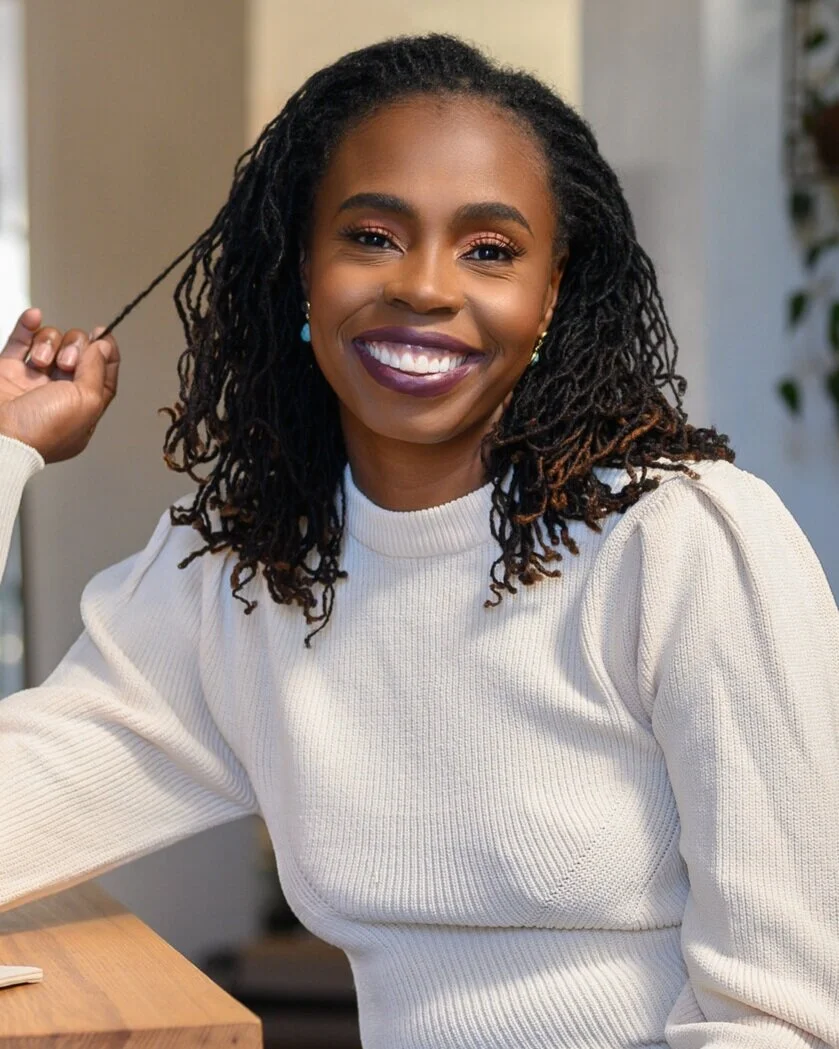
Hey there I’m Naseema
My dream is for everyone to know that financial independence is attainable with a little intentionality. Learn how I can help you finally break the cycle of living paycheck to paycheck.
Join the Facebook Community
Join the Financially Intentional community and get access to resources to guide you on the path to Financial Freedom.
Watch these Videos To Learn How to…
Keep Listening
Here are some more episodes you may enjoy…





We break down what’s really happening with hormones, metabolism, and aging in a simple way, including why perimenopause can sneak up on you.