
What Ally Bank Learned About Your Wallet and Anxiety - Episode 149
In today's episode, I sit down with Jack Howard to talk about money in a real and simple way. We share our first money memories, why feelings shape how we spend, and how to make a plan that fits your life. Jack explains Money Roots from Ally and how it can turn worry into calm. We talk about values based budgeting, easy money dates you can do with a partner, and why more people use prenups to protect love and goals. You will learn small steps you can try today like naming what you value, setting one weekly check in, and choosing one habit to practice.
About our guest:
Jack Howard serves as a leading voice in financial health and wellness, with a focus on money psychology and behavioral financial education. As a passionate advocate for financial social inclusion, Jack is committed to be a change-maker by creating programs that help prepare Brown and Black communities with tools for wealth creation that recognize the significant historical wealth disparities faced by those communities.
Ally Bank
Ally Money Roots
—-
Please join me here, and follow me on social media, Instagram, and Facebook.
Need help getting started on your path to financial freedom? Start Here
Join the Financially Intentional Community
Oh and please subscribe and leave a review on whatever app you're using to stream this podcast.
Get my book Smart Money
Subscribe & Review
Love this episode? Please subscribe and leave a review on your favorite podcast platform.
TRANSCRIPT:
Naseema: [00:00:00] Jack Howard serves as a leading voice in financial health and wellness with a focus on money psychology and behavioral education.
As a passionate advocate for financial social inclusion, Jack is committed to being a change maker by creating programs that help prepare brown and black communities with tools for wealth creation
by recognizing the significant historical disparities faced by those communities.
What's up? My financially intentional people today, I'm so honored to be joined with Jack Howard, who is the head of Money Wellness at our favorite Ally Bank. Hey Jack, how are you?
Jack Howard: Hey, I'm from Detroit, so I gotta say what up though. Hey, everybody.
Naseema: I love that. I'll say what up though too.
Jack Howard: Yes?
Naseema: I'm Oakland, Detroit and Oakland I have, are really off [00:01:00] the similar
Jack Howard: yes.
Naseema: Yeah. All right, cool. So I'm really just interested in your story. How did you get into the banking industry and how did you land this role at Ally? I know for me and a lot of my colleagues in the personal finance space, ally is clutch.
It is our go-to bank, especially. We talk about high yield savings and the way that Ally has evolved over the years has been incredible, and to know that you played a role in that is like really doing something for me.
Jack Howard: Thank you. So
hopefully you wanna stay even longer, become a customer for even longer. Once you hear my story, I guarantee you'll wanna continue to bank with Ally. 'cause my story is one of, a bank not only being intentional with its customers and community, but also with its employees. So I've been with Ally for about 15 years.
I was joking earlier saying that's impossible 'cause I'm only 21. That's neither here nor there. But I've had the pleasure of [00:02:00] working here for 20, for 15 years and my career has been less of climbing the corporate ladder and more of a jungle gym. I've had the pleasure of jumping around really with the goal of having a consistent mission personally.
So my personal mission is to help women, black and brown people. LGTQ communities to really be seen in this space. When you sometimes are not. And with that, that's been my mission, which has allowed me to pick up different positions. So I started out in our corporate citizenship function where I started out as an associate manager really leading or building our financial education, our employee giving efforts, so volunteering in the community.
Making donations and then also financial education. And I did that for just about 10 years and [00:03:00] it eventually went on to lead that function. Then I got the itch to do something different and went to our leadership. So I will say the good thing about Ally is that we have amazing leadership where you're able to go and say, Hey, I wanna stretch.
I really wanna try something new. And at that time the president of our bank. The chief marketing officer, who is still our chief marketing officer, who is my boss now, they said, Hey Jack, we want you to try going on the product side. And I was given the opportunity to serve as Chief of staff for the president of our invest business.
Her chief of staff was going out for maternity leave. And the great thing about Ally is that we have a really extended maternity leave. It's, between three to six months for women. So I did that role for about a year while she was out, and then coming back and getting adjusted and decided to stay with the invest business to help launch our wealth advisory platform.
And with that, so that was essentially when you work with a financial advisor, they give you [00:04:00] guidance on your retirement and things like that. What the president of the invest business at the time, she was an amazing leader and really the approach changed my life. Professionally and personally because they grounded the work in money psychology and behavioral finance.
And what that means is we all know the right thing to do with money. We know what to do. You're not supposed to spend all your money, you're supposed to save 20%. You're not supposed to, be irrational when it comes to the stock market and things like that.
You wanna be a long-term investor, all these things. But we do irrational things because money is extremely emotional. It's not this thing where it's just numbers. So we knew that going into the wealth business. And decided to really help our clients to identify what are those emotional triggers, and then more importantly, what are the things that are most important for you, for your retirement?
Because for a lot of people, it has to be more than numbers. It has to be tied to, I wanna build generational wealth, [00:05:00] or I wanna take that trip around the world with my partner and build experiences. And when you tie. Your money to your values, into your emotions, you're less likely to do irrational things with it.
One of the first questions that we would ask a client is, what is your first memory of money? And those moments in life where you hear something and it changes everything for you? When I heard that question, it changed everything for me. More so on the side of, mind you, 10 years before I helped to build our financial education.
So a lot of my work was. Supporting underserved communities with helping them to understand the basics of money. So budget, credit, investing, that was my job to teach those skills. But I found that, and even in my own personal life, I found that despite knowing the right thing to do, people weren't doing, didn't do it, I wasn't doing it.
So when I heard that question of what is your first memory of money, the goal of it was for you to understand your history with money. Okay. [00:06:00] What is your history with money? What are your beliefs around money? And then how does that impact you today? So we did that within the wealth business, and I loved it so much that I went to our leadership again and said, Hey, I really think this is what's next for.
Really how you approach conversations with money, how people should think about money, how we should think about financial education, and really just your relationship with money regardless of how much money you have. Because if you have someone I've talked to, people who have millions of dollars and are ready to retire, and it'll be a woman who's had such a saving mindset, grounded in scarcity, that you're afraid to buy a new bra.
That's true. And then on the other side of the spectrum, you'll have people who don't have a lot of money and they may overconsume or they may not have a lot of money and they're completely okay with the lifestyle that they have. So when we think of money, psychology and specifically your wellbeing around money.
It's less about the [00:07:00] amount that you have and more about the security that you feel with money, your ability to really tackle day-to-day expenses and really your ability to have money as a tool to live the life that you want. So from there, we launched, I moved over to our marketing team and. Was given the position, head of Money Wellness, where we launched a free program called Money Roots, where we teach really a lot of the concepts I just mentioned.
We have four different workshops that are each hour long. The first one is Money Plus You, where we go deep into your emotions around money, which I'm telling you right now, just where the world is. Everybody has so much anxiety. It's keeping them up at night. It's impacting relationships. So when you think of your wellbeing, please include money in your wellbeing and attend to it properly.
Our second workshop is your money story, where we go deep into your history of money your beliefs, things you learned from your parents, from society, and then how does that [00:08:00] impact you today? And then more importantly, what do we wanna keep and what do we wanna get rid of? What are the beliefs that still serve us and the things that we need to rethink and really call out when they come up.
Our third one is money plus values, where we go deep into what are your values, what are your financial goals, and then do you have a life where you're spending saving and giving really aligns with your values? And that again, is with the goal for you to have to stick to your goals and also just have a better relationship with money and your return on joy with money.
That's something, that's what I like to call it. And when you're sticking to your values, that becomes a lot easier. And then our last one is Money plus Love, where we look at all of those areas. So values, emotions, history, but through the lens of your romantic partnership. So that has been my last 15 years at Ally.
And again, all with that common thread of I wanna help people to have a better relationship with money, help them to really build wealth. And I'm thankful that I've been able to jump around to do the work that I do now.[00:09:00]
Naseema: I really love that and. It is funny 'cause when you think of a bank, you think of this kind of just. Relationship where you're just like exchanging money back and forth. You don't think of all the ways that a bank can help serve you, especially because traditional banks and actually, for my parents banking was something that there was no trust in, right?
Where my dad said that we don't really mess with banks like that. Like banks will steal your money. We only leave a certain amount of money there it was always tension when it came to banking and seeing the things that Ally is doing to help people really understand the money.
And that money psychology piece is just like next level, out of this world. When it comes to the range in which like I've experienced money in my lifetime. You've been doing this for so long, these kind of companies just came into my awareness [00:10:00] like in the last, five, six years.
And so I'm really just blown that number one, you had so many opportunities to learn, and grow for yourself in this organization. But the commitment that the organization really has in making sure that people have overall financial wellness is really remarkable, and I am so impressed.
Jack Howard: Thank you. Yeah. I think what I love about this company has been its ethos has really been being a disruptor. So being a disruptor doing things right, and it has a culture of just really good people, for lack of better word. So when I think of our leadership in the. The women and the men, women specifically, who have literally thrown me on their backs and taken me along with them on their journey as they were able to rise, I was able to grow too.
I think all of that is intentional from sponsorship and [00:11:00] mentorship. And really a culture that values that. And at the same time, 'cause we are the largest. The nation's largest digital only bank, I gotta call that out. But our roots are in being a digital bank. So when you think of like technology and innovation, it's just a culture where, let's try it.
And when I was able to think of the money roots program I think, maybe at some other places it's, a lot of red tape to get things done. But here it's more of just run with it. Even if you have to be scrappy with the idea initially. Run with it and see what you can create. And having that freedom, it's nothing better than having the freedom in corporate America to say, I have an idea. That has literally been my career. My entire career has been, I have an idea. Let's try. I have an idea. We had a program when I was on the corporate citizenship team, we partnered with the Thurgood Marshall College Fund. To support HBCUs with a program called Moguls in the Making. And [00:12:00] that literally stemmed from me saying, I have an idea.
And now we're, almost a decade later of this program of helping HBCU students to participate in a pitch competition and get scholarships and internships. But that was another thing that started with, I have an idea. So this culture of ideas being welcomed and backed. Has been very empowering for me, which makes me constantly stay in this state of what's next?
What other ideas do I have to help people to have a better relationship with money? So it's made my life and my career really exciting.
Naseema: But it speaks to like, when companies lean into their employees and actually listen, first of all, is exponentially beneficial for that organization, but it is a, real driver for us. To be able to come up with these ideas and your impact on the community is so much deeper and like I, I know you could just [00:13:00] look back over your career in the ways that you've been able to help people change their money, stories, change the future of banking, and what that looks like is.
Incredible, and it's just refreshing to know in this era where everybody is do the bare minimum and work and don't show up because they have been in a culture that doesn't care about them, that doesn't support them, that might hear their ideas, take their ideas, never give them credit for their ideas, or just shuts them down.
Also in a culture where we're seeing, all these initiatives that are, for the underserved communities being shut down because it's DEI and reverse racism and all these kind of things. But when you see a, a bank like Ally fully leaning into these things, it really is inspirational.
Jack Howard: Yeah, I really love and I give the suggestion for anybody out there. For your career to really ground it in your mission and [00:14:00] values. And we'll get into that and how that kind of pulls into your money as well. But when you have work that is aligned with who you are as a person, coming to work is amazing.
Naseema: Yes.
It's not like work,
right?
Jack Howard: Yeah, and I'll say this too, I've had moments 'cause I've had amazing roles here at Ally my entire time. But there have been moments where I've had people who wanted to join my team, and you can only have so many people doing certain roles. And what I would say is how do you bring in your passions into.
Your volunteer work, or how do you bring your passions into, for example, we have employee resource groups here and volunteer leaders here. How do you bring your passions into those outlets as well? Just because your job may be this one title, sometimes you have to stretch a little bit to get noticed for other things.
So I would say even for those folks out there who may feel like they're. In a role that's not completely in alignment to one, look for other [00:15:00] opportunities and also look at it through the perspective of I'm getting the skills that I need for whatever's next. So I'll tell you this. When I was on the wealth business, I served as senior director of operations.
I worked really closely with operations. Our compliance team, it was definitely a stretch role for me. Not, very different than this role, but I had to do that role to get to this. I had to do that work to get to this was it my favorite role? No, but I had to do that to get here.
So also looking at your career really through the lens of what do I need to get from this position? What are the skills I need to pull from this position to get me to whatever is next? And I didn't know that whatever was next was this role. What I did know is that I wanted to do the best job I possibly could in that role and pull out the things that I loved about it, and that's how I got here.
So I think we also have to think with our career that, sometimes things don't go exactly how we want, but how do you pull out what you need to [00:16:00] learn to be curious so that you get to whatever's next for you.
Naseema: I, I just love that approach. I love that approach. 'cause it's so just. Counter to what the messaging we're hearing nowadays, and I just, it's refreshing. It's refreshing, and it's just inspiring to see somebody like you in that role and to be able to speak to your organization Like that just says a whole lot.
But
Jack Howard: Thank you. Thank you. Let's see. Hopefully I'll be here another 15 years.
Naseema: I I, I love that exactly. If you are in a role that you love, it's not something that you have to retire from, and I think that's what a lot of people are . Trying to search ways that they can retire early because. They're just miserable in their
roles, but if they find found something that they really love doing, it would be more of creating that optionality in your finances and that flexibility to be able to do what you want.
And I think people need to understand that there are roles, there are positions, , [00:17:00] there is work. That can bring you that joy and that you can find and that you have passion in. And so I just, I thank you. Thank you for
Jack Howard: Yeah, I'm a wanna be member of the fire community, so I, I think I'm fat fire is what they call it.
Fat fire, but I'm more fi. But I think there has to be space of, financial dependent. Retire early, but what are you gonna do when you retire?
Naseema: Part.
Jack Howard: whatcha gonna do with your time that is valuable for your mission.
That gives back to the world that helps your next generation. So yes, I'm more of a, I wanna be financially independent so that. Should there come times where I need to pivot or wanna have options to do different things? I know I have enough money to support that. But I think people have to really lock in on, on the retire early piece of it because, is it because you want to escape a life that you don't like, which is more work than a job?
Or is it that you generally wanna, [00:18:00] explore, take a sabbatical, things like that. So I think that whole retire early. Notion for me is a little bit deeper of how do you want, if you, if money wasn't an option, what would you be doing? And for most people, you can only play so much golf and sit by a beach for so long.
Especially, when you're not quite in your sixties or seventies just yet, you wanna be thoughtful about how you spend your time. But I am a big fan of the FI piece of it, of I wanna have the money to do what I want and I'll retire. I don't think I'll ever retire. I'm one of those kind of people too.
I really see myself. Eventually helping more in the community, helping more with the work that I'm doing with helping people to build wealth and understand their money. It's mission-driven. So when you're doing things that's mission-driven for you individually, I don't think you can ever retire from it because it's a part of my DNA.
Naseema: Yeah, it's the same thing. Like even if I retired, from nursing, I'm always gonna be working in this space. I'm always gonna be doing something, but I'm also always gonna be advocating for reducing maternal morbidity and mortality, and making [00:19:00] sure that we get the best care possible.
So it's always that. So I love that piece of finding what your passion is in what you're doing right now or in what you're doing outside and leaning into that and not focusing on, everybody wants to use the word, the toxicity of the toxic workplace and all these kind of things, and putting energy into that.
There's something that you love to do. There's something that you're really good at doing. Lean into that. And then if you do wanna retire early, you have something to retire into. So I like that perspective. I wanna talk about allies work and the research that it does, and specifically we're gonna talk about prenups, right?
Why is understanding this so important for Ally and getting this research out there?
Jack Howard: Yeah, so we've been doing some really cool work with just. Surveys and research to help people to understand from this money wellness perspective. We've done research everything from understanding money and your mindset [00:20:00] and having financial anxiety. Now with the survey that you're talking about, really this your money and understanding marriage and what we found out of that survey with prenups is that we're finding that Gen Z , we're starting to have more conversations.
So that's good. And I think that speaks to Gen Z. So Gen Z is not playing around when it comes to unlike I'm a millennial and I think previous generations we made kind money conversations more taboo. And I think our younger generations, gen z Gen Alpha due to social media and just having so much about money at your fingertips is making it more of a conversation.
So with that comes when we think of things like Pren. They're more willing to have these conversations. So we found that about 30% of Gen Z are either open to talking or considering it or have had a prenup. However, there's a bit of a shift with them actually feeling comfortable having the conversation.
So they're thinking about it, they [00:21:00] know it's a good thing to do, but having the conversations still are tough. Still is tough, but it's better than our other generation. So we're moving in this place where. Having some of these conversations still difficult, but they are taking place. Which gets us to why do we think people need prenups?
And I'm not advocating for or against it. But I think when you think of what comes out of this prenup conversation, several things. First when you have this prenup conversation, you gotta lay out everything that you have. So we're talking about our debt, we're talking about assets, we're talking about your net worth.
And this is a conversation you wanna have before you get married.
Naseema: and it's, shocking how many people don't.
Jack Howard: how many people don't. So then you get into this marriage, not fully understanding the money of your partner, which money isn't one of the, top reasons for divorce, but it does, lead to it. So we wanna have those conversations so that you can make these decisions before you get married.
It's one of the biggest stressors when you [00:22:00] think of marriage.
Naseema: I wanna just tap into something you said. You said that money isn't one of the main reasons for divorce, but that's the thing that we hear over and over again, right? Finances, troubles in your finances is the leading cause for divorce. So
Jack Howard: so it's more, so less about the divorce and more about, it's one of the biggest stressors, right? So when you think of the stressors that could lead to divorce, that's one of the top stressors. So we wanna help people to not, make it easy. And when you have this conversations like a prenup and it's really all of the stuff you gotta talk about for the prenup conversation that I'm an advocate for, it forces transparency because we wanna have transparency for your entire relationship.
It forces we have to have regular conversations about money. So I'm a big fan of money date nights. So this is, and when you have money date nights, we're talking about this regularly, a conversation about our assets is a lot easier. Then if you just spring this on somebody, what's your credit score?
What's your net worth? That's a tough conversation when we've never talked about it. And I think too, when [00:23:00] you think of prenups, the person you are when you get married versus the person that you are when you are considering divorce, are two different people. So just, it's two different people. I'm not gonna call out the name of a certain rap artist who is going through a divorce right now, but in my interviews.
Hearing her, she said that exact thing of the person that I married is not the person that I'm talking to now. Because there are so many emotions that come into money that come into when you're hurt that something that you thought that was gonna be forever is ending, unfortunately. So you are gonna be a lot more irrational and mean, so it makes it
you.
Naseema: on the mean. Heavy on the
Jack Howard: You gonna be? Yes, you're gonna be mean. So I think the good thing about a prenup, if you look at it as almost like an insurance policy for our marriage, look at it through that lens. So that should anything go wrong, we know that we showed up and did this when we were both our best selves. We did this when we were our [00:24:00] best selves versus when we were our worst selves and hurt and full of emotion. You can make rational decisions about who's gonna get the house and how do we think we would do things with the kids? How would we split the furniture? All these things. And then I think the last thing I wanna bring up with the prenup is that we have historically tied a prenup to, you have to have a lot of money.
In order to have a prenup, but I didn't know about you, but for me and my friends we didn't have a lot of money in our twenties, but we are doing a lot better in our forties. And I know even a lot better, I know even from your story of you paying off debt and now you have sizable net worth and you are doing that for your kids.
If you are a different person now than when you started and you have a lot more assets. So I think we also have to think of it through the lens of, our goal is to grow and build with each other and should anything ever happen, separating this can be a lot easier when you have these conversations.
So again, I'm not advocating for or against, but what I am saying is [00:25:00] that we should have the conversations that make it easier. Yeah.
Naseema: But I also think in these conversations, you get to understand your partner's money, personality as well. Are they a spender? Are they a saver? What are the things that they value? Because you're actually gonna look at what they're spending money on and what you spend money on is who you are, right?
Jack Howard: It speaks volumes. And that's not to say, so this is we in our Love and Money workshop, we go into that. So we go into what is the money, personality and the history of your partner. What's your history and personality? What are your beliefs? Do they conflict? How do we have conversations about it?
And again, it's not to say that a spender or a saver or someone who is an avoider or a nurturer one is good or bad. It's really for the couples to have empathy and understanding about your partner. For example, for me and my partner, I'm more of a spender and he's more of a saver. And I think for most of our relationship, we really bumped heads on that because it was.[00:26:00]
You are spending all the time and me saying You are so cheap. But it wasn't until we really understood each other's money. Stories of Jacqueline's money story is grounded in emotional spending. It's grounded in the feeling that money should be used to create experiences. So I'm gonna overspend because of my story while as he is gonna be more frugal because of his story.
So now that I have an understanding of his beliefs and he has an understanding of my beliefs, there's a little bit more wiggle room and empathy in the conversation so that we can now better understand our values individually to create values that are more combined moving forward.
Naseema: But I love that because it gives you. The information to be able to come into a conversation and to be able to have really constructive conversations because it's not a blame, it's not a shame, it's not [00:27:00] any of those things. You come in and you're just like, yes, I understand this about you, and now we can, form our commonalities or we can be empathetic and all of those kind of things.
And when we look at. The budget it do is not like this conflict thing because you're trying to figure out or blame or shame or do all of these things you can be in a space where you can really have constructive and productive conversations around money.
Jack Howard: Yeah, and knowing that we're not all the same, even if me and my partner let's say we were both savers, he would still be a different saver than me because we got a different source. So it's really understanding that what I love about this money wellness work is really understanding that Naima has her own story and a bunch of stuff, and when she comes to our relationship, Sima's, mom, dad, grandma, culture, brothers and sisters, what happens to her at work, any inequities she's ever experienced.
All of that is coming to our relationship. And when you [00:28:00] look at it through the lens of like, all of these systems are coming into our relationship and a part of this conversation, it creates more empathy for the conversation and understanding there's no way we could be the same. And since we're not the same, let's have a really common ground on values that we can live upon moving forward.
So that's what saved me. I'll say that. So I mentioned earlier that I am a spender. A big piece of my money story is I'll tell you a little bit about my money story. I am born here in Detroit. My mother was a teacher, my father, a police officer, and my mother was more of like the saver, nurturer.
My mother passed suddenly when I was 12. And from that, my father allowed us to go on shopping sprees with the money from her death benefits. He was grieving. That was the way that he dealt with it. But what it taught me about money is that money is used to hide emotions. As long as you look good on the outside, it doesn't matter how you feel on the inside.
So I come into my relationship with money knowing that if I'm spending, [00:29:00] something might be going on with me and I may need to go talk to my therapist. Because the 12-year-old Jacqueline who was taught to spend to hide emotions may be coming up. The thing that has saved me individually, which is why I love my role at Ally so much, and when I was on the wealth team, that aha moment with the first memory of money, why that was so important to me is that I realized by anchoring my life and my values for my career and my spending, now I'm doing things from the lens of does this support who I say I wanna be?
Does it support who I say I wanna be? Or is this 12-year-old Jacqueline who is sad that her mother passed away coming up right now? And when I say, does this support who I say I wanna be? It's you're creating generational wealth. You love to splurge on really, really beautiful things. Is that beautiful enough to pass this right?
When I buy things I really love experiences. So when I spend from that lens and tell my partner. [00:30:00] Hey, I'm gonna spend through that lens now when I go buy my fancy shoes. He understands that those were really beautiful shoes and she really locked in on that as being a part of her values instead of it being your overspending.
But I think really living a life that's grounded in your values with your money, it really was a shift for me personally. And then I'm hopeful as people take our classes, it helps them as well.
Naseema: But I think that shift in being able to say does this align with who I really wanna be? Is the point that most people don't get to, right? A lot of people can't get to those money stories and understanding, but that shift in understanding like if it is in alignment to the goals that you are really setting is.
That's the point where the shift in the work and the transformation happens because yes, you can understand those things about yourself, and yes, you can still do those things, but not to the detriment [00:31:00] of the goals that you set for
Jack Howard: Yes, and you know what's the hardest thing is that I think the older I get, the more I'm realizing is that it may force you to pull away from the crowd.
Naseema: Mm-hmm.
Jack Howard: And pulling away from the crowd and saying, I'm gonna do things differently. So I bet you had to do that a lot in your debt repayment journey. You had to do that a lot.
And I think we have been, as a society, when you think of social media, things like that, we've been taught that everybody should do the things all the same way. We should all want brand new cars and over and over again, we should all buy big houses. And when you get more money, buy even bigger house. We all should want.
A closet overflowing with clothes, but that may not be everybody's values.
Naseema: Yes,
but when you're inundated with those messages, it's hard to differentiate. And one of the biggest thing that I learned in my debt payoff journey was I could still do those things that were super important to me and the [00:32:00] other stuff didn't even matter
Jack Howard: It didn't matter because it didn't, it wasn't a part of a value system and we, and you were doing it just because you thought that's what you had to do.
Naseema: Half the time, girl, I didn't even know what I was spending that money on, so I didn't miss it.
And so that's what people don't get is like they think like one of my, biggest life saving things was learning how to budget and putting my money to work. And people look at a budget. It's Ooh, that's deprivation.
Oh, I can't spend like that. I don't wanna do that. There's so much resistance against it. Instead of being like, wait a minute, so that means I can't spend on the things that I enjoy. Yes, because you're not spending on the BS in the background
in the
middle of the night scrolling through Amazon packages, like showing up at your door, like how many times you got an Amazon package and you was like, I don't even.
Jack Howard: I don't even, I don't even, I didn't know I ordered that. I was at a a conference last week. Last week, so I served on the board for the Society for Financial Education [00:33:00] and Professional Development. They had a conference last week and they invite , a ton of HBCU students, and you're there.
It's like preaching to the choir, right? Every it is you, me, all of the people, the money nerds, I like to call 'em, are there giving talks. But I was thinking to myself, what was the shift for me? What saved me in this money, in this, strive to build wealth and create generational wealth. And I thought about two things.
One, it was what we talked about with values. The second thing for me was automation. So it sounds like for you it was budgeting. For me it was automation saved my life. I think. 'cause for me being a spender to know, since I was started working when I was 22, I've automatically put money into a 401k account automatically even.
It went, it started out at $25. It's a lot more now what those deductions are, but that habit. It has been consistent. The habit of putting money into our employee stock purchase program. The ha the habit of putting money into my HSA account, the habit [00:34:00] of putting money into my kids' 5 29 account.
It's automatic. That saved my life because otherwise I would've spent the money. Would've spent the money,
Naseema: For it for me. Yeah. The automations was definitely in the investments. 'cause once I set that thing up, baby,
that that money is working and it just grows and it, it works so much harder. Like I took a month off of work and I was like, oh, I didn't really make this much money. And I was like, but my investments did.
Jack Howard: But they did. Yes.
Naseema: And they did.
Jack Howard: that epiphany for me, I think if I could share with anybody, this journey for me has been like really locking in on my values and we talked about my career earlier, but really locking in on my values, showing up in my work, and really locking in that my values show up in my money.
Those two things have brought so much joy to my life. And that requires authenticity of who are you as a person. When we're in our rocking chairs a hundred years old, looking back [00:35:00] on our lives, what did you want your life to represent? And knowing that the things that I'm doing here at Ally, the things that I'm doing with my money, saving and investing giving back to know that all of those things in alignment, it gives me extreme joy.
Naseema: I love that. I love that. And again, in that for you can be in your authenticity in your workplace.
Jack Howard: Yeah.
Naseema: And you are doing so much in that role to serve not only the community, but your organization. It's just everything. I love
Jack Howard: Yeah, it's been a blessing, I must say that the last 15 years. Even for me personally, the journey that I've been on with my money to get to this place from being in more of an emotional spender to. Becoming an expert in money psychology and all of this, it has been such a journey.
That's another thing I wanna tell people, like you could be whatever you wanna be putting in the work, building your education really building your skills. I'm [00:36:00] constantly learning, getting additional certifications, accreditations. So I think that has been a big part of my journey as well. And I was gonna tell you that too the Certified Financial Therapy Association, you were saying like, how do you bring in your work as a nurse into this, that may be an avenue.
So that's next on my plate is to become a certified financial therapist. So I'm actually studying for that now. Yeah,
Naseema: I actually have thought about that several
Jack Howard: have.
Naseema: I have. I have. It is right on that path.
Jack Howard: Yep. The mental health and the money.
Naseema: Yes, definitely. Definitely. So thank you for that. So I just wanted to wrap this up by like really talking about Ally as an organization because for me, ally, it's just the bomb high yield savings account that I'm always gonna recommend, but I just want you to put a plug out there for all of the things that Ally does for the community, not just to their customers, but for the community and their customers.
Jack Howard: Yeah, so as I mentioned [00:37:00] earlier we have the Money Roots program. The Money Roots program is free. Y'all, it's free. Like I can't come on. It's free.
Naseema: let's do it.
Jack Howard: It's free. And we've invested so much time and money and we have a staff of folks that teach it, so please take advantage of that. We teach classes on a weekly basis.
We're also out in the community. Teaching with nonprofits and things like that. So I'm very proud of that work. I'm very proud of the work that we've done. I mentioned earlier with moguls in the making where we support students from historically black colleges through a pitch competition, and then they get internships and scholarships.
We're very deeply involved with giving back with our employees where they're able to give donations and also volunteer in the community. And we give a match for that. So very deeply ingrained in the community, specifically around the area of economic mobility, helping people to not only better understand money, but create a process and skills that'll help them to grow their [00:38:00] wealth.
So that is a big piece of it. I think from a cultural. Standpoint as an employee. Great, amazing colleagues, amazing leadership. And I can't say enough of having amazing leaders where for me, I'm a senior director, but I have folks in our C-suite who check on me all the time.
So just having a culture where, even for the work that I do, it's deeply supported and also having a culture where the door is always open. As I mentioned earlier, me even having the idea of creating money roots and being able to take that to the leadership for consideration says a lot.
To be, feel comfortable to do that too, and then to get the green light. And just for my career over the last 15 years, navigating different opportunities and having support internally through mentorship and sponsorship for my career, which I now do for the next generation. So that's another conversation to have of when your career has been supported, making sure that I'm now responsible for doing that for the next generation.
So that. The folks under me [00:39:00] have the same opportunities that were given to me. So that is something that I take very seriously as well. But I think, just a great culture and disruptive more to come from, the great things that I'm excited that we'll do in the future. But we are a disruptor.
We're an innovative bank, the nation's largest digital bank. So more to come, more ideas from the work that I do. I'm hopeful that to be able to share in 2026. So maybe we'll have more reasons for me to come back. More survey data. We wanna definitely continue with that as we help people to navigate the ups and downs of money and their relationship with money.
Everything from your mindset to what we talked about today when we think of money and in your marriage and . How does your money wellness show up in some of these romantic partnerships? So we're really hoping to have a different spin on these things so that we're not only showing up for great things like our interest rates and savings buckets and things like that, but also from the standpoint of helping you to have a better relationship with money.
We're doing a lot with the WNBA right now. We're doing a lot in women's sports also. Very [00:40:00] proud about that. We have. A 50 50 pledge where our commitment for sponsorships is that we will spend as much on women's sports as we do on men's, which has been really, and I give all shout out to our leadership for that, but it has really been for me as a woman knowing that we're helping to be a part of the conversation.
So more with that. So I think, i'm excited to hear that your audience loves the bank, and hopefully this interview will make them love it even more.
Naseema: Listen, what? There's other high yield savings out there. There's other, there's out there. What? I just thought that that was I line because that's all. No, but I love this and. I'm just really honored to be able to have a conversation with you and to speak to you because
you're truly an inspiration, especially in the finance space because. We are few and far between. And when they say , representation matters. Not only in the fact that you're in this position and you're impacting these communities, but you are in your authenticity and you get to [00:41:00] show up, as you are and contribute and bring these things and you've been able to, in a corporate space, survive and thrive in ways that is so inspirational.
And I know, like I'm. And so I know my audience will be too, but it means a lot to be able, like you, you just don't know, like when I saw your face, like how proud and how happy I was, and I just know. It's like that for so many people.
Mm-hmm. And also hearing the work that you do, it is just so inspiring.
So I'm just honored and I'm just happy to be able to share you with my community because I've gotten so much from this and I just appreciate everything that you're doing. And I got a big up ally for, like fostering this in their employees. And so I think it's an amazing organization.
Jack Howard: Yes. So tell your community, please visit. For a session, again, it's free [00:42:00] ally.com/money roots. You can go there and the schedule is up, I think now until the end of the year. But we are teaching on a weekly basis, so please check us out. I'm excited to share the work and it's truly, I think, transformational.
It's not a class that goes by where I don't have people when I teach it in person, come up to me and they're in tears explaining how it impacted them or the aha moments of how this incident when I was a kid is impacted my relationship with money now. So seeing people, even for just that moment have a bit of an epiphany of oh, I'm not just bad with money.
'Cause we can have that narrative and to really understand that. A lot of this comes from our beliefs and we get to shift our money story. We get to do something different moving forward and can control what we can control in this big world of money and building wealth. So it has been so good talking to you.
Thank you for having
Naseema: Yes, of course. And so the links will be in the show notes. You guys make sure you check that out. And [00:43:00] again, this was everything. So thank you so much, Jackie.
Jack Howard: thank you.
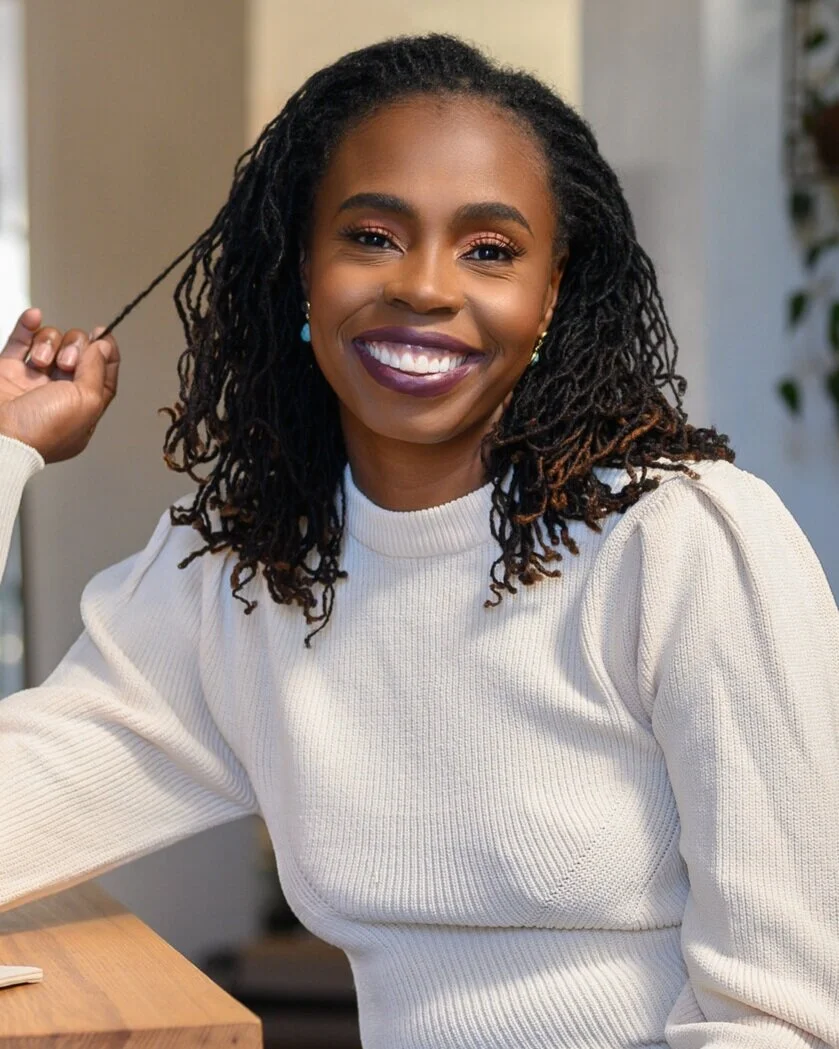
Hey there I’m Naseema
My dream is for everyone to know that financial independence is attainable with a little intentionality. Learn how I can help you finally break the cycle of living paycheck to paycheck.
Join the Facebook Community
Join the Financially Intentional community and get access to resources to guide you on the path to Financial Freedom.
Watch these Videos To Learn How to…
Keep Listening
Here are some more episodes you may enjoy…


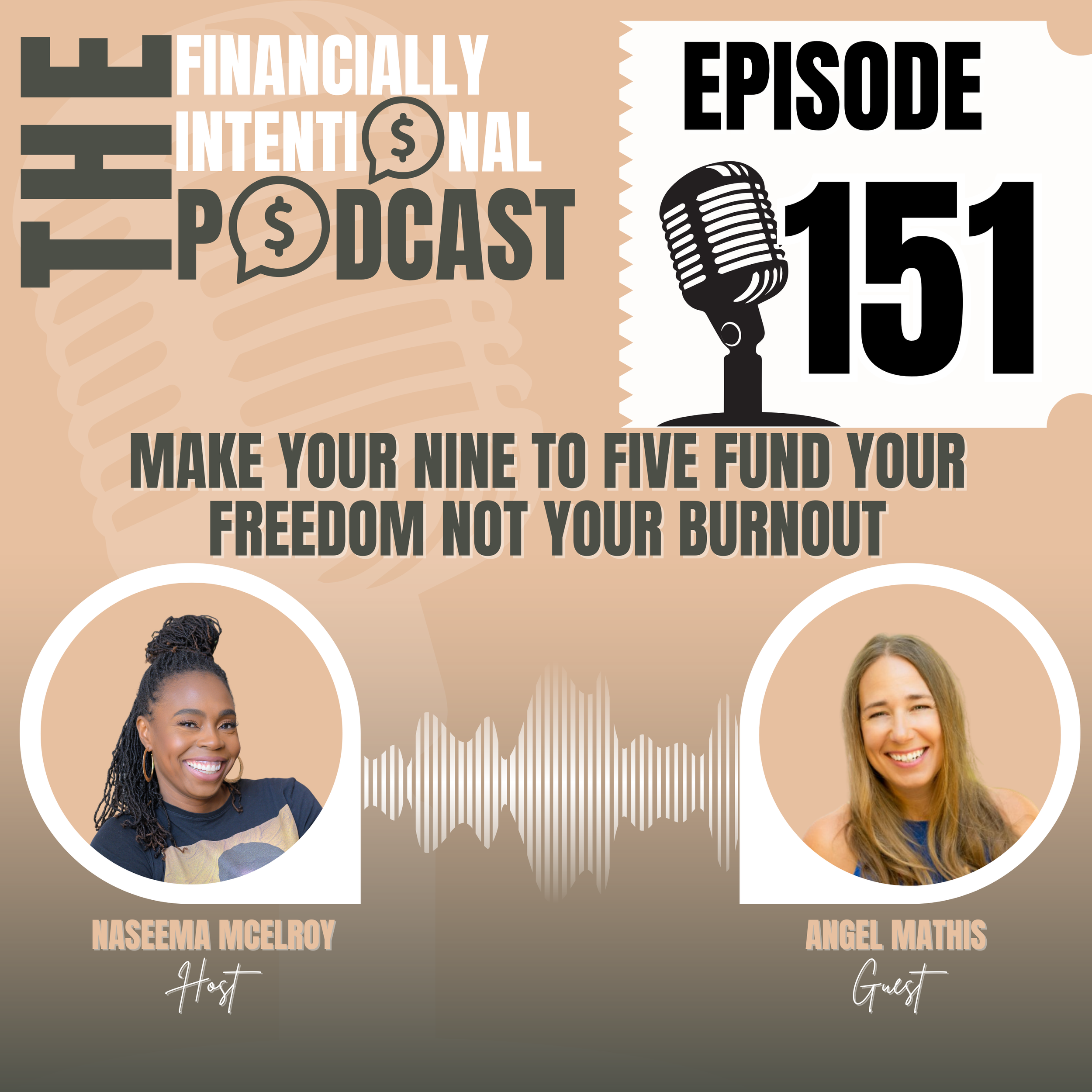



We break down what’s really happening with hormones, metabolism, and aging in a simple way, including why perimenopause can sneak up on you.