
When Success Is Literally Making You Sick and How To Redefine It - Episode 152
In today's episode I sit down with coach and author Amina AlTai to talk about what she calls the Ambition Trap and how it can push us toward stress and burnout instead of a life we actually enjoy. We share our own stories of chasing “perfect” success in work and money, getting sick and tired, and then slowly learning to listen to our bodies, heal old hurts, and make choices that fit who we really are. Amina explains how big goals, toxic work culture, and doing everything alone can hurt women and especially women of color, and we talk about building community, setting kind boundaries, and creating careers and businesses that support both our health and our wallets.
About our guest:
Amina AITai (pronounced AH-MIN-UH) is an executive coach and leadership trainer, proud immigrant and chronic illness advocate. A leading coach to notable leaders, executives, and founders—Amina's mastery is in connecting us to our brilliance and teaching us to live and lead from it each day. She is the bestselling author of The Ambition Trap: How to Stop Chasing and Start Living, with Penguin/The Open Field.
Amina has partnered with progressive companies such as Google, Meta, Roku, Snap, Outdoor Voices, NYU and HUGE. She's an Entrepreneur Magazine expert-in-residence, a Forbes contributor and was named one of Success Magazine’s Women of Influence. Additionally, she's been featured in goop, Well+Good, The New York Times, Yahoo, NBC, Adam Grant’s Next Big Idea Club and more.
Amina AlTai's Website
The Ambiion Trap by Amina AlTai
—-
Grab your spot in my free Financial CPR class and learn the simple steps I used to go from paycheck to paycheck to my first million.
Please join me here, and follow me on social media, Instagram, and Facebook.
Need help getting started on your path to financial freedom? Start Here
Join the Financially Intentional Community
Oh and please subscribe and leave a review on whatever app you're using to stream this podcast.
Get my book Smart Money
Subscribe & Review
Love this episode? Please subscribe and leave a review on your favorite podcast platform.
TRANSCRIPT:
Naseema: [00:00:00] Amina Altai is an executive coach and leadership trainer, proud immigrant and chronic illness advocate, a leading coach to notable leaders, executives, and founders. Amina's Mastery is in connecting us to our brilliance and teaching us to live and lead from it each day.
She's the bestselling author of the Ambition Trap, how to stop chasing and start living. Amina has partnered with progressive companies such as Google Meta, Roku, snap, outdoor Voices, NYU, and Huge. She's an entrepreneur magazine expert in residence, a Forbes contributor and was named one of Success Magazine's, women of Influence.
Naseema: All right. My financially intentional people. I'm so excited to be joined by Amina Alai, right? Did I say that right?
Amina AlTai: You got it. Thank you so much.
Naseema: Amina. I love it. I love it [00:01:00] Because I'm, from Oakland, I'll be like, Amina, I know so many Amina, but
Amina AlTai: There are,
Naseema: good, I know a good Amina too, so I love your name and I love what you're doing, so I'm gonna, it's just. A beast, like she is the go-to person for these big companies like Meta.
And i'm honored that she graced us with her presence. My little old community
Amina AlTai: Are you kidding? Is amazing. And first of all, it is so hard to build a community. So anybody that has built anything, I'm like, you all are amazing. Like I'm an entrepreneur too. It's I know this is no joke. You're amazing.
Naseema: Thank you. I appreciate it. But that's what we're gonna be talking about. We're gonna be talking about the Ambition Trap and which is your book, and then we're gonna be talking about this toxic individualism that you know is going on right now. But let's just hop into it. Let's talk about your background and just how you got started in this space.
Amina AlTai: Yes, [00:02:00] so I actually started my career in marketing and brand management, and this is my origin story of how I actually came to write a book on ambition. I am the child of immigrants and was told like, keep your head down. Work really hard and when you do that, you'll have all the things that you want in your life.
And when I first started my career, I just kept my head down. I worked really hard first one in last one out. I'm sure so many people listening can relate to that vibe. And I got really sick. And I eventually burned out and I got a call from my doctor one Friday when I was headed into work and she said, if you don't go to the hospital instead of going to work, you will be days away from multiple organ failure.
I know it was a shocking moment, especially at 28 or twenty seven, twenty eight to get a call like that. And that was what I call my stop moment because it literally was like, your relationship to success and ambition is quite literally killing you. You have to choose another way.
And so from there I went on to, just amass all of these tools to feel better in my own life. So I went to coaching, I went to nutrition school. I studied [00:03:00] mindfulness, like all these things just to feel better. And then fast forward a couple of years after taking a few other marketing roles, I realized this is the work that I was supposed to be doing.
And I jumped off the cliff, I became an executive coach, and was working with all these other really ambitious folks and then was seeing the same patterns mirrored back. And so eventually that's how we came to the book.
Naseema: I love that. And I was definitely on that trajectory as well. Taught like you just have to go to the best schools, get the best job and I was definitely like the pursuit of degrees, then climbing the corporate ladder and then realizing this is not for me, and then have to back into nursing.
And so I definitely understand that path.
Amina AlTai: I have so much respect for nurses. I come from a long line of nurses, actually. My mom, my grandma um, yeah, you all are amazing. Truly.
Naseema: Thank you. Thank you. I like to think so too, but on the other side I'm just like technically I'm supposed to be like a hospital, CEO or [00:04:00] CEO of a health insurance company by now. And just the thought of that makes me wanna gag. But also societally, people are just like why wouldn't you wanna do that?
Because of what we're about to talk about. So let's talk about it. Let's talk about this ambition trap.
Amina AlTai: Yeah, let's go there. So I wrote this book called The Ambition Trap because I was highly ambitious, had all of these other really highly ambitious clients that were struggling with it too. Actually, it all came to this boiling point in 2020 at the height of the social justice uprisings. I ended up coaching a handful of celebrity, very well-known girl bosses who were canceled.
And my book isn't an analysis of cancel culture, but I saw all of these same patterns mirrored back and I was like, okay, we have to pull this apart. So I ended up creating this whole framework on ambition. And what I was seeing was like, twofold, maybe. Threefold, right? So the first piece was the stories that we tell ourselves, right?
About what success has to look like, what our careers have to look like, the bias that we internalize. But the second piece [00:05:00] is the system that we're operating in, right? It is bias, it is problematic. It does uplift some folks and push others down, right? Then we can weaponize that against ourselves. And so the ambition trap is feeling like we're caught between this space of feeling like we're both too much and not enough because this system that we're in celebrates some folks' ambition and sees others as a detractor.
Just to drop a little data here, men and women enter the workforce with the same levels of ambition. Men, it's seen as wonderful. We celebrate it. Women, it's seen as a detractor. We're penalized for it. Ambitious women that negotiate their salaries are seen as difficult, and then women of color are actually the most ambitious cohort in corporate America and experience the most headwinds.
And so we get this mixed message of take up space, but not too much, speak truth to power, but not too loud. And then we end up burning out and hurting ourselves in the process.
Naseema: I can relate to all of those things. And you would even think, like even in female dominated workforce like nursing that, that [00:06:00] wouldn't happen, but it's the same thing because it's still under the societal context, right? That if you're too assertive and just out there, then you know, oh, you're looked at as like a threat.
And instead of just saying oh no, I'm an advocate, I'm like doing all these things, that would be for a man, really celebrated. It's really oh no, you're not professional. It always comes up in evaluations. It's always like tone yourself down. I've heard all of these things, so is it really just like resonating with me?
Amina AlTai: yes. The tone policing is so real.
Naseema: Yes.
Amina AlTai: I have to share this one story because I think it's so compelling and interesting. So it's about the ambition penalty, right? The idea that not all of us are allowed the same levels of ambition. And so this Columbia Business School professor decides they're gonna do like a little study on this, and so they give a case study to their classes, and half the class gets a case study on this woman named Heidi, and she works in venture capital, and they're supposed to evaluate her, and they're like, oh, Heidi has had an illustrious career.
She's awesome. She's not very likable, [00:07:00] she's not a team player, not great leadership. Now the other half of the classes evaluates a case study of a man named Howard, and Howard also works in venture capital and they're like, oh, also had a great career, but amazing leader. We love him. Such a great team player.
All of these things, right? But jokes on those students because it turns out that they're the same person that , this professor actually swapped the name to underscore gender bias around ambition. And I feel like that is the essence of it. Everything that you were just saying.
Naseema: Yeah, I'm, I kinda already knew what that outcome was, because that, that is just how it is. That's just how it is. Even being a minority in the same thing. Like those studies that have been done similar to that, where they swap out a name, on a resume, it's the exact same resume, but the resume will get a hundred times more positive, receptive responses, just because of just a name swap and
Amina AlTai: Exactly.
Naseema: So frustrating, but like it, but then like, how do we navigate in these spaces successfully?
Amina AlTai: Yeah, I [00:08:00] think some I don't wanna download the work on our individual shoulders only because I think that's problematic. It's like we need to stop telling women and other historically excluded people to fix themselves and instead fix the places where we're working, right? But I do think that looking at our side of the street can be really helpful and can shift how we experience things.
And in the book I talk about ambition is neutral and natural. It's simply a desire for growth, a wish for more life, which is inherent in every living thing on the planet, right? From plants to humans. And so ambition can't be right for some people and wrong for others. But where we get a little tripped up, where it gets a little wonky, where our experience starts to not feel good is where that ambition is coming from.
So there's two types. It can be painful ambition, which is driven by our core wounds, or there's purposeful ambition that's connected to our truth. And so if we are feeling like we're bumping up against a lot of headwinds and barriers and listen, so much of that is systemic, but where are the places that we could feel different in our own life?
I would look at that because there's five core wounds, rejection, [00:09:00] abandonment, humiliation, betrayal, and injustice, and each of us has 1, 2, 3, or all five of those wounds. Then we can spend time unpacking that, but if our ambitions built upon that, it's gonna feel really wobbly. So that does become a good place to start.
Naseema: Yeah, I was, you were listing those off. I was like yep.
Amina AlTai: I have three. So anybody listening that's oh my gosh, what if you have more than one? It is typical. Don't you worry?
Naseema: Let's spend some time unpacking that, but I also like wanna expand on what you were just saying about. If your ambition is built on any of those things, it's gonna feel like wobbly. And I definitely understand that feeling because to me it presents as like a feeling of not belonging ever,
Amina AlTai: Yeah.
Naseema: And I don't know if other people feel that. And like for me, what I leaned into, instead of feeling like I had to make myself belong, it was less like, okay, use this for now to get to where I wanna be. And that's like [00:10:00] financial independence, right? That is my motivation to be financially free so I don't have to do all those things.
And also to put my daughters in a position where they get to opt out of the bullshit like this,
Amina AlTai: some amazing Mama bear vibes there to put your daughters in a position so they can opt out.
That's amazing. Yeah.
I love what you said about the it feels like a sense of not belonging. I think I relate to that. I never heard anybody say it that way, but I feel like that's true for me too. So is it helpful if I go a little deeper into the core wounds?
Yeah. Okay, great. So for each wound, we also have a corresponding mask. And this is where things get interesting. So if you have a dependence mask, or sorry, an abandonment wound, the mask you wear is dependent. So abandonment is if you felt abandoned in childhood, then the mask of dependence shows up as being overly reliant on others.
And sometimes even for my really independent clients, it'll show up in small ways of here's this one place where I have some learned helplessness and I'm overly dependent. Then [00:11:00] the next wound is rejection. That's one of mine, and that's where we felt rejected as children. And then the mask will wear is avoidance or withdrawal.
So we will avoid throwing our hat in the ring. We'll withdraw maybe from a tough conversation, avoid conflict, stuff like that because we're so worried about being rejected again. The next wound we have is humiliation. So that's when we felt like our caregivers were embarrassed of us in some way.
So the mask will wear is masochism or martyrdom. I see this a lot with my clients where it's let me carry the burden. Let me take the hit, let me do all the work, right? Because on some level we don't feel worthy. I got one of those too.
The next one is Betrayal. So that's when we felt like our caregivers didn't live up to expectations.
The mask, but wear is control. It's, again, shows up with a lot of my clients where we need to dot every, I cross every T 'cause we're so worried that someone's gonna let us down again.
Then the last one is injustice, and that's when we felt like our individuality and childhood was restrained in whatever way that looks like.
So the mask will wear is rigidity [00:12:00] or perfectionism, basically an intolerance to live in an imperfect world. And like I said before, you can imagine that if our ambitions coming from that place, it's gonna be a little dysfunctional. And clearest, simplest example, like me having a rejection wound, right?
And not throwing my hat in the ring for all of these things for so much of my career and then putting out a book was like such a salve and an antidote because I was like, okay, if I wanna heal the rejection room, there's no better way to do it. 'cause you get knocked down 99 times than have to get back up a hundred.
And so there are ways that we can work with these and not be coming from that place of pain.
Naseema: No, I love how you offered that solution too for that. But when you work with your clients, like around these wounds, and I'm particularly thinking about like the cancel culture that happened around like 20. 'cause there was a lot of that, like what tools do you give people to work through those things.
Amina AlTai: Yeah, I really, such a great question. I really think that awareness is 80% of it, because the [00:13:00] minute you name it, then you start to see it everywhere and the minute you start to see it and catch it, you can choose a different way. Again, going back to that rejection wound, if you know that you avoid you avoid conflict, you avoid hard conversations.
The minute you feel that tendency of okay, here's where I would bow out. Day in the conversation, let me just go toward the hard thing. That's where our life starts to shift really dramatically. But for so many of my clients, it's like the awareness of it already. Just naming it really shifts things very dramatically.
And then just moment to moment, choosing a different way.
Naseema: When you were talking about like the cancel culture that happened, one of the things that came to mind is I wonder why. These people got caught up in that culture. Was it because in their ambition they lost a part of that integrity that they had in chasing what they thought they needed? Like I feel like once people get to a certain.
Level either professionally or [00:14:00] just like success wise, that it feels like they have to conform to what's acceptable. So it's just you, I feel like you have to lose a part of your identity that might tie you to a community or a standard that is not. What's I'm trying to say politically correctly.
Amina AlTai: I really get what you're saying.
Naseema: Yeah.
Amina AlTai: So I think it's a bit of a both and because what I was seeing with my clients, and listen, this is, not the hugest study, right? But what I was seeing with my clients is that they had these stories about themselves and ambition, and then they were operating in this broken system.
So many of them were venture backed. And so the venture capitalists were saying, Hey. We want you to grow really fast, right? We want you to grow at these unsustainable paces and to grow at those unsustainable paces. They then had to cut essential corners and because they're one of the few for right, women get less than 2.7% of VC funding.
There's not a lot of women in the room, let alone women of color. And so [00:15:00] because they're one of the few in the room, they're like we wanna stay in the room. Okay, so we'll do what you say. We'll cut that corner. And I think that they're operating in a system that is somewhat dehumanizing and then that gets perpetuated.
And somebody was telling me the story of they were fundraising and they were like literally not even a week postpartum.
Naseema: That
Amina AlTai: That's so dehumanizing. But like things are falling apart and they felt like they had to get in there and save the business, right?
And so I think that there is a lot of, being asked to cut these corners operating in a dehumanizing system that dehumanizes you, and then you perpetuate the dehumanization.
Naseema: Oh my God. That made me wanna cry because I know how that feels and that pressure and like you're in one of the most vulnerable states, and that enough is. Set up to push you over the edge to totally lose your mind. And you see it like postpartum, like women have the highest risk factor of having a baby is depression and major depression in a way.
And oh my God, that just made me really sad. But I [00:16:00] understand that because that's who you're expected to be because again, you're trying to adapt to the system that was never meant for you.
Amina AlTai: Exactly never meant for you and doesn't wanna continue to make space for you. So you're fighting to stay in that space, right? So then you're going in a week postpartum, like when exactly what you said, like you're in such a vulnerable state and probably don't feel like you have other choices.
Naseema: Yeah and it just seems like there's not a push. For that to change. We see, more efforts like that in the workforce, but in these venture capital spaces, in these entrepreneurial spaces, there's not a lot of room for that. It's either you hop on this boat, this train, and then you go along with the flow of how, to be successful, you do these things.
Or you just get left behind and I'm just like, man, it again is it's hard for me to imagine trying to chase that instead, or trying to even fix those systems instead. I'm just like, let me [00:17:00] fi focus on my financial independence so I can opt out of all that stuff because I don't wanna do that.
And it needs to change. But to be those change makers seems so daunting and so overwhelming, I can't even imagine.
Amina AlTai: Yeah, I'm with you. I think the same thing too. Somebody once said to me, there are people that work in the system. There's people that work on the system. And what I would add to that is are the helpers that help those people that work in and on the system? And I think you and I are those helpers and they need like safe spaces.
They need places where they can grow. They know need places where they have a sense of belonging that aren't in those spaces. And yeah. I think it's super important that we have spaces like you and I are creating to, to nurture those folks that have to go in there.
Naseema: Yeah, I'll definitely be a helper. 'cause I'm just like,
Amina AlTai: Yeah, I don't feel put out for it anymore either. But I think, honestly that was my origin story, right? Is like I had dehumanized myself so much to fit in a space not designed for me that my body was literally like, we're not gonna survive this. I literally used to joke, I was like, going to work, felt like pulling on a, putting on a [00:18:00] life-sized callus to protect me from the harm, right?
And so I feel unavailable to go back into those systems and I have so much privilege now that I have my own company and I don't have to, but there are people that have to, and yeah, like I'm here to help those people.
Naseema: And in your work, how do you help people that are in that space?
Amina AlTai: Yeah, I, so this is gonna sound probably a little woo, but I do feel, somebody recently asked me like, Amina, you're out here helping all the women of color, but like, why don't you like educate the men to show up as better allies and show up differently in the workplace? And I was like, bet.
Right? That's super important work. And also what I really feel like my job is to create safe spaces and brave spaces in places where people are unconditionally loved outside of the workplace, where they can explore their purpose. 'cause they don't have that elsewhere. And so I think that's some of the most important work to do because if somebody doesn't get that space and then their beautiful sacred contribution fails to exist 'cause they didn't get that space, that is, that to me is a crime.
[00:19:00] And so I feel like this work is so important in creating these safe spaces is so important. And my work as an executive coach really is helping people align their work and their purpose. And they don't have to be the same thing, but for the people that I work with, they want them to be aligned. And who are you?
Who did you come to the planet to be and how do we create vehicles that are an expression of that and that honor your humanity, that honor your wellbeing, that center, those things not detract from them.
Naseema: I could imagine it's like. Being able to have a space where you're heard and recognized so that you don't feel like gaslit and am I tripping like in these spaces so that you can really work in your genius. That's how I imagine it. Like you have a space to come back to and be okay, this is who I truly am.
These are my intentions. This is how you know, this is, the purpose of my work.
Amina AlTai: Okay.
Naseema: Because I just feel in that space, it's just so many things that can tear at you and break you down that you need to have something [00:20:00] to come back to so that you can still excel in what you're doing. So that's how I imagine it.
Like I love
that.
Amina AlTai: I have this program and I was coaching people in it. It's a group program and somebody was asking about their zone of genius, right? So a lot of the work we do is building around your zone of genius. And they were like what if you have no idea what your zone of genius is or what if you don't have one?
And I was like there's no way. Like we each have one. But so many of us operate in spaces where all of our skills have been in service of somebody else's genius. So we have no idea what we're amazing at. And I think. That's a crime. I think that we change the world by us each being in our zone of genius and moving things forward together, like we have to democratize that idea versus us all being in service of one toxic visionary that everybody's serving.
Naseema: That's a whole word. That is a whole word. Like I love that. I love that. And like you said, ain't no way, but I know more people than I don't, that just feel like they just don't have a lane. Like they are just put here to just be [00:21:00] worker bees and just go along with the flow. And I just feel like. There's so much potential out there, but nobody tells us that number one, that we're worthy of it and what that can look like and like how to get there , and again, a lot of it I think is intentional because if everybody was super ambitious, who's gonna do all the work?
Amina AlTai: Yeah, exactly. And people have notions of who they want in power, and who they can control. And so certain people get suppressed for sure.
Naseema: Yeah. The ambition trap in itself, like what is the major takeaway that you want the readers to get from the book?
Amina AlTai: A couple of things. So first and foremost is my invitation with the work is for all of us to come out of that painful relationship with ambition that's driven by our core wounds, and instead to come into purposeful ambition that's connected to our truth and to our purpose. We move really differently when we do, right?
It's like we're not moving with urgency. Culture, we're more [00:22:00] collaborative versus individualistic. We focus on using our gifts to help the world. We're not instrumentalizing our minds and bodies we're taking care of ourselves. It's just a really different paradigm. So that, and when I was socializing the conversation around ambition as I was writing the book.
People fell into two camps. And the first camp was, I'm highly ambitious, but that ambition has been expensive and so it's costing my health and my relationships and I don't want that anymore. And then the other camp was, I've only seen a toxic version of ambition, so I reject it altogether and I don't want us to fall into that binary.
A third option exists, which is what I'm talking about with purposeful ambition. And then the last thing that I'll say that I really want people to take away is that ambition. the next thing that I wanna say is that ambition moves in cycles.
So we think we're taught basically that it's more for more's sake all the time, right? This never ending upward trajectory. Always moving the goalpost. But I actually think that, again, that upholds a toxic and oppressive systems and I really think that we move much more like nature does. So we move in [00:23:00] cycles.
Where, there's a season for growth and there's a season for rest. So maybe in this season you wanna grow, you're feeling really ambitious. And so you have this seedling of desire to grow and you take care of your inner and outer environment. And because you do, you have this beautiful growth period, but the seasons always change, right?
And so then we wind down and we go back underground and we rest there until the ground's nurtured enough that we can rise again. And I think that's such an. Important shift around ambition. And then the last thing I'll say is that ambition is our for the taking. And the true trap is believing that our ambitious dreams as women and other historically excluded people are not possible or refuse to let any of us buy into that.
Naseema: I love that. I love that. And that's what I. So I love presenting people on this podcast and on my platform, and it's really just about showing people what's possible, because I think day to day we have so many messages that. Of the things that we can't do or who we can't be. Like we have to have these messages of what's [00:24:00] possible for us.
Your work also reminds me of some work I've recently done, like around like jean keys and like your potential, right? Yeah. And it's we are already enough and we have everything that, we need. We just have to understand. Those components of what our strengths are and move in those strengths instead of trying to mold into other people's expectations of us, our society's expectations of us.
And that's when you'll really see the growth. So the way that you described that your book is oh yeah, that is totally aligned.
Amina AlTai: Yeah. I'm so glad that you brought that up because all of this work really is just about coming home to yourself because we're born these perfect whole humans with all these brilliant ideas, knowing our purpose, all the things, and then life happens, and all these ideas get put on us, and then we just spend a lot of our lives peeling off the layers to get back to the truth of who we are.
Naseema: A hundred percent. A hundred percent. And then I wanted to talk about in [00:25:00] this community and like how community is super important in that and how we're shifting out of community. And again, I feel like it's super intentional because first of all, I feel like individualism makes you a better consumer, right?
Because if you're not, because if you're not sharing in the things, then like I can just look at in the mom economy, right? Like there used to be more community around like childcare, but now childcare is like this thing everybody has. To pay for. And so I'm spending $4,000 a month on childcare, right?
Like there used to be shared resources and so without shared resources, now everybody has to buy the things why do we everybody need a lawnmower on the block when you only use it like once a month? Things like that. But just like the community and just the family structures I feel like are under attack as well.
But yeah. I wanna hear your thoughts about this [00:26:00] individualism that we're seeing.
Amina AlTai: Yeah, I love what you're saying, right? The individualism makes you a better consumer, and I think that's such a brilliant way to put it. And I think it's absolutely true, and I think that individualism, especially in the work context, I refer to as toxic individualism because it is, right? It's like this idea that we have to elbow everybody out of the way to get where we wanna go.
And we hurt ourselves and we hurt others. But I think so much of it is perpetuated by scarcity, right? We're told there's space for only one woman, one woman of color, one queer person, right? And so we're like, okay, then I gotta, fight my way and I've gotta do this as an individual. I happened to come from two collectivist cultures and, was taught so much about the community element and like how much you really need to lean into taking care of family.
And so that was always like really central to, to me growing up. And I think I lost a lot of that in the beginning of my work Jo Journey, being like, okay, I've gotta race to the top. I'm here by myself. But I actually think a race to the top by ourselves is actually a race to the bottom. And how we create.
These more healthy cultures is us being in that cyclical nature of [00:27:00] ambition together, right? Collaborating and that's how we create these cultures of care, that center purpose and wellbeing versus the scarcity driven only space for one elbow people outta the way, like we're stronger together if we unite around our gifts and our voices, right?
That's how we're gonna drive change.
Naseema: Yeah, that's what I'm saying, there's so much change that's made in that those collective actions. Yeah, I've seen it in the space and I'm just so far from that world that like these examples are like really old examples, but it definitely happens where it's like you go to I just remember like being in the corporate space and like seeing that one black woman and like wanting to be like her and then she's the one that tears me down.
Is the one that talks about me. So I don't get that role. And I'm just like, man because there is that scarcity, there's only room for one of us here and it's gonna be me. Yeah.
Amina AlTai: And I think also, unfortunately, so many. [00:28:00] Historically excluded people. We what? We internalize that bias and then we weaponize it against people that look like us, right? Of so you have to operate this way. This is professional, this is not professional. And we dehumanize ourselves in the process, right?
And then we dehumanize others. Going back to that, girl boss example.
Naseema: This is what's professional and this isn't what professional is that to me, is every time It's just if you don't look like this, if you don't present like this, if you don't speak like this, then automatically you're. Not right for this environment or the term that I used to hear a lot was, oh, you need to work on your soft skills.
Amina AlTai: I'm shaking my head over here for people that can't say Yeah. Yeah. So much cloaked in that language, right? So much is cloaked in that language.
Naseema: It is a lot. It
is a lot. And I just. Again, I just gave [00:29:00] up like hope on like that any of that stuff will change and I'm just like, yep. What works for me is, making sure I create a lane where I don't have to do that. And I don't have to buy into that and then show other people that's possible and that's my community.
Those people that want to escape that.
Amina AlTai: Exactly because it's so toxic. And I recently gave, this is maybe six months ago, I gave a talk and it was about the like what does professionalism actually mean? And like across the generations, and there was this one study that was done and professionalism is such an amorphous term and it's really Eurocentric, right?
All of these standards of like how we expect people to show up. But when you look at the data over the years, it wasn't too long ago, it was in like the 2000 tens or early two thousands when we valued Slimness. As professionalism and like I was looking at that data and I was like literally throwing up in my mouth of oh wow, all of this is so ableist, so Eurocentric.
And now that we have five different generations in the workplace, a lot of this is shifting [00:30:00] because generationally people show up differently. And so I think people are adapting a little bit, but there's a lot of harm cloaked in the language of professionalism.
Naseema: We still have the conversation around hair, and it's freaking crazy. You would think that wouldn't be a thing, but I think Michelle Obama just talked about it like. Of course she knew when she went to apply for, her law internships that she wasn't gonna come in braids, because she knew it wasn't gonna be acceptable.
And it's a whole lot of things that the code switching that we have to do just to make sure that we're taken seriously. Because once one little thing is critique. Then people stop listening.
Amina AlTai: 100%.
100%. And then there's also, there's that piece, right? And then, you know what I've also been navigating with some clients in the workplace too, is the appropriation now, right? So for so long we were told that certain things were unprofessional. Like [00:31:00] black women in their nails, right? And now you see.
Nail culture, nail art taking off, and that's now acceptable because there's an adjacency to whiteness. And so it's really interesting to watch this unfold right now and the level of appropriation and what we're saying is acceptable because of who's doing it.
Naseema: I think and we see it, in social media a lot too. All of those things that get like these people, they have these massive brand deals and this huge success is usually something that is appropriated from another culture and popularized and sometimes just. Blatant just stealing.
Amina AlTai: Yeah.
Naseema: Yes.
Amina AlTai: Yeah.
Naseema: And now it's popularized and as to where like those original content creators, are shunned or looked at a certain way. These people are monetarily and heavily monetarily rewarded for the same things. And even though it's technically not at the professional space, I feel like, [00:32:00] that's shifting into what is.
I don't know. Popular culture.
Amina AlTai: Yeah. Okay.
Naseema: Yeah. Yeah.
Amina AlTai: But again, this comes back to if the workplace is so disempowering, if the workplace is so extractive, if the workplace is saying, Hey, this isn't professional, but will let it slide if this group of people does it right? Like the way to become empowered is to create spaces of our own, right?
So everything that you are teaching and showing people what's possible through entrepreneurship is so important because those are the spaces where we get to be ourselves.
Naseema: Yeah. And that in itself. Is the goal because like for me, it's always been a dream to be able to show up exactly as I am and not have to worry about being taken seriously, not have to worry about getting paid, not have to worry about, just the judgment or the tear down and all of that things are like being attacked and it [00:33:00] still happens.
It happens all the time. But I think the thing that has helped me up is my community is like creating that lane to where. No. People are like wrong. Stay in that because this is what we need. This is what is helping us. We see ourselves in you, and only because you can show up exactly how you are.
Amina AlTai: Yes. I love this so much. I have a fun story to tell. So I have curly hair, and when I first started my career, first boss was like, you cannot come to work with cur. Your hair looks unprofessional. Like you have to blow out your hair. Long story short I straighten my hair these days because I feel like I lose more hair with curly hair and with chronic illness stuff.
I've had a whole hair loss journey. So that's a whole separate
thing,
Naseema: whole, yes.
Amina AlTai: but. But recently I was going to this interview and it was for, they literally said you have to dress in this particular way. And my friend came over and I was like, I literally have no clothes that speak to this because I've spent like the last decade as an executive coach and like really in my own business just being fully expressed and being myself.
I was like, I [00:34:00] don't have any of those clothes that say fit into the box anymore. And I was like, this is such an amazing moment and a full circle moment because I can't, I literally don't have the outfit to fit in your box. I can't go.
Naseema: No, I love that because I love the reframe because it is just you could be like, oh my God. Like I don't, and I can't, and it's just I don't, and I don't have to anymore. Like I love that. I love that.
Amina AlTai: I was like, I love that. I don't own a plain white button down anymore.
Naseema: Ew, what is that?
Amina AlTai: Yeah.
Naseema: I know this has been like really amazing and I just feel like especially right now and in the times, like people need to hear these things and understand especially. People right now, I just think about all the black women who were excelling in corporate spaces and now have been laid off or, are like trying to redefine who they are and what value they [00:35:00] bring.
I really feel like these messages are super important, super timely. So I really hope that people are able to pick up the book, are able to. Hear their worth through our conversation and yeah, I just want you to speak to those people and where they're at, and then also offer up like how people can work with you and , get your book and all of those things.
Amina AlTai: Thank you so much and thank you for the work that you are doing to show people what is possible, because I think that this is. Exactly it, right? We need people that expand our belief systems of what's possible. And we've seen the data. We know that black women are disproportionately affected by layoffs right now.
And I really do feel like entrepreneurship and building our own businesses is how we take our power back, right? So then we're never in a position again where somebody just decides that we are disposable. And it's also where I think we get to rebuild our confidence because it is such a confidence hit after you're laid off, right?
Even if you've been doing this extraordinary job and then somebody says, Hey, no more. It takes so long for us to build [00:36:00] ourselves back up. And so surround yourself with amazing community members that see your zone of genius that are just so inspired by your light and the value that you bring because you are so inspiring and you do have value, you do have light, you do have a zone of genius, and the world needs it.
And so how can we lean into that more so that you're super empowered? And I do think, again. Last soapbox moment. But entrepreneurship is so empowering because when we have more resources, we can resource other people too. And so like you are doing, supporting your daughters or your children when we have more resources, we can direct more money to the causes that we deeply believe in, we can shift our own reality. Like really, that's where the game changes. And so like you, I'm a big proponent of building our own dreams and then we're empowered and we have agency. so if you'd like to learn more about me, you can on my website, amina altai.com.
I'm sure the spelling will be in the show notes and on Instagram. Same thing at Amina altai. The book is called The Ambition Trap, how to Stop Chasing and Start Living. And you can find that everywhere you buy [00:37:00] books. And yeah, and if you're interested in coaching, you can learn more on my website.
Naseema: I love that. Thank you. Thank you so much, Amina.
Amina AlTai: Oh my gosh. Thank you for having me. You are incredible. I know this community is absolutely incredible and I was so grateful to be here. This was an incredible convo.
Naseema: Oh, I'm honored. I'm personally honored, so thank you.
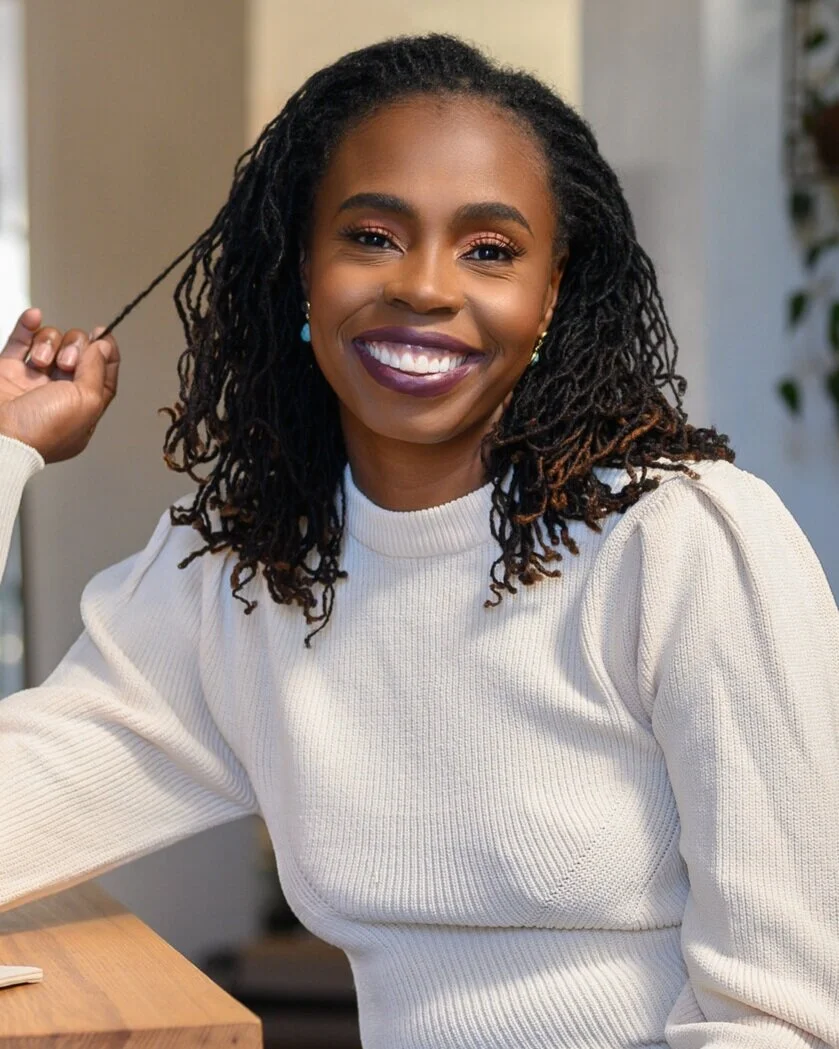
Hey there I’m Naseema
My dream is for everyone to know that financial independence is attainable with a little intentionality. Learn how I can help you finally break the cycle of living paycheck to paycheck.
Join the Facebook Community
Join the Financially Intentional community and get access to resources to guide you on the path to Financial Freedom.
Watch these Videos To Learn How to…
Keep Listening
Here are some more episodes you may enjoy…







We break down what’s really happening with hormones, metabolism, and aging in a simple way, including why perimenopause can sneak up on you.