Stop Letting Tax Pros Confuse You And Take Back Control - Episode 156
In today's episode, I’m joined by tax expert Hannah Cole from Sunlight Tax to make self employed taxes feel way less scary and way more doable, so you can stop missing write offs and stop overpaying. We walk through simple end of year moves like tax credits that are expiring soon, plus how an HSA can be a powerful savings tool and how SEP IRA vs solo 401k rules work as your business grows (including why an S corp change can affect your setup). Then we get into one of my favorite topics, how a Roth IRA for your kid can work when they have real earned income, and what “reasonable pay” really means so you stay on the right side of the IRS
About our guest:
Hannah Cole is a tax expert who specializes in working with self-employed people, especially creative and mission-driven ones. A long-time working artist herself, she’s helped tens of thousands of self-employed people skill up with accessible tax and money education, through her Money Bootcamp program, tax workshops from Florida to Alaska, and on the Sunlight Tax podcast. Her forthcoming book, Taxes for Humans: Simplify Your Taxes and Change the World When You’re Self-Employed, is the most funny and empowering tax guide you’ll ever read. Hannah is the founder of Sunlight Tax.
Sunlight Tax
—-
Grab your spot in my free Financial CPR class and learn the simple steps I used to go from paycheck to paycheck to my first million.
Please join me here, and follow me on social media, Instagram, and Facebook.
Need help getting started on your path to financial freedom? Start Here
Join the Financially Intentional Community
Oh and please subscribe and leave a review on whatever app you're using to stream this podcast.
Get my book Smart Money

Subscribe & Review
Love this episode? Please subscribe and leave a review on your favorite podcast platform.
TRANSCRIPT:
Naseema: [00:00:00] Hannah Nicole is a tax expert who specializes in working with self-employed people, especially creative and mission-driven. Ones a long time working artist herself. She helped tens of thousands of self-employed people skill up with her accessible tax and money education through her money Bootcamp program.
Tax workshops from Florida to Alaska and on the Sunlight Tax Podcast
forthcoming book, taxes for Humans, simplify Your Taxes and Change the World When You're Self-Employed is the most funny and empowering tax guide you'll ever read. Hannah is the founder of Sunlight Tax. What's up? My financially intentional people? We have a special guest with us today, Hannah Cole. And we're gonna be talking about the incredible world of taxes. You, you all, you guys' favorite subject. The scary part of finance is oftentimes the thing [00:01:00] that people love to avoid talking about, but it has gotten so many people into such heaps of trouble and I know so many people that are there.
So let's talk about it. Let's just get it out in front of everybody. But firsthand, I wanna welcome you to the podcast,
Hannah Cole: Thank you so much, CIMA. So great to be here.
Naseema: of course. And let's just talk about like, how did you get into this world of taxes?
Hannah Cole: It's completely bananas. I am an artist by training. It just shows that God has a sense of humor. Like I'm the furthest thing you could possibly be from an accountant, but I just, as a creative person, I, when I sat down with my dad's accountant for the first time as a, professional thinking, oh, I've gotta figure out bookkeeping and quarterly taxes and all that stuff.
He asked me when I was gonna get a real job. And I just, I found it so [00:02:00] insulting and I was so flooded with shame oh, oh, oh, you don't believe in me. It was just like such an awful experience that, frankly, my anger fueled me all the way back. It's a school for accounting.
So I went back to school and I at Brooklyn College and I studied, taxes to try and basically just help, like people like us, whether that is, creative people who are weirdos and don't fit in, or whether it is people who don't look like my dad's accountant, like you look at that financial world and you're like, wait, that seems like super white, straight male, 60 plus.
Just it doesn't look like me. Is this really stuff for me? And so I love what you do in bringing this to a really like wide array of people, but we all need to do our taxes. We all need to understand how it works. So I want it to feel more friendly.
Naseema: Yeah. I love that. And my friend Berna coined the phrase, the male, pale and stale world of finance.
Hannah Cole: Oh, that's so good. [00:03:00] That's so good.
Naseema: And yeah, like that is my whole goal is to normalize wealth conversations for people who are typically intentionally or unintentionally excluded. And taxes are one of those things that do bring a lot of fear and a lot of intimidation. And yes, we are approached oftentimes when we go for help for professionals, like with shameful messages and feeling intimidated.
And I know just as being a nurse and as a woman, just like talking to financial professionals, a lot of people don't invest. They don't do a lot of things just because of that sense of intimidation. So being able to be approachable and relatable seemed like really soft skills, but really are essential
for helping people with their finances.
Hannah Cole: Totally. And something that I tell my clients a lot is for [00:04:00] all of us who like, look at that male, pale, stale financial world, we think that doesn't look like me. I just wanna flip that thinking for a second and say there's a hole in that world shaped like you, like you belong there.
Naseema: Yeah.
Hannah Cole: Yeah.
Naseema: I love that. And I know your goal is to make taxes more approachable and simple, and it goes hand in hand with like how I think about just personal finance in general. It is like it does not have to be that hard. It can be simple, and it is just I feel like people have a vested interest in keeping people ignorant so that.
They can be the experts and they can get paid, and they can have people rely on them to do things. So let's talk about some of the common misconceptions that people have about taxes and how we can spin those messages on their heads so that, we can take away the angst behind taxes.
Hannah Cole: Love it. Let's do it.
Naseema: yeah,
Hannah Cole: I think first, and [00:05:00] you touched this, but like I wanna touch it a little more is there's a lot of gatekeeping around, especially the tax, finances in general, yes. But because somebody can make a buck off of you feeling like you need help. In the tax industry especially, it is an industry who's marketing, whether conscious, the big companies, it's conscious, the small companies, it's often not conscious 'cause they're just following the big companies.
But the methodology of the marketing is just to say oh my gosh, this is so complicated, so horrible, so complex and intimidating. And if you make a false move, you're going to jail. So you should just pay us and we'll do it for you. And I really just wanna engage that civic side of all of us and be like, you know what?
We all have to pay taxes. We all really need to be able to understand what's going on with our own money. It's a civic, right? Like it's something that we should be able to do. And these companies, they sometimes hide some of the stuff that we're entitled to, like the law that says that the lower [00:06:00] 70% of incomes you are entitled to a free tax return.
That is the law,
But you're not gonna find that on the messaging from big tax companies. So there's a lot of gate campaign on this info, and I just feel, I named my company Sunlight Tax after the lack of that, about clarity. Just let's all just have the info. So as a good place to start.
Naseema: So yes, people have access to free tax filing, but I think that the intimidation is still there because they're just like, yes, I can have access to this for free, but should I get a professional because I don't wanna mess up.
Hannah Cole: Yeah, no, absolutely. Yeah. And it doesn't feel easy to understand. So I think one of the key things that I end up teaching people a lot, that is a misconception, I've got two for you. One is that if you make any income that is 10 99 or freelance, so any income that you earn that is outside of a W2 [00:07:00] job as an employee, that makes you a small business under US tax law.
And for that reason, you get to take deductions. So any expense you incur for that income is deductible against the income. So if, for example, you have a little side project nights and weekends where you like. Go to estate sales and buy jewelry and vintage clothes and you sell it at shops at markets on Saturdays.
In the weekdays you're a nurse, right? That vintage, stuff that you do, you are allowed to take the deductions so you can get a mileage deduction for driving to those estate sales. You can, the cost of the materials that you buy at those estate sales, any advertising that you do, the laptop that you work on, or a portion of it, those are things that will get subtracted off the taxable income you make from selling.
So a lot of people, think, they don't realize that that 10 99 kind of triggers all this other stuff like those deductions, [00:08:00] but it does. So it's good to be aware of that.
Naseema: Okay. What's number two? I, I do have a follow up on that, but let's go to
Hannah Cole: please.
Naseema: I don't wanna get.
Hannah Cole: Yeah, no. So number two is I think a lot of people don't take enough advantage or maybe, don't even have the awareness that there are accounts.
That are tax smart accounts that really save you a lot of money on taxes. If, and the important thing is to use them. They're not just for rich people, people who are already rich and who have fancy full-time accountants, they're for you and me. They're for basically established by the US government to help taxpayers do things that are hard, save for things that are really big tickets.
So whether that is education expenses, healthcare expenses. And the big, big one is retirement expenses. So there are accounts for all of those three things that just when you put the money in, there's a tax [00:09:00] benefit that you get. And so you do all your investing. You know that money, those accounts are a container.
You put the money into the container, you still have to make investment decisions. They still need. You and your training on how to invest that money, but they're doing it inside this box that gives it, it's like a kryptonite box that like protects it from tax and helps it grow more. So just like using those, being aware that if you max them out to the dollar limit every year you are getting the full benefit that you can be.
I think that is a really big takeaway. Whether you have freelance income or you're fully an employee, you are entitled to those kinds of accounts.
Naseema: So speaking specifically about tax advantage accounts like your 401k, your 4 0 3 B,
Fi, your Roth IRAs, your 529s and HSA accounts? Correct.
Hannah Cole: Yes, I, yes, yes. Thank you for naming them.
Naseema: Thank you. So yeah, just to be clear, those are tax advantage accounts and [00:10:00] some of 'em are pre-tax, some of 'em are after tax, but I think, yes, those are very important vehicles to save on taxes and things that I advocate for, for everybody all the time.
So I love that you touch on that. What I was gonna ask is that as a business owner, I've been told that if I have my small business even though I do have a business, if it's not earning up to the standard deduction, that I should not even worry about taking deductions.
Hannah Cole: Oh, can I clarify something? There's a little misconception in that. Yeah. So a lot of people confuse itemized deductions with business deductions, but they're completely different things. Yeah. And it's a tragedy to lose out on your business deductions when you're completely entitled to them. So just to explain what an itemized deduction is.
Every US taxpayer gets an initial chunk of income [00:11:00] tax free. So you can earn a certain amount and you're not taxed on it at all. That's either a fixed amount, and that fixed amount is called the standard deduction,
Or you can take a variable amount. That variable amount is called itemized deductions.
Now, the standard deduction for 2025, which is, the taxes you'll be working on in 2026, the standard deduction for a single taxpayer is $15,750. If you're married, filing jointly 31,000 and change, that's the standard deduction. So you are only gonna itemize if you have itemized deductions that are greater than that number, right?
Because you get to take the bigger tax-free chunk, and that's what you want.
Itemized deductions, and this is what's the important part. They have nothing to do with business, nothing to do with it at all. What they are. What they are is medical expenses that exceed 7.5% of your adjusted gross income.
Kind of a mouthful, but high medical [00:12:00] expenses, charitable contributions mortgage interest, and state and local taxes including those that come outta your paycheck. So state and local taxes capped newly at $40,000. Those four things are itemized deductions. So if you add those four expenses in your life up and they equal more than $15,750 in 2025, and you're single, that's when you'll itemize.
So only about 9% of US taxpayers itemize. In other words, most of us don't. Accountants will say this phrase to people, Hey, you don't itemize. Don't worry about that stuff. But they think you know exactly what itemized deductions are. And a lot of people think itemized deductions are business deductions and they're not.
So you can hear that phrase, you don't itemize, don't worry about that stuff. And that can be true, but still get your business deductions.
Naseema: See now I'm not gonna throw anybody under the bus. 'cause maybe it was my [00:13:00] misconception that thought that they were the same thing, but
Hannah Cole: Oh no, it's not just you at all. It's not, it's not.
Naseema: I'm really trying to be nice, but yeah. Okay.
Hannah Cole: Yeah, no, I see it all the time where people, I see people throwing out their business receipts because they think they don't get them because they heard an accountant say, oh, you don't itemize, so it's really important. This is why I sometimes freak out when somebody's talking about, organizing their business deductions and talking about that being itemizing.
I'm like, that's not itemizing. That's not,
Naseema: Mm-hmm. Can we talk about the question I often get is, I have people who have their own business
They wanna start saving for retirement. And they wanna know, like when they should do like a solo 401k versus a ep IRA. Or.
The way that they set up their business entity, like the [00:14:00] tax structure around that. Like when to go from an LLC to an S corp or C corp or like, all of these things, because a lot of people get caught up in that and then they get analysis paralysis and don't do anything. And I think they miss out on a lot of opportunities, number, want to save for retirement, and number two, to save on taxes.
Hannah Cole: for sure, for sure. Yeah. Let's talk business entities. So first thing for everybody to know is that an LLC doesn't change your taxes. LLC irrelevant when it comes to your taxes, it's a legal protection that isn't a tax anything. So if you're one person, a single member, LLC. Then you're just gonna file taxes the same way you did last year before you had an LLC.
No change. It just puts a shield in between your business assets and your personal assets. Although there is an accounting thing there, you better have a separate business bank account.
It's [00:15:00] percent. But thank you for saying that
Yeah. people need to hear it. Yes.
Yeah, I mean that's a good idea. That's good practice for everybody having a separate bank account for your business activities.
But when you have an LLC, it's mandatory because if you don't, you can invalidate your own LLCA court of law if you actually get into that lawsuit. That is the whole reason you got the LLC to protect you. If you actually get into a lawsuit, the opposing counsel can subpoena your bank records, and if you are mixing business and personal money, then they can come and say, Hey, oh, that separation, that legal separation between personal and business that you paid for that LLC for, you're showing us that it's not true.
And in fact, this lawsuit, instead of stopping at your business assets and not being able to touch your house or your 401k, we can take your house in 401k. So
Naseema: That's scary.
Hannah Cole: it's definitely scary so there is some accounting accounting holds up the LLC, but otherwise irrelevant. [00:16:00] So for S corporation, that one can actually save you money on taxes.
It's great if it applies to you, but this is where you want the warning of watch out for just taking random internet advice. Yeah, because there are a lot of states, first of all that don't honor an S-corp or essentially tax back all the benefit of an S corporation. So if you are in New York State, for example, and you're getting served those Instagram ads about, oh, you're gonna save money if you form an S-corp you might go ahead and spend all that money and now force yourself to have to run payroll and increase your accounting expenses by quite a bit.
And then only at tax time realize, oh. New York taxes back, all the savings, this is a waste of money. So you wanna know that in advance. But an SCORP is something that you don't need instantly. You can do the scorp later. So just hopefully for your listeners who are small business owners who are considering, [00:17:00] that's one you can put on the shelf and wait until you have a good amount of profit.
There's a sort of break even analysis that you wanna do around forming an S corp and it's not worth your time until you have minimum $50,000 of profit. So that's after expenses, $50,000 of take home. Only then is it even worth doing the math to see if it's worth it?
Naseema: who would you do that math with? Would you just go to an accountant? Who would you wanna seek out to ask those questions?
Hannah Cole: Yeah. And S Corp is an election that you make with the IRS, so it's a tax thing, so you wanna go to an accountant for that. And I highly recommend, I don't think a lot of accountants, there are some wonderful accountants out there. I like to think on one of them. So there are good communicators, but if you go to an accountant and say, form me an scorp, and this person just does it, but doesn't explain anything to you and doesn't do it because it makes sense, like that's not good.[00:18:00]
You wanna say I'm considering an scorp. So you're asking your accountant, I'm considering an scorp. I wanna know if it's worth the money and worth the effort. Can you do the math to show me what I'd save? That's important. Especially because that way they can bring in the state law and say, oh, your state doesn't honor these.
It's not gonna make any sense for you. So that you need to know. But it's also yeah, there's a lot of, factors. And the other thing to understand within an S corporation is one of the things that you have to do with an S corp is you have to run payroll. And so there's some serious.
Legal protection, but for employees, which is rightful and good but you're now on the hook as an employer registered with your state when you form an S-corp. And so the admin is not a joke. If you don't pay yourself on time, if you don't pay into the workers' comp or whatever your state requires, the state can come [00:19:00] after you.
And I've seen it happen. So you wanna be very careful that you are following every rule because a lot of people get casual and they think but the person I'm paying on payroll is myself and I don't care. It's fine. The state just sees that you're mistreating an employee and they don't care that that employee is you.
So that admin stuff is really a big deal. So you don't wanna do it in the first year where you're so busy and you're forgetting tasks. You wanna do it once you're like cooking and you've got the capacity to do those technical things or to pay an accountant to do them for you.
Naseema: Thank you for that because the only. People that I've ever seen talking to me about forming scorps are businesses that form scorps.
Hannah Cole: Yeah. Interesting.
Naseema: just okay, it's like a method interest for them to, for you to form a scorp because that's what they do, like the businesses that stardom and manage help you manage them. So just to even know [00:20:00] what that starting point and profit wise would be, to even engage in those conversations are super important because of course, like people that want your businesses, they're going to generalize it a little bit more than normal, right?
That top of the funnel has to be big for them. But, that was really, really good information. Can we talk about the investment structures, like solo 401k versus SEP ira.
Hannah Cole: Yeah, great question. I love it. I love these accounts. This is my, please do it. Please do it. If you're listening, you wanna max these out 'cause you are
really, this is like anti hustles. What it is is like making each dollar work harder rather than you working harder. That's what I love about it.
Naseema: Yes, exactly.
Hannah Cole: Yeah, so good. So I would say that AEP IRA, so just so that everybody has the [00:21:00] baseline, AEP IRA is something you are allowed to have. It stands for simplified employee pension. Misleading. You're like a pension. What it is that, but that's what it stands for and it's generally something that you're entitled to do if you have your own business.
And you can put up to 20% of your business profit. And that's as calculated on your tax return. So you can put 20% of your business profit into AEP IRA tax deferred. So no, it, if I make a hundred thousand dollars in my in profit in my business, I can put $20,000 this year into my SEP IRA and what it does is instead of giving me a hundred thousand dollars of taxable income, that contribution will drop my income to 80,000 taxable
Naseema: So it's similar to a traditional 401k where it
drops your taxable income, but later when you go to pull money out of that account, then you'll have taxes.
Hannah Cole: Correct. Yeah. You'll be taxed at ordinary income tax [00:22:00] rates. In other words, sort of the tax rate that you were saving on the front end, you pay on the back end.
So they're great and that 20% that can go up really high. So the, if you think about it, it's proportional to your income. So for some people it actually makes less sense than a traditional or a Roth IRA because if you're making, under $30,000, then 20% of 30,000 is only my getting, my math right here is less than the IIRA
Naseema: Less than the IRA limit. Yeah.
Hannah Cole: So you would actually do better not to do a SEP if your income is that low from your business and you're trying to decide which, which one you can stuff more tax free dollars into. But once you get way up high, if you're making $200,000, you can put $40,000 into a
Naseema: That's a lot of money.
Hannah Cole: Pretty amazing, so that's great.
Yeah. The solo, the thing that I really love about a step IRA is it's very simple. The admin is [00:23:00] simple and it does not require you to make the same contribution every year. So it's really great for an entrepreneur or somebody who's starting a business because you have a really, really good year.
You have cash on hand and you're looking for strategies to lower your taxes for that year. So you can really stuff a lot of money into those accounts. So it's great. And , on the other side of that, if you have a lean year, if tariffs have hit you hard and you're on the struggle bus this year, you don't have to put in that same amount you put in last year.
You can make a game time call. So that's really nice. The flexibility of a SEP IRA is really nice for people who work for themselves.
Naseema: Awesome.
Hannah Cole: The solo 401k also awesome. I really love it. They have a little more setup and they're subject to basically a little bit more regulation. So you have to like, I recommend it when you feel that you have the [00:24:00] attention or the ability to pay for somebody else, to pay attention, to check all the boxes.
There's software out there that does a pretty good job these days. So it's not as big a deal as it used to be. But for example, so I run payroll for myself and I use Gusto for my, gusto is a great software. I really recommend it. Nice. So they have a partner called guideline and guideline kind of hooks into Gusto software.
And so I basically administer for myself a solo 401k through guideline that hooks into Gusto. So with every paycheck that I pay myself, I've got my IRAI, sorry, misspoke. My solo 401k contribution getting pulled out of every paycheck. The setup, the admin is a little more complex and you definitely have to make sure you're following the IRS rules 'cause SOLO four oh ones are, highly regulated, but they're awesome.
And you can put the same amount that you would put into any [00:25:00] 401k plan. It's basically a 401k for one, so
Naseema: Why did you choose a solo 401k over Yra for yourself?
Hannah Cole: I actually switched, I used to do a Sep IRA. And when I formed an S corporation, so once my business Sunlight tax got to a certain level of profitability, I formed an S-Corp to save money on self-employment tax. And one of the requirements of forming an S-corp is you have to pay yourself on payroll.
And so basically that was the triggering moment where I had payroll. And so because I had payroll and I had to do that work to set it up. That was the moment that the solo 401k suddenly made sense because administering it became a lot easier 'cause it was just gonna, it was already doing 90% of that work.
The solo 401k, just as being one more thing that comes out of every paycheck that was pretty easy to tack on. So that's why I switched from the SEP IRA when I [00:26:00] just had a, schedule C business and I moved to an scorp. That was the moment that I switched from a SEP to a solo 401k.
Does that make sense?
Naseema: 'cause I, yeah, it makes a lot of sense. And it's refreshing to hear from your standpoint and to see it in action. Who would use it? Why would you switch when? And like I love all of that 'cause that's how I learned. I don't learn a lot by like theory and concepts. I learned a lot by like how people actually apply the concepts.
So it made a lot more sense to me when you said it like that. So I really appreciate it.
Um, can we talk about paying your kids in business or setting up accounts for your kids?
Hannah Cole: Ooh. Okay. Sure. You are so on top of this and I love it. I feel like I, I have a lot to learn from you, Naima.
Naseema: No way. Not on the side. I still am very intimidated by taxes by the way. That's why I pay a lot of money to have them [00:27:00] taken care of.
Hannah Cole: Fair. Fair.
Naseema: Yeah. But I think there's a lot of misconceptions around it. I think that people think that you have to have a business in order to set up accounts for your kids.
And a lot of people think that you have to pay them through the business in order for your kids to have an account. Whereas kids can just have accounts on their own and it's just their own thing. And I just wanna ask specifically like how that's treated tax wise.
Yeah.
Hannah Cole: Yeah. Okay. Maybe my favorite thing in the US tax code is a Roth IRA for a child.
Naseema: It's my favorite too.
Hannah Cole: nice. So for your listeners, shall I explain why it's so magical?
Naseema: Yes,
Hannah Cole: Um, so a Roth IRA is an account where when you put the money in, you don't get a tax benefit as you put money [00:28:00] in. So you're putting in a taxed dollar, but because you have that upfront tax payment, then when you take the money out, that's the end of the transaction that is tax sheltered.
So you take money out of a Roth IRA tax free. Which is pretty great. So the rules for a Roth say you have to earn the income and you can't put in any more into a Roth IRA than you actually earn in that year. So that's important. You can only do it for a child who actually earns money. But the interesting thing about a Roth for a child is somebody who is earning, as potentially small amount as a child, likely will earn, is they may be taxed at a rate of zero, right?
That might be their tax rate. So you are putting in a dollar that's been taxed, but it's taxed at a rate of zero. And so you're essentially putting in money. Taxed, but at such a low rate that maybe there is no tax and then you get to take it out tax [00:29:00] free. So it's there's very few places in the US tax code where you get a tax free two sides of a transaction and this is one of the spots.
So it's pretty awesome. So my daughter started babysitting a year ago and I was like, ding, ding, ding. This is our moment. And I actually let her keep the money that she earned and I just told her upfront, up to X amount of dollars, I will match you and put that money for future you into a Roth IRA, which is perfectly fine to do.
Naseema: but I just wanna address right here that's where people get the misconception. They'll say, oh because you don't have a business, you're able to do that. No, that's her money. It's
totally separate.
Exactly. It does not have anything to do with your business. And I don't know where people got this misconception from, but I think that, I think it's just a lot, just like anything else, all the misconceptions around money.
And then they're just like oh my God. What do you mean your child is working? That's child labor. I'm like, kids do [00:30:00] jobs all the time. There's kids actors, there's kid model, there's kids that do voiceovers. There's kids that break your grass, that break your lawn and, . Snow blow and all these kind of things deliver newspapers.
And like in the age of social media, your kid can just be in the background of your video and you can say you're paying them, you know what I'm saying? It's not hard to phantom, what like a kid can do these days.
But I think what's important is, the other caveat of that is that they can't earn more than what's real for them to really earn.
So you're not gonna say, oh, my toddler was in the background of my Instagram video and so I'm gonna pay her $10,000 and that's how much I'm gonna put into a Roth. Number one, that's more than the broth limit number two, that's not a reasonable amount of money to pay somebody to be in the background in video.
So it has to be something that's reasonable. So
Hannah Cole: yeah.
Your kid has to [00:31:00] have a legitimate job and be legitimately paid.
Naseema: Yes.
Hannah Cole: be paid as an employee, that, that makes it simple. 'cause then it's documented. And then taxes are already. Withheld, their Medicare and social security. If they are, doing something freelance, like my daughter babysitting, it is important to know that you do actually owe, if they earn over $400 of freelance profit, then they owe Medicare and Social Security in the form of self-employment tax.
So if you, if it goes over $400, you will have to file a tax return for them so that you pay in that money. But that does entitle you then to use the Roth IRA?
Naseema: Yes, a hundred percent, yes. So let's talk about though, if you are paying them through your business as an employee, how does that
look for people?
Hannah Cole: Sure. I don't feel so well versed on
Naseema: Okay.
Hannah Cole: I feel like I wanna get back to you. There [00:32:00] is some savings and I forget exactly one of the accounts. You don't have to pay into the way you would for a regular. Employee because there is a special rule for family businesses. I can't remember if it is
the Social security or the Medicare, I apologize, I don't have that on the tip of my brain, but there is, it's true that there is some savings when you hire a family member, whether it's a child or an adult.
But one of the really important things is that the IRS is very keen at looking at family transactions because there's funny business that happens. If you pass money between two spouses, like often it's listen, that's not really money passing. Y'all share that money in the first place.
So one of the very important things is if you hire your kid, you wanna make sure they're really doing a job and that they are really getting paid for that job. And you want that documented and you're cutting a check.
Naseema: Yes,[00:33:00]
Hannah Cole: Yeah.
Naseema: a hundred percent. A hundred percent. Thank you for that.
Hannah Cole: Yeah. My pleasure.
Naseema: All right, let's talk about what are some things that most people overlook that can be a tax savings?
Hannah Cole: Hmm. Yeah. Gosh, my head just went to a bunch of tax credits that are expiring at the end of this year. Still a little late.
Naseema: Let's talk about the end of the year because this will end before the year is over. So what are some things that people don't wanna miss out that are going away? Like I would love to talk about those tax credits that are expiring this year.
Hannah Cole: Sure. Yeah. There are some home energy tax credits that are expiring in this new tax law that was passed over the summer. The one big beautiful bill act. It basically killed all the Biden era energy credits that were quite extensive. So in September, the electric vehicle credit already died. So that one, [00:34:00] I'm sorry, listeners, that one is gone already.
I did go out and buy an ev. I was like, I'm gonna get
Naseema: I have benefited from those both of those.
Hannah Cole: But if you do, for example, like a home energy audit, you hire a company to come in, this, you could probably scrape in before year end if you hire. Somebody who does like insulation, new doors, new windows, that stuff. You get $150 tax credit to pay for just that energy audit where that company tells you, this door is losing heat.
If we replaced it, that would be a big energy savings. We could blow more insulation into your attic, that kind of thing. So there's $150 tax credit just for that evaluation that you can pay for, and they cost about that much. So it pays for the whole thing or close
to it.
And then actually doing that work.
Now this is tricky because I think with this little time left in the year, it's gonna be pretty hard to book [00:35:00] someone to replace the windows and doors. But if you can, there is that tax credit. It expires December 31st.
Naseema: Of a credit do you get for like doing the work?
Hannah Cole: You get it is actually like per window, per door, the number of dollars that you get. So it gets a little complicated.
Naseema: yes. Into the weeds.
Hannah Cole: Yeah. So it's a couple hundred dollars per window and per
door.
And then there's like a cap on the credit of, I believe it's $1,500 or $2,000. It's around there yeah.
It's not bad. It's better than a poke in the eye.
Naseema: Yeah. Hey, somebody wants come two weeks. Some windows, they got some business. But
Hannah Cole: That's right. Yeah. Yeah. But one thing I will say is that HSAs, which stands for Health Savings Accounts. Those rules actually have changed in that new tax law and expanded a little bit. So there's some a [00:36:00] little bit of new qualification for HSAs. That's a great tax savings vehicle and you are allowed to invest the money inside an HSA.
So just for your listeners to have a baseline, an HSA is a health savings account. Which is
Naseema: different from FSA, which I have to tell people all the time.
Hannah Cole: Very easily confused. FSA is a flexible spending account. That's through a workplace, usually as a workplace benefit. And ironically, they're less flexible than an
HSA.
Naseema: by the way.
Hannah Cole: Yeah, those, they generally eat up the money each year. If you don't spend it, you lose it. Sometimes there's a little credit of about a $500.
Naseema: I
Hannah Cole: Rolls over. But in HSA, you don't have to spend it every year, but you're allowed a limit that you can put in for that year which goes up a little bit each year. And then that money is tax free when you put it in. And then this is another one of these areas in the tax code where you get to put money in tax free and [00:37:00] take it out tax free if you then spend the money on a qualified medical expense.
And these are pretty broad and pretty general. But you can buy your tampons with your HSA money, like stuff that you're, fill your stock, your first aid cabinet, get your kids' bandaids,
Naseema: you can
also do that with your FSA. I'd say that's a better use of your FSA because HSA, we look at it as like the golden account for early retirement,
Because the money goes in tax free. It goes tax free, and you pull it out tax free. So, it is the only account that's triple tax
advantaged. Yeah. So I wanna make sure you're the expert. I'm trying to speak over you. Triple tax advantage. And a lot of people are like, put that money in there and don't spend that money. Save it for like when you, unless you're really sick and that's what it's really supposed to be there for.
In early retirement community you're just like, no. That can be your funds for when you retire early if you have old receipts. So the way we use it is you put the money in, you [00:38:00] invest it, you let it grow, and then if you decide to retire early, that's another bucket you can pull from.
If you have medical receipts for something you already paid for, you present the receipt and you can get that money to spend in it, you pull that money out tax and penalty free.
Hannah Cole: Yeah. It's pretty great. So it used to be the old rules before this new tax law were that you needed to have a qualifying. High deductible health plan in order to open an HSA and in order to contribute to it, they've shifted it a little bit and opened the window just a tad. So now, in addition to a high deductible health plan, now bronze plans and catastrophic plans both also count,
so it's a little bit
more
Naseema: That is good to know. So if you do have those plans that aren't those high deductible plans, now there's two more plans that are included.
Hannah Cole: Correct.
Naseema: I feel like though, the way that insurance is set up [00:39:00] right now, none of those plans work. Like I have the best premium PPL plan,
But it's like they keep on cutting what's covered every year and then everything is expensive.
Like
I work in the hospital that I go to,
I go to that hospital, but say I go to the emergency room well. Emergency room doctor that I see, oh, they're a contractor. They don't work for the hospital, so now you have to pay their bills separately.
Hannah Cole: Oh, no. Oh, no. And I'm just like, the rules keep on changing and all the costs are being caught passed down to the consumers. And so it's just getting more and more expensive for these plans where they used to be like the Cadillac of plans and they just keep on finding ways to add more expenses into it.
Naseema: And it's just, it's ridiculous. So I feel like HSA should be accessible for everybody 'cause we all have to save for healthcare expenses.
Hannah Cole: yeah. You know what? I [00:40:00] totally agree with you. I think there's another side to tax paying, which is that sort of accountability. Who do we elect? What do we advocate for? What laws do we wanna pass? That spend our tax dollars. That's a good one right there. That would be a great call to a senator like, Hey, we all pay so much and our costs are going up.
We all should be able to act access HSAs. I think that's a great idea.
Naseema: I think that's a great idea too. You're onto something. I wanna talk about, and I know you have some experience with this and just working with communities of color or people that have been systemically, left outta, wealth building.
But the predatory things that we get. Sold are, especially in the age of the social media age where there's so much misinformation out there.
I feel like a lot of us are oversold products that aren't really made for us or that don't really [00:41:00] benefit us. They only benefit the people that sell them in an effort to say what, this is what the rich do and this is how, you save on your taxes if you were to do this, or this is how you get access to your money tax free.
And oftentimes it's being sold into insurance products that have very, very high upfront fees that are really hard to maintain and get in the way of your general wealth building. If our, because we only have a limited amount of money to be able to invest and if it's being eaten up by this expensive product that you're usually not gonna benefit from, it.
Dampens, like your ability to build wealth, but also just I think like we're just oversold, like this whole ideology of this is what the rich do and this is what you should be doing, so you should buy this because this is how people save on taxes. This is how they do that. And I wanna talk to you about things that you've seen that oftentimes aren't beneficial, [00:42:00] but are often oversold, especially in communities of color.
Hannah Cole: Sure. One of the things that I have seen that really makes me feel sick to my stomach is frankly just paying for like financial advisors. I,
Because, and I can say this with some authority, because those fees used to be tax deductible, so people would show me them, right? I would get the paperwork that showed how much, this, woman is paying $4,000 a year for financial advice, whether her accounts go up or down.
Oh, interesting. That he makes money even when you lose money, but when you make money, he also makes a piece of that on top of his fee. So I just, I almost think of it like it felt to me like an insecurity tax. Like something that people would pay who really are smart people and could read a book on investing by a reputable person and know everything that they need to know about, just [00:43:00] basic index funds and basic diversification.
I think I like to tell my clients like investing is, you wanna be careful, like that feeling of fear. Listen to that, that is legit to listen to, but not so much that you don't do it or that you pay $4,000 a year or a percentage of assets under management to get it done for you because then you blow all your compounding interest.
Naseema: those fees. Just eat away.
Hannah Cole: they really do. Yeah, there's so many really, really good books. I was looking through your website this morning, and I just noticed you have a lot of recommendations of really good books, and I think read one great investment book by somebody who is talking to you about index funds, lowest cost possible,
Naseema: yes,
Hannah Cole: diversification.
And like you will have what you need to really be able to manage your [00:44:00] own portfolio without paying a ridiculous amount to somebody who isn't really doing anything for you.
Naseema: Let me just tell you how much that fear is. So just before I got on this call with you, I'm like managing, people fraudulently scamming my account. And it was brought to my attention because one of my, somebody that's in my coaching program was like, oh, I can't log onto this account. I was like, I don't even know what account that was.
Somebody copied my account and was like, oh, you need to be investing in this account. You need to put your money in here and buy this Bitcoin, sell your Tesla stock. Buy this Bitcoin, and she did it. And then I just, the, and the reason why I'm saying this is not to shame. It's to say that there is so much fear around investing oftentimes that we trust people to.
Give us [00:45:00] investment advice to our detriment sometimes.
And,
it's just scary, like how many people are out there willing to take advantage of you? And, and again, I feel like a lot of us are just targeted because of a perceived ignorance or the fear that people have that they can't do it on their own. So of course you would listen to this person. And it's also just pissed me off because I spend a lot of time. Building trust and rapport in my population. And for somebody to come and take that trust and be like, get you into this bad situation. And that's not the first time it happened.
Somebody reached out to a couple years ago and it was like $30,000 that had been taken, and there's no recourse. They can't get that money back. And so I just feel like it's so [00:46:00] disheartening that there's still so much fear around money that we often pass it off to somebody else or think that we should blindly accept the advice of somebody else without really understanding it
for ourselves and,
Hannah Cole: I really think that it is one of the best pieces of self care that you can do is to just read a reputable book about investing. Just one, not 10. Just one.
Naseema: Were to read one like this, and this is just like the most general and the best book I feel is like The Simple Path to Wealth by JL Collins is one of my favorite books. Or Yeah, the Psychology of Money by Morgan Housel
Hannah Cole: Oh, nice. I got this one.
This is a good one. I will
Naseema: Ramis, yes.
Hannah Cole: I started with Susie Orman when I, you know, 20 years ago.
Naseema: She was the only voice,
Hannah Cole: she was the only one there. She's,[00:47:00]
Naseema: Yeah, Suzy Orman and the latte Factor guy, David Bach. I think
Yeah. He's a OG in the game too. And I personally know Bola Bola is one of my very good friends that wrote
Hannah Cole: Oh,
I love it. She's very
smart. This is
a
Naseema: She, I, I'm actually in that book by the way.
Hannah Cole: you really?
Naseema: Yeah, I am.
Hannah Cole: Oh, I love that. Okay, now I'm gonna take
Naseema: My story is in that book
Hannah Cole: Oh, I love it. You have quite a story.
Naseema: yes, I do. I do. But yeah,
but like any of those books are good.
Hannah Cole: I really think like the basic rules of investing are pretty simple. There are some rules and it's good to really know them and just any time something's violating one of those rules, your spidey sense should be going off, right? Get rich slowly is definitely possible.
Get rich quick. Spidey sense should be activated. Also like basic [00:48:00] principle is no one knows the future. No one. So somebody will be confidently telling you, oh, this is gonna happen. This is, yeah, that's what they think. But remember. No one, no one. Even them, they don't know the future. Just some basic things like that that'll if you always keep those principles, you just know that you'll be, on this side of risk.
And also, I just like to encourage your listeners, people who have felt traditionally held back out of the financial world actually make better investors. I know the stats on women are pretty impressive as investors, and I think in part it's a little bit of that fear that we do feel around it that makes us cautious.
And you should be cautious. That's not a terrible attitude with your money.
Naseema: A hundred percent. A hundred percent. And I just want people to be careful. So let's talk about who is your typical clientele? How can people come work with you? [00:49:00] What kind of work do you love to do?
Hannah Cole: Oh, I love that. It's funny that I wrote, so I wrote this, this is my book. It actually, I was not holding it up for investment advice 'cause I don't talk about investing. I hand that off to people like you Naima. Though it's very important I talk about the container to put your money into, but then you have to decide what you do with the money in that container.
But the people that I work with are weirdos and misfits and people who feel, who have been historically left out, whether 'cause it gender, sexual identity, race, or just historical, second generation people from immigrant families. I work with people Yeah. Who don't feel like they have seen themselves represented enough in the financial world.
Naseema: People like my audience,
Hannah Cole: Yeah, money is for you. Money is for you. You have to pay your taxes and you have a right to understand them. So people can find me@sunlighttax.com. That's [00:50:00] my company, sunlight Tax. I have the Sunlight Tax podcast where I do things like break down the new tax law, little issue by little issue.
If you wanna learn about how the new tax law will affect you or how to set up your year for, with some good systems in January. January is a big, heavy hitting month for me in the podcast, so that's a great place to start.
Naseema: And do you work with people across the United States?
Hannah Cole: I do. Yeah. So I am an enrolled agent, which means I'm federally licensed. I'm licensed by the IRS. And so yes, I specialize in federal income taxes. I can speak to some state laws and sort of general cautions about, certain states that don't recognize your S Corporation, but yes, I do. I have a national audience.
Yeah.
Naseema: Yeah. That, I, she was just talking to one of my clients one-on-one yesterday. And there's still a lot of fear even in trusting tax professionals.
Like looking [00:51:00] for tax professionals that they feel like. Will understand their unique financial situations.
Like I've heard all kind of crazy stuff. Like my neighbor down the street has told me my account has said that I can't open account for my kids. And I'm like, what? Like, why would they tell you that? And did they explain that to you or did they just tell you you can't do it because that doesn't make sense?
And she was like, no, they just said I couldn't, and it just didn't make sense. So there's a lot of mistrust in the tax community as well.
And my client was like, can you recommend someone? 'cause they're, I don't know who to trust.
And so they're like, thank you for what you're doing, because just your personality alone, I just can tell like that you're actually, you're caring, but I know that you're interested in actually educating people and not just like telling them what to do. So I appreciate that. And also seeing and understanding that [00:52:00] there are people that have been historically, kept out of these conversations and just don't know and have a lot of mistrust in the system and all of those things.
And to know how to address that without pushing me to the side or discounting where people are coming from and meeting people where they're at.
Like that's super important. So I really appreciate the work that you're doing.
Hannah Cole: I appreciate that so much. I always tell people when you're looking for an accountant, if you feel disrespect in that meeting or on the phone. That's a sign I really have personally experienced that and I think it's very difficult to get in good information when you don't feel like you're just even being listened to or respected in the first place.
It's a hard scene out there because accountants are, burdened by tax laws that get more and more complex all the time, and a lot of people are leaving the profession. So it is hard, good people fill up, but I am always happy to give a recommendation. [00:53:00] I don't actually even do a tax return anymore.
I'm completely objective. But I do, I do collect good people, so if you want a referral, you can always reach out to me at Sunlight Tax, just throw me a DM on Instagram. And I'm happy to just send you to somebody who I think is a good person.
Naseema: I love that, and thank you for that. And I'll have all of your links in the show notes, but thank you so much for just spending time with me for just normalizing these conversations, for making me feel like I hey, like I am validated. Like I feel like there's a little bit of gaslighting that went on in some of those text conversations, but that's okay
Hannah Cole: Not to open a new thing, but there's no tax education in this country. I find that so many, it's like the one thing that everyone who comes to me says, they're like, I'm behind. I'm like, we're all behind. None of us got this education, so you are not broken. Let's just start here.
Naseema: And
I thank you for that. [00:54:00] Thank you for that. Because most people are just like, how come I don't understand that? How come I don't understand it? It's the one you required to do it. As soon as you earn money, you're required to pay taxes, but nobody teaches you properly how to do it.
And then there's so many rules around it. So how are you ever gonna know?
So thank you for, thank you for that validation. I appreciate
Hannah Cole: Yeah, so I really did write this book Taxes for Humans, just as a way to really give like super, super clear with a sense of humor. Just basic information about how your taxes work and how to file your own tax return. So, if you wanna do it yourself, my book actually gives that away. And I did that after I sold my tax practice.
So I would have no skin in the game, right? I'm just teaching you everything, how to do it on your own. And I have a little section in there 'cause it's not always a thing you should do. There are some scenarios.
Naseema: not.
Hannah Cole: There are some times, yeah, you do need to hire a professional for some [00:55:00] things. And I actually have, I have a little checklist in here, when to hire a pro and it says, do you have this situation, this situation?
So you can actually look at that and be like, okay, I can safely DIY this, oh. This isn't the year for me. I'm gonna hire a pro. Yeah. Yeah.
Naseema: love that.
Hannah Cole: that's important.
Naseema: I love that. But this conversation has been amazing. Thank you so much, Hannah, for being on the podcast. I know my people will appreciate you. And again, I'll leave all your links in the bottom of the show notes, and looking forward to getting that book for myself and to be, and to go through that checklist
Hannah Cole: Yay.
Naseema: and to share the checklist with my audience.
Hannah Cole: I love it. Thank you so much for having me. Naima. Your story is so inspiring and I just love the work that you are doing. So thank you for doing that important work in the
world. It's
awesome.
Naseema: you. I appreciate
you.
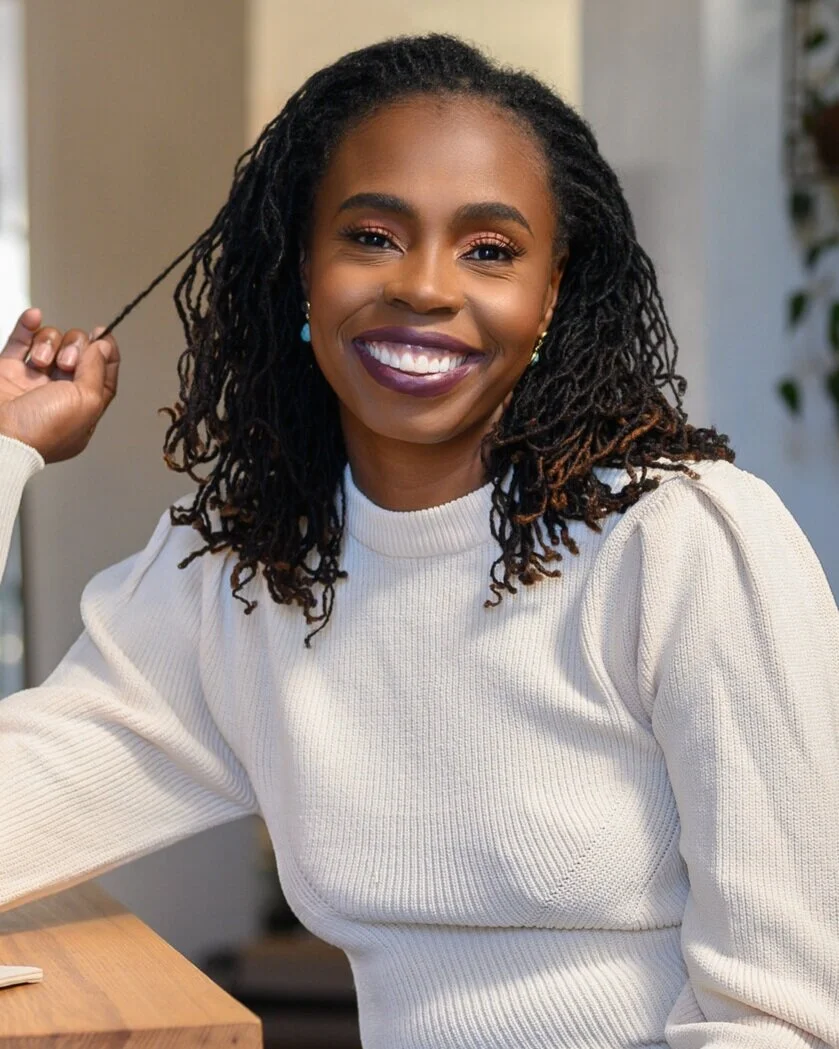
Hey there I’m Naseema
My dream is for everyone to know that financial independence is attainable with a little intentionality. Learn how I can help you finally break the cycle of living paycheck to paycheck.
Join the Facebook Community
Join the Financially Intentional community and get access to resources to guide you on the path to Financial Freedom.
Watch these Videos To Learn How to…
Keep Listening
Here are some more episodes you may enjoy…






We break down what’s really happening with hormones, metabolism, and aging in a simple way, including why perimenopause can sneak up on you.