
Health Is the Missing Piece in Your Wealth Plan - Episode 159
In today's episode, I talk with Dr. Aleksandra Gajer about why so many of us feel tired, stressed, and “off,” even when we’re trying to do all the right things. We break down what’s really happening with hormones, metabolism, and aging in a simple way, including why perimenopause can sneak up on you and why your doctor might not always connect the dots. We also share practical tips you can use right away, like how to build better meals, get enough protein, sleep better, manage stress, and support your body without extreme diets or complicated routines.
About our guest:
Dr. Aleksandra Gajer is a board-certified physician and visionary leader on a mission to revolutionize medicine by optimizing human physiology to achieve true health and well-being. A graduate of the University of Maryland School of Medicine with Alpha Omega Alpha honors, she founded The Gajer Practice to transform how we approach health—combining cutting-edge science with deeply personalized care that's missing in today's healthcare system.
The Gajer Practice
—-
Grab your spot in my free Financial CPR class and learn the simple steps I used to go from paycheck to paycheck to my first million.
Please join me here, and follow me on social media, Instagram, and Facebook.
Need help getting started on your path to financial freedom? Start Here
Join the Financially Intentional Community
Oh and please subscribe and leave a review on whatever app you're using to stream this podcast.
Get my book Smart Money
Subscribe & Review
Love this episode? Please subscribe and leave a review on your favorite podcast platform.
TRANSCRIPT:
Naseema: [00:00:00] Dr. Alexander Geier is a board certified physician and visionary leader on a mission to revolutionize medicine by optimizing human physiology to achieve true health and wellbeing.
A graduate of the University of Maryland School of Medicine with Alpha the Omega Honors. She founded the Guyer Practice to transform how we approach health, combining cutting edge science and deeply personalized care that's missing in today's healthcare system.
What's up? My financially intentional people. I'm super excited to have Dr. Alexander Geier here and we're gonna talk about something that isn't talked about nearly enough and is my passion, which is the intersection between. Health and wealth, and first of all, we want you to live long enough to reap the benefits of the things that you've been saving for, but also to be able to be in a good physical position to be [00:01:00] able to earn a living and save and invest for the future.
So I appreciate you, Dr. Guyer, for joining us. Welcome. So let's go into like your background, like what's your story like in the health space, and then how have you been able to translate those messages about health into how it impacts our finances?
Dr. Aleksandra Gajer: Yeah, so I started out as an ER physician. I am a conventionally trained medical doctor, and I went to medical school because. I felt like it was a way that I was good at math and science. It was a way I could give back to the world, and I felt like it would be a secure career. It felt like big investment upfront, but pretty much a short thing on the other end.
And I really liked emergency medicine. I liked the pace. I liked being at ground zero with people. I enjoyed meeting people. In their time of [00:02:00] crisis and being able to be there for them and being able to navigate some of those situations. But over time I found like many other people that I was getting more and more burned out and that for many of the patients I was seeing, they were dealing with chronic health issues.
And the ER was a revolving door where I could put a bandaid on their symptoms get them through this episode. That invariably they would come back and they would be worse and eventually they may pass away in the er. And there was a lot of lifesaving care, of course, and traumatic accidents and things like that.
I felt like for a lot of people, we weren't making a real difference and I became really passionate about. Exploring health and exploring the state of health and how can we create the state of health, both for myself and for other people. And that led me to leave emergency medicine, start my own practice, and really start a practice where we're investing in health and investing in wellbeing before [00:03:00] illness takes hold and both strategizing.
So we're not ever seeing those chronic illnesses, but also. Listening and working with people to help them feel really good and help them feel their best at every age, and to work with the kind of medicine that actually matters to people. That's , how I ended up here.
Naseema: I love that. I love that. And like you I started pre-med and then I realized what doctors did and I was like, oh, I don't really necessarily wanted to do that, but I really wanted to impact access to care. And so initially I went into healthcare administration and then. Saw the administrative side, it was like, I don't really to do that.
And then I went back to school to be a nurse because I saw what my nursing friends were doing and , they really got to impact patients' lives. And I have found that, in my nursing practice that. What [00:04:00] I've gotten to do in like being able to really impact people's health well minds is around, labor and delivery and having a baby and all of that stuff.
But just being an advocate has been able to drastically improve their lives and outcomes and access and all of those kind of things. So I love that and I love that you went off like the traditional path and started a practice, which can really impact the way. That your patient is actually access like health and can get the care that they need.
Just sad, like the healthcare system, I like working in the healthcare system because I know the role that I play individually can have an impact, but it's just sad that the way that the healthcare system is set up and has evolved isn't really focused on prevention and healthcare.
It's really reactive. So I like that you started your practice to do more of that.
Dr. Aleksandra Gajer: [00:05:00] Yeah, I think it's so important. I think the science exists now. The data is there to help people intentionally set themselves up for a life of health. And unfortunately, our healthcare system is built in such a way that most. Providers, practitioners just don't have the time. They don't have enough time with patients to do what we need to do to actually plant the seeds of health.
And just like you said, very reactive. Once you're sick, we got a drug for that, and medicine has created some lifesaving and incredible drugs, and we get to live so much longer than we used to. But I think now the frontier is how do we take charge of our bodies so that. Not only are we healthy at 70, 80 and maybe enjoying a fruitful retirement, but we're also sitting on the floor playing with our grandkids, that we're traveling to those places.
We've never seen that we're still feeling really good, that our brains are working well and I think that's the really exciting part of medicine that [00:06:00] we're discovering now.
Naseema: Yeah, and I to just speak to the fact, like a lot of people say that oftentimes that you would get to retirement and then we die a couple of years later and people attribute that to not. Working and not having that structure and all of that kind of stuff. But I think it's more attributable to the fact that over time people haven't been really taking care of their health, and so it just catches up to them, like around the same kind of time that they're slowing down.
Can you speak to what you've seen and in that regard and what your practice does to reverse those trends?
Dr. Aleksandra Gajer: Absolutely. And I talked to a lot of, I was giving a talk and I talked to a lot of young people and someone personally me messaged me. It was a man and he said. I eat junk food all the time. I eat whatever I want. I don't sleep very much, but I feel great and I'm in really good shape, and so tell me why I should [00:07:00] do anything different.
And I was like, great. I love this question. Let me guess. You're 25. And he's yes, I am. And the answer is that whether we know it or not, what we're the habits of today? Are drawing the roadmap of what our life will look like 15 years from now. We're the way we live our lives is affecting what's gonna happen 10, 15 years in the future.
And many people say I hope that I don't end up, a frail old lady, or I hope that I don't end up in a wheelchair. You have complete control over that. And right now for me I'm 43 and I know that what I'm doing today will determine how I feel at 58. So I think, what are those habits?
And I think those habits are really foundational, the two biggest things is how we eat, what we put into our bodies and how we're fueling our bodies. I think, the landscape has become so complicated. There's a hundred thousand diets out there. There's people telling you not to eat carbs.
There's people [00:08:00] telling you to, do all kinds of crazy things and, but I think the most important thing we can do is feed our bodies. Real food, whole foods, food that maybe our grandparents could have eaten, food that could have come from the earth. Clean sources of meat and plants. There's so many non-food products out there.
And there's a lot of diet foods and people and I think we're getting a little better, but we were so fixated on diet culture, just get thinner, lower calories. And that really does a lot in those years, especially the eighties, nineties, where we were fed all that information about eat less, move more, eat all these diet foods, low calorie, sugar free people became less metabolically healthy, more overweight.
And that is for a number of reasons. Those non-food chemicals don't actually feed our bodies. They actually wreck our metabolism. They wreck our gut [00:09:00] microbiome, which are all the. Little bugs. We actually have more little bugs living in our colon than cells in our entire body. And those little bugs communicate to every other part of the body.
They communicate to your heart, to your brain, and when you are putting non-food chemicals into your body instead of real foods, you, the good bugs are dying and the bad ones are overgrowing. We end up becoming metabolically unhealthy. We end up developing a lot of inflammation. So I think that one foundation is.
As much as we can to eat real food. Things that don't have a long ingredient list things and some of that can be convenience food. Not everybody's gonna sit at home and cook. It's not possible for a lot of us, but things with a short ingredient list, things without a bunch of stuff that you can't recognize.
That goes such a long way in making sure that we have enough protein in our diet and enough fiber in our diet that we're [00:10:00] eating. According to a nutrient hunt. So basically rather than eating to just get it over with not to feel hungry or eating in order to be skinny looking for nutrients in our foods and making sure that we are choosing those foods that are gonna nourish our body because that's, that is the roadmap for what's gonna happen 10 to 15 years down the road.
Naseema: It's a struggle though. I can honestly say I think about this every day, right? And I know, like I wanna focus on making sure that I'm eating. Real food, right? And but then I'm about the same age as you, and then there's like this thing like, okay, you get to a certain age, now you gotta focus on protein and making sure that you're balancing out your proteins and your fat.
And honestly, it's overwhelming. The information. And even in being conscious about it, it's still hard to make really smart decisions. And like you have to be in a good financial position to do so too, because those convenience foods are often the less expensive foods, [00:11:00] right?
Because they're not real foods. And even me like being intentional about getting my meat, that's grass fed and organic and all that kind of stuff. I often think about the things I eat during the day and then they all have like labels on them. So then that means that they typically have a lot of ingredients and a lot of things.
And I don't know, it is a challenging thing to say and I think that. It's hard to incorporate that in your diet, so I would love how you simplify it, for your patients to eat healthier metabolically and just to eat whole foods and move away from this more convenience or culture of like cheaper foods.
Because let's face it, groceries are hella expensive
right now, right?
Dr. Aleksandra Gajer: Yeah. Absolutely. And it's definitely, it's a challenge. Yeah. It's easier right now to find these like non-food and the, food [00:12:00] industry has changed so much over the last a hundred years where food science . They took a lot of notes from the cigarette industry and a lot of our foods are engineered to chemically make us unable to stop eating them.
Even I think Doritos has the slogan, you can't just one, which is this is not a good thing, guys. Like they're telling you what they're doing to you. They're hijacking your brain
Naseema: yes.
Literally.
Dr. Aleksandra Gajer: And the thing is that most people that I see who are struggling with weight feel that it's their fault.
They feel like they don't have the willpower when really there are so many forces at work that have hijacked our brains in a very real way that makes it. It's so much more challenging. And one of the great things about Whole Foods is it's just much harder to overeat. That you can easily eat a bag of potato chips, but I don't see many people sitting there and eating three apples in a row.
Your body really says, okay, we're done. Okay. Let's talk a little bit about a practical way, [00:13:00] to do this. You don't have to be perfect, but if 85% of the time you are making good choices, it's gonna go a long way. So breakfast, trying to have some form of protein of breakfast can be really helpful.
Eggs are usually pretty quick. 3, 2, 3 eggs. Putting some cottage cheese in eggs can also increase their protein content and.
Eggs and maybe some blueberries. Blueberries are probably the healthiest fruit you can eat. They have the lowest amount of sugar. They have a lot of fiber. A lot of nutrients.
If you are making breakfast at home, you can make three scrambled eggs. You can make three hard boiled eggs. Something like that. There are also some high protein Greek yogurts that are really good. And it depends where you're at. You don't have to go fat free, but, you can do 2%. Depends what the goals are, but the high protein Greek yogurt can be really good.
Even if you get it plain and you put some cinnamon in it, it can taste sweet or blueberries. So I often find that's a quick way to [00:14:00] have a high protein breakfast that's not super expensive, not really hard to make, and that you can just grab and go. There are some. High protein yogurts like the Chobani's that I think are not that bad.
They do, their flavor, they have a little bit of sugar in them, but if you look at it, it's not one of those with a hundred thousand ingredients, so you get some protein and you have breakfast, you don't want that sugar crash. I grew up on sugary cereals for breakfast and.
I knew and you're like, what is going on? I feel awful. And I'm so hungry and you don't wanna sugar crash at breakfast. And then. For lunch. I think if it's possible to have some kind of protein and vegetables, that's really helpful. I think Chipotle is awesome. You could do a lot with Chipotle.
You can get their salad bowls, you can get a lot of healthy ingredients in there. You can get protein and vegetables and there's other chains like Kava where it's possible to get a very filling meal. If not, meal prepping at [00:15:00] home and making either some ground beef earlier in the week.
There's some people who use companies like ButcherBox to get bulk meat.
Naseema: Yeah.
Dr. Aleksandra Gajer: Yeah, I know, I do. I'm not affiliated with them in any way, but I think that, for meal prep, if you can make a whole big thing a ground beef early in the week and put it into a salad and be creative and, even if you're making a sandwich with fresh chicken or something like that, you can make it happen. But there's some things that are labor intensive and some things that. Are cost intensive, so you have to make your choices there. And then at dinner time, trying to make a choice where you have some protein and vegetables tends to be a little easier whether you're eating out or eating at home.
And, some carbs are good too, especially if they're small in comparison to the other things that you're eating. Particularly I think carbs are great if they're timed before exercise. So that's [00:16:00] the foundation that I would have is just thinking about making sure that you get some protein and fiber in every meal, that there's something real in there that again, you don't have to be perfect a hundred percent of the time but getting real food in your body can go a long way.
Naseema: That was very helpful even for me. Can you recommend snack ideas, especially for us labor and delivery nurses at work
all
Dr. Aleksandra Gajer: yeah. Oh gosh. I know that's the hardest thing is when the food around you is not the stuff that you should be eating. I think I also tell people that we usually wake up with a certain amount of willpower every day. We've got a bucket. And as you go through your day, you use up your willpower.
You use it up when you don't yell at your boss. You use it up when make good choices at work. And usually later in the day, that willpower bucket is low. So if you're not set up to make good choices, if you can put a little bit of thought and [00:17:00] time into your week, maybe on Sunday, and make sure that.
good choices are easier to make than bad choices. So because at the end of the day when that willpower bucket is low, you will reach for whatever's convenient. So you have to trick your body. So when it comes to snacks, I think in terms of packaged food, I really like RX bars.
They're not as high protein as other bars, but they're all real ingredients and I think they're quick and easy to take with you. Carrots and hummus, if you can do something like that. I think those are really good apples and peanut butter or almond butter, all really good snacks that can be filling.
And even hard boiled eggs. Some people just pack hard boiled eggs and they can be easy to transport, easy to eat, and it's amazing how different your body feels when you start fueling it appropriately. I think a lot of people feel fatigued, burned out all these symptoms and they feel like they're helping [00:18:00] themselves by having that candy bar at 3:00 PM to get through the day.
If you don't realize how much you're burning yourself out even more by making those choices.
Naseema: Yeah, those are very helpful. But I love what you said about setting yourself up for success early on because man. When that willpower is gone, that willpower
Dr. Aleksandra Gajer: Oh God,
Naseema: That's super helpful. But me and just like a lot of people that follow me are at the same stages of life and that's like aging, are reaching perimenopause, I should say.
And like a lot of people are super, it's frustrated because. They're for I'll take myself as an example, like gotten to a stage where everything is slowing down, I'm working out harder than I've ever worked out in my life. I'm eating healthy, I'm doing all of the things, but it's like my body is spraying me, right?
It is just what is [00:19:00] going on? And we don't have a lot of answers. And I'm like, I feel like I've checked all of the boxes that I can do personally, like physically and, intake wise, but still, I don't feel. Like hormonally or metabolically, my body is responding. I even like just got this alert through my health tracking app through, apple and it was saying that like my cardiac recovery rate is lowered and it's lowered this year.
And I was like, what does that really mean? And so I had to do some research and it was basically like, your stress levels are really high. You're like, even though I do all the things to reduce my stress, like physiologically, like not getting an adequate amount of sleep because I work nights or, just like the way my, body is set up, aging, like the things that I have done. For years and years aren't working for my body, and it is just [00:20:00] so hard, number one, because it's a lot of intangibles that are going on and then. I don't feel like there's a lot of resources out there and I personally work with ob , my GYM. But, and then I can talk to them, but even then I get so many varying opinions based on the doctor that I talk to.
A specific example is that I asked my doctor for, hormone replacement. 'cause I really feel like my hormones are off. I had a baby at 42 and I have not been able to physically like, bounce back no matter what kind of diet or exercise I'm doing. No matter how many steps I take in a day, and no matter how much sleep I get, 'cause I intentionally took time off to sleep, like I'm not being able to bounce back.
And then she was just she prescribed me birth control pills, which I don't need birth control. I had a tub with my last pregnancy, but I shared that on my social media [00:21:00] and I got so many responses, like thousands of responses from people who have had similar, situations and are still looking for answers,
Dr. Aleksandra Gajer: yeah. Gosh. Thank you so much for sharing that. And you're so right. I talk to so many women who are in this boat and, where we're doing and those are my favorite women to work with you. You're doing everything. You're doing everything, but your body's not listening anymore. And just really briefly, I want to touch on the fact that these transitions are easier if you're exercising, building muscle, eating right, trying to sleep, trying to manage your stress.
But there are intangibles, and. I often think about it as, we as humans have been on earth for about 200,000 years. That's a long time. And for 199, 990,000 of those, I probably got that number wrong, but everything but the last 150 years, we've lived till about age 40.
Life expect. [00:22:00] On Earth for 99% of our existence as humans have been to age 40. And we have these ancient genes that have adapted over time to make us work optimally until we're about 40, 45 and we've reproduced. And then mother Nature has not caught up to the fact that i'm sorry. We're in our prime right now.
Like we're living life like, things are good and we've advanced in so many ways and we're absolutely at our prime at 45, but we are living with these genes that adapted over so much time that are saying, Nope, we're slowing down, we're conserving energy. We're not gonna do all the good things to keep you lean, to give you energy, to make sure your sleep is good.
So the way that shows up is that. Our hormones start to downregulate. We don't make as many hormones, especially as women. It's more dramatic in women, but it happens in men too. Men go through something called andropause, which is now being more [00:23:00] recognized that men also lose their prime and don't feel the way they used to.
But it's not only hormones that start declining. Our body makes. Hundreds of thousands of chemical messengers that sort of optimize how it works and how it responds to stress and to life. And some of those are called peptides, and those are just chemical messengers made within the body that are somewhat like hormones, but also send messages to optimize things.
Just laying the groundwork, all that is going down and we're all saying, what is going on? I'm doing all this good stuff. Why aren't you listening like you used to? And life is demanding and we can't slow down entirely and start sleeping nine hours every night and, have a stress free life where we're just doing yoga and meditating and eating avocado and I think that hormone replacement can be really meaningful for a lot of women and this is a
Naseema: Wait, can you just clarify real quick? There's a difference between hormones and peptides,
Dr. Aleksandra Gajer: [00:24:00] Absolutely. Yeah. There's a difference between hormones and peptides. Yeah. And the big difference physiologically is just that hormones are made by what are called endocrine glands.
So that's like your ovaries, your thyroid, your pancreas. Whereas peptides can be made in all kinds of places in the body, but they have very similar effects. But they are absolutely different. And I
can. About that. Of course. So hormone replacement. This has been a really controversial topic for women's health and I think that we're.
Getting on board with giving women what they need finally. But even recently, within the last few months, the FDA re removed the black box warning on estrogen after many years of studies proving that estradiol or bioidentical estrogen does not cause heart disease or stroke, and in the right patients does not significantly increase the risk of breast cancer.
But we had this study called the Women's Health Initiative. That [00:25:00] was done about 20 years ago that produced some very scary results and there were some big issues with the study and also some big issues with how it was interpreted. The study was done with synthetic hormones. So rather than using , bioidentical means the same as your body would make.
There was a shortcut that was taken and instead of using a bioidentical hor hormone, we used pregnant horses urine. So the estrogen was called Premarin, which was literally pregnant mare's urine. And surprise, that caused a lot of damage. 'cause we should not be taking pregnant
Naseema: Wow. I can't imagine why.
Dr. Aleksandra Gajer: I know.
It's, yeah. And it's chemically, it's just a little different, but it's different enough that it caused some very significant disturbances to women's heart health, women's brain health, risk of cancer. So those studies were done with synthetic hormones. They were also done on older women who had not had the supportive hormones for 10 plus [00:26:00] years, and that suddenly were given these synthetic hormones and they had a lot of bad outcomes.
So women were pulled off
hormones.
Naseema: I can imagine already had comorbidities
that affected.
Dr. Aleksandra Gajer: And I think that was a big thing. If you already have heart disease, if you already have a lot of plaque buildup, then probably starting hormones is not a good idea. But this should be a conversation each woman should be able to have with her doctor.
But unfortunately, it's, I think the newer generation of doctors will be educated on this, but. The wonderful doctors out there have not gotten the benefit of the correct information that is now being made available. The newer studies have shown that both. Estrogen, progesterone, and testosterone can be very safe for women, can actually protect brain health, can prevent heart disease, can lower cholesterol can protect our metabolic health, can lower inflammation.
So when we use bioidentical [00:27:00] hormones or hormones that are the same as our body makes and we start them early, then it is extremely protective for women. And just to go down this rabbit hole a little bit more, this is. An interesting factor because anything else that we stop making in the body, if you have hypothyroidism, we give you thyroid.
If a man has low testosterone, he gets testosterone. If you're a type one diabetic and don't make insulin, you get insulin. But women stop making estrogen and we say. Good luck, hope you do well with that. Why don't you try exercising a little more? And I think that's absurd.
Naseema: Ridiculous. Thank you for calling that out. So real.
Dr. Aleksandra Gajer: Yeah. So it's taken us 20, 30 years. But there are a lot of women and a lot of doctors speaking up now saying, no, we wanna feel good. And hRT is not necessarily a magic bullet. I think those lifestyle factors are still really important, but I think having the right hormonal [00:28:00] support at the right time also makes it possible to make good choices.
I work with a lot of women who are so exhausted, who feel so crappy, and then we get them on the right hormone support and they're going to the gym, they're prepping their food, and all of a sudden their life is completely different and they feel like themselves again. I talk. To a lot of women who say, I don't know what it is, but I just don't feel like myself like it. And a lot of women feel like, again, I think the medical establishment has done a lot of us a disservice in the sense of making it feel like it's us. And there are a lot of studies that also show that although women live longer, our quality of life tends to be quite a bit lower, and it doesn't have to be like that.
I think that we have the technology out there where we can. Live in healthy bodies that are metabolically fit. We don't have to feel guilty about wanting to be, feel strong, look lean, have energy, sleep, have good sex. [00:29:00] All those things we can have at 50, 60, 70, and beyond. I.
Naseema: Yeah, and let's talk about that because like one of my biggest rational or irrational fears is like drying up like vaginal dryness. And like I feel like people laugh at me all the time, but I just said I wanna enjoy aging, I wanna enjoy that. And my sexual health is a big. Part of that, and I don't want I don't want that to be affected because I'm older because again, I feel like I'm in my prime, like I'm done having kids I wanna do that. And yeah, like I think it's important that we have options in that area and we understand that so how does. Hormone support or hormone replacement affect that and like the other I guess like the estrogen creams are hormone replacements, but like how do we work on that?
I know there's, and for men, there's all these
things, For
Dr. Aleksandra Gajer: Mm-hmm. Absolutely.
Yeah.
Naseema: that great.
Dr. Aleksandra Gajer: Can't get an [00:30:00] erection. It's a four alarm fire.
Naseema: Okay.
Dr. Aleksandra Gajer: There's 10 drugs on the
Okay. Yeah I, that's a great question. Just starting with the foundation, when we think about hormones, there are a number of hormones that we mentioned. We talked about thyroid and insulin, and all those are really important hormones.
Insulin is the main governor of your metabolic health of higher levels of insulin will make you fatter. Lower levels of insulin will make you thinner and your body will make lower levels of insulin if you are what's called insulin sensitive, which means that your cells listen to. Insulin very well, and you become insulin sensitive by eating whole foods saving your desserts for special occasions.
I think we should celebrate life with food. I think there are times when we absolutely should have that cake and the ice cream, but it shouldn't be every night. It shouldn't be a coping strategy. And by building healthy muscle, you become insulin sensitive. Thyroid health is [00:31:00] also really important.
It's an epidemic for women. It's the number one autoimmune disease that we experience. So a lot of women basically attack their own thyroid, and we don't have enough thyroid to help our metabolism, help our mood, all those things. So those are important things to be checked, optimized, taken care of.
Cortisol is an important hormone. And you talked a little bit about stress and our modern life is stressful and it's stressful in a much different way than it was for people 200 years ago. They didn't have the material conveniences that we do where taking care of basic needs safety.
It was different, but the stressors tended to, but most of the time. Life was boring and sometimes there were big stressors. But now the fact that we're always reachable, that we have these alerts, that there's all these alarms, that the level of inputs on our brain and body is so intense [00:32:00] that most people don't get that quiet time, that time to shut off, that, time where nobody can reach you and that produces.
Higher levels of cortisol, which can really mess up all the other hormones and. Yes, there's no magic off switch for stress, but you mentioned this. There are strategies and techniques and things that people can do to counteract the effect that stress has on your body. And we can make choices to turn off our devices, to go for a walk in nature, to connect with other people, to read a book, take a bath, to meditate, to do yoga.
And those are really important because it. Creates beneficial hormones that are counteracting some of that effect of stress. So we've taken care of all that and now there's our, for women, estrogen, progesterone, and testosterone are very important. And all three are important for sexual health. All three are important for a number of different things.
[00:33:00] But just to touch on sexual health first it is. A combination of the three. A lot of, we often think about testosterone as being related to sexual health, and it is, and for a lot of women, we, it's also highly under-recognized that we can have very low testosterone levels and we also need some testosterone.
And testosterone is responsible for drive, and that's drive to exercise, drive to eat well drive to leave your house, but also sex drive. And estrogen is really important for sex drive as well as is progesterone. And when we lose the support of estrogen, we can experience vaginal dryness.
Women can have difficulty achieving orgasm. Our organs actually start the nerve supply to our sexual organ starts to degenerate. And, the estrogen vaginal creams are really good and very safe. So I think , you're never too young to start that if you're having, [00:34:00] if you're seeing any sort of a.
Lag time there if you're not able to achieve orgasm like you used to or you feel a little bit of dryness, I think it's never too early to start that. It's not absorbed systemically, so there's no risk of it actually going into your bloodstream, raising the risk of anything else, messing with your systemic estrogen production, but taking care of your sexual health in that way.
Usually we start by doing it every day. And then you can just go to twice a week. There are suppository tablets or there's creams but I think that starting that in our forties can be really helpful so that, we maintain that function and it's actually super important for urinary tract infections as well, pelvic floor, all of that.
I think it's never too early to start,
Naseema: So you don't have to wait until you start noticing the symptoms to start, right? Yeah. Okay. Yeah.
So I know you have a [00:35:00] practice that helps women over 40 with these things. And can you talk about like how specifically you work with your patients who you can work with and like how they usually go through working the process of working with you.
Dr. Aleksandra Gajer: Sure. Yeah. So the way we work with patients is very individualized, of course, because every man and woman is different. And what's most important to me is addressing what's most important to you, but also keeping you healthy, alive for a long time and in your prime. And and I think it's a place where you can come and, not get brushed off for the things that, it's okay to feel that those things are important and it's not just aging. We are located in Northern Virginia and we can work in a health coaching capacity with men and women throughout the country, but there's some limitations. So we do telehealth visits.
We can always do a consultation but specific to actually prescribe medications. We have to see people in the [00:36:00] Northern Virginia, Washington DC area. I work with peptides with people throughout the country, and we didn't talk much about peptides, but I'll tell you a little bit about about how we work with people.
I think the foundation of what we talked about, how are we taking care of our bodies is really important. Making sure that your diet, your exercise sleep, stress, all that as optimized as you can make it with the, your current. Resources of time, energy, all those things. Generally we'll do very comprehensive labs to check hormones, to check levels of inflammation, to check markers of heart health, and see if there's anything modifiable that can improve your quality of life and reduce the risk of disease down the road.
Looking at those smoking guns, those red flags that say. You may not feel anything now, but 10 or 15 years down the road this might turn into something, so let's. Get on top of it, and here's how, and whether we use supplements, medications hormones, peptides there's a number of [00:37:00] different ways of doing that.
And, with women, especially in perimenopause or in the menopause transition, we'll start with working with metabolic health. Hormone health. Sometimes we'll use GLP ones. For a whole topic in themselves, but I think at micro doses they can be extremely helpful for women in hormonal transitions to just tune up the metabolism, not in doses that are gonna make you not want to look at food just enough to make you more insulin sensitive.
So your body's actually listening to the other inputs. And then if we have things optimized, then we can. See what's left, what kind of symptoms are still coming up, and think about using peptides, which again, are the chemical messengers that are not hormones, but that talk between different parts of your body and there are.
They are naturally occurring in the body, but again, they can be replaced because our body is trying to conserve energy. And [00:38:00] after 45 it thinks it doesn't need to make as much anymore 'cause we should be winding down when actually we're winding up. But there are peptides in a number of categories are peptides for inflammation and there's.
A number of people that I work with for whom we realize that their energy issues or weight issues are related to inflammation and we kind of modalities, there are peptides for body composition, not just the GLP ones that help you lose weight, but others that help you. Build lean muscle. And some people there are peptides that increase your growth hormone levels, we can check that through the blood.
And for some people that is really down-regulated and, and when we don't make growth hormone anymore, we might be exercising, doing all the good things, but we're still not making muscle. There are also peptides for brain health and there are some that help with focus and reduced neuroinflammation which is also really important for [00:39:00] anxiety depression, which can be intense during hormonal transitions as well as protecting brain health against dementia.
There's some sexual health peptides. So there's peptides give us some more tools in the toolbox. They're usually, they're pretty much always used short term to optimize something happening in the body. And again, to we call this epigenetics to find a way for our body to express our ancient genes in a more productive way for this world in which we are still thriving.
50, 60, 70, 80 beyond. So there are a number of tools and I spend a lot of time getting to know our patients, our clients to help understand, what are your goals? I usually ask, if we could wave a magic wand and make three things about your health. Just suddenly perfect.
Not saying I can, but if we could, what would those be? That's my hardest question. And then, we come up with a plan to try to do those [00:40:00] things and protect our most important assets our brain, our heart our muscle, all those things.
Naseema: One. This is a very specific question, but I think it's important 'cause it keeps on coming up whenever I talk about this, but. People have been shut down from any kind of treatments regarding perimenopausal health because they have high blood pressure and people are just like, I'm not gonna give you hrts because of that, or whatever pep.
I think like they put up this wall and I really feel like it's all related because I know I have high blood pressure that I didn't have it until. I got pregnant with my last daughter. And so , I feel like my hormones were affected, but I also just feel like. There's so many people out there that either suffer in silence or don't have the words to advocate for themselves in the medical space to say I don't feel good and I don't want you to keep on telling me it's because I'm eating high sodium foods, or I need to regulate my blood pressure and [00:41:00] all these kind of things.
So just to wrap things up, what's your message for people who are suffering in silence or don't have the words to communicate what they truly need to their healthcare providers?
Dr. Aleksandra Gajer: Yeah, that's such a great question. I empathize, I sympathize both with the patients and with the doctors. And I've been on the other side of conventional healthcare where I so deeply wanted to help people, but I didn't have the tools I had to go out.
And find a way to educate myself and spend a lot of time and money to understand these things. And I think a lot of doctors don't. We are taught what we're taught and we work in a system that doesn't support. Diving deeper into these issues. So I think that it is very important to find the right person and find somebody who perhaps has done some additional training, especially in the field of bioidentical hormones or lifestyle medicine, or somebody who, has some expertise and [00:42:00] who's gone an extra mile, who's going to listen to you.
Yeah, I think it's what you said about high blood pressure, yes. We lose hormonal support and our blood pressure goes up. 'cause our blood vessels change. It's again, it's like you're not gonna to the gym, not you. I have a woman in front of me, she's not going to the gym because she's freaking exhausted.
Like she doesn't. So I have to support her. I have to help her feel better first. And of course if your blood pressure is out of control and you're running it one 70 systolic on an average day, we gotta get that under control to make sure that we're starting hormones safely. But I think. Most women I find it's not the same in every woman.
And I do a pretty deep dive understanding your medical history, your family history. Sometimes we'll do testing like something called a coronary calcium score to see if you have any plaques, especially if we're starting five, 10 years after you've entered menopause. But there's. [00:43:00] I think in my practice there's something I can offer every woman to improve her quality of life.
And but it takes time and it takes effort and we have to be proactive about it. So trying to find someone to work with, who and unfortunately, I wish we had a healthcare system that was, more focused on this, but until, and I think the newer generation of doctors, honestly, the people who are in medical school now have a bit of a different outlook and they're pushing back a little more.
And I didn't know. There's a lot of really wonderful things that pharma has done for us. It. Drugs have allowed us to live without disease for a really long time. But there's so much of what we learn in medical school that's based on the format of drug equals disease. So if there's not a drug for it, we may not learn about it.
And, we have to start understanding health. We've really made so much progress in medicine over the [00:44:00] last a hundred years by cur, by treating disease, by making cancer survivable, by making heart attacks survivable. But we have to shift now we have to stop thinking of what we've put out, a lot of fires, and now we need to start supporting bodies so those fires don't get started.
We really need to. Start seeing the smoke, looking for the smoke. So that's a long way of saying try to find somebody who's interested in this stuff and who has made an effort to understand it at a level that's gonna be a little more nuanced. 'cause otherwise, a lot of doctors just don't feel they know enough or comfortable enough or, worry about malpractice and just hasn't.
Well equipped to help.
Naseema: Yeah. And I think it's, it is really hard because, there're not a lot of doctors like that. And like then how do you find them? So I'm grateful for you being [00:45:00] that resource. And for people who want to work with you, how can they get in contact with you?
Dr. Aleksandra Gajer: So the best thing to do is. Go to our website, which is the guyer practice.com. It's spelled G-A-J-E-R. On the first page, there's an option to book a free introductory call, which I think is a great way to start because we can tell you exactly what we can and can't do. Don't wanna waste anybody's time.
But if you're outta state I can help you figure out what labs to order, figure out your risk profile, figure out what would be safe for you potentially help you with some peptides. If you're in state, of course, come in and see us and we can do the whole thing. But that free intro call is a good way to get started to to talk about your case specifically and see how we can work with you.
Naseema: I love that and this has been so great. So much good information, very validating because I know there are a lot of women out there and men too, [00:46:00] because I feel like. They're not totally served in that way, but women especially I know are just at this breaking point. I know I am.
'cause I'm just like, what is gonna be enough? There is not, I cannot exercise more and I
cannot eat healthier than I already am. And especially if you're not seeing results and I actually seeing it, actually things get worse, especially when it comes. To like weight gain and physical appearance and the things that, may seem vain, but are important.
And I especially know because if this is happening and it manifesting physically, then, underneath like at a systems level, that they're at something wrong. But not having any recourse to do that, to fix it, is very frustrating. And I know there's a lot of people out there like that.
So this again was like very validating and knowing that. There are systems and tools and things that are helpful and there are people out there that can help us with it just like you. So I really appreciate this more [00:47:00] than, like this has been a really good, just episode just for me.
And not because this is all about me, but oftentimes when I speak to things that happen to me or that are affecting me it's a lot of people that are dealing with it in silence and just never, had the voice or the capacity to speak out and just didn't know that these things were.
Possible. So you know, in light of showing people what's possible and giving people access to you I just appreciate you.
Dr. Aleksandra Gajer: Oh, thank you so much. That means a lot.
Naseema: Thank you.
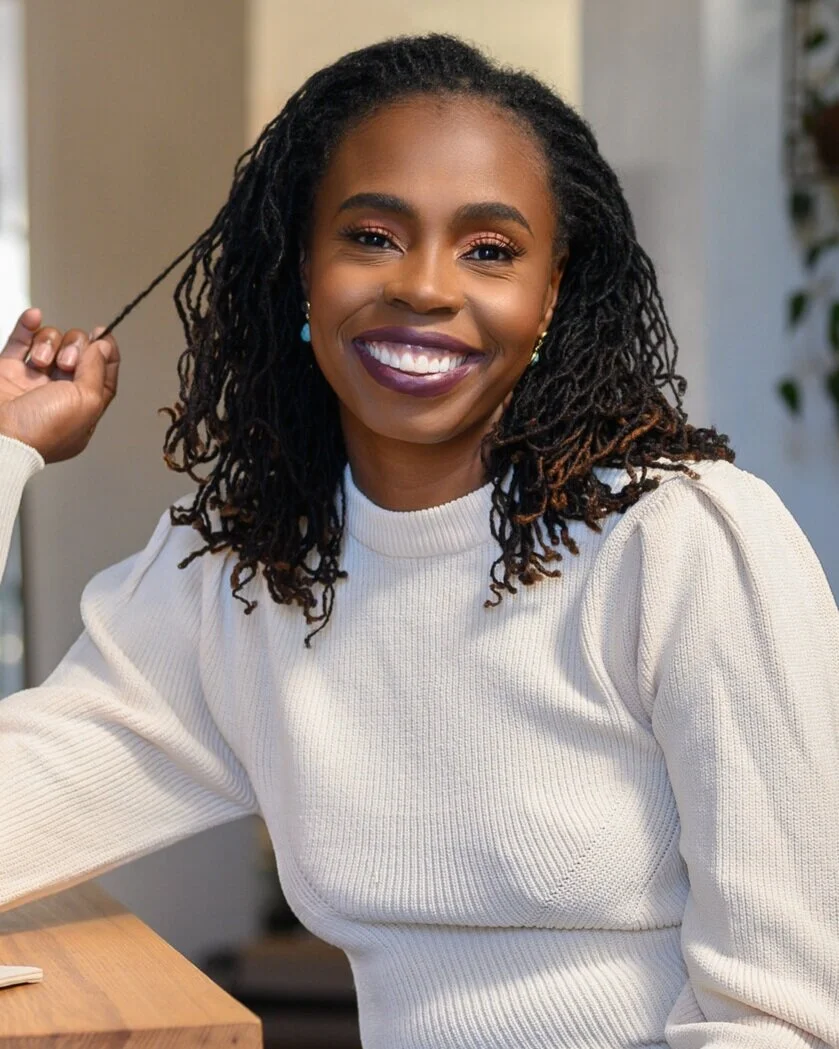
Hey there I’m Naseema
My dream is for everyone to know that financial independence is attainable with a little intentionality. Learn how I can help you finally break the cycle of living paycheck to paycheck.
Join the Facebook Community
Join the Financially Intentional community and get access to resources to guide you on the path to Financial Freedom.
Watch these Videos To Learn How to…
Keep Listening
Here are some more episodes you may enjoy…





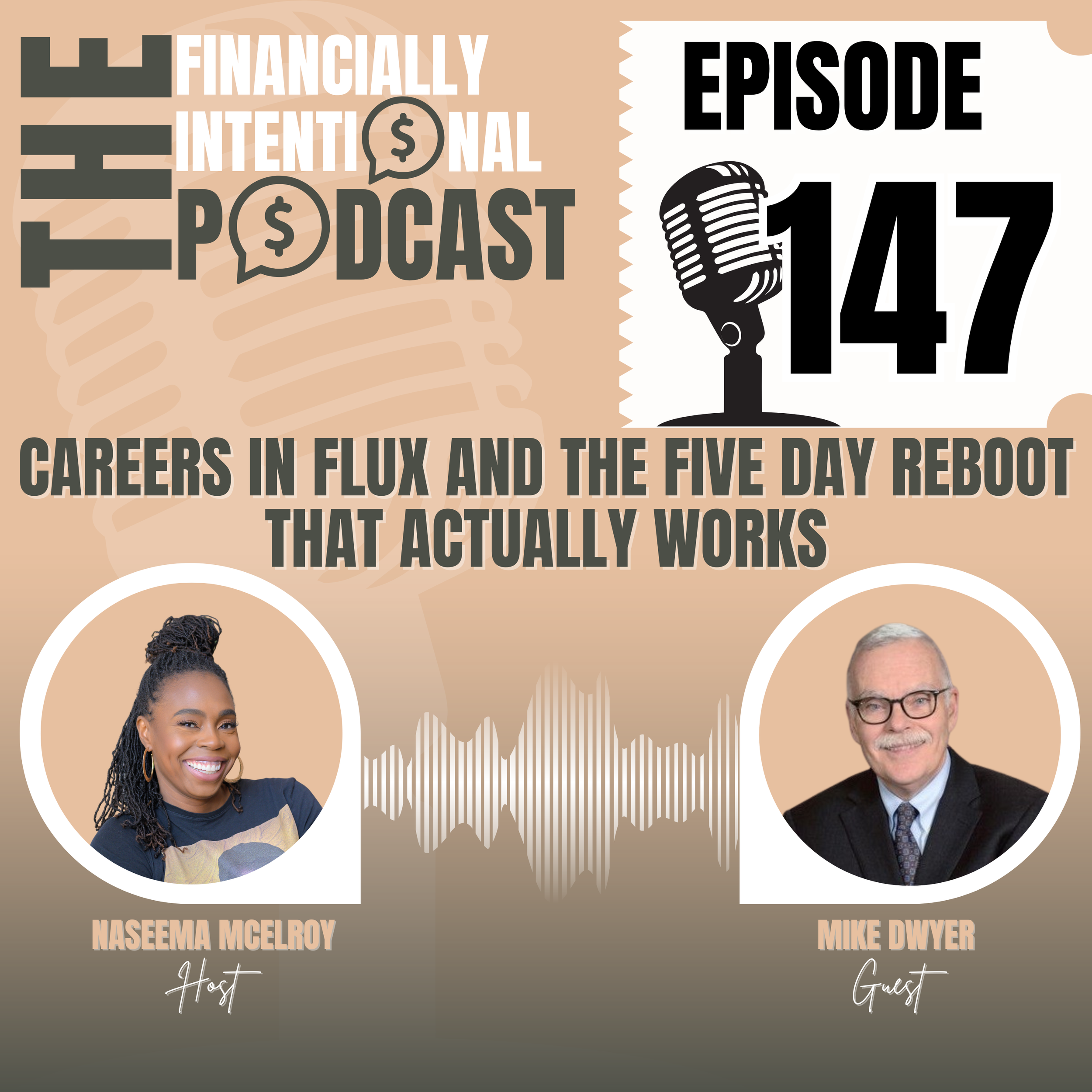


We break down what’s really happening with hormones, metabolism, and aging in a simple way, including why perimenopause can sneak up on you.