

Historical Fiction That Explains Your Money Better Than a Textbook - Episode 150
In today's episode I sit down with Terry Kirk to talk about money lessons from the 1929 market crash and the Great Depression. Terry tells real stories from his book Pitfall and from life on the Chicago trading floors. We break big ideas into simple steps you can use today like how to stay calm when markets drop how to protect your savings and how to keep a long term plan. We also talk about mindset shame and starting over after a loss. By the end you will know what went wrong back then what still happens now and what you can do to be ready.
About our guest:
Terry Kirk holds a Juris Doctor (Law) and a master’s degree focused on tech innovation. After practicing law and several executive leadership roles, Kirk plunged into Canada’s fintech and innovation sectors. As a Founder & CEO of three investor-backed ventures, she oversaw capital raising and shareholder exits into large-scale companies. She also served as a Director, Private Capital Markets Association of Canada, and was named Top Female Innovator and Entrepreneur by the Advanced Technology Alliance of Canada. Following the sale of Fundingportal.com, Kirk has achieved success writing fast-paced historical fiction stories about cataclysmic events. Her debut novel, Pitfall, was published in June 2025, named A Top Book to Read by CBC Books, and is for sale on major book-selling platforms, including Indigo and Amazon. Her second novel, Plunder, expected to hit bookshelves in 2026, follows the character in the build-up to World War II. Kirk, a popular public speaker, has appeared on BNN-Bloomberg’s The Pitch, delivered a TEDx Talk on financing innovation, and is presenting Pitfall on podcasts and morning television and at literary and financial events Canada-wide.
Her author site is: https://www.TerryKirkBooks.com
—-
Please join me here, and follow me on social media, Instagram, and Facebook.
Need help getting started on your path to financial freedom? Start Here
Join the Financially Intentional Community
Oh and please subscribe and leave a review on whatever app you're using to stream this podcast.
Get my book Smart Money

Subscribe & Review
Love this episode? Please subscribe and leave a review on your favorite podcast platform.
TRANSCRIPT:
Naseema: [00:00:00] Terry Kirk is a lawyer turned tech innovator, turned bestselling author after leading three investor backed ventures in Canada's FinTech space and serving on the private capitals market association of Canada, she pivoted into storytelling. Her debut historical thriller pitfall dropped in 2025 named one of CBC book's Top Freeze of the Year and her follow up plunder hit shelves in 2026.
Terry's been featured on BNN Bloomberg TEDx, and across Canada's literary and financial stages. You can find her books@terrykirkbooks.com.
What's up my financially intentional people. As you know, I love breaking down financial concepts in a way that you can understand because I was like you, I was overwhelmed. I did not understand how things worked. I really felt like I needed to get a PhD level of understanding of [00:01:00] finances in order to like.
Build my own personal wealth, and when I realized that it really wasn't that hard to understand, it was just in the way that it was phrased. And so oftentimes people have a vested interest in making sure that things are confusing so that you can pay them for it.
Terry Kirk: You're not talking about lawyers, are you
Naseema: at all.
Terry Kirk: okay? Bankers? Yeah. Got
Naseema: know, bankers like the, you know, people who are selling insurance products,
Terry Kirk: Yes, indeed. I'm
Naseema: But today we're joined by Terry Kirk and she has an phenomenal way of helping us understand financial concepts and the history around finances and, just.
A vested interest in making sure that things stick in the way that she presents her information. So Terry Kirk is an author first of all, she's all things, she's every woman. She's a lawyer. [00:02:00] She's worked in the tech, space. But. Her latest ventures are writing these historical fictions and breaking down financial concepts in a way that we can understand.
So welcome Terry, and I'm just honored to be able to talk to you.
Terry Kirk: Oh, thank you so much, Naima. I'm so glad that we shared this in common. It's such a lifelong journey, I think, to really. And finances at both your, even primarily at the personal level and how it affects our life and ability to pay rent and raise our families. But I think the more we get comfortable at that level, the more we wanna understand about some of the bigger concepts.
And that's what really drove me as an author. I thought, they have been these. Giant financial events, and not necessarily in our lifetimes, but maybe in our parents or our grandparents that we heard about when the family lost a family farm or the family store. And really my mind went back to the 1929 crash, the, the world's greatest economic [00:03:00] crash.
How did it happen? Why did it happen? How did it affect people? Were our families affected by it?
Naseema: Mm-hmm. But let's go back and talk about first of all, you're all these great things. You have all these accolades. What made you want to actually just write about it though and create these novels?
Terry Kirk: It was really my first love to write. I think the one common link that's throughout my life since as long as I can remember was the love of the word and the power of the word, and the importance of the word. And you change it a little bit and to change their understanding. To go from nice to Wiley or from Wiley to.
Smiley ears. You, you swap a word and you hold the picture in your mind of the person or the environment changes dramatically. So I've always loved the word, I carried around a little word book as a girl and some people carried around their sketchbooks. I. Swapped in words, tried practice spelling big words, breaking them [00:04:00] into little components.
So that drove me to really write in my early years, I traveled and wrote full time. I found my way to journalism school, frankly, found it a little bit boring. I like to really be creative as a writer, and I found it very constraining in terms of, the limited number of words and very formulaic writing and having to stick so closely to the facts.
It's much more fun when you can stray a bit. Yeah, which took me into law school where the word really prevails. Lawyers used to get charged by the word right.
Naseema: Hmm.
Terry Kirk: And that's why legal documents are so long. If you could use three words instead of one you, you what your fee.
Naseema: You know what? I did not know that. And it all makes sense. That's why I'm cracking up like that is
Terry Kirk: When you look at a document, you'll see this is a contract agreement and document. It'll never just say, this is a document or a contract, and it'll describe you in three different ways. You're the plaintiff, you're the aggrieved, you're the [00:05:00] victim. Mm-hmm.
Naseema: That is hilarious. And I'm just like, dang, why did they use so many words? Like, why can't they just say it like this? And I too am like that person I'm like every time I write something like. I get a kick out of it. 'cause I'm just like, man, I could say it like this and it'll mean like this and it, and I find myself being like, man, I love language.
Like I love how I can just change one little word and I can change the tone of this conversation,
Terry Kirk: I agree. And I can see you're an oral person and an auditory person too. We were talking about how you love to listen to your books and obviously you earn at least part of , your living through , your choice of words orally. And that kind of communication and writing is yet another platform on which or you can.
Take the time to really reflect and often switch a word. People say you're opening sentence, you, if you haven't rewritten it at least 50 times, you haven't worked hard enough on it. So yeah,
Naseema: a lot. [00:06:00] Yeah.
Terry Kirk: it's a lot.
Naseema: Yeah. Let's talk about your novel that you just released this year and the premise of it, why you felt like it was important to write, and like the main takeaways you want people to get from this book.
Terry Kirk: Yes. The book is called Pitfall. I was under contract to write two books, and I've now completed the second book, and they all start with the letter P a publicist told me that, find little ways like that so people can remember your book. So my book, first book is called Pitfall, and the second book is called Plunder.
It'll be out next spring. And I'm working on my third book, which is gonna be called Probe.
Naseema: Wow.
Terry Kirk: Yeah. And all three books really focus on big financial undertakings. Not in our lifetime, but before that and our memory of our parents or grandparents. But as I worked through the stories they will build up right present day and the final book in my plan [00:07:00] series is.
Looking into the future. So it covers bride swath, so let's talk about Pitfall, which is a book that's on the market now. It came out just the end of June, so it said the summer and now just entering the fall market. The first edition was sold out in eight weeks,
Naseema: Go ahead, girl.
Terry Kirk: yeah, so I was really pleased with that.
And it's on Amazon and, indigo in Canada. Yeah, and a lot of small independent bookstores and so on now. So the sales have gone really well, but the premise is starts with the 1929 crash. It was the biggest economic collapse in world history. We've had some real doozies ever since, but nothing like the crash of 1929.
So I felt, something, I knew my grandparents had been affected. They lived on the prairies. They'd immigrated from Europe and into America. And really lost everything and, had a generation of, poverty as a result. Because the crash coincided then with the big grand depression and the great [00:08:00] of, drought the lack of rainfall to creating economic consequences as well. So that was the period I wanted to understand. It was really a study in contrast between the great, great lavish years of the late 1920s. We saw it in the Great Gatsby with, the wealth. And people flocking to the stock markets and the stock markets churning out millionaires.
Fabulous fashion and parties, and a great sense of wealth and kind of carefreeness after the traumas of World War I and the great flu. Which followed. So that's where the story is sent in 1929 and it follows a character who's a male, but of course he's married.
And in the shadows a little bit in Book one. Katrina merges much more in book two, but she's bit in the shadows in book one because that's how life was in 1929. And arguably it still is a bit, but certainly at the time there weren't any women in in capital markets. Frank is a [00:09:00] commodities trader.
He's done really well. The money has flowed in the 1920, and then he stands at the back of the pit as the market crashes and his fortune disappears.
Naseema: Wow. And so it talks about him like in the profession of the finance space, but then it talks about like his personal life, right? And like how those effects like, cause him to lose it all.
Terry Kirk: Yes, exactly. And it's professional life. He's a commodities trader. He trades wheat, which doesn't sound that exciting. But wheat was the Bitcoin of the 1920s. There were no, the cyber security or even advanced manufacturing stocks at the time. They came really with World War ii, which stimulated investment.
And trains and planes and automobiles and so on. It was still an agricultural economy in 1929. The big stocks were really wheat pork cocks, corn cotton that's what was traded. And Frank was the weak. King of he had made a fortune really selling wheat [00:10:00] futures. In terms of his personal life though you could argue, who really cares unless you know these characters and what was at stake for them, he'd, hat was really at the top of his game. He lived in Chicago, which was the center of the agricultural markets. It was commodities exchange. Wall Street was still developing financial stocks and so on. But so he was in Chicago and he lived in one of those Frank Lloyd Wright type houses in the northern suburbs.
He had a beautiful wife two children. And he loses his fortune in about an hour and a half. That's all it took from 10:00 AM By 1130 we had gone from a dollar 69, a dollar 59, a dollar 49, landed down around 32 cents. And so he was not only was he fully wiped out, all of his clients were wiped out and Frank as I think anyone would be, was just massively ashamed.
It's good to remember, we complain that it wasn't easy for women at that time, but it wasn't easy, for men either. [00:11:00] They bore the weight of supporting their families. And so he was a proud man and yeah, he lost everything and he didn't behave well as. And that's where I think we start getting into some, what are the bigger themes of the story.
There's story, it's a story not just about Frank and his financial loss in 29. It's about I think how we experience big losses. It might be a divorce. It might be the loss of a loved one. It might be a financial setback in life. But people don't tend to behave in optimal ways when their lives are falling apart.
In Frank's case, he fled. He didn't go home. He didn't let his wife know where he was. He didn't let his partners know where he was. He just was ashamed and he flees.
Naseema: So one thing I love about historical fiction that I mentioned pre-call is that. First of all, it teaches us something about history in a way that history books and textbooks can't teach [00:12:00] us, right? These are historical events. These happen, but it makes it more relevant to you and easier to process, at least for me, because you could see it how it affects people in a practical sense.
So I love that aspect of it, but I also love it because it gives you an idea of. If this were to happen again, what it would look like and get you into preparing and wrapping your mind around it. I know, like for so long because that is like one of the biggest and greatest that has happened in history. You hear these people like saying where, we've been on this bull run for so long, we have to prepare for this crash, and what are you gonna do when the market crashes? And oftentimes I post about like my investment accounts and my kids' investment accounts, and people are just like how does this prepare you for a crash?
If the [00:13:00] market crashes, it's gonna crash and I'm gonna have to worry about a whole lot of other things. The whole thing is, is that sure, like I'm not shielded from a market crash. Just somebody who hasn't prepared for a market crash isn't shielded. But what I do know is that I've already built those muscles so that when the market does return.
I'll be ready to benefit from the upside of it when most people are just like I'm not gonna invest because the market is gonna crash. How is that serving you? But
Terry Kirk: Yeah.
Are good
Questions.
Naseema: but I'm just saying yes, these kind of books, like I feel like instead of being on the doom and gloom and not taking any action.
Like you could also look at these like books and even though it is fiction, wrap your head around okay, what would I do in this event? Because that's the beauty of like books and novels. You always, you put yourself in the shoes of at least one of the characters. It might [00:14:00] not be the main character.
And then you can wrap your head around okay yeah, in this situation with what I have right now, I would do this and I would do that. And so that's why I love these kind of books because I'm just like it puts me in a state of mind that. Without reading these books, I wouldn't have thought about those scenarios, and then they prove helpful in my everyday life.
Terry Kirk: And I think the timing is really interesting too because it's almost a hundred years ago. Here we are, 1925, and here we are in October. And the crash happened in late October. So a day, much like today, virtually a hundred years ago. And yet these big cycles seem to be about a century long.
There was a lot of talk during the COVID crisis about synergies with 1919. Which was the, the great flu after the war. And they were virtually a hundred years apart. And here we are now a decade later, dealing with the economic crash. And people are seeing many of the same circumstances. It is [00:15:00] a volatile market.
There was a mini crash and in April of this year when things, the market responded to tariff talk, and people worry about it being overheated. We also have consumers entering into the marketplace in a way that they didn't use to. 1929 was the first time people started feeling, wow, stock markets.
I want a little piece of that. And before that, it was really for very esoteric little narrow demographic of financial whizzes. So people flocked in a way that they are today too. And we're seeing technology tools enable direct investment and stock markets. So it's a lot of similar circumstances and that's why I think the book is proving timely.
I just did a, big event for a group of traders and it was called The Crash of 29. Could It Happen Again? And even for Traitors, they tell me that's the number one thing on their mind. So I think you will find that the book. Allows you to start thinking about how would I respond? [00:16:00] And I think you can do it really through both characters, Frank and his wife.
There are many other characters too that you'll learn from. I think as women today, now that we are. In the stock market, or we're investing, or we're thinking about our pensions and so on, we can now relate to Frank because we do bear that same kind of burden on our shoulders, often on our own as single parents and sometimes with a partner who may or may not help or may hurt.
And so we relate to Frank who, and the shame. And the loss and really the fear he experienced when he lost it all. But I think as women too. Katrina's helplessness is really poignant because women do often find themself helpless. And I think that's why your show is so valuable. It's about helping people to realize in the end, the kind of the buck stops with us.
And that was one of the things I really liked about the story is how Katrina had to take. Accountability for her own life and when financial life, when her [00:17:00] husband really just disappeared.
Naseema: So overall from the book, what are your main takeaways? What do you want people to walk away from the book? Knowing and understanding?
Terry Kirk: I think the biggest point is a really positive point because it's easy to feel like it's a dire story. It's a dire economic time. It was a dire, period that followed. But I like to think it's a story of redemption and a joyous story in many ways because when we suffer losses, you have to step outside your comfort zone.
And again, as we talk about, maybe it's a divorce and you find yourself having to move or losing a job and you're changing communities or traveling to a new country or a new region too. Manage. So it's a time of change and the fundamental story is about managing through these crises and coming out a better person at the other end.
It's fun to watch Frank, my main character grow, [00:18:00] everything he thought he knew is no longer relevant. He, the one thing he did well was trade on the stock exchange and, all of that just really shut down and it didn't come back,
Naseema: I think that's just really relevant to the times right now, especially in the way that things are evolving. Just in the technology space, which evolves the way that we make money and operate and I think a lot of people are finding like. Their skills are as relevant as they used to because the machine can now do what engineers were doing in seconds, what it took them months and years to do.
And yeah, I love how. We always say, past performance doesn't dictate future returns. But you can learn a lot from the past, like in replicating that. Okay, like the market crash, he had these skills that were all in trading and all these kind of things [00:19:00] that no longer was relevant.
So how did he bounce out of that? And I love that and I love how it ties into what's going on right now.
Terry Kirk: These are the character aspects of the story. And we've talked about the many ingredients that go into a good story that people love. And I think it starts with a compelling idea. The notion of getting into a, major financial event that all of our families experie in some way and that kind of highs and lows era.
It's very plot driven. Paige Turner, people who write to me all the time saying, oh my God, I stayed up all weekend getting through this book. I couldn't put it down. I, flip from page to page. But in the end it's the characters. And I find the things that I've really liked is when people write to me about the characters there's we've talked about Frank and Katrina.
I like Louis. A lot of women had big crushes on Louis.
Naseema: Okay. We gotta find out what this Louis oh [00:20:00] oh yeah. And I wanna tell you about Hector Ray too, because Hector almost didn't make it into the story. We were speaking earlier about the gold rushes and so often in the history of telling those stories about the gold Rush, the black community and, is overlooked.
Terry Kirk: And when I set out to write a story about the 1929 set in Chicago, I just knew that there had to. Be some important black characters in the story. And in 1929, apart from all the other things we've talked about, was really the time of the great migration when blacks moved from the southern US into urban centers in the, really, the largest black church in America was sitting right there in Chicago.
One of my characters, Hector Ray is in the parking garage. He's a young, newly arrived to to Chicago and he's always reading the New York Times that the traders leave and the garbage bins are in the backseat of the, he hauls 'em out and he's following the cotton exchange and so on.
Anyway Lewis, good old Lewis [00:21:00] gives Hector Ray an opportunity. Hector Ray it turns out has a really understands cotton. His family had a long history in cotton. He follows the exchange. He's trying to enter some make some money. But my first editor read the book, said, no, no, no, no.
Hector Ray's gotta go. There weren't really black traders in Chicago in 1929. It's not realistic. You're writing a historical fiction. There's really no room for the character. So I fought and fought, but I did decide that it was my first novel, and this person knew more than I did. Poor old Hector and his family went into the garbage pail.
Happily. I got a new editor who said. No, no, no, no, no. You're missing a big part of the story. Hector came back and I'm so pleased and now by book two Hector's done really well , in the stock market and he's a major character.
Naseema: So Terry, like what I often find, and I wanna know, I'm curious if you find this, is that it's not that [00:22:00] we didn't have a role or black people didn't have a role, it's that we were often never talked about. And that's why I was telling you about like the histories that get lost. And I was wondering if you were able to, or even looked into to find were there any traitors that maybe had a one line in the history book or not acknowledged, but I think what I mean, even if you didn't find it, it's just like in the medical profession, there were so many black inventors people that they never got credit.
They were put off, wrote off as like the janitors in the building or something like that. So I think it's kudos to you for getting another editor, number one. Number two, I think it's naive to say that there weren't black people that had a, pivotal role in these places, because if we know anything about America, we know that, black people had to be in there somewhere doing something,
and then oftentimes we just don't ever get our props.
And it means a lot to me that you didn't scrap that [00:23:00] character and that that character. Really shows like the knowledge, like you said, he knows cotton and even if he knows cotton from an agricultural perspective, to be able to. Switch that into trading knowledge is gold and
like being able to give voice to the intellect and the contributions that, my people have played into this country, means a lot to me and I appreciate that and I appreciate that character.
Terry Kirk: Oh I'm really pleased and, some people challenge me about writing that character and what relevance did I have, but I would say that's true with any character in a novel. What do I know in fact about, I don't know anyone who lived in 1929,
Naseema: Exactly, but it's like those, but those roles. But you would never get any pushback about a white male being a trader, right? It would be like, oh yeah, whatever. Like, why wouldn't they be?
Terry Kirk: And it was great to as I built up Hector as a [00:24:00] character, and as I say, it's really, I when book two is out, we get to know Hector even better. But we meet his wife Maisie, and they live in the black corridor in in Chicago, in the urban ghetto, which was a really rough place to live.
And he's. Conflicted. He is making money and he makes some very, very good money in 1929 before the crash. And he can afford a house, but he can't find a community really to
Naseema: That's what I was about to say, but where is he gonna buy a house?
Number one, where are you gonna buy legally? Buy a house? And then even if you are, even if you do buy a house in that neighborhood, is it worth like being harassed and like all the things that come with, and even Chicago is like still one of the most segregated places.
In the world right now, and it's just like you can't necessarily just roll up into any neighborhood, depending, no matter how much money you have, and think that you're gonna be cool and be able to raise a family. You have to think about the things your kids are gonna experience. What is it gonna be like for them going to school [00:25:00] in that area and all of those kind of things.
So yeah, you get it. Like you get it, Terry.
Terry Kirk: So thank you.
Naseema: Yeah. Oh, the most important question, Terry, and I cannot, I cannot not ask you this because this is the top, top, top, top, most important question is, is this book available on audiobook?
Terry Kirk: Oh, that's a very good question and I'll have to say it will be soon. So the platforms it's on right now are yeah, so you can buy the book and people are loving reading it. And by the way, there is big return to buying books. I thought everybody read on Kindle all the time, but it, it turns out it peaked at about 19% of the market.
80% more than 80 still read books, but. People even who are reading the Kindle devices, have gone back to books. So that is the main way that people are reading. But I'm thrilled to say it's on Kindle now and I'm working with my publisher to make the audio book. And [00:26:00] if you promise not to tell anyone, I'm working on writing a screen we're writing a screen script for it.
Naseema: Yay.
Terry Kirk: yeah. It'd be fun. , Think about when you read it, or ultimately listen to it. Think about who you would cast as Hector Ray or maybe, maybe more importantly his wife. Maisie. Yeah.
Naseema: Oh yeah. I gotta check it out so that I can plug those characters into my mind because Yeah. I love that. Let's talk about how this book transitions into the second book. What do you go into a whole different historical event that happens in the second book, but carry the characters along?
Terry Kirk: Yeah, I would say that's exactly right. I did wanna bring forward the characters. It was always my plan to do that. And I was really pleased as people read pitfall, they were like, oh, I'm so sad to say goodbye to Hector or Louis. Some, many people were very sad to say goodbye to Louis, that's for sure. And it was like promise to bring them [00:27:00] back in another story. They do and they return. It's almost a decade later. And it's interesting when you look at these big financial events, and of course there are many, but the ones that I chose. Are roughly every 10 years.
29 30 is the first the next really big pivotal time was 39 40. And that was a time when just so much was happening. The war broke out in the fall of 1939. America did not enter the war Canada did. Many countries found themselves immediately at war in, in 39. But it was a time in the US there was what was being called the yes no debate.
And I just love the simplicity of that. Was it nuanced? It was yes or no. Are we in this war or are we not? And, it was very, very divisive. And that's was something I really wanted to explore. Again, like the visceral conflict in pitfall, the market was up and then it was down.
It's, you get it right. It's a stark contrast. And that's how America was divided between yes or no again. And I think it's, again, quite [00:28:00] applicable to today where you just see in a two party. Country that the political parties have perfected with each of them getting around 50% of the vote and, and just a clear left right divide.
The country was divided in that way from a financial point of view. So much turn on whether America entered the war, the world would be a different place if it had not. I raised what was the equivalent in today's dollars, $7 trillion for America to spend two years in World War ii. And bearing in mind that that money had to be raised in the 11th year of the depression, unemployment had been as high as 35%.
It was. Down to about 26%. One outta four people were still unemployed. Taxes had never been higher. They were rolling out every kind of tax. America was broke. And so this decision to raise this kind of money to fight an overseas war was a really challenging one. So Frank Frank's role is he's become a bit of a big shot again and he [00:29:00] gets sent to London.
Where all the money people and war was happening, and the money was swarming in to London for that kind of equipment and activity. And Frank is put in charge of trying to raise this $7 trillion, come up with a plan for America to enter the war. So it's, it's fun. It's a different book.
It's set in London, England with people in Washington and New York and in Ottawa. It's fast paced. It's bombs and politics and yeah. And Katrina comes into, the fore, as I would say. She's a person in her own right. And Frank's in London. Hector's , running the firm, so
Naseema: Okay. I love that. I love that. Again, first of all, I did not know about this. Yes, no war. I did not know that happened. But anytime again, I'm presented with an opportunity to learn about history in a way that I can process it. I'm like, yes, please. And the story is great because I think, first of all, lemme tell you.
I have a degree[00:30:00]
Terry Kirk: Yeah.
Naseema: policy, but it's still one of those things that, again, if you don't really have a lot of context for it, it's hard to really process. What really happens, and like the way that you described the book, like in trying to see if we're gonna participate it, the money that goes into funding wars, like who was really behind wars and the bombing and all that kind of stuff.
The ability to be able to see it from the backend. And this perspective is like so fascinating to me. Like I really love that. And I asked you before, like, how can you write these books and not be burnt out? Because I'm, I have PTSD from writing my book, but writing's like this.
Like I feel like first of all, you are constantly learning and then like now you're challenged to integrate this history into these characters lives, so it seems so fun.
Terry Kirk: I find it fun. Some people would say you have to be an [00:31:00] introvert. I'm not sure that's true. I think you just choose to hang out with some pretty different people and you hang out with the people. You get to create yourself and you decide, how your time is gonna be with them.
What are they up to? And yeah, IJI just really liked thinking about all the different actors, as you say, and big macro decisions like that. There's a lobbyist in Washington Stacker, he's called, he's a Oh, he is a fun guy.
Naseema: But like even lobbyists, like I don't think people understand how much political power lobbyists have.
Terry Kirk: Oh my God, stacker is really when stacker wants to, walks in the room. People pay attention. More importantly than those kind of big, and there's the general so there's the kind of people who represent industry and finance and politics and the general, but more importantly, there's just like regular people whose.
Are most affected by these big financial decisions that are being made? [00:32:00] Will we or will we not, raise this money and enter the war because. It's ordinary people whose jobs are lost or gained, who lose their lives, lose their children. Enormous consequences for really everyone from a financial and military event like that.
Naseema: Yeah. Yeah. I'm fascinated I'm gonna be reading these books for sure. Where can people find the books? Like where do you want people to go to look for the books? And then I know the second book is gonna come out this year the first pitfall is already out.
Terry Kirk: Yeah. Pitfalls out. And plunder is just to let you know, really, you don't even really have to think about it. But when you finish pitfall, it's just good to know that if you like the characters, and I know you will, that you can get some more of them and watch them fly.
As they, and I'm really pleased to say in the, third book that I've just started on, that Frank's daughter, Franny is. Growing up and she comes [00:33:00] to the fore and it's really fun to write about a female protagonist too. In terms of getting them the big platforms are always the easiest thing to do.
So if you're in the US it's amazon.com and just put Pop in Pitfall by Terry Kirk. I always tell people if they can't remember my name, just think about Captain Kirk from the Starship Enterprise. You just say pitfall by Captain Kirk or. Something like that, and it'll pop up for you right away. And it'll be on your doorstep in, in two days.
You can order the Kindle and download it and start it tonight. If you're in Canada, and I know some of your listeners are. Indigo's the big platform in Canada, indigo.ca. It's great to support the independent bookstores too and the Barnes and Nobles carrying it, of course, but so many friends have gone into their little, like at the cottage or just in a, if you're living in a small town, just go into your independent bookstore and say, Hey, will you order in this book Pitfall?
Naseema: Nice and you can go [00:34:00] to your library and do the same.
By the way, I love doing that. So if there's a good book that I wanna promote, all you have to do is get the ISBN number.
Terry Kirk: exactly. That's it. ISPN.
Naseema: bad. Yeah. And there's a little form at your local library, and I'm sure this one is already at the library, but if it's not at your library, there's a form a little thing that you can so form that you can submit.
I want you guys to buy this book. You put it in there. They have a little review process that they go through, and I've gotten so many books put in the library by doing that. So
just so you know, a little tip if you
Terry Kirk: That's a great tiff. Exactly. In other words, there's no financial barrier. The book costs $24. The audio is about 16. It'll probably come down to not the audio. Sorry,
Naseema: Getting my
Terry Kirk: I'm teasing you there. The audio's not out yet, but the Kindles maybe about 16 in the library's free.
Of course. Yeah.
Naseema: Yes. But I, getting library to by the book is also another [00:35:00] way to get the authors, to, to support the authors. So I love that. But to also give access to people that can't necessarily buy. So I love that as an alternative, but most of all, oh, Terry, I wanted to ask you, how did you end up in Canada?
Terry Kirk: Let's see. I live part-time in the US and down in Delray Beach when it gets really cold. Crazy cold here in January. Delray Beach is down near near Miami, so just north of Fort Lauderdale. Yeah, I really love it because the. Condos, the high-rise condos dominate that coast.
And the good people of Delray Beach just decided they wanted none of that. And it's still a little small, like a lot of live music and just small little beach side flats and so on. So it's a lovely place to go and write in the cold months. But my family, my.
Extended family. Were United Empire loyalists. That means they were Brits and they ended up in America. Maybe, way back and
Naseema: I've never heard that term.
another another new thing to learn[00:36:00]
Terry Kirk: That was back during the Civil War. They were loyal to Britain. The Revolutionary War. They remained loyal to Britain, and a lot of them fled then to Canada because Canada was still lined with Britain.
So anyway, it's just a little bit of history and mostly they ended up on the prairies. Yeah, that's my background.
Naseema: That's pretty cool. Thank you for sharing that and thank you. I'm so looking forward to reading these novels. They sound great. Again, like I said, like historical fiction is definitely one of my favorite genres to read in because it helps me. Learn history, but learn it in a way that I was never able to learn it in school.
And be able to have a practical application for that so I can understand and remember them in a way that matters. And again, it, helps me. Forward thinking, because I know about these historical events and I can put myself in these shoes because again, history repeats itself. So I just appreciate you for writing these things.
They sound so, so fun. [00:37:00] Yes. And I can't wait for the next book to come out and the book after that for that PL protagonist, I, I'm excited and I'm really just. Thank you for your time. Thank you for sharing with my audience. I'm sure that they're gonna pick up these books and find them just as lovely as I think I will. And just getting to know you. Terry, it's been an extreme pleasure, so I appreciate you taking your time and sharing with us.
Terry Kirk: Thank you Naze, and for all that you do, it's, I think it's just a wonderful, wonderful mission really to help others in this really important way. And by the way, all everything you do as a nurse too. Wow. Wow. That's a lot.
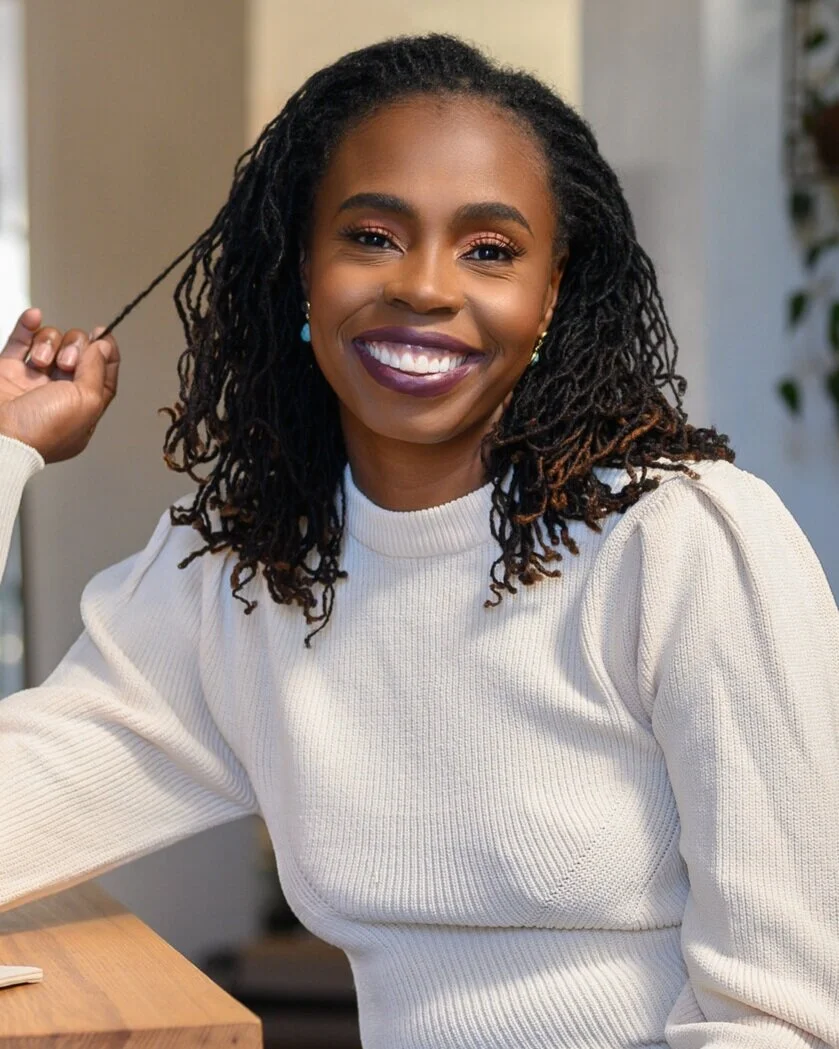
Hey there I’m Naseema
My dream is for everyone to know that financial independence is attainable with a little intentionality. Learn how I can help you finally break the cycle of living paycheck to paycheck.
Join the Facebook Community
Join the Financially Intentional community and get access to resources to guide you on the path to Financial Freedom.
Watch these Videos To Learn How to…
Keep Listening
Here are some more episodes you may enjoy…





We break down what’s really happening with hormones, metabolism, and aging in a simple way, including why perimenopause can sneak up on you.