

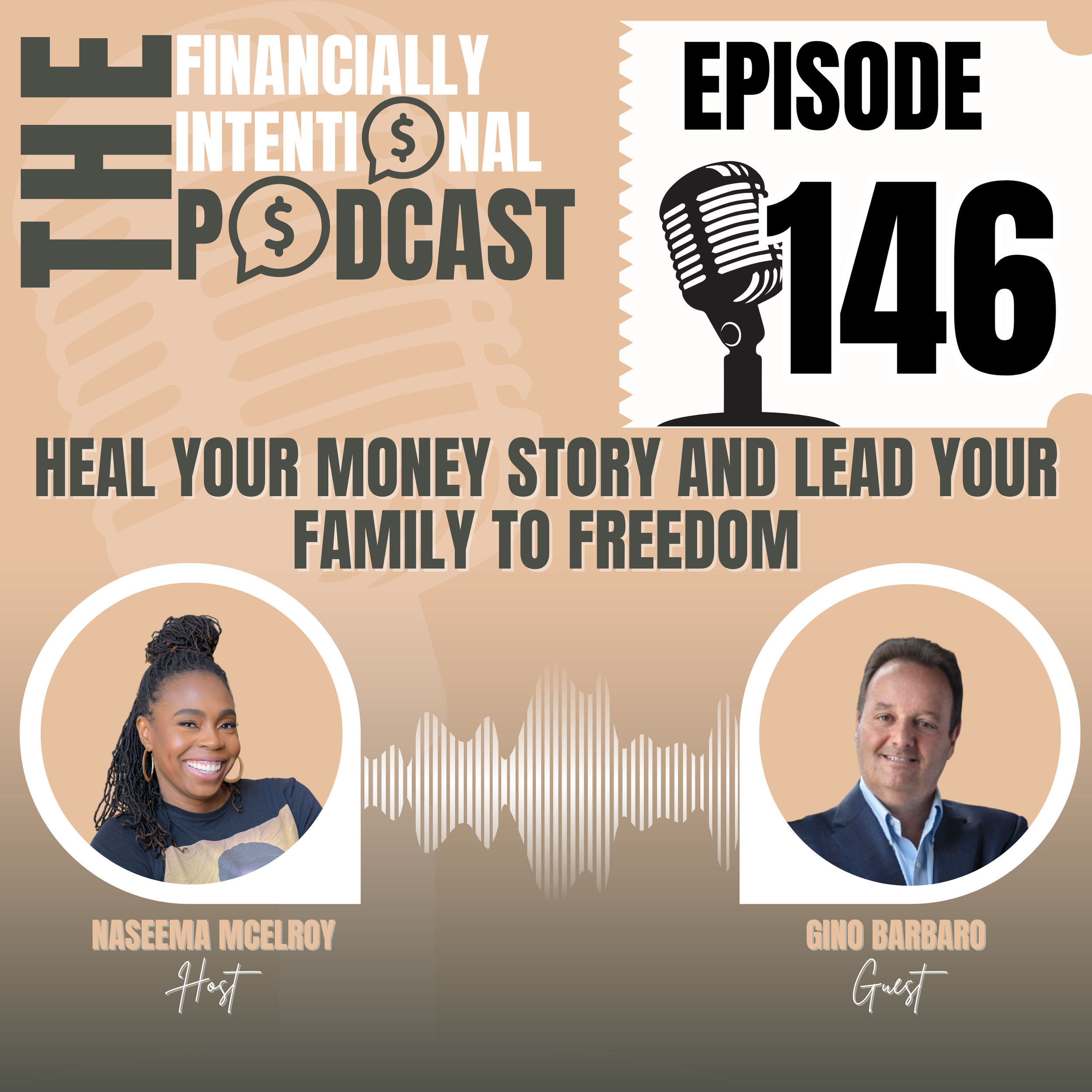
Heal Your Money Story and Lead Your Family to Freedom - Episode 146
In today's episode, I sit down with Gino Barbaro, an investor and certified money coach, to talk about money, family, and simple steps to take control of your future. We dig into money stories from childhood, how they shape our habits, and how to heal them so we can find peace with our spouse and teach our kids with confidence. We break down how banks make money and what it means to become the boss of your money with values based choices, cash flow, and real estate you can understand. By the end, you’ll have small, clear moves you can start today to build wealth and feel good about money at home.
About our guest:
Gino Barbaro is an investor, Certified Money Coach®, entrepreneur & podcast host. As an entrepreneur, he has grown his real estate portfolio to over 1,800 multifamily units & $450,000,000 in Assets under management.
His mission, through Barbaro 360, is to empower families to build lasting legacies by focusing on restoring traditional values in family life, finance, and helping families create a healthier relationship with money.
Gino is the best-selling author of Happy Money Happy Family Happy Legacy. He resides with his beautiful wife Julia and their six children in St. Augustine, Florida.
Barbaro 360
Happy Money Happy Family Happy Legacy: How to Use Money as a Tool to Create Happiness in Your Family’s Life
—-
Please join me here, and follow me on social media, Instagram, and Facebook.
Need help getting started on your path to financial freedom? Start Here
Join the Financially Intentional Community
Oh and please subscribe and leave a review on whatever app you're using to stream this podcast.
Get my book Smart Money
Subscribe & Review
Love this episode? Please subscribe and leave a review on your favorite podcast platform.
TRANSCRIPT:
Naseema: [00:00:00] Gino Barro is an investor, certified money coach, entrepreneur, and podcast host. As an entrepreneur, he has grown his real estate portfolio to over 1800 multifamily units and 450 million in assets under management. His mission through Baro 360 is to empower families to build lasting legacies by focusing on restoring traditional values and family life.
Finance and helping families create a healthier relationship with money. Gino is a bestselling author of Happy Money, happy Family, happy Legacy. He lives with his beautiful wife, Julia, and their six kids in St. Augustine, Florida.
What's up? My financially intentional people? I'm honored to be joined today by Gino Barbara. We're gonna talk about money as usual. We're gonna talk about it in relationship to your own personal responsibility and also like how to have [00:01:00] responsible financial relationships within your family. So I'm super excited to have you, Gino, and I know we'll have an incredible conversation.
Gino Barbaro: Hi, Naima. Let me tell you, you've got a sweet voice, man. Wow. You sound great.
Naseema: Because I.
Gino Barbaro: Is that why I'm just saying? It's wow. It just rolled off the tongue nice and melodic, and it just sounded great.
Naseema: Oh, you are so sweet. I'm fighting off a little cold. It'll be gone by tomorrow. It has to be. 'cause I'm going to Jamaica.
Gino Barbaro: All right.
Naseema: All right, Gino, let's talk about how you guys started in the finance space. What led you here?
Gino Barbaro: Oh, having two immigrant parents that came to the country when they were young and they were looking for the American dream, and that's what they focused on. They focused on saving and money and building a business, a small restaurant, and buying real estate, and that's the world that I gravitated towards.
I was the first person in my family to go to college. I graduated college and. I didn't like it. I didn't like working on [00:02:00] Wall Street. I worked there for a year. I wasn't a cubicle person. I wasn't built to work for somebody else. And I went into the restaurant space and that whole time understanding finance, but for more of a scarcity mindset for my younger years because it was all about save, save, save, save for a rainy day.
And I had the foundation. So I never went into debt. I was always financially. they say financially not even intelligent, but I wasn't a risk taker.
And when I got married, started having kids, started going down that road and I said, I need to find and make money somewhere else because this American dream of having a small business ain't working in 05', 06', 07', 08', everything shifted back then
and people needed to realize that you
needed to make, multiple streams of revenue.
And
I decided to get into real estate and that's when, for me, everything changed. Everything changed when I decided to get into real estate.
Naseema: And let's talk about that American dream, because I think the American dream can be different for people. So when your parents, and where are your parents from?
Gino Barbaro: They're from Italy.
Naseema: Okay. So when your parents came to this country, like what was their American dream for them?[00:03:00]
Gino Barbaro: It's interesting. My mom was 14 years old and she was given the choice to go to school or to go to work.
Naseema: Uhhuh.
Gino Barbaro: She had to go to work 'cause she had to pay for the part of the rent. So she never finished quote unquote high school. My dad finished it, but more or less. I don't even think he went to school. He just got a diploma.
Smart dude. He spoke five languages. He ended up going to the business world. I just really think they wanted to have a home here to have a couple of cars. My dad's dream was always about buying El Dorados and having those things
and being able to, to provide for his family and being able to go back to his home country, buying a house there, having a home here, and
that's what the dream was all about for them. I think if we go down and we take a look at how that dream has shifted, you go back all the way to 1970 when we were taking off the gold standard. That's when you can see the whole American dream starting to erode. It takes decades for it to happen, but once the government starts printing money a La Fiat without anything backing it up, we create inflation and
we create stagnation, and then [00:04:00] all of a sudden the middle class dream of where you're making six figures is not what it used to be.
Biggest six figures, what it used to be. And that's where the whole crux of the issue and crux of the problem is but the great news is you can still do really well earning six figures if you are financially intelligent
and you understand to be disciplined with your money. I have a concept called the baby money soldier. And the reason why I love it's 'cause I grew up playing twice soldiers and me and Jake were sitting around one day, my business partner and the baby money soldier is every dollar that comes into your life. If you have control over that dollar. You are able to be as the financial general of your battlefield to deploy in any way possible, whether it's an operating expense, whether it's a luxury going on vacation, whether you're investing it in a property, whether you're putting it the whole life insurance and you're deploying and you're keeping some of the reserves, whether you're spending some for insurance.
So if you can take it from that perspective, and I shared a quote with you, responsibility is the price of [00:05:00] greatness
if you're responsible. Every single baby money soldier, the idea is to procreate them, to continue to have them multiply. But what most of us do is we kill our baby money soldiers too year early, too young, because we want, on that vacation, we wanna buy that car.
We don't have the time for that money to start growing and to start reproducing. And if you don't understand that very simple concept. That's why most of us struggle and it's, unfair for those of us who are living now versus 30 years ago. Nowadays you have Netflix, you have cell phones, you have Ring, you have Apple, you have Hulu, you have Disney, you have all of these luxuries, all these amazing things.
Whereas 30 years ago, I basically had. Four channels, cable, I didn't have any of these luxuries, so I was possibly able to save more. But that doesn't mean nowadays understanding that you have the ability to do that and you have to be able to pick and choose and to create a cashflow plan for yourself to able to allow you to allocate those resources in whatever manner you may, and just leave some of those [00:06:00] aside so you don't kill them.
So you allow those resources that you save to be able to reproduce and to multiply.
Naseema: But I think that's part of the American consumerism, like we're taught to be consumers and to kill those baby soldiers off really early. We're not taught to build wealth and. If you don't get those money lessons early, like I didn't, and I was like, we don't talk about money in the house 'cause there is no money.
And so it's just but if you don't learn those lessons early, now you have to go back and understand. All right, listen
Gino Barbaro: Mm-hmm.
Naseema: where I at right now. Now how do I get those new baby soldiers to start working for me? And I think that's what you were talking about I like to say financially intentional because that's my brand, but that's where it started from is because if you get intentional about the money that comes in and out.
And you're the CEO of your money, or in your case, you're the commander of that [00:07:00] troop. You have so much more power over your life, your whole
entire
Gino Barbaro: you wanna become financially intentional? What was the point in your life where you said, enough is enough. I want to take control of my financial future. Do you remember that specific
Naseema: Yes. I do. I was a single mom. I had my first daughter, and I was like, if something were to happen to me, I need to make sure that my baby is taken care of.
Gino Barbaro: Mm-hmm. Mm-hmm.
That's powerful and
and what I want everyone to hear, what you just said about two minutes ago is what we were taught. I just became a certified money coach a couple of months ago
and I found it to be fascinating 'cause I say to myself, why are some people so really good at this game of money?
And a lot of us aren't.
Money is such an emotional topic. It's such a taboo topic. Nobody wants to talk about it.
But why is that?
Naseema: Mm-hmm.
Gino Barbaro: adopted patterns from your family that permeate into you. Unconscious behaviors, unconscious beliefs, things you've heard The toy soldiers. Ironically, when I was five years old, I went to the store [00:08:00] with my grandma who had enough money to buy the groceries.
I wanted to buy those soldiers. She said, Gino, sweetheart, we can't buy them 'cause we can't afford 'em. I remember
leaving the store crying, crushed, and she said, when mom comes back, we'll go buy them. I don't remember if we went back, but that's a money trauma. A five-year-old.
Saying to themselves, we can't afford it.
And then at eight years old, going to work with your dad and your dad says, great jobs. Here's $2. All of a sudden that memory says to me, Hey, working hard, you're gonna make money and everyone's gonna love you. So that was encoded into my DNA
hard work. Pay off but save. 'cause you never know when you need it.
So that's really interesting. So anybody listening to this, go back to your history. Go back to the bio, go back to those memories, those things you heard. And it doesn't have to mean you. It could be one of your parents telling you we can't afford it. Put that away. Why are you always buying things?
These are things that you hear as a child and they are traumas. As a child and you grew up with them, and then all of a sudden you become an adult and you start acting as if you're 12 or 13 years old, [00:09:00] unconsciously, and you don't know why.
And it's very interesting, and once you start diagnosing that, you look at those patterns and then all of a sudden the responsibility comes into play.
You can either continue. With those patterns. Some of 'em are great patterns. Saving was a good pattern for me. Hard work was a good pattern for me. I adopted a lot of really good and empowering patterns for my parents, but there were ones that weren't empowering. I had the option to say, you know what?
I'm gonna work on that. That is not what I want. And there is work involved, there is reflection involved
there. There's emotions involved. 'cause you're a little kid and all of a sudden you hear your parents tell you, we can't afford it. Only rich people have that. Rich people are greedy. They're evil. If you've heard that your entire life and you become an adult and then you have an opportunity to set you financially free, but you have unconsciously, rich people are evil, but you may have the ability to become a rich person, are you gonna become a rich person?
No. you're not. Never.
Naseema: you're not.
Gino Barbaro: That sucks because money is not anything other than a result. If you get really good at [00:10:00] something, you're gonna attract more money. That's
the reality, and if you know how to utilize it and how to adopt it and how to wield it, you'll create even more money. It has nothing to do with the kind of person you are.
Money does not corrupt the person. It reveals a person. That's the reality of it. If you're a great person, it's gonna amplify you and you're gonna be able to do other great things if you're a terrible person. You're only gonna do even more worse things with the money, so you get to choose which one you want to be.
Naseema: I love that, and I'm like, yep. Shaking my head the whole time because that is what I tell people. And a couple of great things you mentioned. It's like a lot of people do not understand like money traumas and they wanna throw a budgeting template or, an investing class at, trying to fix their finances.
But it's really about going back and I just, I love now we're. Going into a movement of financial therapists that help you work on those money traumas. And a lot of people need to [00:11:00] understand where those core beliefs come from so that they can fix those so they don't repeat those things in adulthood.
So thank you for bringing that up. And you mentioned that you just recently became a money coach, but I know that you're a multimillionaire. So you were good with money before you became a money coach. How did you grow your empire?
Gino Barbaro: It's interesting. I became a money coach because my relationship with my wife when it came to money just sucked. To be honest with you, over the last couple of years, it's gotten a lot better in the money coaching space and I would really would love to promote the lady that I got. D certification from her.
Her name is Deborah Price
Getting paid for this. It's the Money Coaching Institute. She's been doing this for over 30 years. She's
one of the pioneers in financial therapy.
Just go check her out. She's amazing. I just, like I said, got the certification. It's so worth it. I got it because I wanted to be able to convey the message of money to my kids better.
I've got six kids and I've created a lot of trauma amongst those children and like my 19-year-old a couple weeks ago was like, dad. I had a little anxiety. I [00:12:00] was online, and when I went to go buy something, I felt a little anxious and I'm saying to myself, holy crap, I got enough money to buy whatever we need.
And I'm creating this anxiety in her and she's gonna become an adult. So I wanna learn how to be able to have a better conversation with her. And I
wanna be able to throw our company of Barbara 360 to change the world, one family at a time. And through this conversation with money and through spouses being able to sit down. Not argue about money, 'cause money is just a symptom. But
let's go a little bit deeper. Let's go figure out what's going on in the relationships. To your question specifically, I just got into the real estate space. I started buying apartments
and buying apartments was challenging. A lot of living beliefs.
I'm a pizza guy. How am I gonna raise money or get money to buy these apartments, right? I'm not this finance guy. I didn't get my MBA I don't have a lot of money. I just had a lot of determination. I had a lot of grit and I had a lot of mouths to feed, so I figured it out. And through the years, starting in 2011, up till now, me and my business partner, we've, purchased over 2200 multifamily [00:13:00] units.
We have right now over $400 million in assets under management. But it would not have been able to possible for me to do it if I was not financially, as you say, intentional. I needed to be intentional with those dollars.
I wasn't out there buying Lamborghinis. For me, it was values based decision making,
my values aligned with my children and with building wealth for the long term.
Becoming a financial steward and being a role model to them and to others who wanna actually create wealth and not really worry about the material aspects of it. Great. Cars are great. Houses are great. That's not what's gonna bring true joy to people. It's gonna bring true joy to people I think. At least the way I experienced it, I became financially free and now I'm, I'm like, what's next?
And when you
become financially free, you're at that level. You're like I can help others. I can serve others. And then all of a sudden you start helping one person leave their job and then another person closing a deal, and then another person saying, Hey, you helped me with my goals, my goals, I've exceeded them. That's where your life starts to get really interesting and you're helping others. You're creating a [00:14:00] business, and then things start to, snowplow and multiply and it's really great. But with the money, if anybody's on here you're really having challenges with your spouse, just sit down, take a piece of paper out and reflect on that, your childhood, see what you went through.
My wife was a single mother. She was the youngest of three. Her mom was always running around two jobs. Never really spent the holidays with them because she was working. My wife wanted to be a stay at home mom. She wanted
nothing to do with money and she would what we call the archetype in money coaching.
She was an innocent, she buried her head in the sand and she just didn't wanna deal with it.
Me, on the other hand, oldest child immigrant money focused success. I was the person who was gonna be the provider. I was what you call a tyrant and a self tyrant. I was the one who was living in fear, living in anxiety.
We had the money to do certain things, but I was like, Hey, we can't afford it now.
So you have the tyrant on one hand who's trying to control things that you have. The innocent on the other hand, who was like, you [00:15:00] know what? I don't really wanna argue. That's not a good combination. For years, it was stressful, it was challenging because I'm living in this fear-based reality, which is I can't spend money.
I've got six kids. How am I gonna pay for college? How am I gonna pay for, dental, how am I gonna pay for retirement when all along I should just say God's gonna be able to provide. I should have
realized that sooner, but I didn't. I was living in that paradigm of what my beliefs and patterns were.
And once I realized that that's not the case, and I started to be able to have these conversations with my wife, if you're out there and struggling with your spouse, just do that. See where they come from. Be empathetic and find out what their beliefs are and then maybe you might say to yourself, wow. She doesn't wanna spend any money, or he doesn't wanna spend any money because they grew up dirt poor and they don't want to end up being homeless. That is more the root cause of, or let's say one of them wants to have separate bank accounts. Maybe one of them had a mother or father who's just untrustworthy and just was terrible with the money, and that's their persona right now.
They don't trust their spouse because that's what [00:16:00] they were raised upon. So really dig a little bit deeper and find out what the root causes are. 'cause it's not money. Money is just. The symptom of what's going on in the relationship?
Naseema: I love that. I love that. But walk me through like how you healed that relationship with your wife.
Gino Barbaro: It's still being healed
right now. It's still a
journey and I don't think things will ever. Be a hundred percent healed.
Because I.
remember the shame when we got married, I, she just told me this last year, we were at a couple's retreat and the Italians, to them, these engagement rings.
I remember the big thing back in the nineties. One carat diamond I didn't wanna spend seven grand on a one carat diamond, so I got a three quarter carat diamond. And everyone made fun of us for that. And that's a really heavy trauma for somebody who, we're just newlywed.
They're all looking at her ring and they're making fun of her and I don't even know about it. But that's a burden, that's a money
trauma. So she brings that her whole life. And she just told me that last year makes you feel terrible. It makes you reflect and say, how could I have done better?
How can I be better? Maybe I can teach my kids to be better and [00:17:00] maybe I can ask for forgiveness. But these are some of the things that you need to be honest with, with your spouse. I remember there were times when kids needed braces or dental and I, I just didn't want to pay and I was really afraid. And you have these conversations now you look inside. the Money Bio really helped me out looking at all of these different events that happened in my life and then all events that happened in her life. So I've realized over the last couple of years, I need to pull back. I need to actually include her in these decisions.
And at the same time, she needs to accept responsibility and want to be included. 'cause
if and when I'm not here, I have got a large estate,
I've got revocable trusts, I've got insurance policies, I got 30 bank accounts, 50 LLCs. She needs to understand what's going on.
her her mindset was when I'm not here, my son Michael, take care of it.
But then she realized that's really not fair, putting a burden on
Naseema: On him that I'm not willing to carry. Yes,
Gino Barbaro: So don't you think the of both? I think
both partners need to understand that they need to take [00:18:00] responsibility. I was wrong in becoming the tyrant, but my wife also has some, issue with her becoming the innocent and
putting that burden on
me.
There was a lot of pressure on me all those years and I was willing to accept it, but at, at a certain time, I think she had to realize that being an innocent really was totally disempowering to her.
Naseema: It sounds. Trying to find a way to meet in the middle. There's gonna be push and pull on both sides. You're gonna be stronger at something, but like having all that burden on you and then her being like I don't wanna deal with, it wasn't working. So like continuously trying to work and seeing, and it sounds like there has to be a lot of accountability on both people to be like, Hey, you know what?
I do recognize that this is what I messed up and I love that. She was like, dang, like that is, that's not right to be putting that all on my son. I love those examples. And I just love that, like you said, it, it is a marathon, right?, It's something we're gonna continue to work at.
Like it is not [00:19:00] completely healed. It's a goal, right? It's something that you're continuously striving to get to, and then you're not perfect. It's not linear. That's why I tell people, all this stuff is not linear. You go back and then you, take two steps forward and then you take three steps back.
Like it's like that. And so I love those examples and I love that you guys are working towards that and that you're able to see. Like where you've messed up and been able to now change that, if not just in your relationship before your kids and how old are your kids?
Gino Barbaro: I've got a 26-year-old who just came back from being a missionary. She's back home now, so she's doing some film work.
I've got a 23-year-old, a 20-year-old, a 17-year-old, a 14-year-old, and an 11-year-old. I would've loved to have more, to be honest with you. But and and part of the fear, that's part of the fear, that's part of the not being able to trust and saying let hear all these outside voices saying how you gonna pay for this?
And, that was part of the struggle that I had. But one word that Deborah [00:20:00] Price uses, and I love this term, that she calls financial intimacy. If you can become financially intimate with your spouse, then all of a sudden you can talk about, I think anything, and I know a lot of men out there, it's really challenging. We'll make decisions and sometimes we won't tell our spouse, we did something. You as a guy have to understand why are you doing that? Why are you hiding that decision? Is it from your past where you feel as if you're judged? You feel as if there's some shamer around money and you're probably doing it.
Not to hide it from your wife because you're doing it for other reasons and like maybe you just don't wanna make the wrong decision and be judged. But these are things we need to really look hard at and understand why are we're doing these actions. And I think the ultimate goal is to become financially intimate with your spouse, with your partner, and also in a way with your children as well.
Letting them understand. The value of money, what money is, how to become better, and how to become more independent and as you say, intentional with money. That's what we're trying to teach children. We're trying to teach our kids that once they're become adults, how to make decisions. How to make decisions for [00:21:00] themselves based upon what they value.
Naseema: I love that you have such the range of kids because like I know you can heal those money relationships that you have with your older kids. And now you have the opportunity for your younger kids to implement those things 'cause they're coming of the age where they're starting to learn and implement the money
stuff.
Gino Barbaro: It's annoying 'cause my older kids, I want them to do some money coaching. The oldest one, the young one. She's 11 years old. She's
Let's buy it. What do you buy? And she doesn't ask. She's all into it. She's got so much confidence, it's actually annoying. She's just buy it.
Let's go buy it. Why don't we invest that? I'm like, man, what? Like you could see the complete difference in 15 years, how things have evolved. And it's not like from a standpoint of being materialistic, just understanding. Hey, if you have the money, why not use the money? Whereas the older kids were more like, Hey, we have the money, but we, can't spend the money.
We need to save the money. It's just that paradigm or that mind shift. It's all it needed. And yeah, I absolutely have [00:22:00] created a bunch of traumas for your kids, but listen, when you're listening to this, we all are going to make mistakes with our
children. Don't think we're not going to we, whether you love them too much or you love them too little, we're always gonna make mistakes and just realize that's part of the journey and part of. Opening up and asking 'em, Hey, what have I done wrong here? What can I do better?
Naseema: Oh my God. When you say annoying, like I know that feeling because I'm just like, I worked so hard and I built these things for my kids so that they can be like, yeah, let's go buy it. Because I want them to understand that everything is for them.
Gino Barbaro: Yes.
Naseema: But it's annoying for us because we're just like, man, do you know how hard that I had to work for me to even start thinking like that, or to be in a position to do that?
But for them now they think like that, and so it's just easily gonna float to them.
Gino Barbaro: yes,
Naseema: Yeah, so it is, I, when you said annoying, I'm like right there with you and my kids are 11, six, and two, so you know, I'm fortunate [00:23:00] that I'm starting to work with them early, but I understand like this is why we do what we do.
But you look at these kids like God, like they're really spoiled. But that's exactly why we do it.
Gino Barbaro: Spoiled in a different way, I think
because it's not even the money. It's more they want the relationship and they want the connection. And I think, I mean like if you're a parent, you're always struggling with money, you're always on edge, you're always afraid. It's, it's hard to really be authentic and be there for your
kids.
'cause it's a constant worry. About money and, and it's challenging. And I was there
Naseema: And to talk about it too, like why would you talk about money with your kids if that's one of your biggest stressors?
Gino Barbaro: Yeah.
As a parent, one of the biggest stresses is when you make mistakes to say, sorry. And that's one of the things that I've learned
as a parent is to ask for forgiveness.
What's harder than that? I'd rather talk about money any day than saying, sorry, even today's day, I'll rip on money anytime. But if I gotta say sorry, it's a little challenging for me to say.
Naseema: Yeah, it's hard for a lot of people. It's hard for a lot of people, but sorry. Does [00:24:00] help a lot.
Gino Barbaro: Yes, it does.
Naseema: Yeah. So with your older kids, what are some things that you're doing now to heal those money traumas for them or help heal that relationship?
Gino Barbaro: We just started a business about a year ago called
Barbara 360. They're all involved in it.
All of my, the older three children, they're all in our, my investments. My son is, 23 years old and he's invested in nine of my deals.
So he's 20. he's got his federal firearms license. He's got nine k ones. He's a really savvy, smart kid and we're actually in business together starting an Amazon store. So that's what he wants to do. And the funny thing is, if it was me years ago, I would've said to him, Nope, you gotta get out. Gotta get a job. You
Naseema: job. Yep. Mm-hmm.
Gino Barbaro: Now things are different. Now it's okay, it's not what I want.
It's what you want and how can I support you
Naseema: you.
Gino Barbaro: in what you want? That's a big, that's really hard for parents because we've been doing this thing for 18, 19, 20 years. We've been telling them what to do all along, and then when they become adults, it's we think we need to [00:25:00] continue that instead of listening to them and what they wanna do.
And then obviously, as far as their businesses, they're part of the bookkeeping every month. They're part of the mission statement. They're part of what assets we have, so they're all in those conversations as well. And it's an important, and I think. Trying to have that conversation with your children. First of all, you need to be on the financial page. The kids will mirror you if
they see that you are not, if you're going out there, you're spending extra on your credit card, you're late on your payments. They sense that they see that. So I think the first thing is for you to really take control of your financial house.
I had to do that, but as I was doing that, still teaching 'em the foundations, the basics.
Naseema: That's it. Yeah. I think people think they have to figure it out, and what I learned is, and actually the reason why I started this platform was in order for those lessons to really sink in to be able to teach them back to other people.
And so it's not about. Now I know how to invest, so [00:26:00] now, and I know everything about investing, so now I can teach my kids.
It's about bringing people along that journey with you, letting them see you make those mistakes. It's about how you recover from those things. Letting them see that, but doing it imperfect and modeling those things for them Imperfectly. If money is a stressor for you, talk about it and say these are some things that I think I can do better.
Bring people along that journey instead of thinking that you have to have it all figured out but before you can do that, you have to start yourself, right? So
Gino Barbaro: Yes.
Naseema: It's about starting, starting knowing that you don't have to know everything to get started starting and knowing that it's not gonna look perfect, starting and knowing that you're gonna have failures and that's just part of the process.
And bring them along with you.
Gino Barbaro: Mm-hmm. I[00:27:00]
Naseema: Yeah. Yeah. I just think that. There's so much shame around money, mistakes, and it's like this sunk cost fallacy where people think that, oh like I made these mistakes. There's no get back. But, and then they continue to do that, and then they continue to struggle when they have the wherewithal and the means to fix it.
If you just acknowledge that you make the mistakes and now let's work on fixing it and what that will look like. Yeah.
Gino Barbaro: My, Good friend Phil McKernan said to me about a month ago on our podcast, he said, we give ourselves what we feel we deserve.
Naseema: Mm-hmm.
Gino Barbaro: And if you have any shame around money, like my wife did like I did early on, are you think you're going to attract money or, or you think you can actually hold money?
Or do you think you deserve to have money? There's a lot of work involved. And what Phil says is the work is hard.
It's really hard to do the work, but it's a lot harder not to do the
work
Naseema: it? That's it. [00:28:00]
Gino Barbaro: Right. And it's, it's challenging and I just want everyone to know that everyone on this planet, including Elon Musk, including all the richest people on the planet, they're winging it and they're still figuring it out.
That's
Naseema: That part.
Gino Barbaro: They don't know. Things change so quickly and they're we're all out there just trying to figure it out. So as you said. So eloquently. You don't have to start and have it all figured out. But you have to start. You
have to start somewhere and it's okay where you start. 'cause Elon didn't start with Tesla. He started with something really small and he built something a little bigger, sold it, built something a little bigger, almost went bankrupt, slept on a floor in his factory for six years, and that's how he figured it out. Now, in any instance, in whatever you want to accomplish, that other quote is if you aim at nothing.
You're gonna hit it every time.
Understand what your target is.
Do you wanna make a thousand dollars a month? Do you wanna make 10,000? What's the ultimate goal? What are you trying to achieve? Try to aim for that and then try to figure out who or what or where, or what kind of resources you need to [00:29:00] learn to be able to hit that target.
Naseema: Exactly. Exactly. And I love that. And it's just because, first of all, people don't set a target for themselves, so then they will never reach it. And then. They don't get to a place where they understand where they're starting from. A lot of people like to bury their heads in the sand when they're come.
their money, they don't understand their spinning, they don't a lot of people can't even tell you like the real number of how much they bring home every month, and so set a start point, then set a target and then work towards that.
Gino Barbaro: Mm-hmm. I
agree. And it's interesting. You call back what you were just talking about, and it's, we give ourselves what we feel we deserve. If you don't think you deserve that, then you're not going to achieve it. And I'm here to tell you everybody, we are all deserving. Of ultimately
becoming financially free, and
if at least not financially free, let's all focus on what we were put on this planet to do.
Let's all at least figure what that
is, so at least we can enjoy what we're doing. I wrote [00:30:00] the book, happy Money, happy family, happy Legacy, because if it is what you're doing, like you're doing this podcast, I'm on the show. This is happy money for us, whether we're earning money or not. This is something that's joyful, intentional, powerful for the two of us.
Can you imagine if the world was full of people in that, in that type of activity or that type of action, how powerful the
world would be instead of shrinking back and saying, you know what, I can't do that because I'm not making money. That's what we're always focused on. There's certain elements in life where it doesn't matter whether you make money or not.
I'd rather have you focus on happy money on something that's gonna light you up, and then all of a sudden you do it a little bit more and you do a little bit more, and you get better. And then one day you have your own podcast, and then you start generating a little bit of
money, and then all of a sudden you become a coach.
And before you know it, you don't have to do what you're doing. You love what you're doing here. But like you said, if you don't turn on that mic and start that first podcast, it'll never become a reality.
Naseema: A hundred percent. A hundred percent. I love that. Do it in imperfectly, but just starting. [00:31:00] Just starting. I also love what you said about. Your adult kids and meeting them where they're at and then seeing how you can support them, you came from a generation of immigrants that was like, work, work, work, work, work hard, drive to get those things, those, even though the dream wasn't.
That grand. It was still like a house, a car, and all of those kind of things. So then typically, like with my parents' generation, it was like, okay, I'm gonna make sure that you go to school by any means possible so you can get a good degree, get that good job, stay at that job forever, and then be able to have a comfortable retirement.
Gino Barbaro: Mm-hmm.
Naseema: But that's, like then what happened to me, I did, I went to the best schools and then I came out with $200,000 in student loan debt. And then what? What kind of job supports that kind of debt, and so like it doesn't have to look like that. [00:32:00] And I think. What you're doing is changing the narrative and then giving your kids space in which to grow, which is also a privilege.
It's a super privilege that you're able to even think like that, but to provide a foundation for them to fail.
Gino Barbaro: Mm-hmm.
Yeah.
That student debt is a challenging one for me. It's one of those things where if you need to go to college and you need to do the schooling, I just think, I was actually doing a lesson with my kids last week on, we're doing budgeting and I don't call it a budget. I call it a cash flow plan.
And I said at the end, and I said, every month we're making 4,000 bucks. Here is our allocated cashflow plan,
25%, the housing, whatever, and it came down to student debt. Four grand was already done, and they're like where's their money for this? I said, that's the reality. The reality is that's why people aren't able to pay
because they've have so much personal debt on top of that.
So maybe make the decision, do I need to go to college at that price
point and make the [00:33:00] choice? Look at it as an investment. Maybe go to your, get your somewhere else. Do it online, do it cheaper. There's other alternatives. Maybe take a couple of years off.
Work, maybe get a scholarship, whatever that looks like.
But at least having that a conversation with your children and saying, you're making four grand a month, 3,500 bucks is gone. You only have $500 for disposable income. Would you want to spend that on yourself? Or do you wanna go out and spend that on all student debt? And having that conversation will make them understand, wow, okay, I'm delaying the gratification.
I understand what's going on, and I need to be intentional with my money.
Naseema: Yeah, I just that decision to go to college is like one of those things that again, like for, our parents' generation. They like, okay, my dad came from a generation that college was paid for, for a GI bill. So they couldn't even understand or fathom the possibility that school would cost that much,
Gino Barbaro: mm-hmm.
Naseema: But now it's just okay, now even, like if the decision is to go to college, like what is the best possible way? [00:34:00] Did I need to go to USC? Probably not. You know what I'm saying? Because ultimately I ended up being a labor and delivery nurse, and I could have been a labor and delivery nurse with an associate's degree.
But. The ability to have those conversations and understand is super impactful, and that's why I love that you focus on your family and you have those conversations as a family. And what is missing, I think, is that people just don't have the right. Words to have those conversations because again, most people are trying to figure out their own stuff, and so they don't think that they have the ability to have those conversations.
But again, if you're coming of age where you have a kid that's going to college, this is your opportunity. Yes. I could come to my kids and be like, listen, I left school with $200,000 in student loan debt. I don't want that to be a reality. Let's work together and figure out a plan and how that's [00:35:00] not gonna be your reality if you wanna go to college.
Like it's conversations like that. Can you share some other examples of some ways that you talk about money with your family?
Gino Barbaro: When I have a deal, they'll ask to get in on a deal.
So the conversation is, and it's interesting. So what I've structured my shoulder to do is to set up a checking account so they have their own checking account for basic bills. To set up a business checking account. So the business checking account has enough money in that account to fund the business.
'cause two of them are massage therapists, so they
have their own little businesses there. Great. My daughter spent eight grand on her degree to get a certificate in massage therapy. She makes a hundred bucks an hour. So you do the math. She's basically net positive after a month and a half worth of work is incredible.
If you really think about it, it's
amazing. So you have that and then you have a savings account.
So there's three buckets. So you
have to allocate your money. Your checking for your personal is just personal. Whatever's left over goes into that savings.
That's saving account is to buy an asset.
That [00:36:00] will pay for an event.
And when that event is over, you continue to have the asset.
That's what's important and that's what that savings account is. Now, obviously in the savings account, you wanna have some emergency funds. If something breaks or something happens, maybe a couple of months set aside for personal if something happens.
But other than that, I want them to split it up in those three different buckets. And obviously part of the savings needs to go back into the charitable, but that's what I want my children to have their mindset on. And for us as far as money goes for part of the business is when we're talking from a business perspective. When you start the business or you do the business, I'm trying to think of some kinds of ways for me to teach them about money. When they get to be adults and they start asking those questions, you have to be there for them. Go to the bank, open up a checking account with
them, go to the bank, open up credit cards with them, let's start tracking and monitoring
the stuff with them. Don't let them do it by themselves 'cause they've never done it before. You have to be there every step of the way with them. When they open up their LLCs, make sure you help them open up their [00:37:00] LLCs, make sure you get a bookkeeper with them and help them reconcile their statements every month. And then from there, you don't have to teach them anything.
They'll start asking you questions. 'cause they'll bounce into things that they've never even seen before. They'll be like, really? You have to pay this stuff monthly? Now? It's oh, monthly recurring charges, huh?
And then all of a sudden they're like, oh, things cost this much.
Interesting once they start getting involved and
once they start having skin in the game, skin in the game is everything in this world.
We have to have consequences and if we don't have consequences, it's gonna really inhibit what's going on. And you're seeing it in society nowadays. If you're gonna not, push with the consequences and make things, consequential, then you're gonna have people who are just not responsible.
And you're gonna have people that are really gonna fail in finance.
Naseema: Yeah, I really love that. But I could just see like your 11-year-old is gonna be so freaking savvy, like
Gino Barbaro: It's annoying. I know. It is. It's annoying. She's putting dots together. So I was actually teaching them yesterday about the banking [00:38:00] system.
So the banking system it's fractional banking.
So I literally from, this is from an 18-year-old, 1714. So the fractional banking system, I say you go to the bank, you give them a thousand dollars, the bank's gonna give you 2% on your money.
Interest is the cost of money.
They're gonna give you $20 a year in interest. The bank's gonna take your money and it's gonna lend it out at 6%.
So they're making 4% on the money, but it's not 4%. 'cause they're making $60 from a mortgage
on the $20 they're giving you. So they're making $40 on your $20. So they're making 200 plus percent on your money,
which is other people's money.
Now, all of a sudden I've dispelled the myth that you need money to make money
'cause the bank's making money, but it's not their money.
But it gets even worse. Because the fractional banking system allows you to create a multiple, so the bank can take their reserves of a thousand dollars and nine x that so they can go out and lend nine times the
amount plus, so it's [00:39:00] $9,000
. And they're saying, how does that happen? I said, money just got created out of thin air. So if anybody's saying there's not a lot of money in the world. Maybe me, you don't have it, but a lot of other people have money, so I want them to teach these principles so they're not held back by any kind of belief that they've heard elsewhere.
And I'm saying to you, so the banks making nine Gs, 6%, that's 500 bucks on the $20 that they're paying you for that thousand dollars. What kind of business? That's the business you wanna get into. You wanna get into the business of blending money.
Naseema: That's it right there. I was like, the whole time, I'm like, I'll just be thinking, how can I become the bank
Gino Barbaro: yeah. Yes. And that's what the 11 year old's sitting there going, that sounds pretty interesting, dad. And I'm like, yes. What they're doing is
they're creating money outta thin air. Money did not even appear it was there. They had a thousand, now they got 9,000. It's not even there.
9,000. And they're making a ton of money,
As my father would say, God bless America,
if you could figure out the system, then you can make money, you
Naseema: A hundred percent. A hundred percent. [00:40:00] Gino, walk us through this, Barbara Roll 360 and how people can access it.
Gino Barbaro: Just go to the website. We have a money quiz that's going up in the next week or so, and the money quiz is pretty
cool 'cause it has words. It's just emotions, things you feel about money, whether it's anxious, whether it's fearful, you're compassionate, you're giving, whatever it is, it'll give you an assessment of the money archetypes or the money types that you have.
So I would start with that. Go on the website, download a book, and then like I said, I, I'm I, I love what Deborah's done for my life. I love the whole process of the Money Coaching Institute. Unfortunately, I wish there were more men in the space because men and emotions, they don't really flow too well.
I got in it 'cause I'm like, I wanna figure out what's going on with myself. I wanna help more investors get into real estate and actually do deals. How do I do that? And I was figuring out the relationship with money is such a big factor in holding men back and it's holds women back just. as well.
But go to the Money Coaching Institute, check out Deborah's website, read her resources and her [00:41:00] books. 'cause she's done a phenomenal job in the space. She's been in it for almost 30 years.
She's a retired financial planner. Who saw the need to say that? Financial planning's not difficult, like you had said earlier, making a budget's not really hard.
What's holding you back from making the budget,
Naseema: That's it.
That's it.
Gino, this has been incredible. Such a great conversation. Everybody head over to Barbara three sixty.com. Check it out. All the links will be in the show notes. Thank you so much for sharing your resources about your financial coaching. I love that. I love what Deborah is doing in this space, so I just appreciate you.
I can't. Wait to see what your 11-year-old is doing. I'm gonna be falling our 11 year olds together.
Gino Barbaro: It's gonna be great. It's gonna be a great rock.
Naseema: Yes, yes, yes. But this has been phenomenal. Thank you so much, Gino.
Gino Barbaro: Thank you, NAEM. I appreciate it.
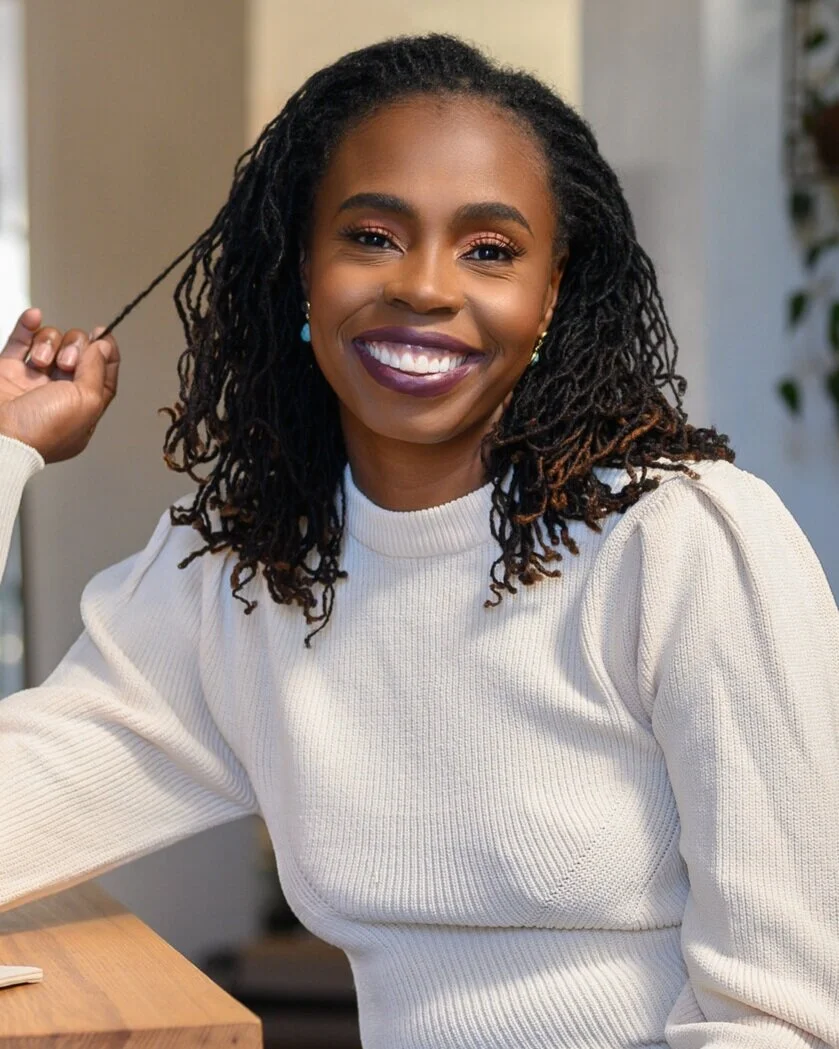
Hey there I’m Naseema
My dream is for everyone to know that financial independence is attainable with a little intentionality. Learn how I can help you finally break the cycle of living paycheck to paycheck.
Join the Facebook Community
Join the Financially Intentional community and get access to resources to guide you on the path to Financial Freedom.
Watch these Videos To Learn How to…
Keep Listening
Here are some more episodes you may enjoy…






We break down what’s really happening with hormones, metabolism, and aging in a simple way, including why perimenopause can sneak up on you.