
The Financial Dad Shares Simple Steps That Actually Work - Episode 145
In today's episode, I talk with Tim Smith, a Certified Financial Planner, about how to make money simple for families. We share easy ways to teach kids about saving, spending, and giving. We also talk about the real cost of college and how to plan before loans pile up. Tim explains why small habits like using cash envelopes, checking your bank app, and setting clear goals can help you feel calm and in control. We cover how to start money talks at home, even if you feel nervous, and how to make a plan you can actually follow.
About our guest:
Timothy L. Smith, CFP® is the Founder and CEO of Aurora Private Wealth, Inc., a financial services firm specializing in wealth management for high-net-worth clients. He co-hosts The Financial Dad podcast with his daughters, focusing on financial literacy for entrepreneurs, creatives, and families. Timothy is an advocate on investment advisor fraud and is finalizing a book offering guidance on protecting investments. He has experience in public speaking and theater, including performing for three U.S. presidents.
The Financial Dad
The Financial Dad @ Youtube
The Financial Dad @ Facebook
The Financial Dad @ Instagram
—-
Please join me here, and follow me on social media, Instagram, and Facebook.
Need help getting started on your path to financial freedom? Start Here
Join the Financially Intentional Community
Oh and please subscribe and leave a review on whatever app you're using to stream this podcast.
Get my book Smart Money

Subscribe & Review
Love this episode? Please subscribe and leave a review on your favorite podcast platform.
TRANSCRIPT:
Naseema: [00:00:00] Timothy L. Smith is the founder and CEO of Aurora Private Wealth, Inc. A financial services firm specializing in wealth management for high net worth clients. He co-hosts the Financial Dad Podcast with his daughters focusing on financial literacy for entrepreneurs, creatives, and families.
Timothy is an advocate on investment advisory fraud and is finalizing a book, offering guidance on protecting investments. He has experience in public speaking and theater, including performing for three US presidents.
All right. My financially intentional people welcome back. And today I am joined with Tim Smith and we're just gonna talk about money like we always do. Tim is the OG in the game and he has a lot of knowledge and. He has a podcast with his daughter. He talks about financial literacy and all of those great things.
So happy to have him on the podcast to have another [00:01:00] conversation about normalizing wealth. So welcome Tim to the Financially Intentional Podcast.
Tim Smith, CFP: you and thank you for having me.
Naseema: Of course. So Tim, of course, we're gonna talk about your background and what got you into the finance space.
Tim Smith, CFP: Oh, wow. I was a child actor singer, and I like to joke that that prepared me really well for a life as a financial planner and investment advisor. Set me up. Exactly right. I was a child actor singer, and I was making money at it, believe it or not. And I invested the money into mutual funds, stocks, and options, which is something far more advanced than just stocks and mutual funds. And I was so fascinated by the investment stuff. That in part, I ultimately decided to stop being an actor and go into this business. I just found it all fascinating and met up. Some friends of mine had joined a financial planning company when [00:02:00] they finished college. And they brought me in to meet their management.
Those folks wanted to sign me up and I just made the decision and never looked back at this point. So I've been doing this since 1985. got my certifi. Yeah, I'm 40 years. When you said og, I think that means the old guy that
Naseema: Are also known as the original gangster.
Tim Smith, CFP: provisional guy. Yeah. Yeah. My, my kids would've known that reference in a heartbeat. But, so yeah, I've been doing it a long time and I got my certified financial planner designation in 1989. In 1995, I left that other company. I started my own company to be an investment advisory firm, and that turned into a investment advisor, broker dealer firm.
And that turned into a company with a couple of hundred financial advisors around the country and me still working with clients, but. Also running the [00:03:00] company and supporting these other advisors in their careers. And eventually I got to the point of my own kids asking me enough questions and suggesting that I should help educate young people about financial matters.
We started the financial dad, technically it was about two or three years ago, but we really launched it this past January on YouTube
Naseema: Oh, very nice.
Tim Smith, CFP: So we are at the financial dad all one word on YouTube. And I'm having a blast with it 'cause I'm working with my children, which is great, fun and wonderful.
It's a really great experience. They're far more talented than I ever gave them credit for. You know how you think so lowly of your children, right? I'm sure own kids. I'm just kidding there. I always knew they were good kids. And I just love to read the feedback on YouTube of people saying, thank you for doing this.
I never understood this before and now I really feel like I can [00:04:00] make a good decision or. That kind of thing. It's very rewarding and, I'm just at the stage of life where it's really all about giving back and being grateful for the success I've had. The wonderful people I've worked with in my career.
The folks I started working with when I first started, most of them have passed away at this point because yeah, I started working with them 40 years ago, you
Naseema: Yeah.
Tim Smith, CFP: So, Yeah, but that, that's the story. And I also just still find financial concepts very exciting and intriguing and, interesting and, I love to talk about them.
Naseema: I love that 'cause you're a wealth of knowledge because you've been in the game for a long time and I think it's important to speak to a financial planner who has seen people through every stage of their life to be able. To talk about financial planning in those stages. But I wanna go back to you being a child actor, because I think that's really important.
So there's a lot of child actors out there that make money and their money [00:05:00] is gone. And I know that recently there have been like, if you're an official, like child actor now, like they have to put your money, your parents have to put your money into a certain account. But back then, I'm assuming they did not have those stipulations in place.
How did you know, or how did your parents know to do that? Who taught them all of
these things?
Tim Smith, CFP: I, I started at 14 or 15 years old, and I already had a savings account
Naseema: Mm-hmm.
Tim Smith, CFP: point, so my parents never saw my money. And it's funny that you even asked the question. It never dawned on me at that point in my life that somehow my parents should touch that money.
Naseema: That is funny.
Tim Smith, CFP: My parents weren't the ones getting on a train and going in and outta New York City by myself to audition from Northern New Jersey.
And, then working two or three days at a commercial shoot or whatever it was getting up at four o'clock in the morning and getting to the city by five 30 [00:06:00] and, working till eight 30 at night and doing it again the next couple of days. The notion that they should have had some right to something is bs from my standpoint
Naseema: I understand that, but like the level of responsibility that you had at that age is not very common. I don't know if it was common then, but it's not very common. You don't see a lot of 14 year olds taking the initiative to go do things like that. But not only did you take the initiative to go out there and work, but you were able to take that money and grow it for yourself.
But, but how did you know how to do that?
Tim Smith, CFP: , so the older friends of mine who had started in the investment world, they had an even older friend who was with a different company but was already in the investment world. And I worked with him when he was young in his career, and I learned a lot from him. His investment style was very different from.
What I ultimately became [00:07:00] as a financial planner. But I generally wasn't working with 18 year olds who could take risk,
Naseema: Yeah.
Tim Smith, CFP: When I was 22 to 27 years old, I was working with people in their forties and fifties, sometimes sixties, who, this was all the money they had in the world, and I was probably precocious.
Naseema: Mm-hmm.
Tim Smith, CFP: I think I seemed older than I was. But people were entrusting me with their life savings and, it's more about preservation at that point than it is about high levels of growth and
Naseema: Mm-hmm. Yes. Yes.
You got it. You got the advice, you invested your money, and then you ultimately went into that business, so that's without any degrees. You just went ahead and got all your licensing and certification and just moved up in the industry.
Tim Smith, CFP: Yeah, I took business classes in college because I found it really fascinating,
Naseema: Mm-hmm.
Tim Smith, CFP: but my major was in communication, television, film, production, theater,
Naseema: you [00:08:00] graduated, you got a bachelor's degree, but you didn't do it. You got your degree and you went ahead and just did
Tim Smith, CFP: Right. I, I'm one of those people whose college degree has nothing to do with what they ultimately, went into basically, it does, and it doesn't, my entire career is about communication.
Naseema: Mm-hmm.
Tim Smith, CFP: So in a sense, I went into my career. But not mass communication. Interpersonal communication and communicating in an educational fashion, I guess you might say.
Naseema: So when you talk to your kids about college degrees or when you talk to your clients about it, like how do you, talk to them about it? Do you think college is a waste of time or because a lot of people don't do, or what is your approach right now?
Tim Smith, CFP: Yeah, I, I think that I'm in the camp of people who, first of all, I never thought every kid had to go to college. That never would've occurred to me because I had many friends who just went to trade school or went into the service or, just [00:09:00] got a job out of high school. And even though I went to a pretty good high school, it was a public high school and you had the full spectrum of kids that were meant to go to Harvard and kids that were meant to get a job.
And so I'm accustomed to that. There wasn't the same pressure when I was getting ready for college or getting out of college. For people to not only go to college, but to go to the best college, you know, to
to work themselves like dogs, to try to get into, the top 10 schools in the country kind of thing.
Which is more about which ego often of the parents than it is, the opportunities for that child. What I have seen in my life is if you want opportunity, you can find it.
Your college degree or lack thereof at a certain point is meaningless in that process.
Naseema: Mm-hmm.
Tim Smith, CFP: So nobody has to go to [00:10:00] college, number one.
Number two, I'm a believer that I, I actually tried to create a product for what I'm about to describe.
I'm a believer that people before they take on debt for college should go to the Bureau of Labor Statistics site. Look at what the average incomes are for people coming out of college with those careers,
Naseema: Yep.
Tim Smith, CFP: and then divide that by, let's just call it 0.06 in your little, calculator and figure out how much debt you would be able to support.
Sorry, multiply that by point. I was like, and see how much debt you could support when you get out of college on an average new person salary because. This is a bad example because one of my daughters is an actress
Naseema: Mm-hmm.
Tim Smith, CFP: and she's the one who cost me the most for college. $200,000 for NYU
in New York City.
Wonderful school for acting at my daughter [00:11:00] is a very talented actress. But it's one of the hardest careers you can possibly imagine. Only two or 3% of mm-hmm. Actors in the union are employed at any given time. And so she knew she was going into a career with no steady work prospects, if any work at all for years.
That's how difficult a career it is. So you can't even look at that and say, okay, what is 200,000 and gonna cost to pay off? And she's lucky that she didn't have to pay it off, so I think that that should be something that all high schools should talk to kids about,
Naseema: I wish that was definitely something that was pushed when I was going to school. So I was definitely of that generation that was taught, like you go to school, you go to the best school possible. And for my parents, it wasn't an ego thing. It was like, that's your way. Out of poverty. That's their way outta the hood.
Like you go to the best, you do your best in school. You go to the best [00:12:00] school, you get that good job and you stay there and all that kind of stuff. That's the narrative that was pushed to us. Now what you're describing, that score that you came up with I've heard it before. Somebody formalized it.
It's blogger called Millennial Revolution. They have a book too, and they call it a pot score. And it's basically, it just takes how much you would earn in your first couple of years in your career versus how much you would spend to get that education. And if it doesn't make sense, then you don't need to be doing that.
Tim Smith, CFP: Right. that's where I think the gap is
that sends so many kids into so much debt.
Because there's no relationship between the work I'm likely to get when I get out of this job, this college career and the cost of that college career. So few people look at it that way.
And I'm really glad to hear somebody has put something out there on it it should almost be required at the end of junior year of high school
Naseema: Yeah, I think that's true, but [00:13:00] also I think that there's not a lot of responsibility put on these universities because it's as soon as like financial aid and student loans and stuff became so prevalent, it was almost like, Hey, we can charge whatever now because, people can afford it. And so I think like of course the responsibility needs to be on the people paying for these institutions, but also at another level.
There is no bounds to how much these universities are charging. And it's we're not talking about that.
Tim Smith, CFP: I can tell you I sit on the board of a particular university in New Jersey,
and They have the opposite problem. They, It's a small school, maybe 1400 students total. And , they can only command so much in the marketplace.
And so their population has been declining over time and it's really forced very difficult decisions on them.
and not able to give faculty the kind of [00:14:00] raises that would keep up with inflation and, things like that. So it does run both ways. There's probably some sort of a median where they're doing fine, but not great. And then you have the big universities, take state schools that have
state funding,
Naseema: Yeah. That part. Yeah. Mm-hmm.
Tim Smith, CFP: mean, they don't, they don't even have to raise their own money
to have students be able to afford to go there and everything.
But yeah, I am also in agreement that the freer, we made it to get to college, seemingly freer. We made it with more loans to get to college. The higher the price of college has risen to that 'cause, stimulated demand, it's pretty simple.
Naseema: I wanna really talk about you being a financial planner and raising your kids. How many kids do you have?
Tim Smith, CFP: I have three in total.
Naseema: Three. All girls or
three?
Tim Smith, CFP: I have a [00:15:00] 3-year-old girl
Naseema: Mm-hmm. Mm-hmm.
Tim Smith, CFP: and I have an almost 30-year-old son. And then I have a 27-year-old daughter, and the two daughters are both involved with me In the financial dad?
Naseema: Nice. Okay, so two girls and a boy. I have three girls and so I
Tim Smith, CFP: one of whom is six. And very testy. I.
Naseema: 6-year-old is a wild one. Okay, so I have a 2-year-old, which is just wild in itself.
Tim Smith, CFP: God
bless
Naseema: I'm in the throws. Pray for me. Okay. So I had a 2-year-old, then I had a 6-year-old. Thank you. That is very witty, let's say that.
And then I have my 11-year-old who is transitioning to middle school.
So it's fun times in
my
Tim Smith, CFP: the worst.
Naseema: And you know what? I think I know that, and I used to say that all the time, and I think from the time that she had she was like in. Kindergarten, she was [00:16:00] preparing herself for middle school.
'cause she was like, mommy, why are middle schoolers so crazy? Because I used to always say, middle schoolers are the worst. They're, she was like, they're so crazy. I'm so scared to go to middle school. And so now she's in middle school and she's having a really, really hard time. So I, partially blame myself for that.
But yeah, so that's what's going on over here. But I just wanna know it sounds like you had a really good financial acumen really early on. You had really good role models. You had people from the beginning modeling, really healthy financial behaviors. How did that translate into parenting for you and raising your kids and the things that you taught them growing up?
Tim Smith, CFP: Let me start by saying I didn't have role models in my parents
Naseema: Okay, yep.
Tim Smith, CFP: my parents were just absolutely wonderful, amazing people. But finance was not their thing.
And so there was always a struggle with money in my family growing up. I think it was part also of my motivation to go [00:17:00] understand money
because my parents struggled with it so much, but yes, as I, entered young adulthood and, college and young adulthood, I did find some role models. I did find people who were knowledgeable in the industry people whose opinions I respected and, their judgment and everything else. And so of course that was very, very helpful to me.
And whether it's a financial planner or a mentor or someone, everybody can benefit. As my kids always say, everybody needs a financial dad. Everybody can benefit with some sort of a mentor mentee relationship.
And the financial dad , is an attempt to create a mentor on personal finance for people who just never had one.
Naseema: Yeah.
Tim Smith, CFP: Still don't have one. And need somebody who understands this stuff to put it into plain English and help them understand it. I can't give [00:18:00] advice as the financial dad. We don't have a call in show where I say, yeah, buy bonds, we
Naseema: Right.
Tim Smith, CFP: pork bellies, buy bonds. You know, we're not doing that exactly.
It's purely educational, not advisory. And
that's because my career in advisory my CFP ethics preclude me from giving any advice
without a full understanding of people's situation.
But we can answer general questions and we do get a number of general questions and that stimulates, by the way, some of our episodes.
For our podcast is, oh, somebody asked a good question. What is a high yield savings account? Okay, what's a high yield savings account? Blah, blah, blah, blah. And I, I'm really also fortunate because Mo, I, I have to do very little prep for all of this,
right? My kids will say, here's the topic, dad, we're gonna talk about this today, and I'll, take a minute and just collect some thoughts.
Some, kinda like an outline in my head of.
How I would present this to [00:19:00] somebody. And and the cameras start rolling and we start going
Naseema: I love it. I love it. I love it. But like in growing up and teaching your kids, like what were some lessons or some things that you instilled in them to get them into adulthood?
Tim Smith, CFP: Yeah. I'll tell you the simplest thing that we did with them when they started to either get an allowance or earn money. Was to suggest, the one third, one third, one
third piggy bank kind of an approach.
Okay. Take a third of the money and set it aside to give away to charity.
Take a third of the money and set it aside as savings and take a third of the money and set it aside as spending money. Use it as spending money. And we didn't tell them that the third for charity is really meant to replace the taxes you're gonna have to pay one day. They probably would've stopped working if they had ever found that out.
I'm giving all this away to the government for some damn roads.
Naseema: Man, tell me about it. I live in California. Okay.
Tim Smith, CFP: [00:20:00] Oh God bless you. We did things like that with them. But another thing that we did was to talk to them about it. My kids had a hard time understanding what I did for a living.
What are investments? What does that mean? You invest money and stocks and bonds and things like that. What does all that mean? And they have to be of a certain age to really grasp, but we didn't shy away from the conversation. Money was. You used the word normalize earlier.
Money was not taboo. It was something that you would educate them about the same as you would educate them about how to walk across the street safely. It was just the same kind of a conversation. Oh, okay. Get to the road. Look both ways. Now. Make sure there's nothing coming and go ahead. A bank account.
Sure. A bank account, you earn some money and you take it to the bank and they hold it and they give you a little bit of [00:21:00] money in return for the money that you, in a sense, you've loaned them money and they give you some interest on it. In return for that, then they turn around, they loan it to other people and they make more interest for themselves.
Just little conversations, keeping it very simple but not shying away from the topics, not treating it like it's something we don't talk about. I think it's a weird, it's a barbell thing, both ends of the financial spectrum. There's this almost a stigma about talking about money.
Rich people do not talk about money. We have so much that we don't need to discuss it, which doesn't do their children anything, any good because. It makes them reliant on advisors and syco defenses around them, and then you have folks who come up in poverty, like what you described for yourself.
And it's probably less or so, but similar to me. I'm sorry, probably more poverty for you than it [00:22:00] was for me but, still not affluent by
Naseema: Mm-hmm.
Tim Smith, CFP: means, you know? And there was no discussion of money. 'cause there just was no money.
Naseema: Like what is there to talk about? It's nothing. Yes.
Tim Smith, CFP: We don't talk about things that don't exist. It's let's talk about aliens, at least that exists. I, I think normalizing it and having just plain old age appropriate conversations. And educating them along the way goes a long way for them being ready to, eventually begin budgeting, which seems to be about the first thing that they learn
about budgeting, because if they earn money, they gotta figure out what to do with it.
Or,
are they gonna take on a car payment or an insurance payment, or things like that. So they've gotta have a, the ability to add up what they're making and what they think they're gonna be spending, and make sure there's enough. To do what they need to do. And little by little they [00:23:00] learn additional skills.
Eventually you're gonna buy a car, eventually you're gonna rent a home,
and eventually you're gonna get car insurance and renter's insurance
and, So life comes in steps and it's easier to give it to people in bite-sized chunks that go along with the steps. Than to give them a CFP course and have them wait 20 years to use the full scope of it.
Naseema: Things are learned better in practice anyway. But did you set up investment accounts for them growing up?
Tim Smith, CFP: Yes. Not that they knew about,
but, , but yes, but we helped them also set up bank accounts
for themselves, and, that was the first thing that I did financially when I was probably a young teenager or something like that. I honestly don't remember exactly when, but it was 50 years ago at this point, half a century ago.
They didn't have banks back in my day. Yeah. Opened up a bank account, but we opened [00:24:00] bank accounts for each of them. But we had investment accounts.
For them. And we had college funding
accounts for them. And I, I wasn't a big 5 29 guy
in the early 1990s
when my kids were being born and, starting to go to college and everything.
But today I, obviously I recommended it highly to a lot of people. There are other mechanisms for also saving money for college.
And so I try to educate p people on the full scope of what different ways there are to get there. Because they all have different impact on fafsa,
Naseema: Mm-hmm.
Tim Smith, CFP: the college funding, ultimately the college funding and things like that.
And there are people in my field who just specialize
Naseema: Yeah,
Tim Smith, CFP: in how to save and plan so that you'll maximize financial aid
Naseema: strategically. Yeah. I'm actually doing a, a training tomorrow with somebody that just does that.
Tim Smith, CFP: It's a
[00:25:00] great great skill to have.
I'm not deep in that
part. I have enough knowledge to be dangerous of that part. But when someone says to me yeah, I'm really worried about getting kids through college, I'm not gonna be able to save enough. And then I'm worried that it'll be.
Just knock down their financial aid and things like that. And I'm like, you know what? You need to have a consult with somebody who's an expert in this
area,
Naseema: Mm-hmm.
Tim Smith, CFP: and they'll be able to guide you as to whether a 5 29 plan makes sense or uniform gift to minors accounts, which have pretty much gone by the wayside at this point.
Or even educational IRAs, depending upon how much money you can save, that there are some benefits to those. In particular that you can invest the money, how you choose. my biggest problem with five 20 nines is just that you give up investment control and you get your money is pooled
with,
everybody else who's the same age and you get all the same kind of results in general,
Naseema: You're talking about like the age-based funds that they have, the, [00:26:00] like the target date kind of funds that they have. You can choose the outside funds. It's just the management
Tim Smith, CFP: Yeah, it, it it still funds though
Naseema: Yes, exactly. Exactly.
Tim Smith, CFP: you can't, Just as an example, you could buy call options on the stock market
and if the market goes up, you make a lot more money than in a mutual fund.
Naseema: Are a trader, so you're, you're, you're talking about some advanced level stuff, honey. Most
Money market.
Tim Smith, CFP: I know, I know. I'm, I'm just talking about other
options besides the mutual funds.
Naseema: Yes, exactly.
Tim Smith, CFP: It could be
Naseema: exactly.
Yeah. You can't do that in a 5 29. No, you cannot. You cannot. Yeah. So you mentioned that your, I think it's your younger daughter costs you $200,000 to go to theater school at NYU. How did you guys fund that?
Tim Smith, CFP: A combination [00:27:00] of the loans that are available and cash.
Naseema: Okay. Okay. All right, cool. So the loans on her, right? You did you
Tim Smith, CFP: No, no. I took the loans.
Naseema: Oh,
Tim Smith, CFP: I took on the loans at various times. Your money's earning more than the rate of return or the rate of cost of interest
Naseema: Mm-hmm.
Tim Smith, CFP: There are times when you don't wanna pull it out.
You got capital gains,
Naseema: Yep. Mm-hmm. yep, yep.
Tim Smith, CFP: um, I took loans at some of the points along the way rather than paying
Naseema: But did you do like parent plus loans? 'cause I heard those are like the worst, or did you do like different kind of loans?
Tim Smith, CFP: I did the parents plus loans,
Naseema: Okay.
Tim Smith, CFP: the the educational, the ones that were offered through student aid basically. Quite frankly, it was the fastest, simplest way to finance it
when the time, when the time was there.
Naseema: I've just heard really bad nightmare stories about Parent Plus loans, but I just think, you
Tim Smith, CFP: well, I will tell you that it seemed like forever that the servicing companies [00:28:00] kept changing
Naseema: Yeah, right? That yes. Yes, a
Tim Smith, CFP: in the neck because you got a password and a, now you gotta learn another password and you gotta set up a auto pay or whatever you gotta do with it. So the servicing aspect of it's been poorly run, I think.
Naseema: Mm-hmm.
Tim Smith, CFP: But that's the government. I was an elected official for some years. Government is really not well run.
Naseema: well, as somebody with a bachelor's degree in public policy, I am aware.
Tim Smith, CFP: There you go. We're preaching to the choir on
Naseema: Preach into the choir, but I wanna talk about the Financial Dad podcast. Could you say you guys, talk about educational stuff and just normalizing those money conversations and things that, even sometimes it surprises your kids to learn about what are some of the like umbrella, big areas where you guys focus on, where you feel like there's a [00:29:00] lot of lack of knowledge.
Tim Smith, CFP: Honestly, the, basics. How does a loan work? How does a mortgage work? How do you close on a house? How does, how do you, it costs so much money. How do you, how are you able to actually buy the house? Like the,
Naseema: And the actual cost of the house. Yes.
Tim Smith, CFP: The, yeah, the, payment afterwards, the, homeowners insurance property taxes.
So those kinds of things. Definitely. Basic wills and trusts, basic insurance concepts. My, my daughter and son-in-law just had a baby last year and so of
Naseema: Congratulations.
Tim Smith, CFP: dad, thank you. So they say, dad, should we have insurance? And the answer to which is, yeah, 'cause I'm not paying taking care of this kid,
Naseema: you better, you know you'll do anything for that baby. I don't know why you
Tim Smith, CFP: Anything except raise it without money, anything you want. I did an [00:30:00] investment, I'm sorry, an insurance plan for them
that takes into account what each of them makes on their own than if they both also pass away what it would cost to raise and educate the child. They actually chose a, if I recall, they wanted to be sure there'd be enough money for the first down payment on a house, to kick the child off in life as well as possible.
Tim Smith, CFP: Questions about things like that. Inflation. What is inflation? How does it work? Why does it hurt? What can you do about it? What can you do about inflation? And by the way, it's a simple answer. Not a lot. It's raise your income, reduce your expenses, or reduce your lifestyle.
You
Naseema: And what everything. Okay. You wanna get ahead? That's the answer. I mean it just like when you wanna lose weight. Okay.
You.
Tim Smith, CFP: yeah, yeah. The answer is simple. Doing it is the hard part. Yeah, those kinds of topics by age [00:31:00] 30, how much money should you have saved or I'm trying to think of, we did 10 topics over two days recently.
Um, because we were all together in one place,
and that way we could put them out every two weeks
and have a supply in the bank, so to speak, in the can is the proper.
Finance, uh, film, film term.
Naseema: I got it.
Tim Smith, CFP: Savings, bonds, bank accounts, credit cards. If you're in credit card debt, how do you get out of it? What's the best way to get out of it? Budgeting 1 0 1, those basic, basic kinds of things are most of what we cover. In the podcasts, we also have a series of videos that go far more in depth than the podcasts that are topical.
So the, I think there are four videos just on investments.
So it takes you from the basics of different investment instruments into investment strategies and goals and objectives and time horizons, and [00:32:00] then, advanced strategies, things like that. And, so if they're also available on the YouTube page if people want to delve deeper, and, and go there.
We always ask, please and subscribe. You know how it works on YouTube.
And but we did, we actually started with those videos
because we initially envisioned it being deeper
informationally rich content.
Naseema: People don't even need to get that deep. need to,
Tim Smith, CFP: not to say anything about our society, but people don't take the time generally to get deep if they just have one question.
They just want that question answered. So we, what we did is became question oriented. Here's a question there, like three to eight minutes. How
do we answer the question in a few minutes and give them enough information to make their own decision? As to what would be best for them to do.
I think we have actually, I think we have something like, no, it's 250 videos [00:33:00] are up, but a lot of that is promo videos,
you know, so I think we have something like 20 to 30 podcasts up and about 27 videos.
Naseema: Okay.
Tim Smith, CFP: there's a pretty fair amount there.
Naseema: Yeah, that's pretty cool. So give us a plug again for the podcast and where people can find you if they wanna
work with you.
Tim Smith, CFP: It's the financial dad.com
is a website so they can find us there. Also YouTube at, handle at the financial dad. Just all one word, no spaces, no underlines or anything like that. Those are the two places to go and learn more about what we're doing. And my daughter's names are Bridget and Halle and Halle Berry.
Halle Berry Smith. And by the way, they're great because they just play themselves. just
Naseema: just your kids. Just the kids of the
CFP, [00:34:00] you know?
Tim Smith, CFP: just,
just being kids.
Being kids. the, short form series is called Ask Dad. They do an intro for every one of these videos. And so they say, oh how does a bank work?
Let's ask Dad.
Naseema: I
love it. I
Tim Smith, CFP: And I'm supposed to know that it go, go dad. Hello. Start talking. That's your job.
Naseema: I love it.
Tim Smith, CFP: But we have a lot of fun with it and I think people can tell that there's a real chemistry between me and my kids, that we really love each other deeply. We get along great.
And and then I love educating them.
Naseema: Yes,
Tim Smith, CFP: I love doing this with them. And, I want them to know and understand all this stuff and live happy, healthy financial lives. Not just prosperous but
Naseema: yes.
and you know what? That's such a gift. And I hope that as I grow and my [00:35:00] financial knowledge and my platform grows, I'm able to take my kids and they grow. I'm hoping to take my kids along with me because it's one thing to leave them money, like you said, for them to be wealthy, but it's another thing for them to be educated.
And I love that you're doing this with your daughters and so you're definitely a role model for me. and
Tim Smith, CFP: much. That means a lot
to me. You know what it. If, if the inheritance to your children is education and a good role model they're wealthier than an awful lot of other kids.
Naseema: They got a little bit of money too I think they're a little bit sad, but for me it's the education that. Is worth more than anything. It's priceless. So I love that you're able to do that with your daughters. And then they're also educating their peer groups and everybody else.
So I think that that's an amazing platform. I am definitely gonna check it out, I hope. Everybody else goes and checks out the financial Dad podcast on YouTube financial dad.com [00:36:00] because you get to see Tim Smith and all his fabulousness and all his and all his OG knowledge.
But present it, but
present it.
Tim Smith, CFP: guy. No,
Naseema: We're gonna go with original gangster,
Tim Smith, CFP: I know, I know, I know.
Naseema: but as you can see,
Tim Smith, CFP: heard the phrase before, just so you know, but it was much funnier to make it into old guy than to
Naseema: As a oh guy, no, I'm giving you your props. Okay. But Tim, it has been my pure pleasure. I know your daughters have a blast recording with you because I've had such an amazing time recording with you. Learn so much. But also, I just love that you get to share your financial knowledge with your kids and they actually listen to you, okay?
It gives me hope.
Tim Smith, CFP: I, I love sharing it with my kids. I love sharing it with your kids. I love sharing it with all the kids I'm very blessed and lucky to be able to do what I do.
Naseema: I think so too. Thank you, Tim. It's been [00:37:00] an honor.
Tim Smith, CFP: Thank you.
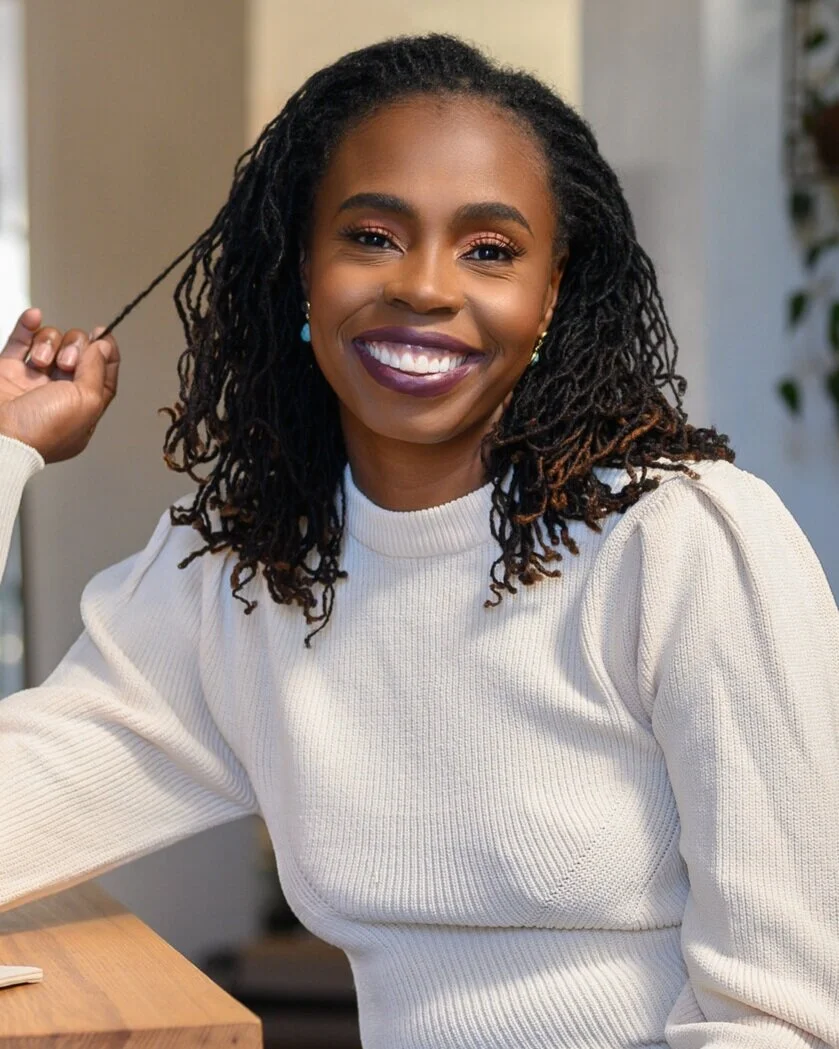
Hey there I’m Naseema
My dream is for everyone to know that financial independence is attainable with a little intentionality. Learn how I can help you finally break the cycle of living paycheck to paycheck.
Join the Facebook Community
Join the Financially Intentional community and get access to resources to guide you on the path to Financial Freedom.
Watch these Videos To Learn How to…
Keep Listening
Here are some more episodes you may enjoy…





We break down what’s really happening with hormones, metabolism, and aging in a simple way, including why perimenopause can sneak up on you.