
Save Like It Is 1950 With Modern Gold You Can Carry - Episode 148
In today's episode, I sit down with Jeremy Cordon to talk about simple money ideas you can use today. We chat about why prices keep going up, what gold has meant in the past, and how Goldbacks work like small, spendable pieces of gold. I ask the questions you would ask, and Jeremy gives clear answers in plain words. You will learn easy steps to start saving, spending, and gifting in a smarter way. If you want your money to hold its value, this show is for you.
About our guest:
Jeremy Cordon, Founder & CEO of Goldback Inc., is passionate about precious metals and sound money. During an internship at the Libertas Institute, he connected with Larry Hilton, which led to a role at the United Precious Metals Association (UPMA). There, he helped grow membership from 400 to 25,000. Jeremy later focused his efforts on creating Goldbacks—a physical gold currency designed to preserve wealth and strengthen local economies. Under his leadership, Goldbacks have expanded to multiple state series, empowering individuals and communities with a practical tool for financial stability.
Learn more about Goldback here
Get a free Goldback
—-
Please join me here, and follow me on social media, Instagram, and Facebook.
Need help getting started on your path to financial freedom? Start Here
Join the Financially Intentional Community
Oh and please subscribe and leave a review on whatever app you're using to stream this podcast.
Get my book Smart Money
Subscribe & Review
Love this episode? Please subscribe and leave a review on your favorite podcast platform.
TRANSCRIPT:
Naseema: [00:00:00] Jeremy Corden, founder and CEO of Goldbergs, Inc. Is passionate about precious metals and sound money. During an internship at the institute,
he connected with Larry Hilton, which led to a role at the United Precious Metals Association. There he helped grow membership from 400 to 25,000. Jeremy later focused his efforts on creating gold backs of. Physical gold currency designed to preserve wealth and strengthen local economies. Under his leadership, gold Backs has expanded to multiple state series empowering individuals and communities with a practical tool for financial stability.
What's up my financially intentional people? So today we're joined with Jeremy who's gonna tell us about gold Standard in gold. In general, gold is something that I know nothing about except that I like really [00:01:00] nice gold jewelry, and sometimes my family uses gold as an investment as far as like buying gold jewelry and passing that down to family members.
But other than that. I pretty much know nothing. So I'm super excited to have Jeremy explain a goal to us and historical value and all of the great things that we need to learn. So thank you Jeremy, so much for joining me.
Jeremy Cordon: I , appreciate being here. Thanks for having me.
Naseema: Of course. Of course. Gimme a little bit about your background. What got you started in this industry?
Jeremy Cordon: I really got started in this industry when I was maybe 21 years old. I was young and just, trying to figure things out and, I ended up following this kind of libertarian campaign for presidency with Ron Paul, and you talk all about gold and it just got me fascinated.
So I've, been sticking with it ever since.
Naseema: That is very [00:02:00] interesting and you don't look too much young. I'm too much older than 21 right now, so I'm sure that wasn't too long ago, but I know when that Ron Paul claim that pain
Jeremy Cordon: It was a while ago. I'm, getting older. I'm not the youngest person in the room anymore.
Naseema: I know, doesn't that suck? Like I'm definitely on the OG side of the room and it's making me feel some kind of way,
Jeremy Cordon: feel meeting adults that were born after year 2000?
Naseema: exactly I'm a labor and delivery nurse, so it's like I'm delivering those babies of the people who were born after I graduated from college.
Jeremy Cordon: And you point that out to them, or you make a comment and they're like, oh . Sorry. You're old. I guess you know.
Naseema: Oh my God. The kids do say that oh my God, you're from the 19 hundreds, and you're like, first of all, that wasn't that long ago. And then you're like, okay, that was 25 years ago. Oops.
Jeremy Cordon: Time, time flies.[00:03:00]
Naseema: Moving right along, but, okay, so you got interested in goals and like where did your, like studies and your research, like where did that take you? What did you learn?
Jeremy Cordon: This was like from a political science perspective, right? Gold is a financial instrument as a monetary instrument, as a as money. I thought the gold standard was interesting. I found a, lot of gold companies back then. The way they sold gold is it was some kind of scary sales pitch.
Oh, the dollar's gonna fall apart and then you won't have anything. And, gold always was worth something, so you better get it, and that's probably been the main sales pitch for gold for 40 years. And what was so fascinating to me about gold was, I wanted to find a way that people could use it as, money.
How we could make gold a little bit more functional than it is right now. And you opened with saying that you don't know anything about gold, but I could see you're wearing gold.
Naseema: I love gold.
Jeremy Cordon: I look at you and I see gold,
Naseema: this is fake, but this is like [00:04:00] real like gold bengal. But like I said, so my stepmom is from Somalia and they, that's how they passed down. Wealth is through jewelry and so they buy gold pieces and yes,
Jeremy Cordon: Yeah, no, I think.
Naseema: if anything happens, you could sell this and then you'll
Jeremy Cordon: , You're wearing your wealth. You are wearing your wealth. And in India they do the same thing. They, deck out brides with gold. Husbands in India aren't allowed to take their wives gold once they gift their wife gold. There's not a lot of woman's rights in India, right?
It's not like a woman's rights heavy area. Men aren't legally allowed to take their wives gold.
Naseema: Mm.
Jeremy Cordon: It's if you give your wife gold as a gift and she wears it, it's hers, that's her gold. And the idea is if something happens to you as the breadwinner, the wife can, pawn off the gold or sell it and take care of the kids and herself and everything else.
And, well taken care of woman wears a lot of gold. , That's been in tradition for thousands of years. So I, think there's something to it. They still do [00:05:00] it. In the West, we're a little bit more divorced from our gold. Gold is something grandpa has and it's behind the sheet rock.
And after grandpa dies, the contractors, when they're tearing down the house in 50 years, we'll find it. We're not wearing it as much as we used to, I guess in more kind of western countries. But the value is always there. Gold always retains value. And what we do at, Gold back is we actually take gold.
We split it into a thousand pieces and we turn it into these bills that people could put in their wallets. They work really well in any woman's wallet, and they can carry 'em around and they can, that is fly. yeah, this is $8 worth of gold right here.
Naseema: Wow.
Jeremy Cordon: So that's one that's, that's a thousandth of an ounce.
Naseema: I love that, that, and It's cute. It's real cute too.
Jeremy Cordon: So this one's a two.
It's got twice as much gold in it.
Naseema: Oh, wow.
Jeremy Cordon: That's one 500th of an ounce
Naseema: Wow.
Jeremy Cordon: bucks.[00:06:00]
Naseema: Wait, are you in Oklahoma? Is that why it
Jeremy Cordon: No, that, that series from Oklahoma. So there's, there's different designs for gold backs. There's a Florida one and Oklahoma one, Arizona's coming out. In a couple weeks, people buy these all over the world.
Naseema: Mm. I love that those are really pretty. And I love 24 caring goals, my thing but can we talk about historically what's happened in America? I know, loosely and like I said, it's so out of my realm of like understanding. Like I just have historical knowledge but just shove it aside we went away from the gold standard, therefore, we can print money, therefore we have all this inflation.
I know what that is like in
theory,
Can you explain how that works?
Jeremy Cordon: Yeah. So a long time ago, it used to be that if something costed 5 cents, it just always cost 5 cents, and it's the same price for like a hundred years.
Naseema: Mm-hmm.
Jeremy Cordon: 5 cents would be a [00:07:00] nickel. We had a money system we had copper pennies and then silver coinage, and then it would lead up to this $20 one ounce gold piece, and it was all pegged together, and that kept the value of money relatively stable.
Naseema: Mm-hmm.
Jeremy Cordon: So just things always costed the same. You buy a house for, I don't know, a thousand bucks. You sell the house 30 years later for. $950 'cause it's worn out. You know what I mean? It's, that's, that's how money worked. And inflation is, it's a newer thing. Before it happened in war, during the Civil War there was rampant inflation, but they were also off the gold system.
Naseema: Mm-hmm. Mm-hmm.
Jeremy Cordon: money's been off the gold standard since the seventies. And over the last a hundred years, the dollar has lost something like 99% of its purchasing power
Naseema: Mm-hmm. Yeah. That's wild and then prices are through the roof. What was the rationale for [00:08:00] going away from the gold standard? Is it to borrow more money to fund more wars?
Jeremy Cordon: it was, it was the Vietnam War.
Naseema: Yeah, I knew it.
Jeremy Cordon: They're printing money. They're printing money to pay for the war. And it's easy. In World War II, they sold bonds for the war. They had to convince the American public, oh, we need this money to go to war and this war is really important. And in Vietnam, they just started printing, but the amount of gold backing the money didn't change.
So other countries started saying, Hey, wait a minute. We think you're printing a lot. Can we just get the gold? We just wanna turn these notes and get the gold. Nixon freaked out and stopped everyone from doing that, and we've been off the standard ever since.
Naseema: Oh, wow. I knew I had to do something with war and money and everything but war always goes back to
Jeremy Cordon: think of it this way. Imagine, imagine that everything is measured with feet, right? We have rulers and we measure everything, and you could say, Hey, your house is 3000 square.
Naseema: Mm-hmm.
Jeremy Cordon: Every year we got that measuring stick. We [00:09:00] got the universal ruler that we all made our rulers based off of, and we shaved a little nick off of it.
Naseema: Mm.
Jeremy Cordon: So now the standard of a foot is now shorter than it used to be. Then you have to remeasure everything. And I might say, okay, you're no longer five 10, now you're six one
and you no longer have a 3000 square foot house. Now you have a 3,200 square foot
house. Then you start saying ridiculous things like your house has really grown a lot and you're really getting taller.
Naseema: Yeah.
Jeremy Cordon: Why is everyone getting taller? Why are all the houses expanding? Why are all the distance business between cities growing?
Naseema: Mm-hmm. Mm-hmm.
Jeremy Cordon: it's just you're changing your measurement and you're re measuring things every year, and that's what we're doing with the dollar.
Naseema: Yeah.
Jeremy Cordon: okay, so do you remember the movie Home Alone?
You ever
see that movie
Naseema: of course.
Jeremy Cordon: came out the year I was born in like a 1990 classic, [00:10:00] and yeah, it takes place right there. They got the McMansion there. That was a normal standard of living. That was a normal middle class standard of living. You have one income earner in the home, he's like an accountant or something. Who knows? He's taking his family on this big out-of-state trip, extended family, everybody, just one guy, big house, one income.
That was
Naseema: With
Those kids. Not to
Jeremy Cordon: all those kids. All those kids, and that was normal. You watch a show like The Simpsons. You have one dad that didn't go to college or finish college, he owns a a home,
Naseema: Mm-hmm.
Jeremy Cordon: they've got a family car and
Naseema: Mm-hmm.
Mm-hmm.
Jeremy Cordon: and that was just normal.
Naseema: Yeah.
Jeremy Cordon: That wasn't the exception.
That was the rule. Everybody gets a house and the truth is that if you had a six figure job 30 years ago, that would have the buying power of making half a million dollars a year right now. So all the houses have gotten [00:11:00] bigger. We've been shaving off this measuring stick, and people learn, they grow up in the nineties and they think, Hey, I want a six figure job someday.
'cause then I can really, take care of myself. And you finally get to that six figure job. And it's I can't even buy a house. I can't go on vacation. I can't afford to put my kids in private school. Everything costs a fortune. Why is everyone so greedy?
Naseema: Mm-hmm.
Jeremy Cordon: Why is everything so expensive? It's your measuring unit is worth less, so not everything's growing.
You're just, everyone's becoming more poor. Part of the reason behind doing gold back is I figured if enough people were to use these, and there's businesses that take these, there's people that trade with these, they barter with 'em, they bring 'em in their wallets. , It's got this whole alternative currency use.
If enough people do this. You don't have to worry about inflation anymore.
Naseema: Mm-hmm.
Jeremy Cordon: You know when these came out, they were like two bucks. That was six years ago. Today they're $8.
Naseema: Yeah.
Jeremy Cordon: So anyone that's saved in gold backs, anyone [00:12:00] that's bought them has done really well. They've kept their value. Anyone that's had dollars, not so well.
Naseema: Mm-hmm.
Jeremy Cordon: In fact, gold was the measure that everything was measured against, and if you measure things in gold today, the stock market. Has been a bear market since the 2000 year 2000. If you measure it in gold,
Naseema: Mm-hmm.
Jeremy Cordon: Yeah, the stocks are going up in dollar costs, but everything goes up in dollar costs 'cause dollars are losing their value.
If your returns are, if you're getting a two or 3% return and the dollar loses 10% of its value a year, then you're still losing 7%.
Naseema: Yeah.
Jeremy Cordon: You're never gonna compound your interest your way out of that.
Naseema: Mm-hmm.
Jeremy Cordon: If you make 8% of the stock market and inflation's 10%, you lost two.
Naseema: Mm-hmm. But because everything is valued in the dollar and that's how the stock market is run and all of these kind of things, then how do we transition into a system that goes back to gold in [00:13:00] like for the masses? Or are you just this is a solution for people who just really wanna hold the real value?
Mm-hmm.
Jeremy Cordon: Yeah, so I, the sales pitch again for gold for 40 years. It is been something. Oh, the dollar's failing and gold's this bunker you can crawl into. And when the dollar total falls apart, you can crawl outta your bunker and be okay.
Naseema: Mm-hmm.
Jeremy Cordon: You, you, you buy gold, it's an inflation hedge. You hide in it, and then you get dollars down the road and you dodge some inflation, you'll pay your capital gains and that's it.
What people are doing with gold backs is very different from that because the people, they're going to garage sales and farmer's markets and small businesses and they're saying, Hey. I pay you with gold instead, and they're just not using dollars, which means you don't have to have as many dollars, which means you're getting hit less bad by inflation.
Your.
Naseema: Mm. Okay. So . Practical. Like on a everyday basis, right? We don't get paid in gold back. We get paid in cash, right? [00:14:00] Ideally, if we take our dollars and buy gold back, right now we're essentially losing money.
Jeremy Cordon: No, you're 'cause gold backs, they've gone from being worth $2 to being worth $8 in six years.
Naseema: But gold does fluctuate up and down and It like just like everything else, right? Mm-hmm.
Jeremy Cordon: but the dollar only goes down.
Naseema: Okay.
Jeremy Cordon: So if you save in dollars, so there's a lady that lived across from my grandmother, old Jewish lady. This is the Bay area. This is back in the sixties, back when the dollar was stable, inflation wasn't really a thing yet. She took $2,000 in cash and she put it in a mason jar and stuck it down in her basement, like between the wall and the foundation or
something. They pulled that jar out when she died a few years ago, and. She put that jar there, $2,000 was good enough for a down payment on a house in
that area. that was a lot of money. It was supposed to take [00:15:00] care of her when she was old.
That's not a 10% down payment on a Honda Prius now.
Naseema: It show lane
Jeremy Cordon: And it's gone. But had she put gold in that jar instead, it could still do a 10% down payment on a house in that area.
So gold is the better savings tool. The gold back it has that property, it, it follows the gold price, but it's a much more easy entry into gold. You can, you could give one of these to your niece or your nephew or your kids for $8 or giving them a savings bond,
Naseema: Mm-hmm.
Jeremy Cordon: like a little savings bond.
This is something that'll keep its value over time and you can spend it as is, if you feel brave at a garage sale.
Naseema: Okay.,
Jeremy Cordon: businesses that take these. We got thousands of 'em across the United States too.
Naseema: Yeah. Can we talk about like the businesses that take them, because, people are like they don't take them on Amazon or a Target, so
What's the practical, everyday use
Jeremy Cordon: Yeah. You're not gonna be able to spend it at Target. And that was one of the first objections I got to these people. Said [00:16:00] that's really cool, and that's a cool idea and that's really cute and I do love gold and that is pretty, but what would I do with it?
Naseema: Mm-hmm.
Jeremy Cordon: But what's it like. I have it, but now what? And normally for gold, the only thing you can do with it is you can sell it back to a coin dealer and get cash. That's it. That's the whole thing. That's the only trick. Or you can die with it or lose it, but that's it.
Naseema: Mm-hmm.
Jeremy Cordon: So we did is we started talking to business owners and we said, Hey, if somebody came into your business and they offered to pay you with gold instead, would you take it?
And I was hoping that, five, 10% of business owners would go for it. 'cause, maybe they like the gold standard and their history buffs or they like gold and, I was hoping to find my people to put this list together.
Naseema: Mm-hmm.
Jeremy Cordon: Do you care to guess how many business owners were willing to take gold as payment?
Naseema: You said you have thousands.
Jeremy Cordon: It was thousand. It was half.
Naseema: Oh,
Jeremy Cordon: Half of [00:17:00] small business owners that, not the receptionist, not the girl on the phone or behind the front desk, but when you talk to the business owner, half of small business owners are willing to take payment in gold.
Naseema: Mm-hmm.
Jeremy Cordon: put up a featured list that's on our website.
You can go to pay in gold backs on gold back.com, and you can find businesses in your area that are willing to take payment in gold. That's not where most people are even spending gold backs. Most people have 'em in their wallet and opportunities come up, they leave 'em as a gift or a tip, or they, send 'em to your nephew in the mail or, they find uses for 'em.
So you can spend them or you can save 'em and, spend 'em later or turn 'em into cash. So you've got options.
Naseema: I'm gonna play devil's advocate here, right? Say Grandma would've put that $2,000 instead into this stock market and just let it compound in like an index fund or a mutual fund back then and just let it compound. [00:18:00] That would probably enough for a down payment now.
Jeremy Cordon: That's true.
Naseema: But you're saying gold is like a better alternative than cash in hand.
Because of the growth.
Jeremy Cordon: Cash in hand loses value, and if you have cash in hand, it's great to be liquid. It's great to have cash for convenience. It's not a very good savings tool because it loses value so quick.
Naseema: Yes,
Jeremy Cordon: If you talk to Warren Buffet, Warren Buffet says gold sucks. You pay a million dollars to get outta the ground.
You pay a million dollars to stick it back in a vault. So out of the ground and back into the ground. And if you owned all of it, you'd have a shiny cube and it doesn't do anything for you, right? Because you don't, what's the dividend on gold?
Naseema: The
Jeremy Cordon: making DI payments?
Naseema: No, it's not making dividends
Jeremy Cordon: No, it's not making dividend payments.
So what kind of
investment is that?
Naseema: Mm-hmm.
Jeremy Cordon: I'd say it's, not really an investment in that [00:19:00] sense.
Naseema: Yes, but it's a solid savings tool as opposed to just a dollar.
Jeremy Cordon: It's another form of money and we try to make gold a better form of money, but this isn't paying dividends.
This isn't equivalent to a stock. A stock market might go up and down. It might, might pay dividends. I learned recently that if you price the stock market in gold has lost value over 25 years. It's not keeping up with inflation very much lately at least the US stock market. That's not to say that there aren't great investment opportunities that will pay returns.
You could buy a rental and right now because saving is so bad because people lose so much value with inflation. I think it's pushing more people to invest more aggressively and that reduces everyone's returns. 'cause everything's so saturated. There's too many people buying the stock. It's overpriced.
There's too many people in the rental market. The rent houses are overpriced. So you have this everything bubble going on. [00:20:00] And gold is, it's this multi-trillion dollar market. But I don't think it's too bubbly.
Naseema: No, I like it. I like it as a form of a different form of savings. Like I think it's a great form of diversification and not to mention they're super pretty and I love gold. Naturally attracted to it, but also. I think it's genius to create this marketplace for it, because now you have a use case of yes, and you can use it in all these institutions, all these people take it and it's not losing its value like it would if you were to spend money there.
So I really love that as a concept, and now it makes a lot of sense.
Jeremy Cordon: We're so sure that people, if you handle a gold back in person, if you look at it up close. We're so sure that people will like them. We're willing to give 'em to people for free.
Naseema: What? I'll take one. Thank you,
Jeremy Cordon: So we have a website. We have a website called [00:21:00] free gold back.com,
Naseema: Uhhuh.
Jeremy Cordon: and you can go there and all you have to do is give us your address and we will mail you a gold back at no charge.
Naseema: Okay, so what is, so this sounds like a loss leader. So what usually happens in the.
Jeremy Cordon: , It's like samples, right? You go to Costco, you get a free sample, and they're sure enough that if they give a sample to a thousand people, that enough people will buy the product where it's worth it.
Naseema: Yeah. Uhhuh,
Jeremy Cordon: So what you get is a $4 gold product, no charge, no shipping costs, no credit card information, nothing.
And we'll just send it to your house.
Naseema: what is it? Free gold backs.com.
Jeremy Cordon: back.com. Oh, back. Oh, that's one. Because
So there's two different designs. One design is for Florida and the second design is Oklahoma. We got Arizona coming out in a couple weeks too. I wanna do California really bad. In fact, we got more people buying gold backs in California than any other state. We've already done some artwork for California. It's good [00:22:00] looking.
Jeremy Cordon: okay, so I've got this one right here.
Naseema: Ooh.
Jeremy Cordon: This is Oklahoma history. This is the Chm Trail,
Naseema: Oh, okay. I like that one. Okay.
Jeremy Cordon: so that's one of the halves that's
available for
Naseema: Mm-hmm.
Jeremy Cordon: Here's the other one. This is like a Conor
Naseema: Ooh. I love the women on the money. Come on, let's go. Let's go. I love that.
Jeremy Cordon: It used to only be women on the money in America. And the reason why is because virtues are depicted as women. It's Lady Liberty is an example of a virtue. Lady Liberty's a woman, right? Lady Justice, she's a woman. So
we,
we followed that tradition with the gold backs and paying tribute touni state histories, and we always use women to depict the virtues.
So we've, yeah, it's just, it's always woman.[00:23:00]
Naseema: I love that. I love that. I wanna talk like more how many people actually are using your product are, and how many people can do you think use like gold, like other forms of gold? I know a lot of people use gold bars, gold jury. Like how do you, how prevalent do you think it is in the states?
Jeremy Cordon: So 10% of Americans own gold.
Naseema: Okay.
Jeremy Cordon: And that's, you figure that's about 35 million people. Whether it's jewelry or, gold bars, 10% of Americans will check a box saying I own gold.
Naseema: Mm-hmm.
Jeremy Cordon: For gold back. I think the number is probably closer to somewhere between one and 3 million people
Naseema: To use the goal, one in 3 million people.
Jeremy Cordon: that own gold backs.
Naseema: That own your gold backs.
Jeremy Cordon: Mm-hmm. That own gold backs and by vintage numbers. Right now in new gold products coming out, we're the number one gold product in the United States by sheer numbers.
Naseema: [00:24:00] Wow. But that's because yours are so super, just like accessible. Like you, you don't have to carry
Jeremy Cordon: Right. Yeah. If it's easier for me to sell one of these than it is for somebody else to sell a one ounce gold coin, that's $4,200.
Naseema: Wow.
Jeremy Cordon: So yeah, I have more of these than they have one ounce coins. It's like the.
Naseema: yeah, I'm really shocked by those numbers. I'm just like, that is incredible. I love that.
Jeremy Cordon: Yeah, so it's, it's going and it, just lowers the barrier for people getting into gold. Now for eight bucks, for four bucks, free gold back.com for free. You can own gold for the first time for $4. You can turn anyone into someone that owns gold. One of my favorite things to do with gold back is just give 'em out tips.
It's tipping culture's just gotten so. Awful lately. You know what I mean? Yeah, you go to Starbucks, oh, this is gonna ask you a few questions. And they get you, it's I like started paying in cash just so they had stopped doing that to me,
Naseema: hundred percent.
Jeremy Cordon: And [00:25:00] it's just
I don't like it.
The whole thing's awkward. And I, started just, saying, Hey, you know what? You did a really great job and I really like your shop. Has anyone given you a piece of gold before? What a piece of No, what do you mean? I pull this out? It's I'm gonna give you a piece of gold if you're cool with that.
Naseema: But how many people think like it's like fake
Jeremy Cordon: maybe one in 10.
Naseema: okay. Okay. Mm-hmm.
Jeremy Cordon: Yeah, one in 10 people. It's you like put a snake in them. They're like, oh, like I don't. I like nine outta 10. They're like, that's so cool. I love gold and I'm wearing gold. And gold's awesome. And that is so cool. I had one guy this happened in Tennessee at the Gaylord.
He's doing ice cream for me and I wanted to give him, I wanted to give him one of these. I've got hooked on it. So he makes me this ice cream and I gave him a gold back as a tip. It was , this guy was so funny. Is this black guy? He got so excited. He is this is like really, really?
You're sick? He bought my ice cream.
Naseema: Aww.
Jeremy Cordon: He wouldn't, lemme pay for the [00:26:00] ice cream. He is I got you, I got you. You're okay. Better service. I, you would never get that for, two
Naseema: I love that as an idea and I love that as like birthday present gifts. 'cause what I usually do for birthday presents is I usually give them like 20, $40, like in cash and then put in the envelope. Like these are the instructions on how to open a brokerage account and if you put this money in an account, right?
But how many people really do that? Versus if I put the gold in there, they put the gold up, like I really love that. And then they can re-gift it or do it whatever they
want with it
later. Yes.
No, I love that. I love that. Yeah, and I love that for tipping as well. So yeah, I got some use cases for it, so I'm definitely gonna be visiting and getting me some gold backs along with my free sample.
Jeremy Cordon: I like, I like garage sales too. You go to a garage sale and 80% of what they don't sell is either going back into the house begrudgingly 'cause they didn't want it, or they have to drive to the thrift store to give it away. [00:27:00] And they don't wanna get insulted. People don't like being offered 5% of the retail value in cash.
They would rather drive it to the thrift store than give it to you for 90% off.
Naseema: Exactly. Which is
Jeremy Cordon: I get it, people are spiteful. They're like, ah. Like,
Naseema: Yeah. Mm-hmm.
Jeremy Cordon: dare you? You'll give it away. You'll give it away. , You go with one of these, you go with a gold back, farmer's markets too.
And you offer, to do a trade. Hey, would you do a trade? I'll give you a piece of gold for your. I don't know, diving fins,
Naseema: Mm-hmm. Mm-hmm.
Jeremy Cordon: take it nine outta 10 times
Naseema: Nice,
Jeremy Cordon: because it's do I want the diving fins or do I want a piece of gold? They'll take the gold and then it is just people, you gave them something that's gonna go up in value.
Nobody got ripped off. You got something of value too. We know people are using gold backs in transactions. We have a little calculator on gold back.com if you wanna calculate how many gold backs you'd owe somebody for
something. Last year it was used 160,000 times.
Naseema: Wow.
Jeremy Cordon: So we know people are doing this
Naseema: they're [00:28:00] actually using it. Yeah. That's
Jeremy Cordon: most of the time I don't use a calculator, so it's, probably just the tip of the iceberg.
Naseema: I'm just so intrigued. I'm like, I'm learning so much. Oh, the website is beautiful. Let's talk about how it translates, like in other countries, how much gold is used and. How you see this spreading like globally.
Jeremy Cordon: It's starting to spread. We have groups in Australia that are selling it, and the markets there is growing like crazy in the UK too. We've got one dealer there. They used to sell a couple thousand dollars worth a week. Now they're selling like $10,000 a week just recently. So sales have really started picking up outside of the United States.
And, people don't buy them because it's not like it says Oklahoma, so they don't wanna buy it in Australia
or the uk. People just buy 'em. And, it's, universal. It's 24 carat gold and that, has value everywhere.
Naseema: [00:29:00] but how do people like know the value of it?
Jeremy Cordon: You can see it on gold back do com. We'll, we'll put a price up there that
Naseema: Okay. Okay. But i'm curious,
like how are they made? Like how do you mint these?
Jeremy Cordon: So they're made through a process called vacuum deposition. It's not like a big penny roller, like they're not like, getting folded out. And vacuum deposition is the same technology that puts a layer of gold and Oakley sunglasses.
Naseema: Okay. Okay.
Jeremy Cordon: So it's a big, big room. They suck all the air out.
There's a big 50 pound target of gold that gets hit with a laser and all this gold ends up in a cloud and they roll plastic through and they coat. A polymer with gold and they seal it. It's like a gold sandwich where there's a layer of plastic on one side, there's a layer of plastic on the other.
You're talking about five, $10 million worth of equipment to do this. You're talking about a decade of expertise. We've got a dozen different anti-counterfeiting features [00:30:00] in the gold back. And we do that because, if you're dealing with little gold bars or even gold jewelry. You have to take someone's word for it, that it's real gold.
Maybe a jeweler would know, or a pawn shop owner would know if it's real gold or not. But there's fakes and there's counterfeits and it, it makes it dangerous. If somebody wanted to trade you a gold necklace for something, it's like you don't really know if that's a gold necklace or not,
Naseema: Right.
Jeremy Cordon: but for a gold back, you always know that it's gold.
Naseema: Hmm.
Jeremy Cordon: that confidence in it makes it easier to trade with.
Naseema: So it's the same thing, like when they just, like you said, coat glasses, clo jewelry. It's the same process. It just, but that's pure gold. So there's like nothing that's plated in it. It's, it's a gold plate and then it's just covered to keep it, safe. So how durable are they?
I see the imagery like floating in water on the website,
Jeremy Cordon: Yeah, , they're tough. They're a lot tougher than a dollar because they've got not one but two layers of plastic.
Naseema: [00:31:00] Okay. Mm-hmm.
Jeremy Cordon: It'd probably take 10,000 years to decompose. You'd have to beat the snot out of it, and we warranty them if they get bent or whatever. And you want a new one? We'll, we'll give you a new one.
Naseema: Nice. Okay. I was gonna, that was the next question, because like you can turn a rip dollar back into the bank. Okay. That's cool that you guys warranty then. Wow. Like I'm just really impressed first of all, it's just. So amazing to look at. And I think that has something to do with the way that we're wired.
Like we're drawn towards, these shiny objects, dollars, not so much,
Jeremy Cordon: yeah, I mean you look at a a one ounce gold coin, a one ounce gold coin, that's $4,200 and you're paying a lot for that kind of allure. You know the brilliant you know you to look at
it. This guy right here. Has nine times the surface area of a one ounce gold coin for eight bucks. And I think that's a big part of the secret for gold backs is people look at them and they're pretty, and they want them, they don't [00:32:00] have to be some libertarian poli sci dork that you know is like following inflation who's theoretically if people just see it and they say, okay, that's pretty, that's attractive.
I want that. That's a really good quality to have in money.
Naseema: Yeah, you're bringing gold back to the mainstream. And I really, really love it. Like me and my, my marketing brain is thinking how do I market this to my audience? And it's it is not, it does the work itself. It's all you have to say is.
Jeremy Cordon: Does all the heavy
Naseema: Yeah. It's like, what would you do if you got this?
Boom, pull
Dollar. Everybody be like, wow.
Jeremy Cordon: We, we've sold a third of a billion dollars worth of these
Naseema: Wow.
Okay. So how much are you gonna pay me to be your Instagram influencer? And I'm just
Jeremy Cordon: Hey, you know what? In the first $50 million worth we sold, guess how much we spent on marketing?
Naseema: zero.
Jeremy Cordon: A hundred thousand dollars
Naseema: Oh, okay.
Jeremy Cordon: For? For 50 million in product
[00:33:00] sales.
Naseema: crazy. That's
Jeremy Cordon: And you know what? Most of that time we were sold out.
Naseema: Wow. That's so cool.
Jeremy Cordon: Yeah,
Naseema: That's amazing.
Jeremy Cordon: well, people want them. , That's the bottom line. They see 'em, they're cool and they want 'em, and , we started right before COVID COVID hit. Everyone's worried they're buying up all the toilet paper. They're buying up everything that's not nailed down.
People all have a lot of anxiety about the economy. About meeting their needs and you come out with a gold-based currency that's inflation proof during COVID. Yeah, we were sold out like almost all of COVID.
Naseema: Awesome. And you get, sell this all out. 'cause you could only produce so much at a
Jeremy Cordon: Yeah. We, we had to put a lot of money into skilling up our production, so it's not a huge issue. Now there were time periods where not only were gold backs sold out, but the only place you could buy them was on eBay and they were like 50 bucks a piece
Naseema: Oh, people
were reselling them.
Oh, see, there's another market for it.
Jeremy Cordon: right. , People pay what they think it's worth the, the value perception is higher than $8.
Naseema: [00:34:00] Nice, nice, nice. So as like a business side, like how do you make money off of printing gold? So like the gold that you buy break it down for me 'cause I'm so confused.
Jeremy Cordon: Sure. We've got a few different ones of these. So these ones are actually manufactured at a loss,
but it's part of a series. So there's a one, there's a half, there's a two, there's a five, and it goes all the way up to a hundred. And they have an interchangeable amount of gold. So if a one has a thousandth of an ounce, the a hundred has a 10th of an ounce.
'cause that's a hundred times as much
gold.
The one denomination, let's say we break even on this guy it costs money to split an ounce of golden to a thousand pieces. And it costs money to have all the, any, security features and it costs money to distribute it and get everybody paid.
So this isn't a very profitable product. But the hundred is because, instead of [00:35:00] making. 0% on the a hundred. Maybe we make 20 or 25% on the a
hundred.
Naseema: Mm-hmm.
Mm-hmm.
Jeremy Cordon: So we'll sell the a hundred for 800 bucks or you can trade that a hundred for a hundred of these guys.
Naseema: Okay.
Jeremy Cordon: And the average amount of money that we make on gold backs is enough to run the company.
So we just make it on the initial sale. And, people can sell gold backs back for cash to, one of any 400 different distributors that sell 'em. And there's liquidity there.
Naseema: So you did, do you save your money in gold? Do you like get all the cash and then buy bricks and then like
Jeremy Cordon: I've been doing that really consistently, and I own quite a bit of gold backs. My philosophy is you don't have a good product if you don't buy it yourself.
Naseema: Uhhuh,
Jeremy Cordon: You know what I mean? It's not like you should probably eat what you make. So I've got a really good chunk of savings in gold backs. I was buying them when they were $2 $3 and now they're worth.
Naseema: Mm-hmm.
Jeremy Cordon: And there's companies, one of them's Alpine [00:36:00] Gold where you can go, you can buy gold bags, they'll vault 'em for you for free, and they'll let you liquidate them with no spread for up to $10,000 in 30 days.
Naseema: Oh, wow. That's pretty
cool.
Jeremy Cordon: it's like a, checking account with gold bags,
Naseema: that's pretty cool. I love that.
Wow.
Yeah. I, this is opening up a whole new world for me, and I'm excited for it, and I love it. , It just helps me understand again, inflation and just for the future, like what are your predictions about gold usage versus like the stock market, for example?
Jeremy Cordon: I, like I said, I think a lot of people buy into the stock market because. If they don't wanna save cash. 'cause if you save cash, you're losing and everybody knows it. And I'll tell you that. It's don't save cash. You need to invest. All this money is being invested. And I think that there's a limited amount of investment opportunities that are good.
And I think what that does is it [00:37:00] artificially inflates the price of things beyond what their value should probably
be.
And then you have all that risk that's not quite priced in. You're hoping to get that 1% dividend check, that 2% dividend check. I had a aunt, she wanted to sell off stocks in a rental, like a, like an apartment building.
I was doing the math and it was like a 4% return.
Naseema: Mm-hmm.
Jeremy Cordon: Okay. I can get a 4% return on, apartment stocks. But what if there's a downturn in the market?
There might be with real estate right now, it's, it seems to be early stages of that. If the value goes down 50%, not really getting a big enough return to justify that risk.
So if there's no good opportunities, you, you take, you could save in cash, but then you're getting hit with all the inflation
by saving in gold instead, my gold is doubled in value over the last, few years.
Naseema: That's a hundred percent return if you didn't know.
Jeremy Cordon: If, if you measure it in dollars, [00:38:00] but again, that's the growing problem. Every house is growing, every person's growing. I, I don't think it, I don't think my money grew at all. I think the dollar just loses value and I'm in something that's not losing value, so I can save and invest another day when the opportunity's better.
Naseema: Okay. All right. So Jeremy is doing great conversation. Can you just recap like the use cases for gold bags and where people can buy them?
Jeremy Cordon: Sure. So gold back, it's a thousandth of an ounce gold product. It's part of a whole currency series with multiple denominations. This is the most successful local currency product in the United States history. There's about a third of a billion dollars worth of them out there. There's millions of users as far as we can tell.
You can learn more@goldback.com. We have a list of dealers that sell them. We just rank the list based off who's moving the most. So you can find out where to buy them on gold back.com. You can get a free one on free gold [00:39:00] back.com. So that's your freebie right there. And that's what gold back is.
Naseema: I love it. I love it. Like I said, I'll be getting my gold bag so I can use them for tips and for birthday presents. So thank you for that. I appreciate it. And I just think that they're pretty, I'm gonna definitely keep some because I love them as gold. Like I love gold as jewelry because it's practical to me.
It makes sense to me. I used to have gold bars and all the gold coins and stuff. But it just kind of like sat there and I love it and I'm gonna start using it and I hope my audience will too. So I appreciate you coming on Jeremy and enlightening us 'cause I learned something new and anytime I learned something new it brightens up my day.
So I'm really grateful for you.
Jeremy Cordon: I'm grateful for you too. I really appreciate you having me. This has been fun.
Naseema: Thank you.
Hey there I’m Naseema
My dream is for everyone to know that financial independence is attainable with a little intentionality. Learn how I can help you finally break the cycle of living paycheck to paycheck.
Join the Facebook Community
Join the Financially Intentional community and get access to resources to guide you on the path to Financial Freedom.
Watch these Videos To Learn How to…
Keep Listening
Here are some more episodes you may enjoy…


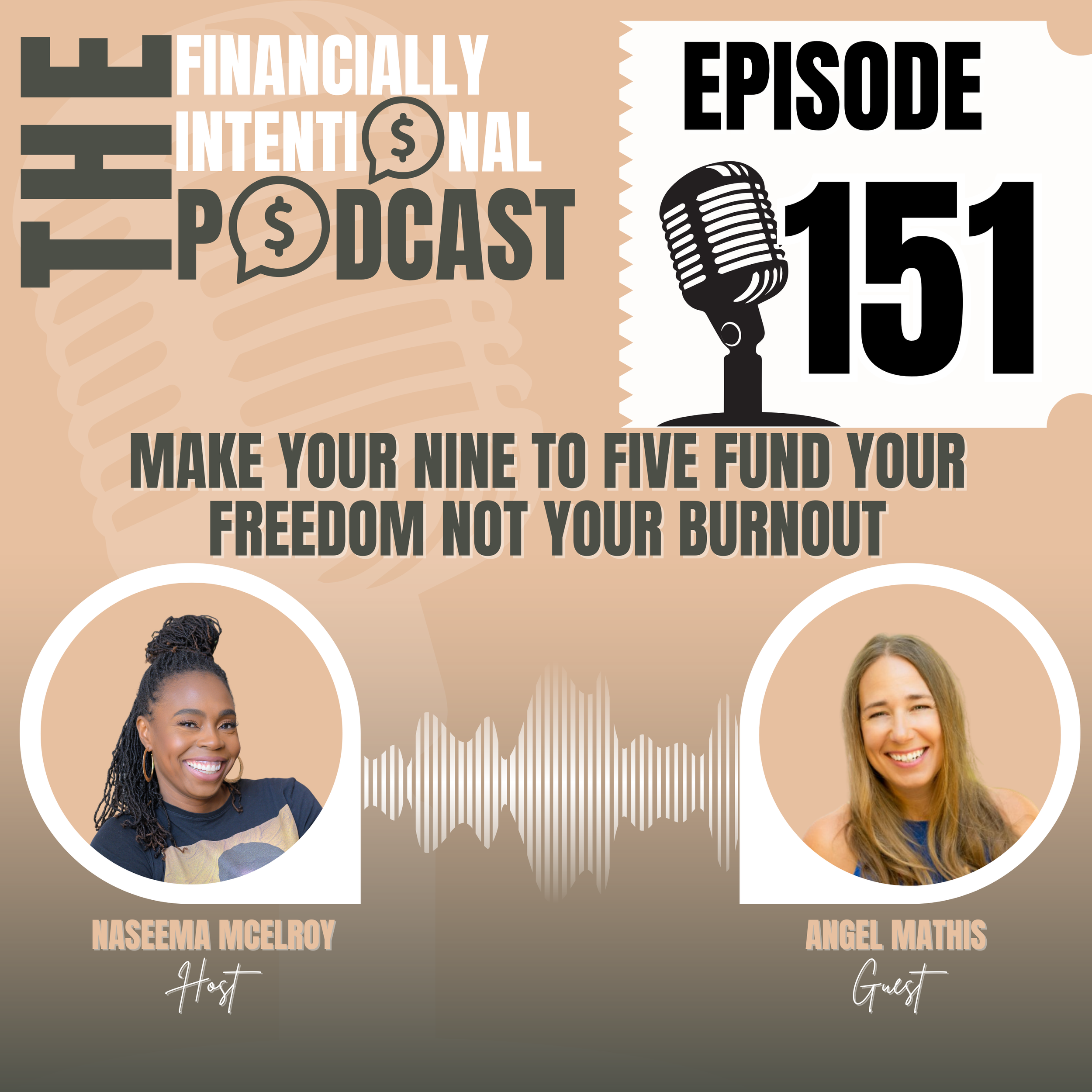



We break down what’s really happening with hormones, metabolism, and aging in a simple way, including why perimenopause can sneak up on you.