
What Every New Clinician Wishes They Had - Episode 134
In today's episode, I talk with Jessica and Andrew Roden, two amazing PAs who created an app called Blox to help new healthcare workers feel less stressed and more confident. They saw a big problem when they started working—new grads didn’t have the tools they needed to succeed—and they decided to fix it. We talk about how they built their app, what it's like to work in medicine today, and how anyone with a good idea can make a big change.
About our guest
Jessica Roden, PA-C, and Andrew Roden, PA-C, are the co-founders of Blox, a mobile app designed to help student and new graduate NPs and PAs feel less overwhelmed and more confident in fast-paced clinical settings.
Jessica’s experience in urgent care and emergency medicine revealed how isolating those first shifts can feel without the right tools or mentorship. Andrew's experience as a clinical preceptor reveals firsthand how often students struggle to bridge the gap between classroom learning and real-world medicine. Frustrated by the lack of streamlined, reliable resources, they launched Blox in early 2025 to build the tool they always needed: something fast, practical, and made for early-career providers.
Their mission is simple: support the next generation of clinicians with high-yield clinical guidance that reduces stress, improves decision-making, and builds confidence.
Try Blox free at
https://bloxmedical.app.link/bloxdownload
https://www.bloxmedical.com/
—-
Please join me here, and follow me on social media, Instagram, and Facebook.
Need help getting started on your path to financial freedom? Start Here
Join the Financially Intentional Community
Oh and please subscribe and leave a review on whatever app you're using to stream this podcast.
Get my book Smart Money
Subscribe & Review
Love this episode? Please subscribe and leave a review on your favorite podcast platform.
TRANSCRIPT:
Naseema: [00:00:00] What's up my financially intentional people. So today I wanted to mix things up a little bit and just share with you a story that's based off of inspiration. So if you guys have an idea or a concept that you wanna put out there and a solution that you know will help people, this is a story of. A person who took that nagging feeling that they know that they can change something and put it into action.
So even though this does have a medical spin to it, I think. All of you guys will get lessons from just doing the things and knowing what's possible. So Jessica and Andrew Rodin are co-founders of Blox, a mobile app designed to help students in new graduate nps and PAs feel less overwhelmed and more confident and fast-paced clinical settings.
So Jessica's experience in urgent care in emergency medicine revealed health. Isolating those first shifts can fill without the right [00:01:00] tools or mentorship. Andrew's experience as a clinical preceptor reveals firsthand how often students struggle to bridge the gap between classroom learning and real world medicine.
Frustrated by the lack of streamlined, reliable resources. They launched Blox in early 2025 to build a tool. They always needed something fast. Practical and made for early career providers. Their mission is simple. Support the next generation of clinicians with high yield clinical guidance that reduces stress, improves decision making, and builds confidence.
what's up my financially intentional people? It's been a while since I've been joined by my medical professionals and we are gonna talk about innovation, inspiration, and what these two wonderful people are doing to change the game for our healthcare system because we know it needs a reboot. Hey Jessica.
[00:02:00] Hey Andrew.
Jessica Roden: Okay. Thank you so much for having us.
Naseema: Of course. Of course. And let's just start by giving people a little bit of background, like how did you guys get into the healthcare space? And you guys are in the ed? Correct.
Andrew Roden: She, yeah, she started out in the ED and then urgent care world and I'm in orthopedics and sports medicine. Yes.
Jessica Roden: Yeah, so , we met each other in grad school and PA school and did our rotation year together and ended up, liking each other a lot. Got married and Andrew's from Chattanooga, Tennessee, so that's where we landed after school.
And my first job outta school was in an er and Andrew just had an amazing job opportunity with the orthopedic group here in town. So that's how we got started. Yeah. No one in our family is in the medical field, which is strange. But yeah, first generation medical professionals,
Naseema: I love that. And can you provide a little bit of [00:03:00] clarity between what is the difference and what PAs do? What advanced practice nurses do and what doctors do.
Jessica Roden: Hmm. PAs and advanced practice nurses in my experience. Do the same thing. Yeah. You realistically work pretty autonomously. And there are some fabulous nurse practitioners and there are some fabulous PAs out there. Physicians, I think it, is a little bit different because they have the ability to.
Really specialize and do things like surgery, whereas like a PA or some nurse practitioners could not do that. But for all intents and purposes, every NP and PA I've ever worked with has functioned in the same capacity. Yeah,
Naseema: And the education is similar, correct.
Jessica Roden: it's similar but different. It's a different type of learning model, nurses are extending that kind of nursing approach. And PAs are more of the [00:04:00] medical approach. And I think that they both have benefits. Yeah. But when it comes down to it, we, you do the same thing. Yeah.
Naseema: So ortho PAs don't like even assist in surgeries. I thought our PAs do.
Andrew Roden: Yeah. You, you can, I don't, I'm in the clinic five days a week, but yeah, no, we've got PAs who are doing in surgery two, three days a week and rounding in the hospital.
Jessica Roden: Just not autonomously. Just not
Naseema: Not autonomously, right? Like you're working under a doctor and
Jessica Roden: right.
Naseema: Yeah. Or not even under the doctor. You're just working under the healthcare system and licensed under
Andrew Roden: Perform. You can assist.
Jessica Roden: Yeah.
Naseema: Cool, cool. So what inspired you to try to create an innovative approach to changing the way healthcare is?
Like accessed by creating your app.
Jessica Roden: To making an app when we have no business being,
Naseema: Yeah, like [00:05:00] how do two PAs get into this app building space?
Jessica Roden: I, that first job that I had in the er, I did not work at like a teaching facility or anything like that, so I didn't really have a mentorship or mini residency or anything like that. So it was very much trial By fire, I just. Figured it out on the fly and it showed, I learned very, very quickly that there's a lot of resources out there, but there's not a lot of resources that new grads specifically need when you're just trying to get your feet under you.
I don't need to read through paragraphs and paragraphs of data and research and text like. I have five patients in rooms. I need to know like how I can get 'em treated and out the door. So that was like two and a half to three years. And then I transitioned to an urgent care, which was a new urgent care system, and they employed almost exclusively new grad or like in the first couple years of their practice, nurse practitioners.[00:06:00]
And they had the exact same experience that I had. And so fortunately at that point I had a little bit more experience and was able to share with them, this is how you do a digital block. Or, we could like run patients, bounce patients off of each other, but they're into the same problem.
And I just kept having this thought that this is a problem that could be solved. And so I've initially developed it with Andrew's help as a web app back in 2019, and then COVID happened.
Naseema: Yeah.
Jessica Roden: everything fell apart. And then we had our first daughter our first child, and then just a couple years ago, we decided that thought never really left the back of our mind that we've gotta try it.
And so we started that process about two years ago. Mm-hmm.
Naseema: Wow. And I know like it has a big undertaking trying to create a product like that, especially something. That has to encompass a whole bunch of information and a whole bunch of moving parts. And in a space where everything is rapidly being updated, [00:07:00] how do you guys keep up with all of that?
Andrew Roden: it's hard. I dunno, it's really hard.
Jessica Roden: It's been a lot of time, a lot of hours. Yeah.
Andrew Roden: Not much downtime for sure. But as far as updating the content and stuff, we're, going through UpToDate and all of the other great resources out, out there. But with Blox our app we're, so we're going through that, but we're also using our, clinical pearls that we've learned throughout the years of practicing.
Jessica Roden: And because there's the information that you need to know for a test. Yeah. And then there's the information that you need to know when you're actually treating patients.
Naseema: Or like real
Jessica Roden: Yeah. Yeah. It's, kind of a, blend of those two things. Yeah. it's difficult, but once we've got our format in place, we just.
Just sit down and crank it out. Yeah.
Naseema: And I know so I'm a nurse practitioner, but I never practiced as a nurse practitioner and like I know trying to get to that. Comfort level of understanding like how to use this information to actually treat people is like [00:08:00] a big barrier. And it was one of the things that I faced a lot, how to gather the proper information to do the right thing.
And I can only imagine like how much more difficult it's gotten now 'cause it's so much information out there, like how to filter through that information. But now just like in the last couple of years we've seen . How the emergence of AI has really changed the game in our space. How do you feel like that matches up to what Blox does?
Andrew Roden: Yeah, so we, as of right now, we don't have AI into our, in integrated, into our app. We are working through that process and seeing how that works with Blox. Yeah, AI is great, for certain things, but you may not get the right information. It may not be tailored to that one patient.
With Blox, we've kind of like if, for example, someone comes in with a cough, feed short of breath, whatever, you can type in those keywords and we've tag those certain keywords to pull out the proper diagnosis. So [00:09:00] it's. Again, kind of our, our knowledge with, what we've, put together with UpToDate and all the other resources, but mm-hmm.
Yeah, ai, it is coming. It's definitely not going anywhere. And so that's how, what we're trying right now, trying to figure out how to make that mesh with Blox
Jessica Roden: safely integrated. Yeah. With all of the regulations that are in place. Yeah. With all the rules that are in place. So that's something that will be a part of Blox, but it will be pulling from Blox as repository of information rather than just Google.
Naseema: Speaking of the regulations and practice acts and all those kind of things, how is that implemented or incorporated into block?
Jessica Roden: So for Blox. Blox is not. To be used as a medicolegal resource. It is a purely educational resource. It is not a substitute for clinical judgment or anything like that. So that's, its own thing. There's just some things going on in the AI space that you have to be mindful of when you [00:10:00] are in the medical world.
Naseema: Yep. Yeah, a hundred percent true. And the reason why I brought that up is because I think that people think that they can substitute that data for something that they find on AI or that. They can get around learning this information in a way that is supposed to be learned so that you have good situational awareness, good clinical judgment skills, like those things cannot be taught by putting something, plugging something into an app.
And regardless of how good that app is, I think like absent things like this should be used like as on a foundational level to help but cannot substitute. But. At the same time, like the AI world is ever evolving and so evolving so so fast and a lot of people are worried that it's gonna replace their jobs or even take the place of thought out apps like this. And I was having a, in a [00:11:00] staff meeting I was having with my coworkers this morning, I was just like, it's not, but what is gonna happen is those people that are familiar with using those apps and that AI is going to replace you. And so I don't think that it's something that we should shy away from, but it's something that, like you said, needs to be incorporated responsibly.
Because you let it do its own thinking. It's going to just create all kind of things. And so I like the way that you said it's a tool. It's not meant to replace all these things that you're supposed to be learning and knowing and implementing in practice. Yeah.
Jessica Roden: Yeah, no, it's just a tool. It's just something to. Block out the noise when you've got a thousand things going in your head. You've got something that you can go to.
Naseema: So just like on a day-to-day like practice basis, like when somebody's working, like how can they best utilize Blox?
Jessica Roden: I think so Blox is really tailored to. [00:12:00] PAs and nurse practitioners either in their student years, so going through clinical rotations or doing their clinicals or in their first like one to two years of practice if they're seeing really any same day acute complaints. So walk-in family practice, urgent cares, low acute ERs, peds ortho.
Those are the people who are really gonna benefit most from it. And like Andrew had mentioned, if you need to know, he looked up the other day, he couldn't, you can't ever, he can't ever remember the dose for Valtrex, for shingles. So he pulled up Blox and it's like right there.
And he didn't have to read a bunch of information. It's just right at the top. So you can use it that way. We have laceration guides, procedure guides. You can type in ear infection and see what comes up. There's relevant images and videos, and it's all contained within the app. So you're not having to bounce between YouTube multiple resources.
Yeah.
Naseema: Does it help you come up with a differential diagnosis or other ways that you can look at [00:13:00] it? Things
Jessica Roden: Yes, but in a, in a practical way I don't mean to read like a big block of why it's not, idiopathic thrombocytopenia. No. It's, it's, it's like very simple, if
Andrew Roden: what you're looking for, how to treat it, what to document in, in your chart mm-hmm.
Jessica Roden: And then your differentials are, are like one to two lines of.
If they've this, consider this.
Naseema: Yes. Yes. I don't know. It's me. Having flashbacks of not being able to differentiate between viral and bacterial conjunctivitis that. I'm like, is it one eye or both eyes? I dunno.
Jessica Roden: It's not like the virus is okay, I know I'm not gonna go to that other side. Yeah. No one knows it's.
Naseema: I know. I was just thinking about like how helpful it'll [00:14:00] be in. like. Me remembering like all of my clinicals and like the different areas like, you have to learn so much in these programs in such a short amount of time, even if you have been practicing, like I've been practicing as a nurse concurrently.
And, it is just a lot of information. So to be able to have a tool to like filter through that noise increases the efficiency and also I would use it as like a study tool. Okay, like these are the things that I've seen, like how could I streamline this? How can I effectively use this?
Like to really learn this information. Have you seen people use it, like in that case?
Andrew Roden: I've got students, pa students who rotate with me every month in the, in the ortho clinic and it's, there's a lot of ortho in the app. And so they'll use it Yeah. For studying , before they go into a patient room, to just brush up on it on whatever , You shouldn't use this tool just to study,
but yes.
Naseema: Of course. Of course.
Andrew Roden: Mm-hmm. Yeah, for sure.
Jessica Roden: Yeah, and I think that's really where. [00:15:00] It could be so helpful for students is you're studying all this textbook stuff or like board prep stuff, which is really not the same as what you're seeing in clinic.
And then so Blox has those really practical pieces. And so if you can combine those two concepts, the textbook information with the clinical application, then that makes the studying that much more effective.
Naseema: Yes, exactly. That's why I was like it, that clicks to me, 'cause it's hard for me to digest the clinic, that textbook information versus the clinical stuff. It just jives better. But the test is usually off of the textbook and stuff
like that,
so that makes sense to me. Like a lot of people see issues in their work, even outside of the medical field.
I know just as a nurse, like every day I see crazy stuff that I'm just like, why don't we have solutions for this yet? When you guys were able to take that problem and create a tool around it. But again, you guys are medical [00:16:00] professionals, you guys aren't. Business people. You don't have MBAs talk about how you were able to transition into that space.
Andrew Roden: Yeah, I'll just start out by saying I, I'm still full-time. Jess is now part-time, but she has done, I give her all the credit I've been along to support and, help with content stuff, but she is the brains for sure behind it.
Jessica Roden: It, and it really just got to the point where. The thought just wouldn't go away.
Like it just felt like an inevitability for the life that we wanna have for us and for our kids and our family. That we, it gives me chills that we just, we had to try. And so the fear of not doing it was greater than the fear of doing it. And I am type A, I care about what people think. I don't want people to think I'm like dumb or like, why is she doing that?
So to [00:17:00] say that the fear of not doing it was greater than That is huge. It was huge. Yeah.
Andrew Roden: just trying to figure out every step along the way. It's just been day by day, just trying to learn and read and talk to people, and talk to people, and talk to people and try, when you don't know something, you just gotta figure it out.
Figure it out. Because we don't, we're not tech, we're not business,
Naseema: Yeah. That's kind of like been my experience. First of all, when I started this platform, I was just like. I didn't start to be an influencer. I just started it to share some money lessons with my friends and, but the lessons around business, around how to create content, like how to grow. A platform, how to work with people and just like all these kind of things that I was not taught in school, it can be like super overwhelming, but also like skills that are intangible.
And I know you guys have learned a lot and I'm sure that things keep on evolving along the way, but what are some of the tools that [00:18:00] you guys really. Found like really useful. Something that you keep on going back to to help you.
Jessica Roden: I think it's just having the right people around you really. I mean that, that is like the tool. I mean there's software and stuff that we use, but it's really. Like we have an amazing developer. We have an attorney who is like so well-versed in this field, and we have an incredible support system, and I think that is really the most useful thing that we have.
It's just surrounding ourselves with the people who know the stuff that we don't. Yeah.
Naseema: Yeah, there's a good book called I don't even know what the real title is, but it's about finding the who, not how. And it sounds like you guys did a really good job of doing that. Did you know that that's what you needed in the beginning, to put those people in place or were you like really just trying to figure it out on your own at first?
Andrew Roden: Yeah, I think from the get go, just like for the, for the software development part of it, it was just, trying to [00:19:00] find the right team. And we interviewed probably five or six mm-hmm. Different developers. And finally, we met this one team and we were like, okay, this is it. And so we found that, and then along the way they help, they'll give you. Resources and people that you meet and then other folks you meet, they'll, they just keeps like stacking on top of each other. But we, I don't think we really knew from the get go that
Jessica Roden: mm-hmm.
That's what we needed. No, it was a lot of like gut does this. And that sounds so lame, but it's true. It's does this conversation feel right? Yeah. Does it feel authentic?
And it like with our app developer, it did with the other people who are helping us.
It, it did. So that's just been the, yeah. Guiding light, I guess
Naseema: So Who all encompasses the team round Blox?
Jessica Roden: This. No, it's really, it's our software development team. There's like multiple people there and then just, the people that you have to have to run business, our attorney, our CPA there's someone I think we both know mutually that's [00:20:00] been instrumental in, helping us just in a mentorship capacity.
But yeah, it's a lot of
Andrew Roden: the day to day is just, yeah, it's just us. Yeah. Right now.
Naseema: You guys are doing some amazing things but, so once you start getting into this space, there's the technical side of building out an app. But then there's like the health information side and gathering that information and knowing how to filter in that information. How did you go about knowing how to and what information to incorporate.
Andrew Roden: Yeah, I mean from, again, I'm ortho, so I did all of the ortho and that I did pretty much. I don't know, I guess we have a hundred or so ortho topics. So it's just the most common orthopedic topics that I've seen in the past 10 years. Yeah, from a walk-in perspective, urgent care perspective. And, and I also work with some nurse practitioners in the urgent care setting, and so I kind of work with them, but, and then she did yard and mm-hmm.
Urgent [00:21:00] care for five or six years. So yeah.
Jessica Roden: And I was compiling all this information as I was doing it, and then. I really decided to take the leap to make the app. That's when I started really getting into the nitty gritty. But I, I think I had mentioned it before, once we had our, templated form and, and I made the, this kind of concept off of what I needed, like what I.
Needed. So that was easy. And then from there, I think that's helpful for other people. And so everything else is just built on top of that. But it was a lot of doing it in the moment and then a lot of refining afterwards. But like I said, we started this process two years ago, so it was probably, we launched in March, so it was probably a year and a half of just data
Andrew Roden: data. And now we're, we're talking to nurse practitioners, PAs, and they're, giving us feedback, saying, Hey, we'd like to add this. So we're just adding as we hear from folks too.
Naseema: Is there a way like in [00:22:00] app to kind of like suggest topics?
Jessica Roden: Yes. There's a submit feedback button. Mm-hmm.
We wish everyone would use it all the time. We just, we want it to be, we, we know that it's useful. We want it to be as useful as possible.
Naseema: do you guys have any OB components to it?
Jessica Roden: GYN and someone the other day was like, you need a whole psych, like a whole
Naseema: Oh my God,
Jessica Roden: That's a huge, especially a, like virtual psych medicine is massive. Yeah. So TB, D, but yeah,
Naseema: Yeah.
Jessica Roden: it's all G and stuff.
Naseema: Yeah. So I'm assuming that Blox refers to how you structured, like the how the app is, or where does, where did the name come from? I'm making a big assumption.
Andrew Roden: it was actually, it's so corny.
Naseema: Oh no.
Andrew Roden: Yeah, we were, we wanted something that, three, four or five letters and catchy and yeah, supposed to like the building Blox for your [00:23:00] foundation kind of thing. The building
Jessica Roden: Blox of your clinical practice. Okay. That's not our tagline because it's too corny.
But if it was acceptable, it would be, I needed four letters. Yeah. I needed an X and I needed something that could be trademarked.
Andrew Roden: Yeah.
Jessica Roden: that's where we.
Naseema: Y an X?
Jessica Roden: I don't know. I just really wanted an X that was
Andrew Roden: like one of our main criteria. It has to have an X
Jessica Roden: what the word is, it just has
an
X
Naseema: Have an
Jessica Roden: and needs to be four letters.
And, getting a, from a business perspective, like getting a trademark is so hard. And so like getting a word that we could trademark was important too. Yeah. But it, it is the. Is the building Blox of your, of your practice.
Naseema: I love that. I guess I got mixed up. Yeah, I guess I kinda got mixed up because you were talking about like how it's structured, like you have this specific form, and to me I was like, oh, that's perfect. That must be where the name came from because these are the Blox that things fit under and so yeah.
Jessica Roden: With that
Andrew Roden: too. Like that too sounds better.
Jessica Roden: Honestly, we should just go with that. [00:24:00] Can we
Andrew Roden: steal that? Is that okay?
Jessica Roden: That's actually how it's like organized in the app is it's drop down Blox and
Naseema: Yeah. You said it.
Jessica Roden: that's hysterical. Yeah. Yeah.
Naseema: No, I love it. But this is how things go is just sometimes things are just like happy accidents and it's just,
Jessica Roden: You're absolutely right.
Naseema: and from the beginning of starting this, how many iterations have you guys gone through?
Andrew Roden: Oh man,
Jessica Roden: I don't know. Yeah,
a
Naseema: I.
Jessica Roden: a lot. I actually was looking yesterday at some like old screenshots and. I, it, the very first like kind of draft of Blox came up and I was like, thank God. We just kept working on it because it was not good. A lot, a lot of design stuff. A lot of function stuff. I don't know.
Andrew Roden: Yeah. Couldn't put a number on it. I really couldn't.
Jessica Roden: Yeah.[00:25:00]
Naseema: I just, the reason why I just say that is because I think a lot of people think that they have to get it right upfront, or they have to have all the answers upfront. And I always tell people, you just gotta put one foot in front of the other and just get started. Especially in something that's so outside your comfort zone.
So outside what you do on a day-to-day basis, like you, you have to just dive in and do it because you're never gonna know all the moving parts. You need everything that needs to happen. So what would be your advice for somebody medical professional or not, that wanna go into this space of solving a solution for people?
Jessica Roden: You have to do it. I, I get chills again. 'cause it's I, I heard this so many times when we were figuring out if we were gonna do it, this or not. And everyone's just you just gotta do it. You just gotta do it. You just gotta do it. And again, like. Andrew is, here. He is, go with the flow.
He's just the best partner. But I'm very type A what are people gonna think I'm [00:26:00] scared? Like the font's not right. And it just, you just have to go for it. You just have do it. And if it's on your, heart and it doesn't go away. You gotta try.
Yeah. You gotta try.
Naseema: And that's coming from a type A person that, that needs to know all the answers.
Jessica Roden: But yes.
Yeah.
Andrew Roden: And definitely put the right team around you.
Naseema: That part right there. Perfectionism is an excuse for procrastination.
that's it.
Jessica Roden: Ooh. Yeah.
Yeah,
Naseema: Not that was not a jam at you, but I'm just saying
Jessica Roden: it's true. So yeah.
Naseema: so what's your vision for Blox? Like where do you want it to be in the next five years?
Andrew Roden: We, so again, I'm practicing full-time, she's part-time. I think we would eventually like to, that'd be our sole job. We would love to ha, platform wise, we'd love, as we kinda discuss adding site can add, ob and, you can. I guess you could take it a lot of different places.
You can even add pt, ot, there's [00:27:00] different things. But yeah, definitely our full-time job adding more content, more and more, I don't know, maybe question banks integrating the ai, but mm-hmm.
Jessica Roden: Really just growing it and I think too, like getting it into schools and programs to help their students.
I think it's kind of the next, thing. Yeah.
Andrew Roden: Institutional access.
Naseema: Have you gotten any pushback from institutions or any hospital organizations that you know, oh, we can't endorse this or share this because it's not an approved app or anything.
Andrew Roden: Yeah, we've talked to our, where we went to school, Lincoln Memorial University. We went and were talking to, to their students and they do have to say that they can't endorse it, but we're also in talks with trying to get institutional access with them,
but haven't really had any pushback. It's just.
Usually is what?
Naseema: It's just about getting in front of those right people. But I love that. I think, and I see that for you, like I just had this really clear vision that you guys are gonna be in [00:28:00] schools nationwide because we need tools like this. And I really feel like schools don't have the tools.
Nor are they built to be able to keep up with information or have resources available for students like this. And so even if they can't officially endorse you, to be able to have this as a suggested resource or anything for students, I think would be amazing.
Andrew Roden: yeah, yeah. It's made for when they
go rotation. yeah,
Naseema: Yeah.
yeah. I don't know if you've seen this, but like I said, I haven't been a practicing nurse practitioner, but I've been a nurse practitioner for a long time and it's this like real lack of an ability to find mentors in this space.
And like people like are like out there seeking help and guidance and the mentorship is what do you see happening on your side in regard to that?
Jessica Roden: Do you mean like for pre, like preceptors [00:29:00] or like from a business perspective or what do you, what do you.
Naseema: No, no, not from a business perspective, but just for like new nurses like coming out. I know this app is supposed to solve a solution, but I think it's because it solves a problem, I feel like, or it's like it creates a bridge for those people who are having a little trouble finding mentorships or the mentors that they have can't really answer their questions.
What have you guys seen? Do PAs just go straight into mentorships I don't know how they, how you guys do your residencies or whatever after
Andrew Roden: Yeah, it's usually like 15 months in the classroom, give or take, and then another 15 or so out on rotations for, a month at a time. And you go to different specialties each month and then from there you graduate and take the boards and you're into school. They do have. Little mini residencies, six months or a year residencies with certain practices.
But
Jessica Roden: like Andrew had that, but, the majority of people don't. Yeah. And for us, our school vetted and set up all of our [00:30:00] rotations in our preceptorships. That is not the case for a lot of people.
Naseema: yeah.
Jessica Roden: I think the downstream effect of that is that you maybe have people who aren't as confident in their practice because they didn't have that ideal clinical preceptorship experience.
For us, Blox can help to fill that gap, but I think that's a bigger, broader issue than what we're doing just
Naseema: Yeah, but the thing is, is that I feel like. That Blox can serve as like a tool to build that confidence so they know that they're not just coming in blind into a mentorship. They have some tools where they can ask questions or, they're just like, okay, this says this. This is how I was thinking about it, is this right?
And I feel like that's gonna be like a more beneficial. Mentorship or preceptorship than somebody that just comes in there and just I'm just here to learn. [00:31:00] So that's, that's the way I was
looking at it.
Jessica Roden: Yeah,
Naseema: Yeah, I just like as far as like and this is just my curiosity, but are PAs , are there a lot of opportunities for PAs in Tennessee?
Andrew Roden: Yeah, it's, I feel like it's kind, it's pretty oversaturated.
Naseema: Really?
Andrew Roden: Yeah.
Yeah,
I do. But
Jessica Roden: yeah, I would agree. I guess it's like with anything, it's like who, who, yeah.
Naseema: Yeah.
Jessica Roden: You know, for me, like when we graduated, so Andrew's from here, and I'm not. And we did our rotation, our whole rotation year was in Florida.
So when we moved back, he knew a bunch of people who could get him a job. I was cold calling places. I tried to help
Andrew Roden: her.
Jessica Roden: He did. I tried to, did, I didn't just leave her.
Andrew Roden: Good luck.
Naseema: Everybody for themselves.
Jessica Roden: He tried try. But, I think that's not uncommon, I think it's a lot about who you know.
Naseema: Yeah.
Jessica Roden: And, and you, I think one of our professors told us this [00:32:00] in school, but it's like you could have three things, the pay you want, the specialty you want, or the location you want, and you could only pick two of those.
Like you can't have all three. Mm-hmm. So that, I think that kind of goes into it too.
Naseema: Yeah, that is a realistic expectation to set up because yes, that is, yes. That is understandable. So what's the plan for getting Blox into the palms of all the advanced practice nurse practitioner PAs out there?
Jessica Roden: It is a slow grind. We are. So you, I was looking at your Instagram feed earlier. You have just done such a great job with that. I spent like all day doing content today 'cause I'm like, I gotta get on Instagram. But your stuff is funny and it's real and I just, a lot. So that's one piece of it.
We're going and talking to students at schools and administration. That's another piece. Trying to work some different [00:33:00] hospital connections that we have. So it's just a slow grind.
Naseema: Have you guys hit up like professional groups or union? Do you guys have unions? We have unions.
Andrew Roden: Mm-hmm. No. We've done groups on like Facebook big, big, nurse practitioner, PA groups that way, which has been, which has been really beneficial, but no, not
Jessica Roden: well, and I'm, I just got a, joined our professional organization for our state as one of like our regional directors. So that's another piece.
But it's hard, it's hard. It's just us and I'm trying to do content and then put the stuff in the app and it's just a balancing act.
Naseema: And be a professional,
Jessica Roden: And be a professional. Yeah. A parent. Yeah.
Yeah. But we're very in that we have each other and we have an amazing support system, so nothing to complain about.
Naseema: But like overall, like I think you guys are an example of what's possible, if you have something that's nagging at you [00:34:00] and you just have to get it out there. And I teach my kids or I try to teach them that if you're able to solve a problem for someone, you'll never not have a job.
And I just feel like you guys are problem solvers, but there's so many people out there that have this. Itching and this urge to create something, but they just don't know what's possible. And so that's why I wanted to have you guys on, because I really just wanted to show people what's possible on top of like just having this extraordinary resource that we can use as healthcare professionals.
But I think just people need to know, if you have something that's a legit solution, there's a way to get there, get that out there in front of people so they can use it.
Andrew Roden: Yeah.
Jessica Roden: Yeah, absolutely. Just have to take the first step.
Naseema: Yes, exactly. Yes. Yes, yes. I appreciate you guys for being on. I'm definitely gonna be sharing. I'm sure also LinkedIn is like a great resource because that's more [00:35:00] professional. But yeah, I'll be sharing in my communities that is somehow. Full of a lot of nurses and PAs. And I have a cousin that's a really good PA as well.
But I'll definitely be sharing this as a resource, as a matter of fact, I gotta hit her up. I'm gonna send her to send her the app right now. But yeah, I appreciate you guys for coming on. I like, am so inspired by what you do, especially with all the things that you guys have going on and. Knowing that what it takes to build something like this, I just wanted to say how proud I am of you guys and that I can say that I was like one of the people in the beginning.
I hyped, hyped you guys up and.
Jessica Roden: Are so kind. That means so much. Yeah.
Naseema: Oh, thank you. Thank you. Yeah, and I'll definitely be sharing and I just, see like where this can go and I'm just really, really proud of you guys and really happy and [00:36:00] just like congratulations on, all of the major accomplishments that you guys are gonna have. Yeah, you're welcome. You're welcome.
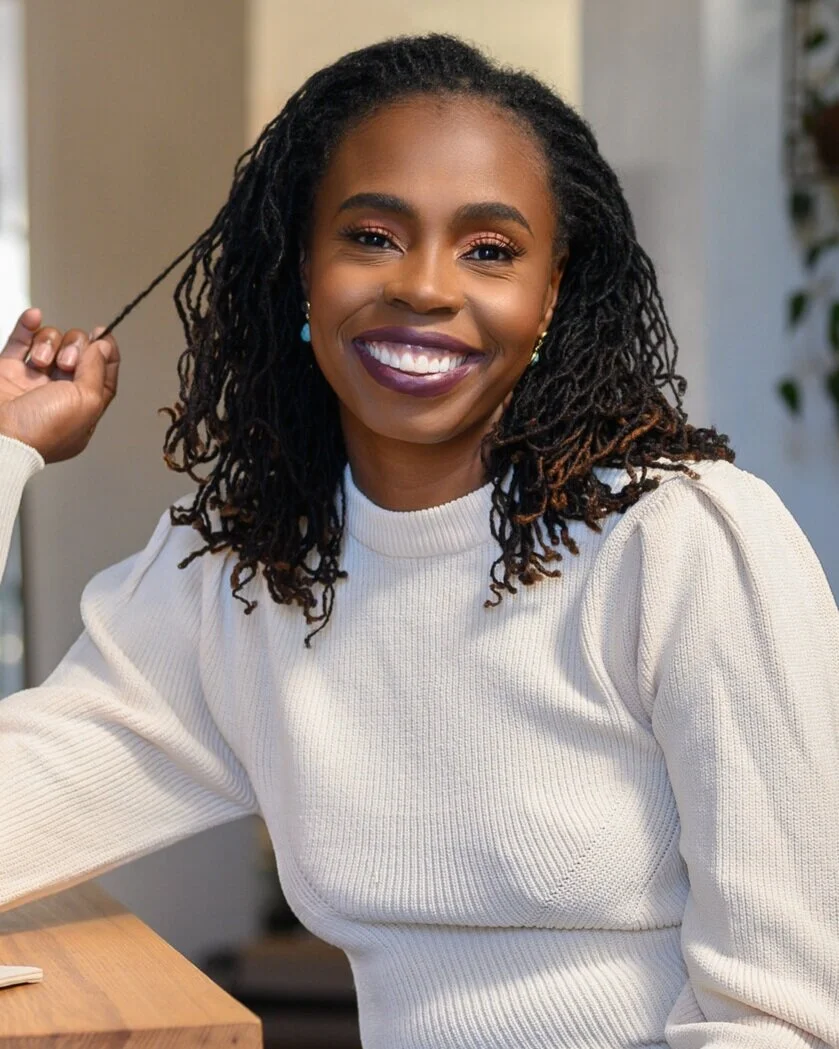
Hey there I’m Naseema
My dream is for everyone to know that financial independence is attainable with a little intentionality. Learn how I can help you finally break the cycle of living paycheck to paycheck.
Join the Facebook Community
Join the Financially Intentional community and get access to resources to guide you on the path to Financial Freedom.
Watch these Videos To Learn How to…
Keep Listening
Here are some more episodes you may enjoy…







We break down what’s really happening with hormones, metabolism, and aging in a simple way, including why perimenopause can sneak up on you.