
The Real Reason You Self Sabotage Financial Growth - Episode 135
In today's episode, I talk with Scarlett, also known as The Biz Hippie, about how our thoughts and feelings around money can hold us back from living the life we want. Scarlett shares her story of going from saving lots of money but feeling empty inside, to building a life she truly loves by changing her mindset and how she uses her money. We talk about why just working harder doesn’t always lead to happiness, and how it’s okay to want more for yourself.
About our guest
Scarlett Stanhope, aka The Biz Hippie, teaches coaches to conquer their finances and own their worth so they can be fully supported by the work they love! Scarlett harnessed the power of money to break free from her workaholic career path and pursue her dreams. She uses a combination of tangible money management strategies as well as a variety of coaching techniques to help her clients transform their mindset and relationship to money, allowing them to strategically achieve their goals and live their best lives.
The Biz Hippie
Free Quiz: Discover your money mindset type
My podcast: Empowered & Abundant Podcast
—-
Please join me here, and follow me on social media, Instagram, and Facebook.
Need help getting started on your path to financial freedom? Start Here
Join the Financially Intentional Community
Oh and please subscribe and leave a review on whatever app you're using to stream this podcast.
Get my book Smart Money
Subscribe & Review
Love this episode? Please subscribe and leave a review on your favorite podcast platform.
TRANSCRIPT:
Naseema: [00:00:00] Scarlet Stanhope AKA. The Biz Hippie teaches coaches to conquer their finances and their own worth so they can fully be supported by the work that they love. Scarlet Harness. The power of money to break free from her workaholic career path and pursue her dreams.
She uses a combination of tangible money management strategies as well as a variety of coaching techniques to help her clients transform their mindsets and relationship to money, allowing them to strategically achieve their goals and live their best lives.
What's up my financially intentional people? Today I am joined with Scarlet Stan Hope, and we're gonna talk about some money, mindset things, some shifts that need to happen in order for you to really, really build the wealth that you need for you and your family. Hold I really feel like in order to be able to do anything with your finances, to get to a place where you can make the changes that you really need and for the changes to actually stick, [00:01:00] you have to do that mindset work and.
I know I'm not a mindset expert, but I know the importance of money mindset and that's why I can bring people like Scarlet to you that can speak to that. So Scarlet, welcome and I'm so happy to have you on the podcast.
Scarlett: Yes. Thank you so much for having me. I'm really excited for this conversation because I have found that like in order to feel financially stable, safe, secure, and even like step into that wealth and that abundance, you really have to have that combination of the internal intangible mindset work. With the tangible tools and practices, and really they tie into each other and you can't have one without the other.
So I'm excited to dive in because I think that this is important wherever you are in your financial journey,
Naseema: And let's talk a little bit about like your background, like how did you get into this space? Like how do you learn the things that you're teaching people?
Scarlett: Yeah, so I have a variety of expertise. My bachelor's is in business [00:02:00] management, accounting, and finance. So I really learned about, corporate finance and accounting and things like that through my education. But I also used to work for a company called Richer Than You Think, which helped individuals to manage their money and budget and track their finances, and that was totally different from everything that I learned.
In school. That's where I really learned about the personal side of money. And then after I got my bachelor's, I really took a 180 and started my life coaching practice. And that's where I really dove headfirst into personal growth, personal development, mindset work, really developing self-trust, self-love, self-confidence, creating a life that you actually want to live and enjoy.
And I had my own personal growth journey that was. So huge, so important. And so I really wanted to bring those tools and those frameworks forward. So for the first year of my business, I was only focusing on personal growth and personal development. And then about a year in, I started to bring the money back in because I found that I was having conversations with people [00:03:00] who were inconsistent nine to five jobs and felt like they were barely scraping by.
They were living paycheck to paycheck each month, even though they had. Decent, consistent money coming in. And that's where I realized, oh, I actually have a lot of skill sets to help you with this. And that's when I combined the tangible money management practices with the deep coaching principles that can really help you transform your life in a variety of ways.
And that's when I really started to apply it to money.
Naseema: Are you comfortable sharing your own personal transformation that you went through?
Scarlett: Oh yeah, absolutely. Growing up I was a perfectionist type, a high achiever personality. That was really the vibe. Straight, A student workaholic. I was the 8-year-old with migraines because I was just like stressed out. And yeah. So then when I was a teenager, I started working very young. Was in the restaurant industry and I worked my way up to managing restaurants by the time I was 18.[00:04:00]
And at the same time, I was very good with my money, so I was saving. I started saving when I was seven years old, so when I got my first job, I was putting 70% of my money into my savings account and was building up. Savings And so on paper, my life looked like super great. I had really great credit. I was paying for college out of pocket.
I had no student loans, no student debt, and no credit card debt. And at the same time, I had $30,000 saved by the time I was 20. But at the same time, even though on paper everything looked great and I was checking all these boxes internally, inside my life was like falling apart. I didn't know who I was or what kind of life I wanted to live.
My whole entire life, I had just been chasing this idea of success and what I thought that looked like, and that's what was motivating me and pushing me so hard to Do these things work so hard, make [00:05:00] so much money. And I thought that, if I just kept working someday, I would cross this magical threshold and finally be happy and finally get to start living my life and doing the things that I wanted to do and enjoy.
And as a result. Ignoring what was going on within me, I was depressed, I was suicidal. I was covered in head to toe eczema. I had migraine headaches. I was in a toxic relationship with somebody who literally doesn't even speak English. At all. I was in a toxic work environment, working crazy hours, wearing four inch heels for eight hours a day, and a full face of makeup.
And I was unfulfilled, and my life had no meaning and purpose until one day I really hit rock bottom. I had a very scary panic attack near death experience moment. And in that moment I said, wow, I have a choice. My whole entire life, I've been passive and indecisive. I've just been going with the flow of life and letting life decide for me.
But in this moment, I can decide, do I wanna be passive and stay here and [00:06:00] let myself surrender and just die? Or do I wanna take action in my life? Do I wanna actually get up? And leave and make a different choice and be the one in control of my life and start to live the life that I want to live.
And that's exactly what I did. And it was really hard and it was really scary to crawl out of this bottomless pit that I had dug myself into, but I recognized like life was already happening to me and that I was the one in control of it, and that I could do something about it and that I could start living.
Now, and that's really the framework and the philosophy that I've built my whole career and business around is the belief that you're in control of your life and you can really live a life you want to live starting today.
Naseema: That's powerful. That story is just like I. Can a hundred percent relate to that, that whole, you don't, you're chasing this thing and you're putting one foot in front of the other and you're doing the things to check these boxes off because you're told like that's what you need to do.
But are not taught [00:07:00] like how to like really come into who you are and develop that person because it's really I guess it's capitalism it's like you, you're taught like your worth is in what you earn and the degrees that you have. It's not about like really owning and like being like a full.
Person and being fully you. And yeah, while I, I just, I can totally relate to that story, but first of all, like a 8-year-old having migraines is wild.
But I
Scarlett: I would have migraines weekly,
Naseema: I understand that because the level of responsibility I had to have when I was younger was crazy like that. But. The story of you not even knowing who you were and like giving up so much of you that you were having these physical manifestations of toxicity, is crazy.
And I know a lot of people are there and they [00:08:00] either think it's too late or they just don't have the resources or somebody to look through to be like. Yes, this is valid because another thing is that people make you think like you're crazy by saying oh, I have all these things. Like you should be grateful for all those things that you have and all that other stuff.
It doesn't really matter. And then it's just yeah, you're not crazy. That's right. But then they don't know somebody who they can go to and be like, listen, let me help you. Coming into yourself and being into yourself fully. And so walk me through , that moment where you were at that panic attack and you were like at this, it was life or death.
Like how did you come through on the other side for yourself, and how did you translate that into helping other people come through that?
Scarlett: Yeah, it, it was, and, and you just touched on so much too, because I think there is this societal expectation that once you have. Something. Once you've [00:09:00] achieved X result, then finally you'll be happy. And I think this is why so many people just work forever in unfulfilling jobs that they don't like, that don't really resonate with them, and they burn themselves out and they feel exhausted.
And it's all based on this idea that someday when I'm retired, then I'll get to enjoy my life. But then people get to retirement and they've spent like 60 plus years living for something else. Running this race, hoping that they're gonna reach this finish line and finally be able to enjoy life. And then you get to that point and you're like, I don't know who I am.
I don't even know what enjoying life looks like because I've never had the opportunity to do that before. I've never trained myself to enjoy life when really. It has to start from within, and that's really what I discovered on my journey was first of all, it was slow and steady. I had this moment in time and it did not change overnight.
It took me several years to really just crawl out of that hole, first and foremost, and then several years to start to [00:10:00] rise up from there and really start to create a life that I love. But what it really came down to was first taking active decision making ac active decisions in my life. Making choices about who am I, really, what's important to me?
What kind of life do I want to live, and what does enjoying life actually look like? And how can I choose to do more of that? How can I move towards the things that are really important to me? And it took a lot of peeling away these, what I like to call scarcity seeds, these scarce space narratives that.
Live across our society and most people have them. And we grew up with these beliefs instilled, but peeling away, what are these like expectations that I've been putting upon myself, these ideas of who I'm supposed to be, what I'm supposed to want, what I'm supposed to like, and how can I recognize the difference between these scarcity seats and who I actually.[00:11:00]
Am and start to live a life in alignment with that. And I got some pushback because you start to do this and other people are like, you're being irresponsible. What's wrong with you? Or like everything was so good before now you're making less money. It was really hard for me to start spending a lot of money to invest in growing my.
Coaching practice in my business and I went to yoga teacher training and started attending retreats and really poured a lot of money into what was really most important to me, which was personal growth, travel, and my business. And so being able to choose the life I genuinely wanted to live, the more and more I discovered myself was a constant practice that took a lot of resilience and courage.
Naseema: Yeah, and it's, it's just goes with that narrative. Like I really feel people only have one version of success, and once you try to question that or you go up against that and you're just like, no, like success for me is making sure that I live a fulfilled life. People think [00:12:00] that that's like naive and stupid and what does it matter?
Like really it's about hitting these goals and doing these things and like once that narrative is changed, it's like. something is wrong with her. Are you okay? Do I but that's the whole thing. Like real success is gonna look weird because it is not common.
not, and. It's a hard journey because not only are you going through this discovery process, which is really, really hard peeling back those layers that have been imposed on you by society and what things are supposed to look like. But for you, the conditioning that happened. You can't just shift it overnight even though you know that you need to change.
And so this double rung thing where like you're bucking against the system and then you're bucking against your internal instincts that are telling you that you need to just be comfortable and [00:13:00] conform.
Scarlett: Yeah.
Naseema: so yeah, and I think that a lot of people know that they need to do it, but it's scary and there's a lot of comfort in. Just staying the same and nothing happens in a place where you're comfortable. Change always has to happen outside that comfort zone, but people know that inherently, but taking that step to actually do something about it, most people cannot.
Scarlett: Yeah, totally. It's really scary and it's hard because you are going against the grain of what we've been taught really, and it is very uncomfortable, especially because, so I talk a lot about your relationship with money, and the work I do with my clients is really digging into. Your actual foundational relationship with money, which is what you think about money, how you feel about money, and how you utilize your money.
And so it's one thing to just say shift your mindset around money, but it's another thing to actually put that into practice [00:14:00] because these scarce based beliefs are so ingrained in our society. We just see it as the norm. It's like being a fish in the water. You don't see the water, you don't realize that's what you're swimming in, but you still are.
It's like us in air. We don't even think about the air in our day to day, but it's still there impacting us all the time. And I think that's really the first step is recognizing how these narratives are currently affecting you. How are they dictating your choices? These subconscious. Default beliefs around money, but also self-worth.
And I think that's one of the reasons why it can be really scary and challenging and difficult to really change your money story is because money is foundational, right? It's your root of survival. So all of your fight or flight instincts, your survival mechanisms, like all of that is tied to your money and your relationship with money.
So to break free from that, it [00:15:00] really requires a deep level of foundational work because your survival instincts are going to go up against you, and you have to learn how to overcome that in order to actually step into that next level of abundance that you're working towards.
Naseema: So where are your clients typically at, like in their life? What space are they in where they're just like, I need help. What is going on? Typically cause I usually find like it's a consistent kind of narrative. It looks different, but there's some consistencies there.
Where are they at?
Scarlett: Yeah, and I work with a variety of clients at different levels of income and different circumstances and different industries all over the world. But some of the things that I see that are consistent is this underlying. Money, stress that is present. No matter how hard you work, no matter what you do, no matter how much income you make, it feels like you're running on this treadmill.
And no matter what you do, you can't get off it. And you hope that [00:16:00] someday you're gonna arrive at a higher income level, and then everything will be easier. You'll finally feel free, you'll be happier, and either you never seem to hit that income level and you just stay stagnant where you are, no matter how hard you work.
Or you do hit that income level, but then it still doesn't feel like enough and it still feels like you're scraping by and living paycheck to paycheck and you wonder oh, I guess I just need to work harder and do more and make even more money. That's one common area that I see the other common.
Theme that I see across my clients is there's something that's really missing in life, like you're working in a hard hustle, unfulfilling way, and there's more that you want for your life, whether that's to travel more or to be able to take more time off. Or to start your own business or do like creative projects, there's something that you want to do or create or build.
But money is the thing holding you back and you just keep waiting [00:17:00] until someday where hopefully you have more money and then you'll be able to live the life you wanna live and do the things you want to do. That's usually what I see when people come to me.
Naseema: I can't tell you how many times I've heard people saying that if only I had this much money, all of my issues would be solved or. If only I had this amount of money, I can really live the life that I wanna live. And I'm here to tell you, it does not start there it does not work like that.
Money doesn't work like that. I mean it's an energy unless you like shift that energy is not gonna happen. But a lot of people. That's just like the thing, and I think that's a narrative that we're fed. And again, I think it's intentional because we have to have a certain amount of people that are continuing to work and feed into this wheel of capitalism that is keeping this country afloat.
You have to have your worker bees and you have to have people that are continuously chasing and always [00:18:00] feeling behind so that they'll continue to move the cogs on the wheel, and I think that a lot of people. Because it is the norm to feel like that, don't really see any alternatives and that's why I love talking to people like you because people just don't know what's possible.
Scarlett: Yeah, exactly. There's two things to touch on here. One is that I think this comes back to the scarcity seeds, which I'd love to share what those are. 'cause I think this will be valuable for everyone to hear is there are three common scarcity seeds that I see with my clients. And really I see these across the board.
I think they're just prevalent in the world. It's the narrative that we grow up learning. And the first is the idea of not enoughness. There's not enough to go around. There's a finite amount, right? There's only. So much water on the planet and once we use it up, it's gonna be gone. There's only so much food on the table and once it's eaten, it's gonna be gone.
There's only so much money to [00:19:00] go around and if you take too much, someone else isn't going to get any, right? Like life is a pie and once that pie runs out, there's no more slices to be had. So that's the first and foremost. Is that not enoughness? There is a finite amount, which is inaccurate. The, the way that I like to describe this is.
Nature is a perfect example of abundance and this not being true, right? There's an infinite flow in and out that completes the cycle with my clients. I like to use the example of trees like. If you look at a tree, that tree is absorbing carbon dioxide all the time. It's like taking in carbon dioxide now.
No one's telling the tree like, oh, you better not take in too much carbon dioxide, because if you do, then the world's gonna run out of carbon dioxide. There's a finite amount of it. No, that's part of the process. It's part of the cycle. That tree, like taking in carbon dioxide is then putting out.
Oxygen, which we [00:20:00] need to breathe. And so money is a cycle that flows. It's not a finite amount of it. When you spend it, you're moving the flow, you're moving the current along so that there is a flow throughout the world, and that flow will come back to you, just like all the rivers in the world, like the water is flowing around the world.
So
Naseema: Mm-hmm.
Scarlett: one is not enoughness. The second one is worthiness. Like I'm not worthy. Deserving. This can also look like I'm not good enough. Your, your money ties into your self
worth in really deep ways. Whatever you learned in childhood of I'm not worthy in deserving of love or attention or affection.
I'm not good enough. I need to work harder. I need to get better grades. And then. Once I do more, once I'm better, then I'll finally be worthy and deserving. But again, this comes back to like you are innately worthy and deserving simply by existing alone. Same thing with the tree example. I could say like a [00:21:00] tree.
You're not worthy and deserving of receiving carbon dioxide. Like you're not good enough. But that's ridiculous. Like of course the tree's existence alone means that it's. Not only worthy of that flow of carbon dioxide and oxygen, but it's also required to keep the world afloat. So that's the second one.
And then the third one is what I like to call starving artist syndrome. And this is the idea of either or either. I can have money and be solid and financially stable, but hate my life and hate what I do and be miserable in my work and my job. Or I can do what I love. I can really enjoy my work. I can really enjoy my life, but I'm gonna be broke in the process.
And it's either or, but not. And again, I also believe that this is inaccurate because the more you do what you love, the more you serve your purpose, the more you contribute to that natural flow, which leads to abundance, not just for you, but also for the whole entire world.
Naseema: Mm-hmm. [00:22:00] Yes. I love those. And I see those narratives play out over and over again. And even I have to admit, some of those things I've had to overcome and some of those things I'm actively working to overcome. Transparently, I'm a nurse and I'm a damn good nurse and I know how to do that and I make really, really good money.
But entrepreneurship is really, really scary to me, and I didn't get into. This brand, or I didn't start this intentionally to be an entrepreneur. I just started this business so that I can share with my friends, and then it took off and then all of a sudden I was an entrepreneur and I didn't know how to be that.
And I just stumbled along and did the things that I thought I was supposed to do, but could never get to the point where I was comfortable being like, yes, like this is who I am. I'm an entrepreneur. I make money in this way. And so it caused me to go through these cycles of not being able to reach the goals [00:23:00] that I knew I could reach because I'm , sabotaging myself in that space because I'm telling me I know how to be a really good nurse.
I know how to make a lot of money. I can always do that and I know that, I can make this amount of money on overtime, but in order to do that in this business this is what I have to do, and like, you're selling this story to yourself, which is just holding you back.
So that's, like my story. But in the people that I work with and the people that I see, I see all of those scarcity seed. Like I see all of those things like, and I just am like, no, you don't have to live in that space. But yeah, I think people need to understand that we, all of us, at some point have fed into those things and have really embraced those things that are holding us back.
And that's normal. But you don't have to stay in that space. And so thank you for sharing those so clearly, because I know that [00:24:00] all of us can identify one of those areas in their lives that they're holding onto. And yeah, I just, in knowing all of that and really looking forward to hearing like how you help people work through that.
Scarlett: Yeah. Yeah. And I think it's really important, especially when you are trying to go against the grain of society of I'm just gonna work in a miserable job I don't like, 'cause that's what I'm supposed to do, and someday I'll be happy and someday I'll cross this magical threshold, when I'll be fulfilled.
Whether that is like staying in a job you don't. Or being afraid to change careers or not believing you're worthy and deserving of asking for a raise, or whether that is like jumping into entrepreneurship and doing something else, like a creative passion that you love, like whatever that is. Usually money's the thing that holds us back from taking that leap from living more of a life you want to live, which is why, that's exactly why I love to coach on it, [00:25:00] is because it's actually not about.
The money. It's not about the amount of money you have, it's really about your relationship with money, and that's just a reflection of your relationship with yourself. Your belief in yourself. Just like you said with your business, kind of self-sabotaging yourself and holding yourself back like this shows up like entrepreneurship is such a great measure of this because in order to be successful as an entrepreneur, you have to fully believe in your value and your worth.
You have to be confident in who you are and what you're offering, and be so confident in it that you're willing to ask money. For it in exchange. And that's really scary, especially when we live in a world that really values like the job and the nine to five where the value is predetermined for you.
It's very different to say this is what I'm worth, this is the value and here's why. And I believe that bleeds into all areas of life. And not just money, but when you do the work of shifting your relationship with money, [00:26:00] what's really happening is you're doing deeper personal growth and really owning your worth in a deeper way so you can bring your value to the world, but also enjoy your life and do the things you want to do.
Naseema: Yes, a hundred percent. I just feel that on so many levels. I love the line where you said your job creates that validation because you have these markers and you have these goals and you have these evaluations, and so like it's built to.
Keep you in that system of worth and so you're there. But once you have to define that for yourself, it's really, really hard to do. And especially if you're not a hundred percent confident, if you are like, if you have any kind of resistance towards that, and that resistance can show up in a lot of ways.
And like when you talk about, like that or that starving artist syndrome. The resistance can look like having money is evil and people that have a lot of money are like really, really [00:27:00] bad people. And a lot of people tell themselves that because, I don't know, money is root of all the root of all evil and all that kind of stuff.
And it's just like these messages that we have to get from under in order to be the person that we need to be. It's really daunting and I just wish people understood that it didn't have to be like that.
Scarlett: Absolutely, and something that you just touched on is so important, and it's one of the things that I address with my clients all the time is like, there's a reason why you are where you are when you look around at your life and the life you're living and what that looks like, and also like your financial circumstances, how you feel about money, how much money you have coming in, how you feel at the end of each month with your money.
All of that is here for a reason. And that reason is because you're creating it in some way. There are subconscious parts of you [00:28:00] likely that you're not even aware of, that are keeping you in this situation and in these circumstances because of these. Different beliefs and narratives around money.
Now, consciously you might be thinking like, yeah, of course I want more money. Like More money. Sounds great. In fact, I'm spending so much time thinking about it. I'm spending so much time like working hard to actually get more money. You might think that that's all you care about and all you want, and yet under the surface there are these beliefs and narratives that you might not even be aware of that are actually showing up and self-sabotaging you, keeping you stuck.
Holding you back and keeping you in the comfort zone that is your current life. And this can show up in so many ways. It could be like mom and dad fight about money, and therefore money makes people fight. So if I get a lot of money, then I'm gonna start fighting with people. Or like mom says that [00:29:00] people with a lot of money just have life handed to them.
And I don't want life to just be handed to me. I wanna be independent and work hard and make sure I earn. My success and therefore like it's wrong for me to just suddenly be handed a lot of money. Like that way I'm not in my suffering. That makes me a good, valuable person, right? There's these narratives under the surface, whether you're aware of them or not, that are keeping you where you are.
And you can know that they're here based on where you are. If you didn't have them, you wouldn't be where you are. You would be. The millionaire that you consciously want to be like. And so uncovering, what are the scarcity seeds? What are the beliefs? What are the parts of you that are subconsciously keeping you where you are?
Because even if you ignore these things and you ignore these parts, and you're like, I'm just gonna keep pushing ahead, keep doing more, keep working harder, keep staying on the hustle train, and making more money. Like these subconscious parts are gonna keep [00:30:00] impacting you and self-sabotaging you and holding you back no matter what.
So you might as well just address them and heal them and work with them so that you can break free from them and really step into the money that you consciously desire.
Naseema: I love that. I love that. How do you get your clients there? What the exercises do you go with through with them? Like how do you identify that in your clients and how do you help them work through that?
Scarlett: Yeah, so I have a five step framework. I walk my clients through. The first one is one we've already talked a lot about, which is uncovering scarcity seeds. This is really deep self-awareness work to recognize what are your current thoughts, feelings, beliefs. Patterns around money, but not just about money.
Also about your own self-worth and also about the world. And this is really uncovering like what are the patterns, the habits, the parts of you that are keeping you where you are now? How are you creating [00:31:00] this current situation in these current circumstances that you're living in? And bringing awareness to that relationship with money.
That internal money story is really powerful because once you see it, you can start to change it. Before you see it, you can't really do anything about it. So
Naseema: Mm-hmm.
Scarlett: one is recognizing how are you creating what you're creating? What's your internal money story? The second step is to develop financial foundations and financial awareness.
This is where I help my clients see their money clearly on paper. Because often if you're avoiding your like internal narrative around money, you're also avoiding looking at your money,
Naseema: Hmm.
Scarlett: at your numbers, seeing what's actually happening, and there can be a lot of fear around that. So I help my clients get their money on paper.
By building a financial blueprint where they can see exactly what's happening, like what's coming in, what's going out, where is it going and why. [00:32:00] And this puts the control back in your hands because you can't change what you can't track if you don't know what's happening with your money. It's just leaking through the cracks.
So that's step two is first we do the internal awareness, then we do the tangible financial. Awareness. And then step three is getting really clear on the vision of the life you want to live. And this is so important because sometimes we're so focused on the present, we don't recognize, oh what's the life I really want?
What's really most important to me? If money wasn't an issue, what would I choose? What would I prioritize? What is the life that I want to live? And we get really clear on what that vision is. That way you can aim. Towards that vision because when you spend time, energy, and money that is taking action and what you take action towards is what you create.
It's what you manifest. So we have to get clear on what the vision is so that you know the direction you want to be working towards [00:33:00] and also the direction you want to put your money. Into so you can manifest it. So you can create it. And then step four is cultivating your abundant identity. This is developing the mindset of the person who is already living your vision.
This is becoming the person who is living that vision, who has the confidence level, who can see the vision as already real. Now, not just someday when you have a million dollars, but today, how can you see your vision as real now and become the person who is already living it? And this is possible no matter how much money you have or where you're starting from.
And then number five is aligned Action. Financial strategy. And now that you're clear on where you are now and where you wanna go, it's using the power of your money intentionally in alignment with that life you wanna live so you can bring it into reality. I really believe that your money is a tool for manifestation and creation.
Like money is how you create this [00:34:00] life that you're living every single day. How you choose to spend your money is how you create and manifest this life. So if you spend your money in alignment. With your vision intentionally and consciously and strategically, then that's how you manifest and live that life.
And so with those five steps, I can really help my clients shift out of scarcity and not enoughness, and feeling stuck and feeling unfulfilled to really living your most abundant life right now. And then continuing to work towards and create and manifest that abundant and fulfilling life every single day.
Naseema: Let me tell you something. Like I felt the transformation in those steps. Like I could see the tangible changes that your clients have in every one of those steps. And so I know that when people work with you, they really. Get the results. 'cause I could feel it in what you're saying and I'm just, I'm less in the mindset space, but more in like the practical like step, like by step space.[00:35:00]
But they all go hand in hand and it's it's all, that is all you have to have both. You have to have both in order to achieve that success. And I'm just like, yep, yep, yep, yep. And I, felt it like, I just want you to know like that system is everything that, everyone needs in every state.
people can benefit. Like you said, from it in whatever stage they are and they know that they're not getting the results that they really want. Typically, how long do you work with people? In what setting is it? Is it like one-on-one? Is it group coaching?
Scarlett: Yeah, that's such a great question. And I wanna touch on what you said too, like you really do need both, like the tangible and the intangible. Like otherwise it doesn't work. You can know all the things you're supposed to do, but you're not gonna implement them if you're holding yourself back.
Subconsciously, like it's just not gonna happen. Yeah. And so the work that I do is I have a, a program called Empowered Abundance that walks my clients through these five steps, and I do it over a period of six months because I find that [00:36:00] since money is such a deep transformation, I love to dedicate. A long chunk of time to really integrate this fully.
I don't want, when I work with my clients, I don't want it to just be a like, oh, you're gonna try this habit and like good luck and go off on your own, and then not fully integrate it or implement it. I wanna make sure that we're doing this deep work from the inside out where it lasts. For then the rest of your life.
So I love doing a six month container. I do offer it as a one-on-one and also group. I really love doing it as a group because money is often taboo. It's something we're ashamed of. It's something we don't talk about a lot. And so when we coach as a group around your money, it's so powerful, so transformative, simply to release some of the shame around money to be able to share.
Your money story, your relationship with money with other people is transformative. And then when one person heals in one area, [00:37:00] everybody heals in that area. It also gets you out of your own head too. Like sometimes our money situation is so internal and personal and we're the only ones carrying that weight alone.
But when you get in a room with other people who are also talking. Openly and freely about their money. You learn different perspectives and it really gets you out of your own narrative. So it just breaks these boxes and these molds that we've created for ourself around our money. So one-on-one is valuable, but group is also valuable for, for those reasons too.
Naseema: And if people want to work with you, what's the best way for them to reach out to you?
Scarlett: Yeah, absolutely. So I love to offer, when I do podcasts, free abundance activation sessions, which are free 30 minute sessions to dive into what is your current relationship with money, what are your scarcity seeds, and what is the vision that you wanna create for your life, and how can. You get there, what are the simple steps to [00:38:00] really help you step into your next level of abundance?
And then if you wanna have a conversation about working together or taking this work further, we can have that conversation as well. But if you wanna book a 30 minute abundance activation session with me, you can do that on my website, the biz hippie.com/activate.
Naseema: Nice. And that link will be in the show notes. But Scarlet, this has been an amazing conversation, something I didn't even know I needed. And it's been great, but and I can just feel your energy. And I know that the impact that you're making on the world is phenomenal and we need more people like you.
And I'm just like super grateful to have this conversation with you, to be able to have met you. And I'm super grateful for the work that you're doing and I know so many people can benefit from it. So I'm just giving you a flowers girl. Like you're doing amazing, and I appreciate you and I appreciate you pouring into the people in this podcast because I know that the people that [00:39:00] need to receive this message have received it and hopefully they take action.
And again, the links will be in the show notes to reach out to Scarlet, and I really hope that you do. Because I know that the impact that you have on people is everlasting and gets them out of that rut. And I just appreciate the work that you're doing so much, and I hope that I can articulate that clearly enough for you yeah,
Scarlett: Thank you so much for having me. I think this conversation is so important and if there's one thing I would want anyone to take away who's listening to this, it's that you can live your most abundant life. You can be thriving, you can be fulfilled starting right now with the amount of money that you have.
And I want you to know that that's possible because I never thought it was possible for me. And yet here I am. So thank you for having me on your show. I'm so glad we could dive into this conversation today.
Naseema: Yes, and I love that takeaway, like you are worthy, it is possible for you. So yes, thank you.
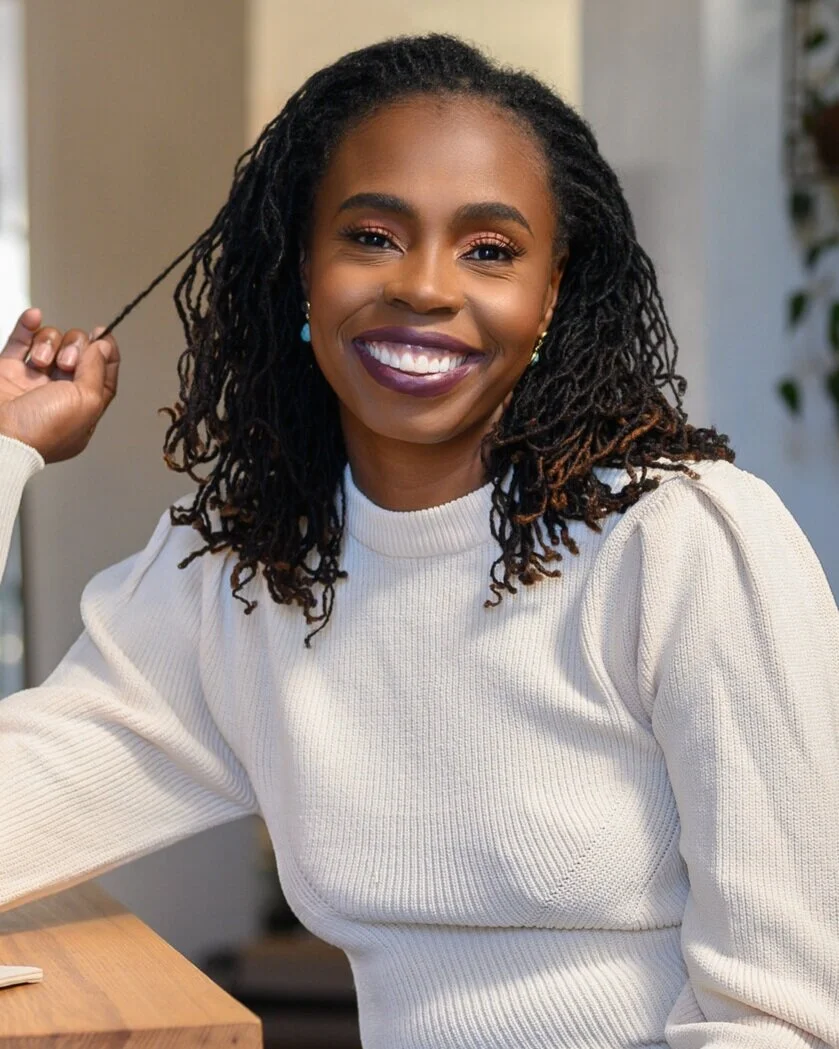
Hey there I’m Naseema
My dream is for everyone to know that financial independence is attainable with a little intentionality. Learn how I can help you finally break the cycle of living paycheck to paycheck.
Join the Facebook Community
Join the Financially Intentional community and get access to resources to guide you on the path to Financial Freedom.
Watch these Videos To Learn How to…
Keep Listening
Here are some more episodes you may enjoy…





We break down what’s really happening with hormones, metabolism, and aging in a simple way, including why perimenopause can sneak up on you.