Women Deserve Better Financial Advisors and This Is Why - Episode 128
In today's episode, I sit down with my friend and mentor Hilary Hendershott, a super smart financial expert who helps women build wealth. Hilary shares how she went from being deep in debt and losing her home to becoming a millionaire and teaching others how to win with money. We talk about why so many people, especially women, feel left out when it comes to money, and how changing the way you think about it can totally change your life.
About our guest:
Hilary Hendershott, MBA, CFP®, is the founder and Chief Advisor at Hendershott Wealth Management, a fee-only firm dedicated to helping women and couples achieve financial freedom through personalized, tax-aware investment strategies. With over two decades of experience, Hilary’s evidence-based, compassionate approach simplifies the complexities of money and empowers clients to reduce financial stress and grow their wealth. As a fiduciary, she puts her clients' best interests first—eschewing commissions and proprietary products—and has earned a 94.96% retention rate among high-net-worth clients over the past five years.
Hilary’s passion for financial empowerment is deeply personal. After losing her condo to foreclosure and facing nearly $600,000 in debt, she rebuilt her life by transforming her money mindset, ultimately creating the Money Operating System® to help others do the same. She’s been named one of Investopedia’s Top 100 Financial Advisors for six straight years, is a Top 40 Under 40 Entrepreneur in Silicon Valley, a TEDx speaker, and the host of the Love, your Money® podcast. Hilary’s work has been featured in major media outlets including The Wall Street Journal, Forbes, NBC, and FOX. She holds an MBA from Santa Clara University and lives between California and Puerto Rico with her husband, daughter, and two cats.
Hendershott Wealth Management
—-
Check Intentional Style here: https://www.intentionalstylesuite.com/
Please join me here, and follow me on social media, Instagram, and Facebook.
Need help getting started on your path to financial freedom? Start Here
Join the Financially Intentional Community
Oh and please subscribe and leave a review on whatever app you're using to stream this podcast.
Get my book Smart Money
Subscribe & Review
Love this episode? Please subscribe and leave a review on your favorite podcast platform.
TRANSCRIPT:
Naseema: [00:00:00] Hillary Hendershot, M-B-A-C-F-P is the founder and chief financial advisor at Hillary Hendershot Wealth Management, a fee only financial advisory firm specializing in empowering women and couples to achieve financial freedom in helping high net worth clients take a tax aware approach to investing through ultra tax efficient wealth management.
For 20 years, Hillary has helped clients simplify money management, reduce financial stress, and grow their wealth. Her obligation as a fiduciary places her clients' best interest, first minimizing conflicts of interest and is void of proprietary product sales or insurance commissions. Her approach grounded in evidence, expertise, and compassion centers on making the complex world of finance accessible and actionable, and has led to a 94.6 retention rate of her high net worth clients over the last five [00:01:00] years. Hillary's passion for financial empowerment stem from her own journey of overcoming financial adversity after losing her luxury condo to foreclosure and accumulating nearly.
$600,000 in debt. She realized her beliefs about money were really holding her back. This pivotal experience led her to create the money operating system, a transformative framework that helps clients rewrite their mindset around money. Recognize as one of Investive Pedias top 100 financial advisors for six consecutive years.
And the top 40 under 40 entrepreneur in Silicon Valley. Hillary is also as Head ex speaker and the host of the Love Your Money podcast. She's been featured in the Wall Street Journal, N-B-C-A-B-C, Fox, Forbes and More.
Hillary holds an MBA from Santa Clara University and is a certified financial planner. When she's not making bold moves with her team. At Hinder Shop [00:02:00] Wealth to create a world where everyone thrives, Hillary stays busy enjoying life in California and Puerto Rico with her husband Robert, their daughter Harlan, and their two cats.
what is up my financially intentional people? This is a really special episode because I'm being joined with Hillary Hendershot, someone who I admired for years, and I just remember being like, how come I don't know Hillary? And in. 2018, we got a chance to work together and really get to know each other.
And she's been someone who I've admired and looked up to for a very, very long time. And you guys will see why during this interview. But thank you, Hilary, for joining me. It is really an honor, so good to be able to catch up with you after all of these years and after all of these life transitions, we're still here.
Hilary Hendershott: We're still here. We're still standing.
Naseema: [00:03:00] Yes,
Hilary Hendershott: a few more children in the mix.
We've bought and sold a few properties.
Naseema: a couple of moves.
Hilary Hendershott: know, I remember the first phone call we had, it was that strategy session
Naseema: Mm-hmm.
Hilary Hendershott: the coaching program and you were telling me that you were on a rocket ship. I said something like six figures or seven and you said, it's going to be more like seven or eight. You said something like nothing's going to get in my way. I can feel it. I'm on my way. I'm on my path. And I was thinking, get out of this woman's way.
Naseema: Oh my God. So optimistic.
I'm still on just a little delay re times, but listen.
Hilary Hendershott: babies does that.
Naseema: Yes, yes. Having babies moves, relationship changes, like all of those things have happened in the course of that time. But I think what hasn't changed is that I'm still on that [00:04:00] upward trajectory.
Hilary Hendershott: It's good for you.
Naseema: Yes, yes. And it's be a lot because of you. I credit a lot of things.
From the work that we were able to do together, and I still remember all of those things, so kudos to you, but I just want everybody to get to know who you are from like where you started because you weren't always good at this money thing. I think you were always really good at making money, keeping money.
Hilary Hendershott: I was better at spending it. Yeah, you know, I graduated from college Phi Beta Kappa Magna Cum Laude with a degree in economics and I thought I was on my way right degree in economics. How could you not master money? So fast forward, you know, I'm in my late 20s. I'm in a career. I was being mentored into the financial planning industry by my father and I was supposed to be his business continuation plan.
And so. A couple of years in, I find myself advising multi millionaires on what to do with their investment portfolios during the day. And at night I would go home [00:05:00] to a stack of bills that I just wouldn't open because I couldn't pay them. I couldn't afford to pay my bills and. I don't know.
I was just kind of waiting to see what would happen if I never made the credit card minimum payment. I'm not even sure what in the heck was going on in that woman's brain because you I was smart, but I wasn't figuring it out about money and the whole thing kind of came to a crisis head crisis pinnacle. One day I pulled my least BMW because I had to have the good car. I had to have the night. It was a BMW convertible. So beautiful, fully leased. And I pulled up that vehicle into a gas station and my two credit cards that were in my wallet. The only two credit cards I had were maxed out. I put them both in a machine.
One gets rejected. The next one gets declined. Then I put my debit card in and my bank account was empty and that was it. That was the end of the line for me. I couldn't even afford to put a tank of gas in my BMW. And I literally walked home from the gas station. I've had people ask me, did that really happen?
This really happened. I remember I was on 30 keys [00:06:00] in downtown San Jose I, I talked to myself on the way home. I had a little conversation, a little come to Jesus with myself. And I said, I can really see what my life is going to be filled with. If I continue to behave this way around money, the way I've been behaving was like, I was willing to look in the mirror for the 1st time.
And I said, you know, I've got obviously my friends were also economics majors. Some of them were doing very well. And I said, how come I have good intentions? They have good intentions. They have good results. I have bad results. And I said, what? So it's obviously not book knowledge,
Naseema: Mm-hmm.
Hilary Hendershott: And so where does my behavior come from?
It comes from my psychology. And so Miss Rationality had to accept that there was something, subconscious, we'll say in my psychology that, was. Creating over and over and over again, a world in which I would earn $100 and spend $120. I would earn $100 and spend $120. money earned a hole in my pocket. And so, I just [00:07:00] started, I said, okay, I'm going to dive in. I'm going to do what I know how to do. Like, there's a body of knowledge that's out there. I know how to move it over here. I know how to have it cross the line, cross the blood -brain barrier. So mine now. So I started attending. I started reading about money psychology, behavioral finance.
I started attending conferences. I would go to the other breakouts where people were talking about money therapy, financial therapy was new to the scene,
Naseema: Mm-hmm.
Hilary Hendershott: therapy has not always been around and I heard the term over spender and I had never heard that term before, but I knew when I heard it that I was one.
And when I got down to it, what I saw was that. My mom, by the way, she worked in a clinical laboratory in a hospital from my childhood. She worked nights and so she had a good salary. But of course, you know, the doctors and well, sometimes the nurses get paid the most. So she had like a medium salary and she's raising two girls and she got divorced and she was committed to being a good saver.
So there wasn't a lot to take home, but I didn't know about her growing [00:08:00] 401k or 403b. I was too young to know that. All I knew is. So you would only give me $5 to spend on my friend's birthday parties. And I was on the high school basketball team, and I was the starting center of the JV team, okay? But, everybody had Nikes, high tops, and I wanted Nike high tops. And she took me to Payless Shoe Stores,
Naseema: I.
Hilary Hendershott: and I got throwaways. It was embarrassing. embarrassed. I was mortified. And so for me, my truth about money, because money is super conceptual and unless we as parents can hit it off at the pass and start to, Fill that blank space for our kids with empowered beliefs about money. It's super conceptual. And so kids don't understand it.
So we lock onto beliefs and my belief about money was there's never enough money. then when you make a hundred dollars, if you believe there's never enough money, of course you have to spend 120. [00:09:00] Of course you do. Right. And it's really insidious and it's not how we normally think about human behavior, but it was definitely true for me.
So that was the beginning of my financial transformation. So at this point, I've gone from a 400 FICO score and $600 ,000 in debt to. I think my FICO is probably 760. I don't know because I don't apply for loans anymore, right? I'm like, I don't need other people's money anymore. multiple seven figure net worth.
I could retire. I work now because I want to. So I'm fully funded. I am financially free and I've dedicated my career to teaching the lessons of empowerment that I learned and embodying a compassionate, empathetic financial. Advisory role with people. So my company was founded with inspiration from the beginning, but I got to re -engineer it.
And we're now by women for women. 65 percent of our clients are women. And we just embody all of these lessons, like, look it, we weren't [00:10:00] born perfect with money. for most of us, our parents were messed up about money, so they taught us messed up lessons, and we just like inherited it, and it's this cycle. so, I've got multi -millionaire widows who are terrified about money. And, I mean, the email questions we get from people are what you, probably your listeners and you would consider. So basic, but we're here for it because that's the questions they need to ask, right, in order to feel fulfilled and empowered and in control and like their wealth is sustainable. And so I just talked a long time. Did you?
Naseema: No, that was also good. But you said you, you like most of your clients are women. Why do you think it's important for women to. You have like work under someone who just focuses on women. Money is money, right? People tell you money is money. But why do you think it's important to be a part of this female founded female run advisory, financial [00:11:00] advisory
Hilary Hendershott: well, a couple reasons. So, 1st of all, you know, I did my 1st, 10 or 12 years in the industry in the normal industry, like, financial services. Largely wall street is largely by men for men. Right? That's how it started. And. My experience in that was that my competition were all 30 years older than me.
That's changing a little in the financial advisory space now, right? We're sort of coalescing on a, younger age of the normal financial advisor. But, you know, I was 25 and they were 55 or 60 and they were all old white men. And I thought I'm the wrong age and I'm the wrong gender. And they would talk down to me.
I would go to conferences and they would say, does your daddy let you talk to clients? Who do you do marketing for? Who's admin are you, right? And, by the way, this stuff persists. Now when I go to conferences, it says my name. My name is the firm, right? And I walk in and they go, who do you work for? Or they say, are you a financial advisor? Yes! That's why I'm here. And [00:12:00] I know, doctors have the same phenomenon, certainly engineers, et cetera, et cetera. So I'm not saying that's unique, but really to be ignored as a member of the industry taught me something about, I had this thought, like in the shower one day, this light bulb went off. Oh, if they treat me like that, I can't imagine how they treat their female
Naseema: Mm-hmm.
Hilary Hendershott: right? And for me, when I go to the doctor, Especially the OB, right? I want a female. I don't, I just want to see a female doctor. And I, I said to myself, there must be women out there who just want to see a female financial advisor.
And then when I start to talk to people, and the most common complaint, that female, women have is A, their financial advisor, if they go with their husband, won't even look at them. won't ask them questions, won't make eye contact. Second, if they do ask questions, they get kind of the pat on the shoulder.
Oh, don't you worry about, don't you worry your pretty little head about it, right? Like, you don't need to ask questions. This is all being managed for you. And then, of course, we know the data that says that [00:13:00] when women lose their husbands, if and when we get widowed, our spouse dies, something like 80 percent of females will change financial advisors because they just don't have a relationship with that person who works.
Naseema: Mm.
Hilary Hendershott: works. The relationship doesn't work. So I thought this is my space. This is my sweet spot. And you it's important for men to have good financial advisors too. I just think there's plenty of those,
Naseema: Yeah, exactly. Exactly.
Hilary Hendershott: not all, you know, I'm not speaking in, I'm not saying everyone, every time, everywhere, but I know for a fact that the women we work for Get a very compassionate, empathetic, even, even loving. We tell our clients we love them. Not all, not in every email, not every time, but there's love there, right? And that's a unique offer.
Naseema: Yeah. and I think I just, the financial services industry, for a long time has just been very male, very stale and very unapproachable for a lot of people. And there's a lot of intimidation even [00:14:00] in the nursing space, like the, people that we have our financial advisors for, like our retirement plan. I know a lot of people just don't go talk to them because they've been talked down to or feel like they can't ask the questions or feel like things aren't explained in a way that they understand, and so I think a lot of people overlook the fact that. This factor causes a lot of people to lose money in the long run, and there needs to be people in this space to fill this void because there is such a problem.
There's such a need there.
Hilary Hendershott: and those folks that you go talk to that are provided by your employer, they do that because the attorneys won't let the employer themselves talk to you about your 401k or your 403b. So they bring in someone from the company that does your 403. Sorry. Do you have a 403b or 401k? Okay,
Naseema: Both.
Hilary Hendershott: let's just say your employer sponsored retirement plan,
Naseema: Uhhuh.
Hilary Hendershott: in someone from the company that does that, which is inevitably an insurance company. [00:15:00] So,
Naseema: Yeah.
Hilary Hendershott: they're usually fundamentally there to either not spend very much time with you or sell you annuity or a whole life policy that you don't want.
Need probably don't need, right? So the intentions are misaligned and it really is about just a morass of regulation that, you don't really have the opportunity to know about. And of course, the truth is, those are probably, you know, I don't want to say their entry level employees, but I mean, they're not set up to educate you in an empowered way.
Naseema: Mm.
Hilary Hendershott: supportive way,
Naseema: And their interest isn't always aligned with your interest.
Hilary Hendershott: Right?
Naseema: So
Hilary Hendershott: Right.
Naseema: it's just yeah, it's a lose lose situation for a lot of people.
Hilary Hendershott: It is. And that's why, let's take a comparative of study for me. Okay, I'm starting to look into anti aging. Okay, so we'll, we'll talk about you have your injectables. You have your [00:16:00] nutrition based solutions. You have your surgical solutions, right? I'm 48. I turned 49 this year. it's like, oh, I look in the mirror.
It doesn't look the same. It doesn't look quite the same anymore. And so, but the democratization of information means that I can turn on Instagram and you've got smart, successful female doctors. to me about the different solutions that are out there.
Naseema: Yeah.
Hilary Hendershott: And so I go through my own due diligence process of who do I trust with their educational credentials? is the tone that they speak in? Right? I feel I resonate with this person? And so, comparatively for your listeners, they have the same opportunity to find voices out there. That they resonate with, and maybe you don't get all of your education on your employer sponsored retirement plan from the guy that the insurance company sends to talk to you in that awkward cubicle. you can't maybe through your own tuning in to the podcast and the. [00:17:00] Experts that you find publicly and social media podcast space you walk in and you say, I want to maximize my contribution for 2025. I'm going to make sure I maximize my employer match. I want to put it in a low cost index fund and I don't need anything from you, bro.
Right?
Naseema: I love that.
Hilary Hendershott: So, hopefully
Naseema: Mm-hmm.
Hilary Hendershott: We're finding our education in, in all of the places, right? And I feel like it's what's made possible that wasn't possible in my twenties, because that wasn't happening. But it's also kind of necessary in these realms where, A lot of things are part art and part science, and unfortunately you can't always trust the intentions or incentives of the person who's talking to you.
Naseema: Yeah, that's why my platform exists. Like I just remember being in my twenties, earning the most money I've ever earned and just I really need to learn how to invest. And then walking into a brokerage and being like, Hey, is there anyone I can talk to [00:18:00] about investing?
And they're like. How much money do you have? 'Cause we only serve people that only have like at least $300,000 in assets. And I'm just like, okay, fine. And just like walking away and through my own path of studying and learning and listening to podcasts and being exposed to different things because I just was like, enough is enough.
Like I, if nobody's gonna teach me, I'm gonna learn this thing on my own, seeing, like finding voices which is, which are so much more, prevalent now than then. But finding voices and finding people that I can listen to and actually finally learning this stuff on my own. Did I know what was available?
And it's just like one of those things I tell people, like still even to this day, there's a gap. and like you knowing and then getting the resources and understanding how to bridge that gap. But one of the main things I tell people is change your circle of influence. And, [00:19:00] I think social media is a great way to do that.
That's typically what I use social media for because, you can go down the rabbit hole, but I encourage people to curate their social media to shape like who they wanna be, to only follow people that they aspire to. And then they can find voices like mine. Find voices like yours and be able to say, okay is this person serving in my best interest?
What have they accomplished? What have they done in their own life? Who do they really serve? What do they do? And yes, we are graced with a lot of information nowadays. A lot more than 20 years ago. And I think that people should take advantage of, these opportunities and learning and a lot of times just people just don't know what they don't know about money, and that's okay. And I think people think, oh, I'm at this age, like I should know these things. Oh, I've, been in my career. I should have done these things and [00:20:00] beat themselves up. But like the main thing I just want people to understand is it's never too late.
The information is out there. There's someone who can serve you. There's someone who's relatable to you. Just build through those voices and find those people, of course, to vet them. But just get started and it's possible. Yeah.
Hilary Hendershott: time, and for those of you listening who felt like my verbal treatment of the anti -aging possibilities was insufficient and unscientific, I have a lot, there's a lot for me to learn. And when you're starting to learn about investing, there's a lot for you to learn.
Naseema: Yeah.
Hilary Hendershott: the nature of A competitive industry or, the free market is that there's a lot of people out there who just want to pitch a product, a thing, right? And so, just like when I'm watching a plastic surgeon talk about plastic surgery, I'm well aware that that plastic surgeon wants to talk to me about surgery because he or she makes money [00:21:00] doing it, right?
Naseema: Yeah.
Hilary Hendershott: And so you have to take it with a grain of salt. And so, and that exists in, Almost infinite forms in the finance industry and the investments industries.
Obviously, a very profitable industry. And so a lot of people are trying to separate you from your money. And so it's important to research what's out there. Understand those motivations. Who does that person work for? What are they selling? How do they make money? Right? so, I mean, I make money selling, you know, Financial advisory services, but everything we advise inside that umbrella, we don't make
Naseema: Go make money from. Exactly. Mm-hmm.
Hilary Hendershott: commissions. We don't
Naseema: Yes. Yes.
Hilary Hendershott: et cetera, et cetera. And so, I kind of wish I could have that, like, the equivalent who would tell me, what do you do?
Naseema: In the beauty space,
Hilary Hendershott: neck? Please.
Naseema: you're so funny. But I think that leads to a really good question, most of my audience are women. Most of my audience are moms, and they just don't, never been really taught [00:22:00] about money, like in their homes. And they always ask me like, I just need a financial advisor. And I think that'll just solve their problems.
But what do you tell people is important when looking for financial advisors?
Hilary Hendershott: great question. Let's start with, so hiring a financial advisor is fundamentally about delegating some of the responsibility for babysitting your plans. That's what a good financial, a comprehensive financial advisor keeps you on track to achieve your goals. That work should be goals based. So you as the client get to say, this is my current income. This is when I'd like to retire. Then together you and that financial advisor, well the financial advisor has the calculator, right? Does the math and says you need to save X amount per month. And then you check in periodically. Make sure we're on track. And then we're going to surround you with products and services. Again, a good financial advisor won't be selling those products. A fiduciary advisor. [00:23:00] That protect you. So, for example, a homeowner's insurance, renter's insurance, motorcycle insurance, health insurance, you got to have these, right? Disability insurance, probably. You want your will and your revocable living trust in place in case something happens to you.
You've heard of all these things, but this person is going to be making recommendations, kind of keep you on track to do those things. the things you cannot delegate, though. Your financial advisor can't open bank accounts for you or won't probably know what the balance of those bank accounts is. So, for example, when Silicon Valley Bank and First Republic failed last year, we found out, not our clients. I had friends in Silicon Valley, one specifically, had a million dollars in the bank. Now, we talk and we financial advisors, Talk until we're blue in the face. Do not exceed the FDIC balance limits in any individual bank account. It's $250 ,000 per bank account per person. are you doing with seven figures or more in a bank account?
Right? And we [00:24:00] say this stuff over and over again. It's so Nobody wants to hear it when we say it, but then the day Silicon Valley Bank goes under and you call them and the line is dead, you're going to wish you had taken that advice and
Naseema: Yes,
Hilary Hendershott: that part for you.
Naseema: yes.
Hilary Hendershott: You got to stay on top of it.
You got to go buy the insurance. You got to go, pay your property taxes, all that stuff. Really, the fundamental truth of your financial life is how much you have, how much you owe, much you earn and how much you spend. Okay. And there are so many people who don't or won't or don't want to know those numbers.
Okay.
Naseema: Yep.
Hilary Hendershott: And if you're living like me with a stack of bills on your kitchen counter that you won't open because you can't pay them, either in the dark. Like, there's a chance you're doing all right, but we don't know. It's just a guessing game. But it's highly likely that at some point you're going to get really tripped up [00:25:00] because you're going to want that $80 ,000. Lexus, right? Right. Oh, I work hard. Right. And it's going to look to you or feel to you like you can afford the payments on the loan that the dealership is offering you or the lease that they're offering you without an eye toward what that does to your long -term net worth. Okay. So we have a saying in my company and that saying is handle money first.
We send our clients mugs that say, handle money first. So, you know, for me, when the email comes in I mean, I literally got notified about my property taxes today. I've been asking my husband, I know we owe property taxes. Figure it out because we moved to Puerto Rico. Like, where's the property taxes?
Bill and it just came in today and I'm in the middle of a busy day. I have an interview with the Naseema to prepare for. I'm like, I have important things to do, but I stop what I'm doing. I open the email. I figure out what the bill says. It's all in Spanish. I call [00:26:00] my friend who's Spanish. I go, I need to help.
I need to help. I don't, I don't understand this bill. And I figure out what I owe. I don't relegate it to the background,
Naseema: Yes.
Hilary Hendershott: Another example, we went to a business conference and left the hotel and then they call it the folio. It's basically the hotel bill. It comes into my email. I open it. I realized that we accidentally paid with a personal card.
I immediately forward it to my bookkeeper. This may not apply to nurses. Okay, but the point is I handle money first. I forward it to my bookkeeper and I say, Hey, this is actually a business expense. Do a profit draw for me and owners draw for me and pay me back for this. It just happens. I
Naseema: Yes.
Hilary Hendershott: stuff up. People ask me, because we published about tax season, and they say, How do you prepare to talk to your tax preparer? I say, you guys, it takes me 12 minutes. I'm ready for tax season because I'm
doing it all year Because you already already set it up. yes, if you know your net worth, and your spending, and your debts, well, you have to know your debts to know your net worth, and if you handle money first, oh [00:27:00] my gosh, that's like 65 percent of the game.
Naseema: Yes, yes, yes. But you are the queen of systems. Like you have systems in place, you have your bank, your personal, on a personal level, bank accounts like set up a certain way. I know you have your business up, that's a whole nother thing, but like your per, yeah. Your personal bank accounts set up in a way, so you.
Won't go back to that place. You will never go back to that place where you didn't have any money in your account to pay for gas. Can you walk us through like those systems that you have?
Hilary Hendershott: Yeah. It's easier with the visuals, but I'm going to do it in audio form. Okay. So if you hate budgets, you have much, much kinship in the world. I would say 95 percent of people hate budgets. The only people I know who thrive with budgets are engineers and they spend way too much time in their spreadsheets about it. I can't tell you the number of times I've had people come to me. They say, oh, we were preparing to meet with you. We spent all weekend on this budget. [00:28:00] We just hours and they haven't even looked at it since. Right? So months and months later, it's just a lost weekend.
Naseema: Mm-hmm.
Hilary Hendershott: believe I'm going to do the opposite.
I'm going to set myself up to win. I'm going to. Automate my financial success. So that means I use my accounts like an irrigation system like irrigation in your garden so that you tie the hoses together and splice them so that water goes to the flower pots that need the most water in your irrigation system. And that's exactly what I do in my bank accounts. I probably have 6 or 7, maybe 8 or 9 bank accounts, but they're all a complex system. They're not that complex. They're a carefully curated system. It's, it's, it's, you know, addition and subtraction, right? But it's, account monthly, account transfers that save first, my bills, and then I spend what's left. And that's it. it. And if, cause most people spend what they want, maybe they pay their bills, and [00:29:00] then they save what's left. You
Naseema: Which is never anything usually,
Hilary Hendershott: anything? No, because Parkinson's
Naseema: yes.
Hilary Hendershott: expand to fill the space we give them.
Naseema: Yes.
Hilary Hendershott: So you're going to save for your short and long -term goals first.
By the way, I pay cash for cars. I pay cash for vacations. I pay cash for luxury purses. And I save for my retirement first, right?
Naseema: I just wanna tell a story. 'cause Hillary, like when we first met, I remember her yelling at me because we were doing our meeting and a week before I decided.
Hilary Hendershott: went and bought that Tesla. I
Naseema: Which I still have till this day. Thank you very much. But she was pissed. She was like, wait, what?
So my whole thought process was like, okay, I really want this car. I, I was like. Planning to get it years down the line, but I [00:30:00] told myself, if I have enough money in the bank to pay for this car, I'm gonna get this car. And so I had the money to pay for the car. I was gonna get the car and Hillary was like, what are you doing?
She was like, I pay cash for my Tesla. Like what? Because I, I financed it like at a 1%. Yeah. It was like 1% rate. I ended up getting the car, all that stuff, but I just remember you being, so like irritated, but.
Hilary Hendershott: not only that, not only that, it was the first day of our mastermind. We were meeting in person and it was like, oh, it's such a big deal to me. And here you were, you pulled up to show everyone your new car, all these women who are coming into this Wealth Mastermind and you pull up to show them the new car or something.
I just remember, and I was like, Oh my God, I'm so excited. I'm so excited. I'm so excited. I'm so excited. What? I have lost all control. No, and for those of you listening, I want you to have a new car. I want you to have a new car. I [00:31:00] do. And, you know, it was just a matter of, it's not the last time that's happened, by the way, multiple times I've had people come into my coaching programs and they're like, I just upgraded my Diamond. I just, they do it the week before we meet for the first time. So I can't take it away from them. Which I never do. I never do. Okay, so getting back to financial automation. And, for those of you who are living paycheck to paycheck right now, it may seem out of reach. The
Naseema: yes,
Hilary Hendershott: of filling your retirement accounts first, paying your bills second, and then spending what's left. And, it takes some belt cinching for a month or two. I mean, you have to bridge that gap. From over being overextended to being underextended, but once you do it, you'll never go back,
Naseema: yes, yes.
Hilary Hendershott: go back because it's so empowering. I used to be, when the numbers, my numbers were smaller, you know, I'd be at Macy's or the mall or whatever, and I would want to buy a bag or a [00:32:00] purse or a suit and I wouldn't really know.
If I spend this amount of money, am I in trouble? Do I have this much? Will I have money left over? And now, I have this account where I just spend what's left, and all I have to do to know if I have enough is, open up my iPhone. It's right,
Naseema: Yeah.
Hilary Hendershott: is right there,
Naseema: Yep.
Hilary Hendershott: spend that account down to zero, and for those of you who spend on points credit cards, great, you spend Up to the balance of the spending account and then you use the balance of the spending account to pay off the credit card.
Get your points more power to you.
Naseema: Yep.
Hilary Hendershott: but it's so simple. And then you just never have to guess. You never have to worry. And the emotional experience is pride, confidence, clarity, power, right?
Naseema: Yep. Mm-hmm.
Hilary Hendershott: So it's something I've gotten very addicted to, and it's a good addiction. Thank
Naseema: It's a very good addiction. I think people don't understand that power that it gives you and the control that it gives you over your life. And that's one of the biggest things that I have felt and and made me wanna share this journey is because [00:33:00] I. Money de defeats a lot of people. People are so defeated and once you switch that relationship with money and get control over it, it expands the possibility of your life, like in ways that you probably would never imagine.
But I wanna give you some props on a piece of advice that I always share and I always tell people, Hillary taught me to do this. But when we were talking about college funding and back then I only had one daughter,
Hilary Hendershott: Yes.
Naseema: then, I was transitioning to this place where I just paid off all this debt and I was just like, now I have to like, really aggressively invest because I, I have to be a millionaire by this day or whatever.
And we were talking, I was like, but I don't know, like how much I should save for my daughter for college, all this kind of stuff. And you were just like. You know what, just make it a goal to give her a hundred thousand dollars because you go from there and you do the calculations from there.
You don't have to [00:34:00] plan on paying for her whole education. And I was just like, bet a hundred thousand dollars seems reasonable. And we set up a plan to do that. And honestly, I have not contributed to that plan since 2020. And she's 11 and now she has. $88,000 in that account.
Hilary Hendershott: Oh my
Naseema: I'm not gonna touch it. I'm not, I don't have to touch it. And even if she doesn't go to college now, she has two other sisters it can pass down to. And I just wanna give you your profit and your credit and your flowers for that, because. Like my daughter is so much further along than most people, period.
Just because of that one piece of advice. Yeah.
Hilary Hendershott: Thank you for
Naseema: Mm-hmm.
Hilary Hendershott: contribute to you and your beautiful Naima. I got her name right, right? [00:35:00] And, thank you. Thank you for letting me call you to the carpet about the Tesla. That was great of you.
Naseema: Oh my God,
Hilary Hendershott: yeah. And you've been a rocket chef. Like you told me. It's not six or seven figures. It's seven or eight.
Naseema: girl.
Hilary Hendershott: Well, yeah, it's been a fun journey. And I'm proud of you. And, you know, wealth is such the opposite of what most of us came from. You know, the life my father is living into is I took care of my mom after my dad died. So you're going to take care of me.
Naseema: Mm.
Hilary Hendershott: And it's, you know, he's like planning for me to be
Naseema: Mm-hmm.
Hilary Hendershott: for some of that.
Or he was, that was the conversation we were in. I haven't reignited that conversation lately, so I don't know what it is today, you [00:36:00] know,
Naseema: Right,
Hilary Hendershott: the point is that was the narrative. That was my family narrative and
Naseema: was the financial plan. That was the retirement plan. Yeah.
Hilary Hendershott: chose not to carry that torch forward and you chose not to carry the torch.
You were handed forward and
Naseema: Yeah.
Hilary Hendershott: something to galvanize that kind of activation energy to change the tide. And I can't wait to see what your daughter's money conversation is. You know, imagine in 30 years, 40 years, they're talking to their friends about money. What are they saying?
Naseema: Yeah. Yeah, I can only imagine. 'Cause we talk about money all the time. It's totally, it's totally different in my household than the way that I grew up. And I just, my, my kids like, like talking about money is second nature. They're like, mommy, my friends don't even know what an investment means.
And this is a kindergartner I don't even understand how, she doesn't know that.
Hilary Hendershott: Well, now, now that you've taught them the financial expertise, you also have to teach them [00:37:00] compassion.
Naseema: No, they have when it.
Hilary Hendershott: know, that's a different podcast.
You're
Naseema: But Hilary I just really want you to understand like the impact that you've had just in my life personally, but I know in the lives of so many women and you work hard because you exactly. Like you don't. Have to, but you like really want to, and you really have passion and compassion for what people, especially women in this space and financial empowerment and I, have seen the amount of people that you've impacted.
And I just wanna know, I want you to know that we are so grateful for you because you're just like on so many different levels, so phenomenal. And I just encourage people like, we haven't even scratched the surface of.
Hilary Hendershott: cry. Oh
Naseema: We've [00:38:00] happened to even scratch the surface on how amazing you are and all the things that you've accomplished and even in the fact that you still serve after, helping your daughter who was diagnosed with cancer at two years old be now 18 months cancer free, which is so amazing. And.
So I just want people, I invite people to even take a deeper dive into Hillary Hindershott, because she is phenomenal. And just like I said, like what we share right now is just a little taste of how. Powerful and impactful you are in just people's financial and personal lives.
'cause you, you have served me in both of those capacities. So I just wanted to bring you on to share my appreciation more than anything because we could talk about money and we can talk about all of those things, but [00:39:00] you are appreciated and you are one of those pivotal people in my life that I wouldn't be where I'm at without you.
You are the best. Hillary.
Hilary Hendershott: Oh, my gosh. Nesima, gratitude is received by me. And you are just the possibility of love, the love that
Naseema: Aw.
Hilary Hendershott: with your listeners. And, I mean, the, the size of your heart to be a single mom to three daughters, I just can't even, you know? And so the fact that you're grateful to me, that make, how highly I think of you, I'm grateful to you.
That really is like a, it's a, it's a so positive of a reflection. Thank you so much.
Naseema: I know I appreciate you, but so I won't cry anymore.
Hilary Hendershott: My mascara is already running.
Naseema: I just wanted to know what else did you want people to this conversation?
What else do you have to share with the people?
Hilary Hendershott: I don't [00:40:00] know how you can top that. I feel we should probably stop. My core message to you is you can start where you are. There are multi -millionaires who have no clue what they're doing. And there are multi -millionaires who have built it brick by brick. most people don't start until they're 35 years old.
That's my experience.
Naseema: Yeah,
Hilary Hendershott: you think you're behind, you're probably not. I don't know if your audience sways female. I'm imagining it does.
Naseema: definitely.
Hilary Hendershott: Yeah you probably, you may be led to think that men do it better, have a better skill set, are naturally better at it. I promise you, I promise you they're not. Okay, talk about it different in an empowered way.
They talk like they know what they're doing, but I have had the opportunity to see the inner workings of thousands of people's financials and women do just as well, if not sometimes better than men. And the research says sometimes because we are afraid to touch it, to make a mess, to go in there and change things, set it [00:41:00] and forget it tends to be what women do out of fear, and that actually tends to be the better thing to do.
rather than mess with it and try to always be the top dog and blah,
Naseema: Mm. Mm-hmm.
Hilary Hendershott: you have room in your podcast lineup, I'd love it. If you'd add love your money, that's my podcast, to your list of subscriptions. and you can find everything I'm doing at Hendershot wealth .com. If you want to talk to a financial advisor about what you're doing now.
Naseema: I love that. Thank you so much, Hilary. This, this has just been so incredible for me on so many different levels. But I know that my listeners will take away a lot from this conversation and I just appreciate you for being here and again for all of the incredible things you've been able to do for my life.
And ah, we gotta talk again. But yeah, I just appreciate you and I thank you for sharing with my audience.
Hilary Hendershott: I appreciate you right back. Thanks for having me.
Naseema: Of course.
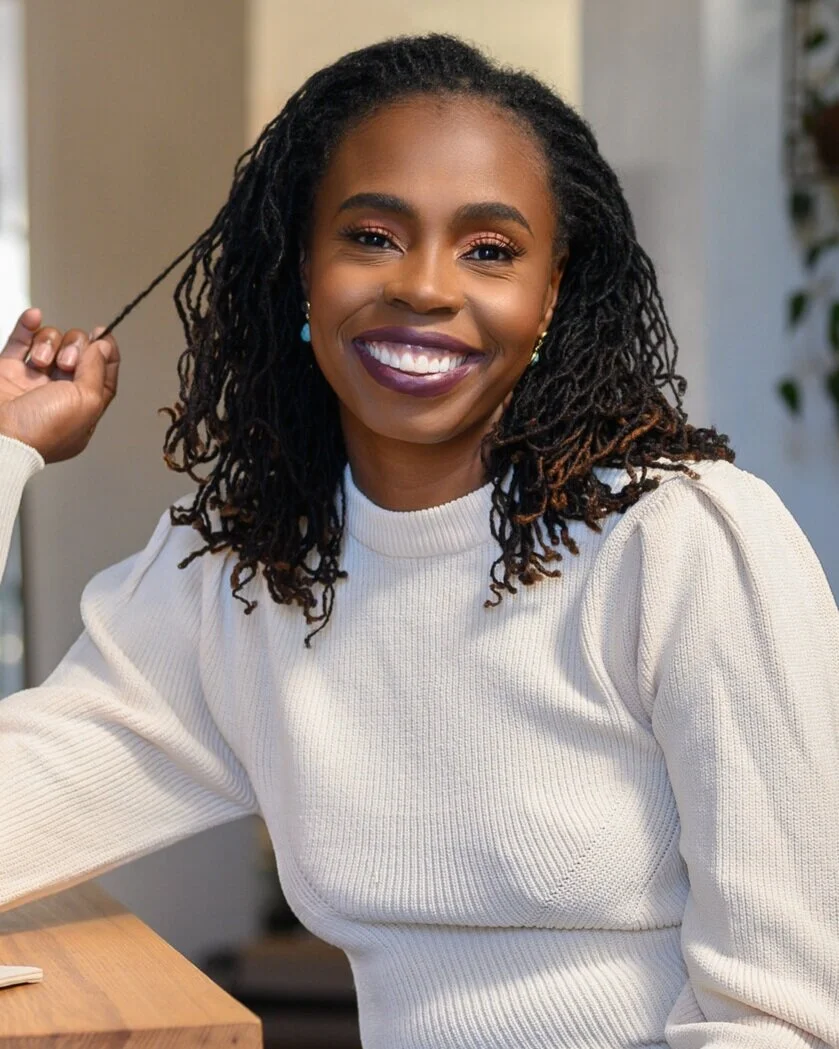
Hey there I’m Naseema
My dream is for everyone to know that financial independence is attainable with a little intentionality. Learn how I can help you finally break the cycle of living paycheck to paycheck.
Join the Facebook Community
Join the Financially Intentional community and get access to resources to guide you on the path to Financial Freedom.
Watch these Videos To Learn How to…
Keep Listening
Here are some more episodes you may enjoy…





We break down what’s really happening with hormones, metabolism, and aging in a simple way, including why perimenopause can sneak up on you.