

Why Every Family Needs a Wealth Command Center - Episode 122
Have you ever heard of a family office? In today's episode, I talk with LaVaisha Davis about what that really means and how you can build one for your family—even if you're not rich. We break it down in a super simple way, so you can learn how to protect your money, plan for the future, and keep wealth growing for the next generation. LaVaisha shares her story and shows us how anyone can become their family’s CEO.
About our guest
LaVaisha Davis is the go-to expert on Virtually Family Offices (VFOs)—a concept that is revolutionizing how high-net-worth families, business owners, and entrepreneurs protect, grow, and transition their wealth for generations. Her approach isn’t about selling financial products—it’s about teaching leaders to become the Family CEO of their own financial legacy. As a wealth advisor , LaVaisha is shifting the narrative from outdated financial planning models to a strategic wealth mastery framework that aligns money with faith, family, and long-term legacy goals.
Booking a time with LaVaisha Here
LaVaisha's Site
The Family Fortune Playbook, by LaVaisha Davis
—-
Check Intentional Style here: https://www.intentionalstylesuite.com/
Please join me here, and follow me on social media, Instagram, and Facebook.
Need help getting started on your path to financial freedom? Start Here
Join the Financially Intentional Community
Oh and please subscribe and leave a review on whatever app you're using to stream this podcast.
Get my book Smart Money

Subscribe & Review
Love this episode? Please subscribe and leave a review on your favorite podcast platform.
TRANSCRIPT:
Naseema: [00:00:00] Welcome, our financially intentional people. I'm so honored to have LaVaisha Davis join us. She's gonna talk to us about setting up family offices, and if you don't know what that is, you are not rare. It is not a lot of people that know what family offices are, how to use them, and it's typically something that is a little bit gate kept in our community.
So I'm super excited to have LaVaisha here to talk to us about it. So thank you so much for joining us.
LaVaisha Davis: Yes. Thank you for having me.
Naseema: Of course. So let's just start like with your background. How did you get into the finance space?
LaVaisha Davis: Yes. Yeah. So I'm here, more by way of experience. So I am founder and managing partner of LS Advisors and it's a wealth management firm that does help form fractional family offices for entrepreneurs. And I got there through two ways through tragedy. And through experience experience is because my husband and I have been entrepreneurs for quite some time, way [00:01:00] before it was trendy and we just had those lessons that we had to learn the hard way through entrepreneurship.
And it was a kind of an eyeopener as we moved through that journey that we were clearly doing things incorrectly. So in an effort to correct that, I was like, okay, I have to learn the money side of it. Learning the about, profit and loss statements and cash flow and income statements and, just the internal workings of a business financially.
But when I coupled that with a tragic experience in my family, we lost my only brother.
Naseema: Oh.
LaVaisha Davis: when he passed away, it was devastating for two reasons. One, my mother lost her only son and she had to go right back to work after that because she literally couldn't afford to grieve. then he also didn't have his affairs in order, so we didn't have the proper resources to bury him.
So I had two light bulb moments in a short period of time between our entrepreneur journey and [00:02:00] then even through a reflection of our family that not only did we not have the resources individually, but even collectively to come together in this challenging time. It was just like from there it was like, okay, we have to make some even more serious choices.
So that's why I coined the term, I hope we talk about family CEO today, because somebody has to step up to that plate when they make that recognition and make some drastic changes. And that's what led to me pursuing certain licenses and education to become a financial professional and applying those principles, not just to myself and my family, but to the clients that we serve to this day.
Naseema: So before you became a financial professional, what kind of entrepreneurship were you doing? What kind of business did you have?
LaVaisha Davis: So we had a staffing company, so it was technology and we did that for about five years. Our original business that we started was a cleaning company. That was the very first one, and we sold that company incorrectly. Buy, not add, but we sold that one and we got into staffing. That's where we really got [00:03:00] more of our entrepreneur experience, where we was able to structure a successful company and really seen, the outcome the fruits of our
labor. I say the cleaning company was just like a major, like learning, like we just used that just for learning. It was, it was really just that, but staffing and then we transitioned into just buying and selling companies after that because it just. It was more attractive for us. We would find a solution or find where we bring value, and we found it better to do that in distressed companies than just starting them from scratch every time.
Naseema: I love that. I love that. Failing forward, like you didn't let that defeat of that the cleaning company, like a lot of people would be wiped out I'm out the game. But you guys used that experience and was able to turn that into, sounds like buying and selling multiple businesses, which is great 'cause those lessons that you learn just through the experience, like you said, are way more valuable than anything you can get through [00:04:00] a, a finance degree through an MBA because it's like lived lessons learned and you take those experiences and you grow from them.
So I love that journey. Yeah, I love that journey. So then you was just like, I gotta figure out this money thing. It's, too much going on personally and professionally for me to not get this right. And I love that you took the route to get the education and the licenses in order to start your own wealth firm.
So what did that educational journey look like for you?
LaVaisha Davis: Yeah, so I started with the path of insurance. One thing I try to encourage when I talk about a family CEO is there is like one of three ways that you can become that. And the first way I always tell people to find, what fits them most. But the one way is from my own personal experience.
So I started through insurance. With the insurance license. I perfected that product again from my personal experience of the loss of my brother. [00:05:00] But through that perfection I be used it as an advanced planning tool. Rather than just death benefit coverage using it for different tax strategies, using it for different ways to accumulate capital, using it for different leveraging opportunities.
So as I mastered that, I became a part of other strategic planning teams. And there that I learned. Okay. There is a group of coordinated professionals that's servicing one particular individual or one particular family that's really helping them elevate their financials. It's not a one man show. And through that, thankfully I was also working with people that weren't gatekeepers and showed me this way in this concept of a family office.
Another thing I noticed was typically the clients that we were serving all had the same last name or some variation of whether it's hyphenated or something like that. So in there it was like, okay, this is the [00:06:00] missing ingredient. To our inability in our community to really build multi-generational wealth.
It's not the income, we found you. We make a lot of money now, actually. We're actually more insured now than we were before. So it's not always, the income or the lack of taking action. It's the planning and the people behind the planning and their expertise.
Naseema: Mm-hmm.
LaVaisha Davis: So learning that it was like, okay now I have to pivot.
And for some reason God decided to put it on my heart that this is my purpose, is to help people realize that they can make a change without the tragedy. We don't need the tragedy to trigger that change. We just need to take further action.
Naseema: exactly, exactly. That's the misstep. But a lot of people just don't know what to do. We live in an age where there's so much information out there. You have like it's, it is overwhelming. So people just don't know where to start. And. [00:07:00] There's just, it's the people are like paralyzed.
People are really, really stuck. So yeah. Analysis paralysis. That's it. That's exactly the words I was looking for is analysis paralysis and, it is not for the lack of, resources, like we have access to so many resources right now. It's just people are just like how do I know I'm not getting scammed?
LaVaisha Davis: Oh gosh, that's so unfortunate. And that's what the I wanted to, I'm sorry. Add the second piece to the licensing. That there's other series licenses that can be pursued, that can really give you. Tools and access to be able to weave through that. Where you don't feel overwhelmed by information, you can sort
and apply because you know how to do it properly.
You have the knowledge and the insights. You may not have the experience. That's why you may rely on other professionals. But when we talk about becoming that family, CEO, you can either becoming through your own journey of getting those [00:08:00] licenses, even if it's just to serve your family, you can do it to create it.
Maybe you may not have the time to go do that, but if you have a teenage son or daughter or a sibling or someone within your family that does have the capacity from time and comprehension, hey, you go do it for
us. Or the third option is just to maybe outsource it. It doesn't have to be overwhelming.
We just have to incorporate more counsel in our planning. We tend to think that we can do it by ourself.
Naseema: Yeah, we think we can do everything by ourselves, especially us women. We could do it all. But talk to us about what specifically is a family office?
LaVaisha Davis: Yeah, so a family office, what I like to describe it as is like your wealth command center. It is the area in which all of your wealth components run through, whether that's the income, how do you plan for the taxes appropriately, [00:09:00] or if it's about growing that income, okay, how can we invest to meet our long-term financial needs?
Or if it's about now we have excess income? To whom much is given, much is expected. How do we plan out our philanthropy efforts? All of that is happening in one space from each individual. Professional perspective. You got investment advisors, you have estate planning attorneys, you have tax advisors or tax attorneys.
You have all of these different professionals that is giving their input to make sure that's planned runs smoothly and it's not interrupted with. Disruption. Political changes, economic changes, anything that can make it sway left or right. Like no, we're gonna keep the wealth right here and we're gonna make sure it stays in this family no matter what happens around the family.
And that's what the family office is literally focused on.
Naseema: Yeah. That's amazing. I like that because I know a lot of people have components of those things. They [00:10:00] have a piece here, they have a piece there, and then if something happens to them, right then you are like scattered, try to find like where is this, okay, I know they have a wheel somewhere.
Where is that at? And like I know they have this life insurance policy. Where is that at? So how do people structure that? Like how do they get their family office if there, if this is not something that they wanna get the licenses for, like what would that look like?
LaVaisha Davis: So you, what you call, what you just described is what we call fragmented planning. Like where each individual professional is in their own world, their own area, communicating with the wealth creator, the person, and they never communicate with each other. When it comes down to organizing a family office, it's really about opening those lines of communication between those professionals.
If you don't wanna take the route of getting your own licenses, it may be challenging to manage those professionals. You think about when we say CEO, what their job is, they're not really the sales team or the account management [00:11:00] team, or the client relations team, that's not what they do, but they oversee the leaders
in those those departments. So the licenses help you communicate with those people. But if you have challenges where, I don't wanna do that, 'cause it sounds like Charlie Brown, wah, then now you can outsource that or co CEO that where you do have a professional who knows all of those languages and coordinates all of that planning and communicates it to you.
So that's called a fractional family office because it may not have the full embodiment, but it, it manages a piece. It manages my investment. Where it manages my estate plans, things like that, and piece it together. But the key is opening up the line of communication where everybody is all on the same page and working congruently and not in
Naseema: Mm-hmm.
Yeah. You got one person telling you this and your lawyer's telling you that, and Yep. Mm-hmm.
LaVaisha Davis: Yes, exactly. More it real, and then it just creates these big gaps and you're like, okay, I didn't know that I couldn't put [00:12:00] my pre my real estate in an s escort. All my tax people do is tell me to put an s escort because it reduces a certain tax, but I have real estate and I can't put it in an s escort.
So nobody, and nobody kind of talks like that.
So it just creates these, sometimes a little bit more chaos than we would like.
Naseema: Yeah. But okay. So how do you go about helping people set up
LaVaisha Davis: how we go about helping them set it up is one, through an assessment, everybody is not the same. So we have to complete an assessment of one, your current financial position, and the professionals that's serving you.
Like you might already be engaging with them, but just not to the level that you need to.
So you may just need to pull them in a little closer
Naseema: Mm-hmm.
LaVaisha Davis: through that assessment. If we find that these gaps are just too big and the professionals who have been providing you that service, you may have outgrown them, like they can't meet your knees no more. We may need to bring in some other ones.
So we source those professionals like, Hey, we need to level up a little bit on the cpa. [00:13:00] Who's used to dealing with someone doing 10 million versus someone who's only doing a million? There may be, there's differences in that. So we do that wealth assessment, identify those gaps coordinate the professionals, and then we build the investment plan around that.
'cause that's where all the planning is always around. Most people think it's just around their income. You really need to plan around your investments because they play out in different ways. So those are a few things that we do to get started with coordinating with that fractional family office.
Naseema: Yeah, I love that. And the thing is, everybody's situation is different. So you gotta meet people where they're at, gather that information, and then either you're gonna bring in whatever pieces they have and then supplement your pieces, or you're gonna be like, no, this is a team that we gotta put together for you to manage these things.
LaVaisha Davis: Absolutely.
Naseema: Is there a minimum amount of assets somebody needs to have?
LaVaisha Davis: There is if you want to [00:14:00] immediately go into the investment side,
Naseema: Mm-hmm.
LaVaisha Davis: but we also work with building that up. We, we call that the wealth creator phase. You may not have the investments just yet. So we work there. So it's not necessarily an amount of assets for that level. There is an amount of income
you have to be able to allocate towards investments.
So we usually, that's around 250,000 taxable income, like what you actually take home for business owners
or taking that amount home. Then we get into something called wealth management, where there you do have to have about 500,000 in investible assets. 'cause now we can come right in from the investment side, we create something called an investment policy statement.
Most people don't have that either. They get, it's shiny object syndrome where every presentation looks good. Like every rate of return that you say I can get, it looks good. There's no parameters. Your investment policy statement creates these parameters. Of how you want to invest and what we're [00:15:00] aiming for.
But then you get into the wealth preservation mode that is a little different because that's usually when you come into a major. Liquidity event or some type of abundance of cash like you sold, won a lottery, got an inheritance, which is a little bit more challenging to do and to receive than it is to create wealth when you get so thrown on you.
What? So there's, phases to it. So all the minimum assay level doesn't apply to each phase.
Naseema: Okay, but you guys, you mostly work with entrepreneurs, right?
LaVaisha Davis: Yes,
Naseema: Yeah.
LaVaisha Davis: but not to negate, our working professionals because they're just as we service them as well. Entrepreneurs just tend to benefit from our service a lot more because of their natural. All over the place mentality. Like sometimes a C-Suite executive or something like that, they can manage their family office pretty well.
An entrepreneur, their mind's always going, they're always looking for things. And they are trying to get [00:16:00] some of their time and energy back,
you know, from being on go. But that it is not that we don't serve other people, it's just about 80% of our client base is entrepreneurs.
Naseema: Yeah. And then also entrepreneurs don't have like access to as like 4 0 1 ks and all those kind of things that people typically use.
LaVaisha Davis: Mm-hmm.
Naseema: Yeah. So like typically if somebody wanted to work with you. Like what is the pre-work that's usually involved in understanding if you guys can work together?
LaVaisha Davis: So back to that wealth assessment we have a very detailed questionnaire that collects everything we need to know and it takes us about a month to even complete that assessment. 'cause we're evaluating everything, the three major structures your legal structure. Which pertains to your asset protection or your risk management, the tax structure, because if not, you'll end up paying 40% of your wealth to taxes if we're not.
And [00:17:00] your financial structure kinda what vehicles we're using right now to even grow our money. And are they gonna achieve that income that you think you're gonna get one day? 'cause the other thing about business owners are businesses won't write us a paycheck forever. There comes a time where you gotta think about what's next.
So when we evaluate those three structures, we dive deep into each one of those and make clear recommendations. So that's the first step in the pre-work that we need to know for us to work together. And it gives you clarity too. It lets you know where you stand financially in all three of those structures, what your biggest gaps are, and how you can feel them.
So you can choose to. Take that back to your wealth team that you already work with. 'cause maybe they're just fragmented and they need to see it all in one piece. Or you can choose to move forward and work with us and we bring it together in one piece. And again, build the investment plan around that.
Naseema: Yeah, I like that. I was gonna ask you like, if you are working with someone and do that assessment and they, you [00:18:00] find that they're not a good fit. They're almost there. Do you give them resources and tools so they can get to that level so that they can either do it on their side or work with you to do it?
And you answered that question,
LaVaisha Davis: Yeah.
Naseema: Yeah. Yeah. I love that. I love that. What do you feel like are the biggest reasons why people just don't do it?
LaVaisha Davis: Fear, trauma the, especially in our community Hey, what goes on over here stays over here. You don't like, so the fear of entrusting someone and the trauma with possibly trusting someone are the two biggest obstacles. And this is, that's for individuals. When we think about family wealth with some of the most prominent ones that we know Walton's or Doles or, some of these other prominent families, it's because it's like, how do I work with my family?
I, I can't even do that. I don't even like my sister right now. I'm not talking to her right now. So
the family conflict [00:19:00] kind of prevents us from moving collectively and it really holds us back from. Being one of those prominent families, like we all have that opportunity for our name to be said in conjunction with pros with long-term wealth, like how we say these names every day when we say Porsche or Johnson and Johnson.
And we all have that possibility. But because the fear and the trauma, we typically just don't. And then I think people ask themselves out because they automatically think they can't afford it automatically. I can't afford that. I gotta have a lot of money for that. When just like everything else is advancing technology can reduce costs significantly.
Building it out, fractionally one piece at a time can reduce costs significantly. So before you just assume, really just try to take the proper steps to see and assess, and then you can make a decision for yourself once you have all the information.
Naseema: How do you know who this life? Family. Who? Ha. Because like you were saying, are [00:20:00] you talking about like just your immediate family? Are you talking about we going all the way from every surviving member in our family and we're including them in this plan.
LaVaisha Davis: It is by choice. It, I always say that your blood family is your God given team to build wealth. it's natural. However, if that comes in a different form, I like to use LeBron James as an example because his, I'm sure he does it for his immediate family, but he's extended that family out to those that he played basketball with growing up and gave them prominent roles in his empire.
They're building wealth collectively, so it doesn't have to be by blood affinity, it could be by whoever you're doing life with. If it's you and your spouse and your kids, you wanna start with. Bet if it's you and your sister, you wanna start with bet If it's like, Hey, no, we got parents we need to think about as well.
It's really about are we building this to last for multiple generations or are we just looking for independent financial [00:21:00] security?
Naseema: Mm-hmm.
LaVaisha Davis: Very distinct. Very two different paths. Two very different paths I should say, and who you should include and how to go about it.
Naseema: Yeah, that is true. I'm heavily in the financial independence space and it is really about, maybe you and your kids and then it don't, it don't extend too much further than that. But I think like a lot of the gaps that is missing is, is that what happens when. Something happens to your parents and then you have to be that person that they depend on what happens to your own long-term care planning a lot of people don't think about that.
A lot of people don't know how to successfully transfer wealth to the next generation and what that will look like and what stipulations need to be in place, even if they do have a will and a trust, like actually what that looks like.
LaVaisha Davis: You're absolutely correct about, if we have to take the responsibility of our parents, it's [00:22:00] not about, if it's really about when.
Naseema: when, yeah, exactly.
LaVaisha Davis: Yes. The circle of life tells us that, that there's going to come a time that we're going to have to take care of our parents. And millennials especially are in this position where our parents didn't have all of the necessary resources to build their own financial future.
They did what they could and what they had access to. But now millennial dollars are split in, what I say, three different time zones. It's split between the past, helping our parents. Split with us presently trying to take care of our own expenses, lifestyle and our own saving needs. And then we have children and we're, it is split between the future and trying to accommodate where they don't end up in the position that we were in.
And that becomes a overwhelming position where people just throw it away all together. Listen, I'm just gonna move this thing day by day instead of playing for it. So that's where the danger zone happens, because now we're just one disability, one divorce, one bad debt away [00:23:00] from blowing it for everybody.
Naseema: Mm-hmm.
LaVaisha Davis: And it's just like trying to get a, reign on that can seem hard, but I'm telling you guys with intent. That's why like financially intentional, like with intent, it can be done. It just, you have to be intentional about it.
Naseema: Typically from start to finish, how long does it take to build out a really comprehensive like plan?
LaVaisha Davis: That depends on how deep we coming from okay. How much of a mess are we cleaning up here? Because if we do it properly, where people don't wait too long, it could be about six months, but if people go long periods of time without court, without looking at it comprehensively, it could take about a year or more potentially.
And then it also depends on who like is, are how many family members. Are we including in this? And now we got a whole nother convincing campaign we need to go on to get. So that may add some time, but the [00:24:00] foundational parts anywhere from six months to a year,
Naseema: Okay. Okay. And what, like in your experience, when you try to extend out like that family thing, what are people's reluctances to get on board? What are they?
LaVaisha Davis: I don't
I don't want to end my
business. So
Naseema: Money is so taboo. Like everybody, yeah.
LaVaisha Davis: so here's the picture. I try to paint for that. I, I get it. But we have to include in order for this, if we're talking about multi-generational wealth, 'cause that's the trending topic, right? Generational wealth.
Naseema: Mm-hmm.
LaVaisha Davis: I know you don't want them in your business, but we have to create some type of continuity.
Some type of cohesion, like we don't have to get into each other's business to know each other's principles and values and what's important to us. Then when it gets to the financial part, there's somebody in your business already if you are contributing to a 401k [00:25:00] this is literally the makeup that's just a separate legal structure, like 4 0 1 Ks are just trusts.
That's managed by a third party. To grow investments to meet your income needs in the future.
Naseema: Mm-hmm.
LaVaisha Davis: A family can do that the same way. They can set up their own separate legal structure that they each contribute to. That's managed by a third party to grow investments that can meet their own individual income needs.
Do those income needs or other financial needs or legacy goals that they have, do they need to be shared amongst each other? They don't have to be better. It is better to be. So that cohesiveness and that continuity can exist, but it's not required. We just need every, everybody doesn't have to be in your business.
We just have to be in the business of working together. That's it. And it, can be that simple or we can make it extremely complex. The planning is complex enough, like we, let's just make it easy for ourselves, but I, I understand those [00:26:00] reluctancies. I've been there myself and my own personal family.
Naseema: So when you're talking about like a vehicle that you can build, like in a family that replicates like what a 401k does how specifically are they structured?
LaVaisha Davis: That's gonna be on a case by case basis on what they're specifically structured as. But even if you wanted to do it at the state level, which is like a like an LLC or a limited liability company or a special purpose vehicle where there is. Someone that's like a general partner and then family members are limited partners.
That's one legal structure and you contribute and then you deploy as a collective into investments. 'cause my 5,000 to be invested may be different than the a hundred thousand that we can come up with Between the 10 of us, that can go into a totally different type of investment than just my 5,000.
So the legal structure can be one of those, or it can go at the estate level, like a trust. Where now you create a trust whose [00:27:00] sole purpose is to contribute to it and the aim, the investments are there to grow for the beneficiaries and whoever you choose those beneficiaries to be. So
Naseema: No.
LaVaisha Davis: ways.
Naseema: But where do those investments go? Do they go into a brokerage? Do they go into an insurance product? Like where collectively do those investments go? Like how are they invested?
LaVaisha Davis: Ooh, that's a great question. So now we're getting into the creation of a portfolio
Naseema: Mm-hmm.
LaVaisha Davis: that's what why we want to, when I use this word, it scares people. 'cause it means something different in our community. That's what we really wanna institutionalize our family we think of institutionalized.
Naseema: It means a whole different
LaVaisha Davis: Yeah,
it's a whole different meaning. But what we mean by institutionalized means that larger institutions have a specific portfolio style that they follow. It's a diversity, it's a diversification of it. So it's not that it goes in one particular place. At least not at that ti at the, maybe at that moment because of the amount [00:28:00] of money it's starting out with.
But the goal is to grow a portfolio that can go into some public equities, less like the stock market, stocks, bonds, mutual funds. There may be some insurance in there again to mitigate risk because the best form of capital is gonna come from when a life insurance policy pays out. So it may go into life insurance or some type of insurance product, but one thing that or one area, or one asset class or multiple asset classes that really create wealth that we don't get to take a lot of advantage of is private market investments.
There's other qualifying factors that you have to have to get into. And the limited access to those investments limits our growth potential. So when I talk about private markets, that's where we get into like private equity or we get into like private credit or we get into commodities like oil and gas or collectibles or all of these other different forms of asset classes that we can put money into [00:29:00] that can get a huge rate of return.
So it, it may not go into one particular place. When you say, where do they go? We have to create that investment policy statement. What are we trying to achieve? What rate of return do we need to achieve that? And then we go find the investments that's gonna produce that rate of return.
Naseema: In that process, do you help people become accredited investors? Because oftentimes for those things, you need to be accredited,
LaVaisha Davis: Absolutely. That's what we mean by the wealth creator status. That's what we have to build you up to that point in order to really create that financial security for multiple people. Now, for yourself, when it's just you individually. you can achieve great success with just the stock market.
But when we are doing it for a group of people, the more collective you have, that's what institutions do. The more money you have, the less return you need, the less risk you can take.
Naseema: Mm-hmm.
LaVaisha Davis: But we have to get to those qualifying factors like accredited investor.
Naseema: Mm-hmm. And then when you do that, [00:30:00] like not everybody that's in this family needs to be an accredited investor. Like it's just do you just assign whoever's at in that CEO role, like to get their accreditation and then the investments fall under them, or how does that work?
LaVaisha Davis: With, that's getting a little bit more specific where you do want multiple people to be accredited
investors. Even in the underlying, like you, the goal is how do we increase the net worth of each individual in order to become accredited investor? That's what you definitely wanna strive for.
Naseema: Okay. All right. No just so like we can understand a, a real example of how this looks. How did you set this up for your family? I know you got the licenses, but I wanna know like how you structured it and what things you have in place for your family now.
LaVaisha Davis: Yeah, so we have a number of trust structures at the estate level, and then we have a number of LLCs at the state level. One thing we started with [00:31:00] is through our portfolio, we employ a lot of family members, so rather than, that capital leave outside of our family, we circulate it. For example, not even to make it too complicated, I'm a mother of four daughters traveling and doing all of these things that can pull me away sometimes, meaning I need someone to take care of my children.
Naseema: Mm-hmm.
LaVaisha Davis: I don't want that to be a stranger. And my mother has been a caregiver for over 30 years. So if I already have to spend that money. I might as well give it to my mother. So we hired my mother and then she became our caregiver, and now that income goes to her and means a lot of the expenses are covered.
Her income now gets to flow into her retirement plan that she didn't have before. So she got funding herself. So the first thing we did was find means of income sources for everyone. Where that needed to come from. And then at the trust level, we make sure everybody is properly insured. We don't own individual policies.
Our trust owns the policies on multiple family members [00:32:00] and who they choose is important. Or if they have their own individual trust, that's where the beneficiaries. Go. But this just allows for us to, the whole thing is about circulating money. That's where we started. That's what I wanna make clear.
It's very helpful for a family. If you can circulate income, circulate money within it first that is easier to accumulate money to go to the next level. So that's where we put our main focus at. Hey, we know we need people in certain areas of our lives anyway. Let me find who has these strengths.
Within our family, fill those first, circulate that capital, that way, help them build plans that they can contribute to internally and externally and just build from there.
Naseema: Yeah. Yeah. I love that. So you started with your mom, but then, and then you just have all these things. What other things do you guys have in place for your family?
LaVaisha Davis: So my sisters have very critical roles too. It's. I just, when I [00:33:00] tell this story, I hope they don't get mad at me. They call me Boss Baby already. I'm the youngest of the four,
Naseema: Oh wow.
Oh, wait, you have four sisters and then you have four
LaVaisha Davis: um, I have two sisters and I have one brother, so I'm the youngest of four.
LaVaisha Davis: But they each have it.
When I say strengths, I mean don't try to impose on your family things that they don't want to do. That's the other thing that causes conflict. Like you have to find what they're really, really great at. One of my sisters is great at she just loves to talk to people. That's her thing. Like she could just make anybody feel great.
So in our, like anything that revolves around a customer service role automatically goes to her and she does the training for it. She does all of that for it. 'cause that's just what she
does. That's what she does. My oldest sister was absolutely amazing at staging homes. Like she just not staging, that's what we moved her to,
but just arranging furniture, decorating.
She didn't wanna do it for a living though, like she didn't wanna do that. She just did everything else. So when [00:34:00] we got into real estate, that was her primary role. Make it look pretty, like you make it look pretty, you make sure you handled the customer service on the side like it was. Those type of things.
I just really wanna encourage people to work within the strengths of your family. My father has been a, a almost say a contractor, and that's not right. A tradesman, I should say. All of his life. He's always done renovation work, he's always done landscaping, those type of things. So that fits in more into our real estate portfolio as well.
So anytime those jobs need to go out, they're going to them first. They are going to them first. That's income that they can generate, that we can circulate back. So even if it's building a family, what do we call a vertical business model? If you do, if you are in real estate and you know you need plumbing or you know you need a general contractor, or you know you need someone that's gonna clean the properties, how can a family member start their own business in that sector while [00:35:00] supplying you a service?
That's just building the family business value. So that's what we've always done. And then they can still use that to build, to go make money outside of us as well.
Naseema: So as your girls grow up, like how are they incorporated into this structure?
LaVaisha Davis: So this may be another thing that people may question with me. So the other thing about multi-generational wealth and the intent the freedom of choice is not as prevalent. I.
Naseema: You not gonna let them go out there and be artists. In other words, they not, they not gonna get a basket weaving degree. Yeah.
Yeah.
LaVaisha Davis: What we've done with our daughters is clearly list out what our family is missing. If your family is missing political power or legal power, or financial power because we don't have, if your family's missing that, you have to be intentional about creating it so you can do whatever you wanna do just from [00:36:00] this
list. This is, this is what we need, so each one of our daughters under, they was able to pick from a list. Now they may change I'm expecting that, but it's still gonna be within the list. Right now they're just like our natural underwriters. When we have investment opportunities, rerun it by them because, kids have this very unique ability to ask hard questions because they don't care.
They don't have any filters, so they're asking all the hard stuff. So we tell them when we have an investment opportunity and they ask us all the questions, and if we don't have an answer, we know we need to take that back. Oh, you know what? I don't have no answer. Find that out. Right now there are underwriters, but they all each have a path that we're hoping that they take.
But even if it diverts, it's only diverted in a number of choices
that how
Naseema: how old are your girls?
LaVaisha Davis: they are 13, 11, 8, and six.
Naseema: it, love
LaVaisha Davis: Yes. And the 6-year-old say I'm just gonna run everything, mommy. She's I don't, I'm just gonna do what you do. That's what my 6-year-old tells
me.
Naseema: have a 6-year-old and I, can't agree, and I have all [00:37:00] girls too, so I think that's sweet. I have three. Three girls.
LaVaisha Davis: You feel? You You feel me?
Naseema: I know. Yes.
LaVaisha Davis: Yes. I older your daughters.
Naseema: They're 11, six and one.
LaVaisha Davis: Oh yes. So you, you right in the thick of things right along with me.
Naseema: Oh, yes, honey. I just, I haven't gotten to the teenager yet.
LaVaisha Davis: I.
Naseema: Exactly. Exactly. Most definitely. For entrepreneurs that know that they need this but don't know how to access it, how do they set this up for themselves?
LaVaisha Davis: Yeah, so if you are looking for a way to. Outsource, if you wanna be the co CEO that's where we come in at as LS advisors and there is a number of ways that you can do that. So you can go directly. I utilize my own personal platform for this. So you can go to LaVaisha davis.com and it is there that you'll be able to either schedule a time, you'll be able to, [00:38:00] directly schedule a time if that's something that you're seeking. But if you want more of a outline of how to become that family, CEO, even before you outsource it, we have a community of other individuals that's advancing themselves to be the family, CEO, and you could just go to my Wealth and legacy.com. There's an ebook of course, but there's also a community that you can join just if you want to take those steps towards, it's just putting that reign on it like we talked about. So you could do it one of two ways. You can take yourself and learn to become your family, CEO, or you can jump right into the co CEO role and reach out to us and schedule a possible call.
Naseema: And then for people who wanna do it on their own, what licenses or trainings do they need to get?
LaVaisha Davis: Yeah, so one, I always encourage, starting with the insurance license one. It's not as overwhelming, like it's very specific, life insurance, you're learning those different products. But then once you get from there, the series 65 is a major door opener. It does, it gives you the license to give investment advice, [00:39:00] but the information that you learn in there is like what you need to pull it all together.
And then that license opens doors that only financial professionals can go into.
Now that you have that license, now you may be able to find suitable investments. You may be able to understand all the different planning components. You may be able to communicate with all the different professionals and coordinate them, at a higher level.
So that license of those two licenses alone can get you really, really far.
Naseema: I just hear people be like, but I already have so many hats. Like I'm as an entrepreneur already wearing so many hats. That seems really, really, really overwhelming. So I love that you've built out a tool for them to utilize to be a co CEO. I.
LaVaisha Davis: We know, like we know oh yeah, no, scrap that. How can you do this for me? Because I.
Naseema: Yes, exactly. A hundred percent. A hundred percent. And then just one more time, like share the resource, like how can they work with you, [00:40:00] schedule time with you?
LaVaisha Davis: Yeah. I am Laja Davis on all social media platforms, Instagram, Facebook Threads, LinkedIn. There is links in each one of those bios as well, but you can also go to laja davis.com and outline some of the things we talked about today about fragmented planning and pull it in altogether. Or if you want to join a community of like-minded individuals who's wanting to take on that CEO role of their family to help create multi-generational wealth, you can go to my Wealth and legacy.com, join the community, download the free ebook to wrap your mind around being a CEO, and we can grow together.
Naseema: I love that Laja. I've learned so much. I really appreciate sending time with you. And it just, I. Get you to think a different kind of way of what wealth is and how to incorporate that and to keep generating those dollars within our families, which is something that I feel like is strongly lacking in our communities.
So I appreciate you exposing people to that because [00:41:00] knowledge is power and a lot of people just don't know what they don't know. And now they know that they not only have access to it, but also have the resources to do that. So appreciate you.
LaVaisha Davis: It was my pleasure. Thank you.
Naseema: Of course.
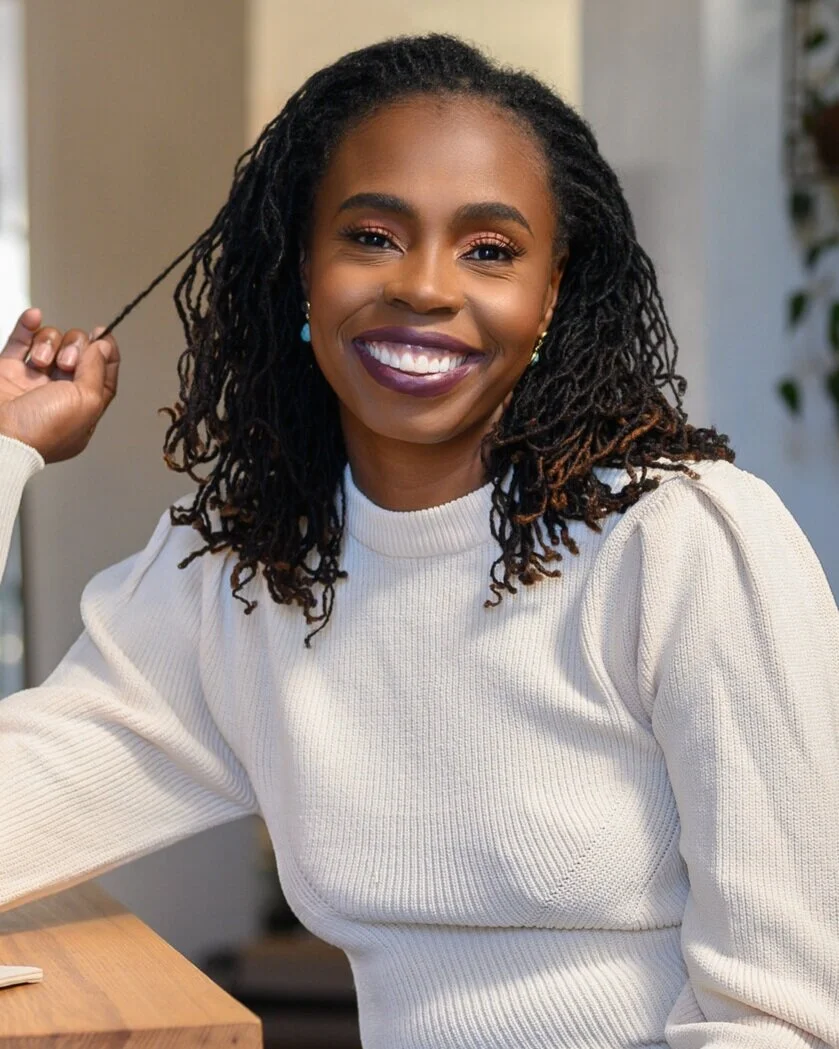
Hey there I’m Naseema
My dream is for everyone to know that financial independence is attainable with a little intentionality. Learn how I can help you finally break the cycle of living paycheck to paycheck.
Join the Facebook Community
Join the Financially Intentional community and get access to resources to guide you on the path to Financial Freedom.
Watch these Videos To Learn How to…
Keep Listening
Here are some more episodes you may enjoy…







We break down what’s really happening with hormones, metabolism, and aging in a simple way, including why perimenopause can sneak up on you.