
How to Stop Living in Scarcity and Start Trusting Yourself - Episode 125
In today's episode, I talk with my good friend Leisa Peterson about her new book and how it helped me see money and life in a whole new way. We share real stories about how our past, especially stuff from childhood, can shape how we feel about money. We also talk about how hard it can be to grow when your partner isn’t changing with you, and why it’s okay to focus on your own path.
About our guest:
Leisa Peterson is a transformative coach and Certified Financial Planner (CFP®) specializing in combining spiritual wisdom with financial expertise. She guides entrepreneurs to million-dollar breakthroughs in their businesses, drawing from over 30 years of experience in coaching and finance. A self-made millionaire by her mid-30s, she authored the best-selling book "The Mindful Millionaire" and hosts a popular podcast. Recognized in Forbes as one of '10 Women Driving Growth in Wealth Management and Investing' for her impact in wealth management, Leisa's innovative approach is celebrated across major media platforms, helping clients navigate complex life challenges with strength and clarity.
The Money Catalyst by Leisa Peterson
Wealth Clinic by Leisa Peterson
—-
Check Intentional Style here: https://www.intentionalstylesuite.com/
Please join me here, and follow me on social media, Instagram, and Facebook.
Need help getting started on your path to financial freedom? Start Here
Join the Financially Intentional Community
Oh and please subscribe and leave a review on whatever app you're using to stream this podcast.
Get my book Smart Money
Subscribe & Review
Love this episode? Please subscribe and leave a review on your favorite podcast platform.
TRANSCRIPT:
Naseema: All right. What's up? My financially intentional people? So Leisa Peterson is no stranger to the Financially Intentional Podcast, formerly Nurses on Fire. She was our. On deck like CFP, giving us all of the practical advice around money, but also that money mindset stuff that we didn't even know we needed.
And I'm just super honored to have Leisa back because she has wrote a new book that will rock your world. I'm just excited for you guys to learn about it. So welcome back, Leisa.
Leisa Peterson: Thank you, Naseema for having me. Thank you for talking to me and for sharing this conversation. I can't wait to share it with with everyone because I just love talking to you.
Naseema: Aw, and I love talking to you and we can talk forever. I really want people to get into this book because I think [00:01:00] everybody needs it. And I was just telling you that kind of came at a perfect time in my life where really feel like this big shift happening, and I think a lot of people are feeling shifts in their lives. And if they. Don't feel a shift. They know that something needs to change, especially just with what's going on right now, especially in this country politically, and just people like questioning what is this life even? And I really just think that this book gives. story, which everybody loves the story, right?
Everybody loves a really, really good story and the story is beautiful. But also you have exercises in this book that forces people, not forces, but guides people into really thinking about how. apply these concepts to their lives. So anyway, let's, zoom out, back out and let's talk about what this book even [00:02:00] is and what inspired you to take a whole year of your life to write this book.
Leisa Peterson: So funny story. My first book, mindful Millionaire, that came out in 2020 around the time that we were talking right in your show. A woman inspired that book and helped me really get centered. And I said to her, I wanna take you somewhere that you've never been before as a thank you.
And it got put off because of the pandemic. But we went to Paris for 10 days in 2023, so two years ago. And. I thought, I'm gonna show you this experience of abundance. And instead of that happening, because she had never been there because she had never been to Europe, because she is who she is. Like she is a deep person who really lives life to its fullest.
And she showed me a whole new way of experiencing [00:03:00] Paris, but it wasn't just Paris like it was like. I awakened to a part of myself that I didn't know was in slumber. Even after writing my book, even after talking so many years about abundance, even after building wealth, she showed me that real abundance isn't just about the money, right?
Money is important. You talk about it. I talk about it, but that we have to be really careful not to get so distracted by the money. That we miss out on living our life in the present moment. And I didn't know she was inspiring a book at that time. In fact, it would take me a whole year before it even came to me.
But my publisher invited me to write a book about abundance, and I started writing that book as a nonfiction book. In the back of my head, I kept thinking about the trip and I was like, something happened in that trip, but I don't even know what it was. But [00:04:00] it changed my whole life. And I started writing a little bit about what happened for us.
But it became a whole fictional parable, the money catalyst. But that was where it started. And by the way, like along the process, 'cause we like the struggle just as much as. my publisher was like, we don't want that book. We want this other book. Like we want the nonfiction book. And I was like, but my community is asking me for a fictional parable and I'm sorry, I'm gonna focus on this 'cause this is what I think is really gonna help people.
Naseema: Hmm. Fictional parable versus nonfiction. Explain that. Explain that.
Leisa Peterson: so right nonfiction books are. You and I talking about the things we've learned and, let's face it, we both know that money is really hard to teach because I like to think of it [00:05:00] like you put the hand right up next to your eyeballs and you can't see the lines on your hand. We're so close to it that even if we get the greatest teachings in the world, a lot of it doesn't sink in.
It's not relatable. We don't understand how to apply it to our exact situation in the moment. And so a fiction story, right? Human beings are wired for story. We love a good story and we love it when it's kind of like, I like Emily in Paris, in on Netflix. Okay? So like you get these little, like you.
You have to watch the next episode because you're like what happens next? And you like it to be short and easy to get into and easy to get outta because I don't know about you, but I might have 10 minutes to read right before I fall asleep at night. So you want one little chapter and then you're in and you're out, and you're like, okay, I can go to bed now.
All of those things are oriented to [00:06:00] how we live our lives now. And what I knew was if I could create a story that let people see themselves inside of it, they could get the message in a much deeper way and that was why I think it became what it did.
Naseema: I love that and I love that you push back. lot of people don't even know that they can do that, right?
Leisa Peterson: I know.
Naseema: you just are just no, this is what we need. And this is what they're gonna get. But but you're so right about stories. Like stories are how history were histor was historically, passed down. And so there's so much power in just like those stories. And I really feel like people learn so much more. The nonfiction is really, really great and it's the context and, they're like the textbooks of life. However, people don't forget the stories. And the way that you can weave in those lessons and people learning unintentionally is the.
Leisa Peterson: [00:07:00] Exactly. It's wait, I learned something, but I don't even know how I learned it because it was just so fun and entertaining while you were getting the teaching.
Naseema: So with this book just with your audience and the audience that you hope to attract from this book, what's the biggest lesson that you want people to walk away with?
Leisa Peterson: I think. There could be my interpretation of what I wanted as the writer, but I feel like it's more helpful to actually talk about my husband for a second because he's really involved in this book. First of all, he's so supportive and he would read every draft, and I do mean like 20, 30 drafts. The poor guy, like he would do it for me.
But when I first. Abel, , the central character, she is married to Ethan. And when I first wrote about Ethan, I had Tim read it and he came back and he sounds like a [00:08:00] she or a male therapist. This isn't how guys talk, right? This isn't right, but he became interested.
And what was also happening is there was a lot of healing happening inside of his and my relationship with money. As I wrote these characters, he's like, are you trying to tell me something? And I'm like, yes, I am. I really am. And so we were growing through this, but as Ethan developed. Tim bred him and really took it to heart.
It actually started changing him in a very deep way. Naseema like that I would've never imagined. And so what is Tim taking away from it? He saw how Ethan was not living on purpose, how Ethan had gotten really distracted by money and the like, what it's [00:09:00] all about, making it, saving it, investing it, keeping the machine going.
And what happens for Ethan is he has some really big epiphanies, even though that wasn't the central focus of the book. And now I'm watching my husband Bring Ethan up on a regular basis because that's not how we wanna live anymore. This is how we wanna live from now on.
And we've been together since 1987.
Naseema: was about to say hold on. It not like you guys are not newly married. You
Leisa Peterson: Mm,
Naseema: been married. than most people have been alive.
Leisa Peterson: yes.
Naseema: and to say that and he is the closest person to you and he's seen you through multiple iterations of your life he's the closest person to see you in the work that you do, and just by osmosis he's gonna pick up those things. But to say that he has totally shifted his mindset [00:10:00] because of this book Wow. Like mind blown?
Leisa Peterson: And he's living on purpose more. He's making better choices for himself, for our family, for our relationship. Like I am so freaking in love with him. You can't even imagine. I would've written this book. I would've spent this past year just doing it for that. But here's the win, right? What if other people.
Could pick up this book and read it and then be like, Hey honey, could I share some of this or would you read this too? I have an audio book too. Would you listen to it? Whatever it takes. And then all of a sudden people start having conversations that, I don't know anywhere else that would instigate these kinds of conversations, but inside of this book, because it's real, like we were living it when it was being written and.
I just think that if we could, buy a book for [00:11:00] whatever, 20 bucks and really take it to heart and put the time in, and it gives us a whole upleveling of what we want for the rest of our life holy moly, I do actually feel like that's possible with this book.
Naseema: Wow. Wow. Just wow. Like truly I know that wasn't the intention when you wrote the book, to be able to say that first of all it's just, it's crazy, but it's just like, how impactful is that? it. I love it. I wanna talk about the themes that you cover in the book and I think to talk about the relationship stuff. The natural segue, because like of course there's, when people start changing, there becomes this friction in this relationship because who are you now? I think oftentimes when there's [00:12:00] this kind of friction, people think that maybe that's a sign that they need to move away from their relationship. Or maybe this relationship can't sustain through this next era in their lives. So like how do you think people can grow without leaving other people AKA, their partners behind?
Leisa Peterson: Yeah. It's so interesting because I feel like that's what's happened in my relationship with Tim. But then here I had this book where it's covering a couple months, right? In somebody's life and what started to come to me was the importance of doing things that I didn't do many years ago, which was being really integrous with the fact that, hey.
I need to grow. I need to change. I need some space right now, and I, I'm worthy of that space. And so Mirabell puts her foot [00:13:00] in, in, on, on the ground or in the sand and says, Hey, I need this for me. And I don't know what's gonna happen with us. I don't know, but I. For the first time in my life, I need to go on this journey and I need it to be about me, and she does that.
It is not easy because she's got all these voices in her head saying, I need to be a good mom. I need, or good daughter, a good wife, a good girl. Like all those stories and she's confronting all of them, which I know a lot of people feel that. On both sides, men and women feel like we've got these standards that we've gotta live by.
And personal growth doesn't totally fit into it.
Naseema: Mm-hmm.
Leisa Peterson: So does that answer your question or was there more there?
Naseema: But think a lot of times people feel like they can't [00:14:00] take that, their partner with them on this journey and just like how do you, how do, how should people navigate that,
Leisa Peterson: Yeah.
Naseema: changing, their change is so dynamic they look at their partner as being like stagnant and maybe even a barrier to their changing. How do they navigate that?
Leisa Peterson: Yeah, you're right. First of all, I just wanna say like everything you just said, you're right like it. You can't change that partner.
Naseema: Yeah.
Leisa Peterson: And that is devastating for a lot of us, like devastating. 'cause we're like can't I just fix him or her? Can't I just change it and No you can't. So I think that's actually, it's so interesting 'cause there's so many subtle things going on because we never flat out say [00:15:00] that.
But if you look at what happens between Maribel and Ethan. Is a res a resolution, and I just wanna say to everybody, having been in a relationship for so long that my relationship did not get better until I realized that I was not going to change my husband.
Naseema: Love it.
Leisa Peterson: And when you totally realize that and you go through that whole experience of wait a minute, then does that mean I need to leave? Because that's what a lot of people would decide. And that was my decision several times over this past, forever being together. Like I need to leave, but that isn't the only option. And somehow we stayed together, but it wasn't because I gave up on myself. Because I think that when we think we can't [00:16:00] change them, then that means we have to change. And that is not true. You still have to change because that's what your path is. And you need to make sure that you let them know that they're gonna need to give you that space, whether they like it or not.
And there were many times in my relationship with Tim where I would say, I'm going here. I sense that you don't want to go here. And I'm okay with that, but just know I'll be over here. I let him have to figure out how he was gonna come over there if he wanted to, and I was not gonna let the codependency, it hurt at first.
I did. Eventually I got this memo right? I'm not gonna let this be a codependent thing. [00:17:00] I'm just gonna go do what I have to do.
Naseema: Mm-hmm.
Leisa Peterson: I'm gonna trust that you're gonna figure your stuff out over there.
Naseema: Wow, that's, you said like a whole bunch of bars in that, first of all, I think people need to understand that and I need to hear that is natural to want to leave. That's a natural urge, like I just have to leave and that you've experienced that time and time again. The other thing that people needed to hear is that you truly had to commit to giving up, trying to change who he was and really like owning, like not having to do that. But also. Trusting that you can do your own thing. And then trusting him to figure out what his role in that would be without having to be [00:18:00] like, and I need you to do this, and have control over what you think his reactions are, his response should be, or what he should be doing. And, those were all like so super powerful and things that I just personally needed to hear.
Leisa Peterson: I wanna make sure, and I feel like this is playing out in the book, so the book will help, but I wanna just be clear for anyone, if you don't get the book, what have you, what has happened for me when I've done what I'm describing is I get. A husband, a partner who shows up in bigger and more powerful and more supportive ways than I ever witnessed in any other relationship.
So I couldn't even imagine. That he could operate at the level that he operates at. It was so far beyond [00:19:00] me fixing because if I had gotten what I wanted, it would've looked like my parents probably the best situation in my parents' relationship. That's all I had to compare it to. No, no, no, no, no. Who he becomes when I let him figure it out and how he comes back and supports me.
Is beyond, and I, that was what I was trying to show inside of how Ethan comes back around without giving too much. Like I wanted people to feel that, 'cause I don't even, I haven't even read this in books, quite frankly. I, I think we're talking about a whole new level of human
Naseema: Yes.
Leisa Peterson: that comes out of it.
Naseema: Wow. I just, we could spend the whole conversation just on this one piece think it's super important. But I think so many people just need to hear that right now. Or maybe it's just me and being selfish and I needed to hear it. I dunno what it is, but I just, I don't think [00:20:00] people understand the benefits of having a true partnership and what it actually brings to your life, but also in giving up this control of what the perfect picture is and listening to these outside voices that you think should shape your relationship and giving it like that room and people, the room to actually develop on their own. And just in doing that, how people are able to show up. And it's always so much more than you can imagine. And I don't know. I'm just here for that. I'm here for that message. And I love that has happened for you and I love how it played out in the book as well. Again, we can keep on talking about this, but I really just talk about the things in the book. That really questioned like where these money beliefs come from and oftentimes it's rooted in trauma and [00:21:00] childhood issues, childhood trauma can you talk about just how so many of our money decisions are based off of the traumas that have happened to us as kids?
Leisa Peterson: They're profound. They shape our, they can shape our whole entire life until we figure out what happened. I. What those seeds were, how we are living 'em out of alignment with our truth. I don't think we win. We're not the victor, if you will. The stories are more important than the truth of who we really are because that's how trauma works.
It overcomes it, Shrinks all the good and it focuses on the difficulty, the struggle, the challenges, and what's so weird about it is it manifests differently for each [00:22:00] and every one of us. Like we can't just look at somebody else's story and say, oh, that's my story. There may be elements of it, but we really gotta get into our own story and we gotta understand where some of these roots are.
The point isn't to discover all of them that would probably take more than one lifetime. But the point is to find those major themes. That are running, the narrative and the background of our, lives and get to the bottom of them. And in the book there was one main theme that, by the way, is a very, very common, theme. So just to remind folks, or for anyone new I didn't come for very much born in Oakland. Made money my God, at an early age, and then focused on money for many years until life's tragedy started happening. And then I started rethinking this relationship with money, but. One. And so now for the past 30 years I've been helping people with their money, but the [00:23:00] past 11 years I've been coaching people in the relationship with money.
Now, one of the things that's so wild that I didn't totally see until I was writing this book is how common it is when the father figure. Is absent in some way in a child's life or, and, and absent can be like physically present, but not really teaching about money. Not really, showing a certain way of being without money.
Like when there's struggles, particularly with the father figure in the home. I've noticed a lot of people struggle in their own relationship with money. And I'll say, I struggle even though I have money and I focused on money. That was the problem, is he was so bad with money that I was so paranoid to not be like him that I focused on money.
So anyways, there, there is [00:24:00] something there about the, in this patriarchal society that we live in, I'm not saying this is right or wrong, I'm just saying. The father figure has a lot to do with our relationship with money. Is that, have you seen that before? Or do you think I'm
Naseema: No, I a hundred percent yes. Agree yes.
Leisa Peterson: So yeah, so that was, that trauma ends up playing out over and over and over again in our relationship with money.
If we don't figure it out and start to heal it.
Naseema: Yes. And the overarching kind of theme of this book is shifting from like a fear-based mentality of scarcity, to this abundance mentality. And I think that, especially like with the character Maribel like the relationship with her dad did create this manifest, this fear in her like about money. [00:25:00] And so a lot of this journey isn't about the things that people think they need. Oh, I need to be better at investing. I need to be better at budgeting. It's really about healing that mindset and really just focusing on. Understanding like where that came from working on oh, like this is from, this is some stuff from my dad.
Like do I think like this? And how do I now that to know that everything is gonna be okay and that there's enough, and I think, in watching that story with Maribel like unfold helps people to understand how to do that for themselves.
Leisa Peterson: Exactly. That's exactly what's going on.
Naseema: Yeah. I love that.
Leisa Peterson: The other thing was like. The two, there's Scar City and there's the abundant world. And so it's like [00:26:00] exposing people to like the intensity of these worlds that we could live in. And the contrast between them both, as being one way to take something that's so close to us and then being like, wait a minute, that's not right.
Of course that's not right. Did that part speak to you?
Naseema: Definitely, definitely. And then, I was just, telling you how I like dip into both of those worlds, and recently I've definitely been landing more in the scarcity mindset and thinking that. Because I was in this like world of abundance, like I can't even tell you like how much joy it brought me to have this time off, even though it was technically my maternity leave and I had just had a baby and all the complications of having a baby at 40 and all this kind of stuff. But what ended up happening during that time's, like I got to spend these really intimate. Life [00:27:00] changing moments with my kids, my parents, we were able to travel the world and these experiences were things that I know that they will never forget and I will never forget them, and it just made me wanna have more of that. But then on the flip side, because I wasn't as productive then in the things that I've known my whole life. When it was time for me to go back to work, I swung all the way into this scarcity mindset of having to have that dependence of having those paychecks come in and paying down, debt and, being able to have money to invest and all those kind of things, put me in this mindset where I was working three jobs.
I wasn't enjoying my kids, I was burnt out, I was tired. I wasn't a great person. now trying to come out of that and like [00:28:00] more into that, that place of abundance. I was telling you like this book is exactly what I needed to help guide that transition and, and, just looking forward to like other people being there, because I know people can relate to that. to like thinking that they need to check these boxes, do all these things in order, and then later they can, live in abundance and they're doing these things so that they can, in kind of just shifting people's focus back to no. You have everything you need right now in a place of abundance, and let's get you there. And how can we get you there? Yeah.
Leisa Peterson: The, Mirabell is doing okay. She and her husband. Financially, they're doing okay, but it was really important. When I was writing this book and getting feedback from my [00:29:00] community that there, they wanted to see different characters and, and Maribel's mom is really struggling with money like she is, that she is in that really tough situation where she's got all these past dues, she's not been good with it.
She's just puts it off. And I think that I just bring that up because yes, the mindset. Is a big deal. But I'm also thinking about the listeners too, who are like, wait a minute, this isn't just in my mind. There are some serious things going on that I'm very concerned about, and I wanted to make sure that both parts were explored because inside of that.
What, it's not all or nothing, this or that. It's really about you finding your own balance between the financial piece and the mindset piece. Like you are very advanced on this path, right? [00:30:00] You've been focused on the money piece of it. You know what to do with the money. You're talking about wow, look at that.
There's opportunity for my mindset to change. How did that happen? Wait, where'd it go? Like how do I get it back? And I. That is something that like only you can figure out for you, and maybe this is also back to the story versus nonfiction, is people always want me to just tell them exactly what to do.
Give me the answer and I will do it.
Naseema: Yeah.
Leisa Peterson: But it isn't that simple. You gotta be like your own best friend. You gotta bring in the resources. But you're gonna have to do the work if you want to actually be able to have it all. Because I do actually feel like we can have it all. It doesn't mean everything's perfect [00:31:00] and going smoothly every day, but there's a sense that I've got this figured out and I'm gonna be okay.
And I think that's where you and I want everyone to be, including ourselves.
Naseema: A hundred percent. A hundred percent. I think people feel guilty also for wanting to have it all. And for whatever reason, like inspires like this thing of like greed and then greed is bad, and then wanting to have it all means that you're not grateful for what you have. And like it brings these, these feelings that's like, where are these things coming from? And we have to explore that. And then what you were saying, like people want you to give them the answers and they think that that's gonna solve things, but it doesn't because like you said, like the perfect example is like with your husband. Like you could have told him what you. W imagine he should be doing or could be doing, but in you allowing him the space to do it and figure it out [00:32:00] on his own, it came back as something so much more amazing and more than you could have ever anticipated.
And I think like for me, I. The power of radical self responsibility. And I don't think people like understand that and like fully embrace that, that we have the power within ourselves. Self-responsibility and the accountability to do those things for ourselves. Like we don't understand how much power over our lives that gives us. And people are so quick to be like it's like my life is this way because this person did this to me, or because they never told me that, or My parents never modeled this for me. in taking radical self-responsibility and accountability, you are able to let go of those things and lean into what you really need for yourself and. [00:33:00] it gives you the ability to show up in ways that you could have never imagined. And love that. Yeah. I.
Leisa Peterson: what's coming to me is like this really tough conversation and nasima, my mom passed away like right around 60 of ovarian cancer and she really struggled with money. And so when I was writing this conversation between Maribel and her mom, and Maribel wants to help her mom and she's also realizing she needs to help herself.
I was like, what do I wish, how do I wish I could have been with my mom when she was struggling with. Money and there's just so many things when you get to the, I'm gonna, I'm gonna be 59 this year, and it's like there's a lot of time spent looking back at not in regret, but what did I [00:34:00] learn that I wish somebody could have helped me with when I was younger?
Whether it be with a parent or with a child, or with a partner, with friends, so many of those things were playing out because when, let's face it, money is not gonna be the thing we're thinking about when we take our last breath. It's gonna be relationships.
Naseema: Mm-hmm. Yep.
Leisa Peterson: And it's funny how much relationships and money have to do with each other.
Naseema: Yep. A hundred percent. I get think this is more about your story and then about the book, but like you are about to approach that age. And it's just I know it. don't know. For me it's like one of those milestone things that you, it makes you reflect on oh my God. What if I just had one more year on this earth? What would [00:35:00] be the most valuable thing to me? Or what would be the most important thing to me in that one year,
Leisa Peterson: yeah. Yeah living life as if we don't know how much time we have. 'cause we really don't. We don't. We don't. And when we think of it that way, I wrote a post about this today, it was like, can you pay attention to your life and believe that you have. More control than maybe it feels like you do in this moment.
But if you had more control, then you know the things that you're doing. Would you wanna do them over and over again every day? Because if not, then maybe there's some things that might wanna change in your life, and that's what's happening with money like every single day. Is this how you want it to be for the rest of your life?
Because if [00:36:00] not, you are the only one who can change it.
Naseema: Yep.
Leisa Peterson: And you and I are all about creating tools to help people get out of that same way of thinking that we've been doing yesterday and the day before, and like trying something different. That's all that we're doing here.
Naseema: Yes. Yes, and this book is definitely a tool to do that, and so I encourage everybody to get it and read it. But when is the book coming out? How can people get
Leisa Peterson: Yeah, it's, out May 11th Mother's Day for the moms out there. That was the published date. But it's out there in soft back form in EUB version and audiobook, which is probably a whole other podcast. But Naseema people. Okay. The general [00:37:00] consensus is the author doesn't read the audio book when it's fiction, but the way that it came together.
I felt compelled and if you get the audio book, then I'm just gonna say you take it with Chung in cheek that I am not a professional actress. I did my best because the transmission of what comes through when I'm reading it versus somebody who doesn't understand the depth of what's happening is different.
And it's a fun ride. And the people who have listened to it, they love it. They've listened to it multiple times 'cause they're just soaking it up. But I did it. I did it all. I, yep.
Naseema: I love your voice and I think that you're incredible, so I don't doubt the audio book is amazing.
Leisa Peterson: Oh, you're kind reserve you. I give you the right to reserve [00:38:00] judgment. But it's available. Book Passage, which is a friend of mine, owns book Passage in the Bay Area. It's on their website, but you can find it at all the different sources online.
Naseema: Yeah, and I love like book passages and, supporting local bookstores
Leisa Peterson: Yes.
Naseema: books. But also I'm like an audio book fan, like that's how I really get through the hundreds of books that I read. Like that because I can do it anywhere. It just gives me ability to keep on engaging and learning as I'm on the move.
So I always encourage people to listen to audiobook and my superpower is listening to stuff at two xb. I thought it was a superpower, but really it's just that I have a DHD and it's the only way I can process it.
Leisa Peterson: I know, me too.
Imagine trying to read it and then go like pause, like
that's funny.
Naseema: I really [00:39:00] encourage everybody to pick up a copy of this book, and I know it's transformational, but in ways that I don't even think people know. So books are sold, mother's Day, May 11th, which just happens to be a couple days before my birthday, so I'm, doubling
Leisa Peterson: Happy birthday.
Naseema: get this.
If not for me, just buy it for yourself as a birthday present for me. Or a Mother's Day present, whatever you wanna do. But yeah, thank you for releasing this book, so close to my birthday. I just feel, I feel so much more attached to it.
Leisa Peterson: You're the super mom, so of course.
Naseema: Super mom or like struggling to survive I don't know. I teeter between both of those things. But anyway, Leisa, this has been so amazing. Always so great to talk to you and I always leave our conversations but so much more than I hope for and learning so many [00:40:00] things and like you always have these lessons for me that.
I just can apply in my personal life and just, I feel like this book is just a really compounded like dynamic version of who you are and your story and all of those things. And so yes, everybody, I'm encouraging everybody to get it. Just like Mindful Millionaire was life-changing. This book is one of those life-changing books, so yeah, you guys gotta get it.
Leisa Peterson: You make my heart so full. Thank you, Naseema. Thank you everyone for listening.
Naseema: Oh, of course. And thank you for taking the time out to share it with us and to share, everything that you do is phenomenal. So I really appreciate you, Leisa.
Leisa Peterson: Thank you, and it's money catalyst book.com, because there's all kinds of really good freebies that go with the book. I wanna say that. Mm-hmm.
Naseema: So we'll have the links in the show notes, but my catalyst book.com is where you can find it. And [00:41:00] you guys, I can't wait to hear how much you enjoyed it
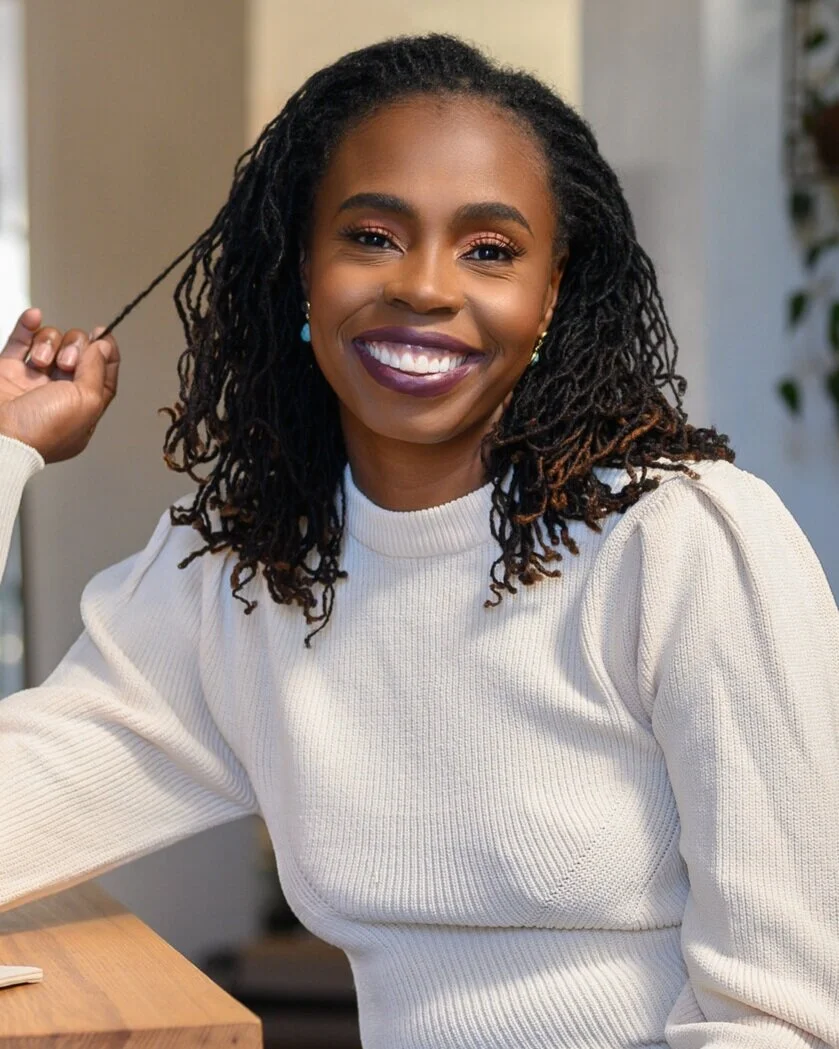
Hey there I’m Naseema
My dream is for everyone to know that financial independence is attainable with a little intentionality. Learn how I can help you finally break the cycle of living paycheck to paycheck.
Join the Facebook Community
Join the Financially Intentional community and get access to resources to guide you on the path to Financial Freedom.
Watch these Videos To Learn How to…
Keep Listening
Here are some more episodes you may enjoy…





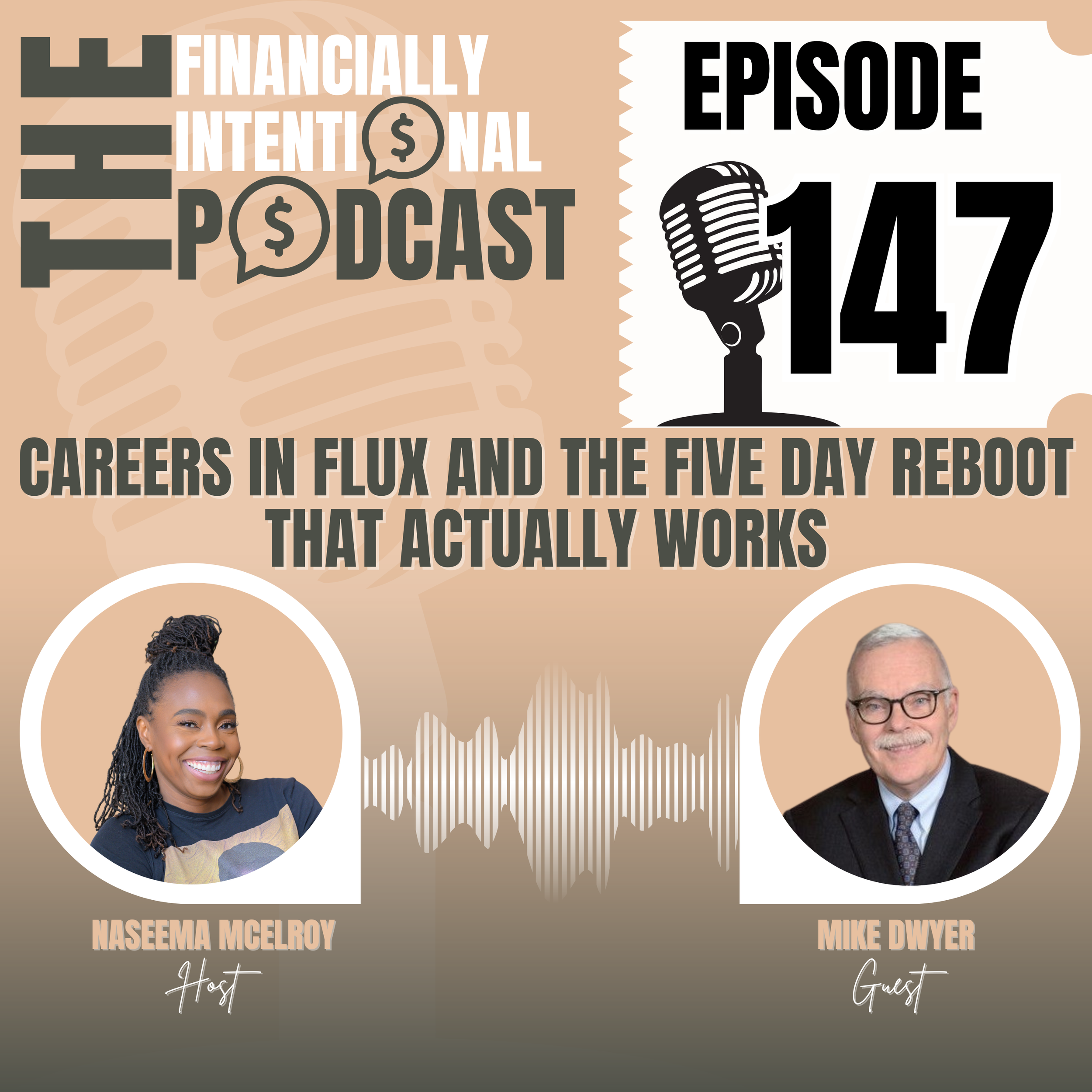


We break down what’s really happening with hormones, metabolism, and aging in a simple way, including why perimenopause can sneak up on you.